Supply Chain Strategy2026-03-1214 min read
Balancing MOQ and Production Costs: A Survival Guide for Startup Underwear Brands
Paul PengFactory Technology Director
Part of the Manufacturing Solutions series
Part of the Manufacturing Solutions series
You've got $15,000 in startup capital. You've designed three killer underwear styles that you know will resonate with your target audience. You're ready to launch.
Then you contact your first manufacturer.
"Minimum Order Quantity: 500 pieces per style."
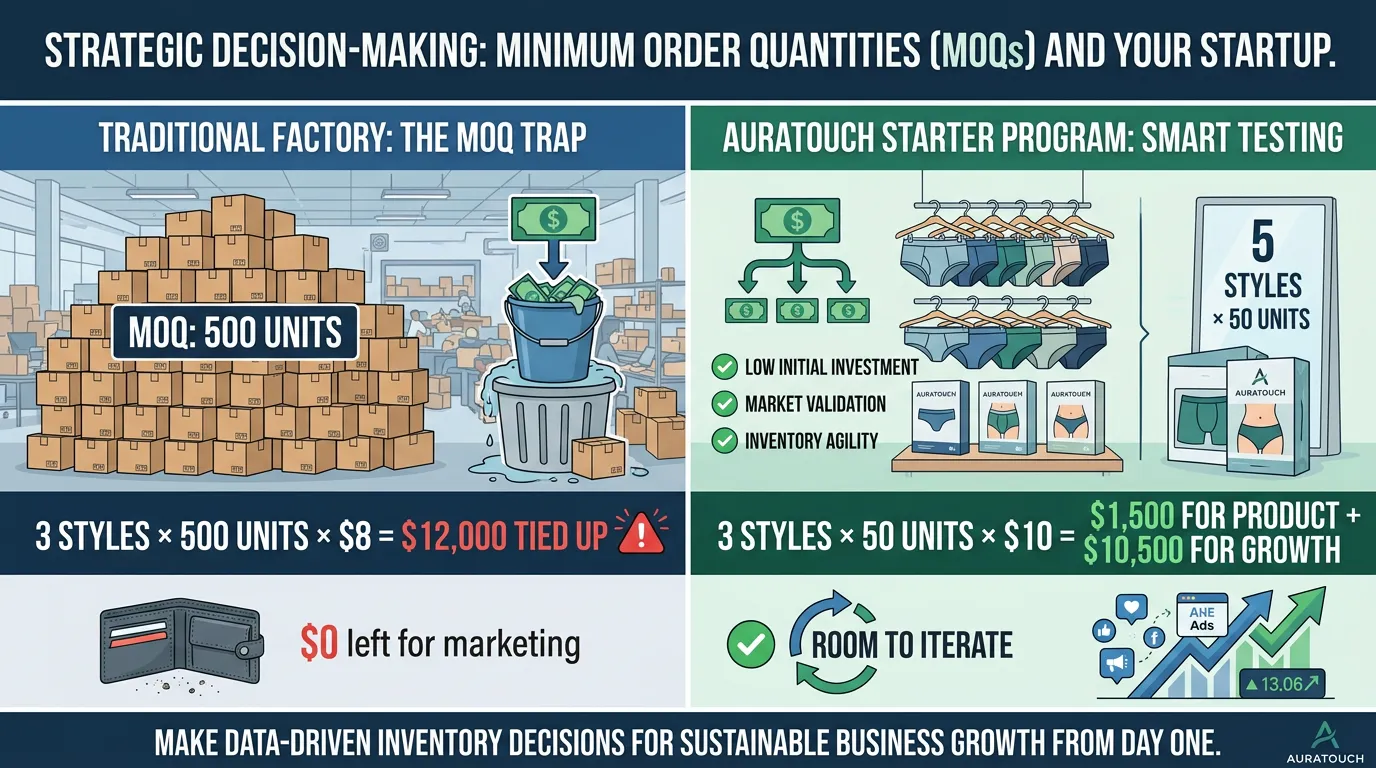
The math is brutal: 3 styles × 500 units × $8 per unit = $12,000 tied up in inventory before you've made your first sale. That leaves just $3,000 for marketing, website development, photography, and all the other expenses of launching a brand.
Worse yet, most DTC brands need to test 5-10 product variations before finding product-market fit. With traditional MOQ requirements, you'd need $50,000-100,000 just to experiment.
This is the MOQ trap, and it kills more underwear startups than poor design or bad marketing ever will.
But what if there was another way? What if you could launch with 50 units per style, test the market, prove demand, and then scale? What if the barrier between your vision and market reality wasn't a $50,000 inventory bet?
At AuraTouchGlobal, we believe the math should work for startups, not against them. This article will show you how to navigate the tension between low MOQs and production costs—and how our Starter Program makes small-batch manufacturing economically viable.
Loading video...
To solve the MOQ puzzle, you first need to understand why traditional factories demand high minimums in the first place. The answer lies in the economics of production.
Setup Costs Are Fixed, Regardless of Quantity
Before a single underwear piece can be sewn, manufacturers face substantial fixed costs:
These costs exist whether you order 50 units or 5,000 units. For a factory, spreading $2,000 in setup costs across 500 units ($4 per unit) makes economic sense. Spreading it across 50 units ($40 per unit) makes the unit price uncompetitive.
Machine Changeover Time
Traditional factories use long assembly lines optimized for mass production. Each workstation performs one operation—elastic attachment, seam sewing, label application, packaging. Changing from one style to another requires:
For a 20-station production line, that's 12-25 hours of lost production time. Small orders literally aren't worth the interruption.
Economies of Scale in Material Sourcing
Fabric mills have their own MOQs—typically 500-1,000 yards per fabric run. If your design requires a custom fabric, the manufacturer must commit to purchasing a minimum quantity, regardless of your order size. For 50 units, you might use 30 yards of fabric. The remaining 470 yards? That's inventory risk the manufacturer must absorb.
These factors explain why unit costs drop dramatically as quantities increase:
If you find a manufacturer willing to produce small quantities, you'll encounter hidden costs that can destroy your margins:
Material Sourcing Challenges
Custom fabrics require 500-1,000 yard minimums at mills. If you're ordering 50 units, you'll either:
Labor Efficiency Losses
Assembly lines reach peak efficiency at 500+ units per style. Workers develop rhythm and speed after completing 100+ repetitions of the same operation. At 50 units:
Quality Control Burden
Quality inspection requires the same time investment regardless of quantity. Checking 50 units for stitching defects, elastic integrity, and sizing accuracy takes nearly as much time as checking 500 units. Per-unit QC cost at 50 units is 10× higher than at 500 units.
Seamless Underwear Production Challenges
Seamless underwear presents particularly steep technical challenges. Specialized circular knitting machines cost $200,000+ and require specialized operators. The hot melt adhesive application used in seamless construction demands precision equipment and expertise. Setup costs for seamless production are 30% higher than cut-and-sew alternatives, making small orders economically challenging for traditional factories.
To make informed clothing production cost breakdown decisions, you need to understand the tradeoffs. Here's a practical comparison for small batch apparel manufacturing:
| Aspect | Low MOQ (50-100 units) | Bulk Order (500-1000+ units) |
|---|---|---|
| Unit Cost | Higher ($10-12/unit) | Lower ($4-5/unit) |
| Capital Risk | Low ($500-1200 total) | High ($2000-5000+ total) |
| Market Testing | ✅ Test multiple styles | ❌ Limited to 1-2 styles |
| Cash Flow | Preserves capital for marketing | Ties up inventory |
| Scaling Speed | Fast to market, quick validation | Slower validation cycle |
| Best For | First launch, trend items, testing | Proven sellers, core collection |
The key insight: For startups, the "expensive" low MOQ option is often smarter strategically. Paying 20-30% more per unit to test 5 styles at 50 units each is better than paying 50% less per unit but committing $15,000+ to unproven designs.
This table represents the clothing production cost breakdown every startup should understand before choosing a low MOQ underwear manufacturer.
These constraints explain why traditional factories reject small orders—but they don't explain why startups are stuck with unacceptable choices. The problem isn't manufacturing economics itself; it's a traditional production model optimized for mass markets, not startup experimentation.
What if a factory re-engineered its entire operation to support small batches?
At AuraTouchGlobal, we recognized that the traditional factory model serves established brands but fails startups. So we built something different—a manufacturing infrastructure specifically designed to support emerging brands with flexible production needs.
Our Starter Program operates on fundamentally different economics than traditional manufacturing:
Tiered MOQ Structure
Rather than a one-size-fits-all 500-unit MOQ, we offer tiered minimums based on product complexity and design requirements. Contact our team for specific tiers tailored to your product type—some simple styles can start as low as 50 units, while more complex constructions may require 100-200 units.
The key difference: we can tell you the specific minimum for YOUR design, not a blanket policy that treats all products the same.
Shared Fixed Costs Across Startup Orders
We aggregate setup costs across multiple startup orders in our flexible workshop. Pattern making for similar garment types is shared across clients. Fabric sourcing is coordinated—five startups using Modal fabric? We consolidate sourcing to access mill discounts while passing savings to each client.
Volume-Based Pricing That Scales With You
Start with quantities that make sense for market testing. As your sales grow, our production lines scale seamlessly:
You're not penalized for starting small—you're rewarded for growing with us.
One area where startups face particular challenges is seamless underwear. The technical barriers—specialized machinery, hot melt adhesive application, material science expertise—make most traditional factories unwilling to consider orders under 1,000 units.
We've invested $200,000+ in state-of-the-art seamless knitting equipment and built specialized expertise in seamless construction:
Specialized Seamless Machinery
Our circular knitting machines produce seamless garments with minimal waste and superior comfort. Unlike traditional cut-and-sew manufacturing, seamless production creates the entire garment in one continuous process—no side seams, no bulky elastic, no irritation points.
Hot Melt Adhesive Application Expertise
Seamless underwear relies on hot melt adhesives for elastic attachment and reinforcement. This requires precise temperature control, application pressure, and curing time. Our technicians have mastered this process through extensive R&D, enabling us to produce seamless garments at 50-unit quantities that traditional factories refuse.
Can Produce 50-Unit Seamless Orders
Because our flexible workshop is designed for small batches, we can produce seamless underwear at quantities that make economic sense for market testing. We've had clients launch with 3 seamless styles, 50 units each, prove demand within 60 days, and scale to 500-unit reorders.
As a specialized low MOQ custom underwear manufacturer, we've made seamless technology accessible to startups—not just established brands with 10,000-unit production runs.
Packaging is another area where traditional MOQ requirements punish startups. Custom branded boxes typically require 1,000-unit minimums at packaging suppliers. Eco-friendly wraps need 500-unit runs. Premium packaging can cost $2-3 per unit—prohibitive when you're testing the market.
Our private label underwear packaging options are designed to scale:
Branded Boxes (MOQ: 100 units)
Custom printed boxes with your logo and brand aesthetics. At 100 units, we can produce professional packaging that positions your brand as premium-quality without requiring 1,000-unit commitment.
Eco-Friendly Wraps (MOQ: 50 units)
Sustainable packaging options including compostable wraps, recycled content bands, and minimal-print options. For eco-conscious brands targeting environmentally aware consumers, our 50-unit minimum enables authentic sustainability messaging from day one.
Recyclable Materials (No Minimum for Basic Options)
For startups wanting to minimize packaging entirely, we offer no-minimum options using recyclable paper bands and simple size tags. This lets you prioritize product quality and let the garments speak for themselves.
Custom Packaging Scales from 100 to 10,000 Units
Start with basic packaging at 50-100 units. As your brand grows, upgrade to premium boxes, custom tissue paper, thank-you cards, and unboxing experiences. Our packaging scales with you—no need to commit to 10,000-unit packaging runs before you've made your first sale.
The core innovation that makes our approach possible is our Flexible Workshop—a production space specifically designed for samples and small-batch production, separate from our mass-production lines.
Digital Pattern Cutting: Instant Adjustments
Traditional factories create physical cardboard patterns for each size and style. Making adjustments requires manual pattern work and new physical patterns.
We use digital pattern cutting technology. Adjustments happen on-screen instantly. Size grading is automated. New pattern variations can be created in minutes rather than days. This eliminates $500-1,000 in pattern-making costs for each design iteration.
Stock Fabric Rapid Response Program
For startups needing the fastest path to market, our Stock Fabric Program offers a quick response solution:
Available Fabrics:
Best for: First product launches, market testing, seasonal collections, and rapid prototyping.
No 500-yard minimums. No 6-week lead times. Select your fabric, and we can start production immediately—this is flexible MOQ manufacturing at its most efficient.
Multi-Skilled Craftsmen: Complete Garment vs Single Operation
Traditional assembly lines have each worker perform one operation repeatedly—one person sews side seams, another attaches elastic, a third applies labels.
Our Flexible Workshop employs multi-skilled craftsmen who can construct an entire garment from start to finish. One person cuts fabric, sews seams, attaches elastics, applies labels, and performs quality inspection. This eliminates assembly line changeover costs and enables rapid small-batch production.
Image and Sample Replication: No Tech Pack Needed
Many startups don't have professional technical drawings (tech packs). They have inspiration photos, sketches, or reference samples.
Our pattern makers can work from:
We'll help you professionalize your design and create production-ready specifications. No tech pack? No problem.
One practical strategy we recommend for small batch apparel manufacturing: share common accessories across your styles to leverage bulk pricing while maintaining low per-style MOQ.
Elastic & Trims Sharing Strategy:
Real Example: A startup with 5 panty styles can:
This approach is particularly valuable for low MOQ underwear manufacturer partnerships—by smart component standardization, you access bulk economics without the inventory risk.
Our factory in Zhongshan-Xiaolan (China's underwear manufacturing hub) gives us unique advantages for serving international startups with flexible MOQ requirements:
This location advantage directly translates to: Lower MOQs, faster turnaround, better communication for emerging brands.
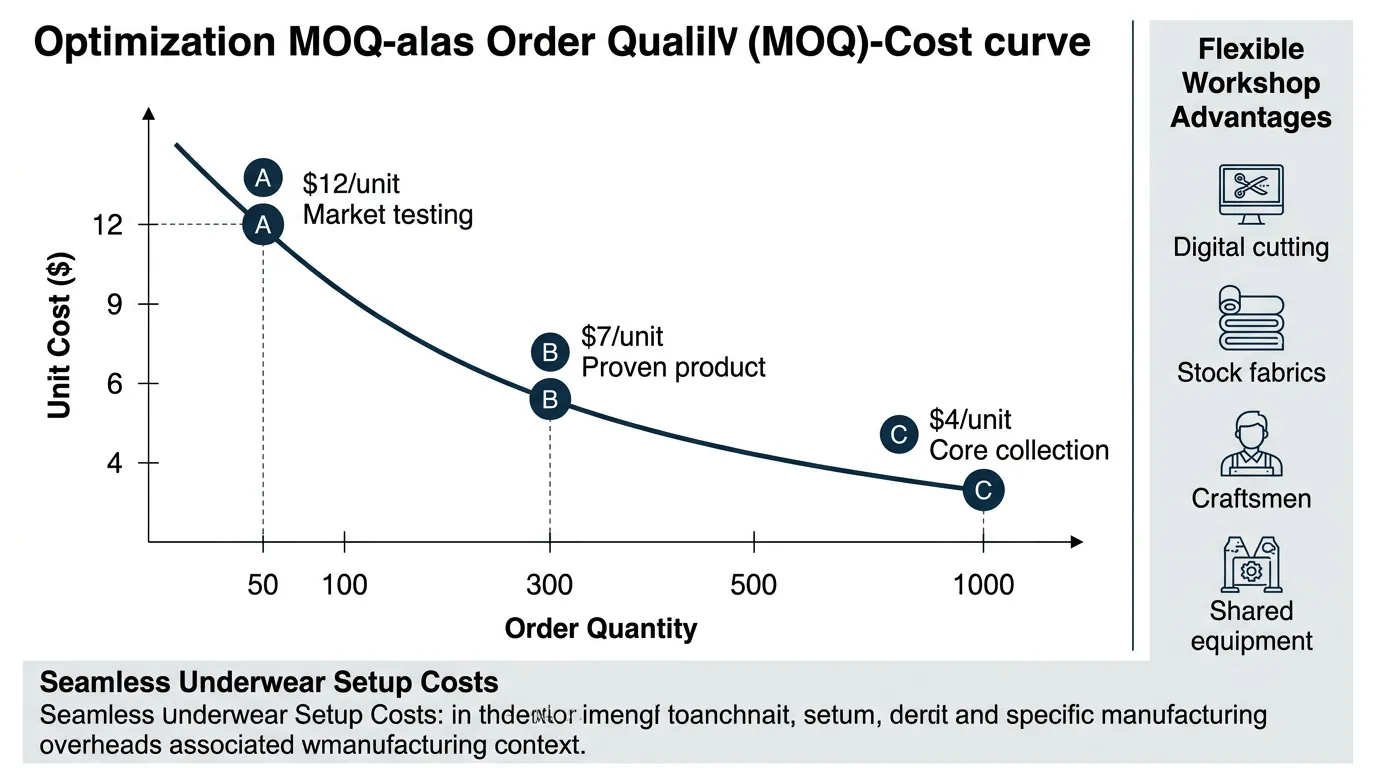
Understanding the economics is one thing. Making strategic decisions about when to accept higher costs versus when to negotiate lower prices is another. Here's a framework for making smart MOQ-cost tradeoffs.
First Product Launch: Pay 20-30% More for 50-Unit MOQ
For your initial product launch, flexibility matters more than unit cost optimization. Paying $10 per unit for 50 units ($500 total) is better than paying $8 per unit for 500 units ($4,000 total) when you're unsure which styles will resonate.
The $500 premium you pay for flexibility is insurance against tying up $3,500 in inventory that may not sell. Better to lose $500 on higher unit costs than $3,500 on unsold inventory.
Market Testing: Better to Lose $500 on Costs Than $4,000 on Inventory
DTC brands typically test 5-10 product variations before finding product-market fit. If each variation requires a 500-unit commitment at $4,000 per style, you'll invest $20,000-40,000 before knowing what works.
With low MOQs, you can test 10 styles at 50 units each for roughly $5,000-7,500. You've spent more per unit, but you've spent 75% less overall and preserved capital for marketing and iteration.
Trend-Driven Items: Speed to Market Beats Cost Optimization
Some products—trend-driven colors, seasonal styles, influencer collaborations—are time-sensitive. Being first to market matters more than minimizing production costs.
Accept higher unit costs to launch quickly. If the trend takes off, you can reorder at larger quantities for better margins. If it doesn't, you're not stuck with 500 units of dated inventory.
Proven Sellers with 6+ Months of Sales Data
Once a style has demonstrated consistent sales over 6+ months, you have validated demand. At this point, unit cost optimization becomes a priority.
Negotiate larger production runs for proven sellers. The economics work in your favor—you're not betting on uncertain demand, you're scaling a winner.
Core Collection Items You'll Reorder Indefinitely
Every brand has core styles—basic panties, essential bras, foundational items that form the backbone of your collection. These are perpetual sellers that will never be discontinued.
For core items, negotiate the lowest possible unit cost through larger production runs. You'll sell through 1,000 units over time whether you order them all at once or in batches. Ordering all at once maximizes your margin.
Seasonal Launches with Pre-Orders Secured
If you're launching a seasonal collection and have secured 200+ pre-orders through crowdfunding, waitlist deposits, or wholesale commitments, you have validated demand. Negotiate lower unit costs based on confirmed orders rather than speculation.
The most successful DTC brands use a hybrid approach that evolves over time:
Phase 1: Market Validation (50-100 units at $10-12 per unit)
Phase 2: Optimization (300-500 units at $6-8 per unit)
Phase 3: Scale Production (1,000+ units at $4-5 per unit)
This hybrid approach mirrors how successful brands actually scale—rather than betting everything on one massive order, you validate, optimize, and then scale.
Every startup's situation is unique. The right MOQ-cost tradeoff depends on your capital, market knowledge, risk tolerance, and growth stage.
What's universal is this: The traditional model—500-unit MOQs or go home—has killed too many promising brands before they had a chance to prove themselves.
There's a better way.
Our Starter Program offers:
Whether you have:
We're ready to help you navigate MOQ-cost tradeoffs and find a production strategy that works for your stage.
New to the lingerie business? Our step-by-step startup guide covers business formation, cash flow planning, and the complete launch timeline — the business side of building a brand that most articles skip.
Looking for a reliable partner for your 2026 collection?
📥 Download our latest Product Catalog — see material options and production capabilities
📧 Request a free sample analysis — send us your design or reference, and we'll provide feasibility feedback and recommendations
💬 Get a custom quote — specific MOQ tiers and pricing for your first production run
Contact us today to discuss your project. Limited spots available in our 2026 Starter Program—secure your production capacity now.
Your customers are waiting. Let's build something amazing together—without the MOQ math standing in your way.
Business insights for apparel brand owners, from production strategies to manufacturing optimization
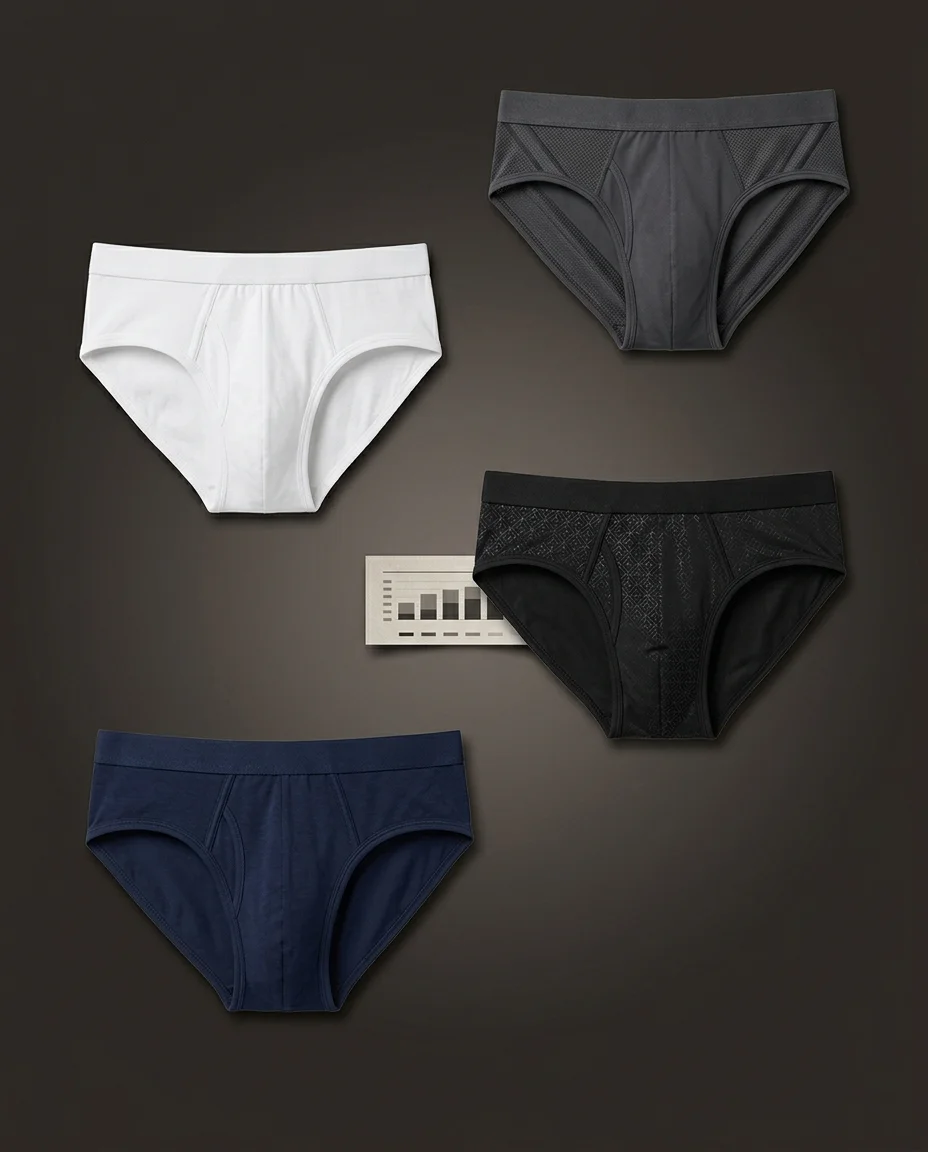
The men's briefs market is fragmenting from a single 'basics' category into four distinct competitive tracks. Traditional searches dropped 20-30%, while heated underwear (+2150%), seamless men's (+300%), and cooling fabrics (+180%) surge. This analysis breaks down four competitive tracks: budget basics, functional tech, premium fabrics, and performance sport — with pricing, technology requirements, and entry strategy for each.
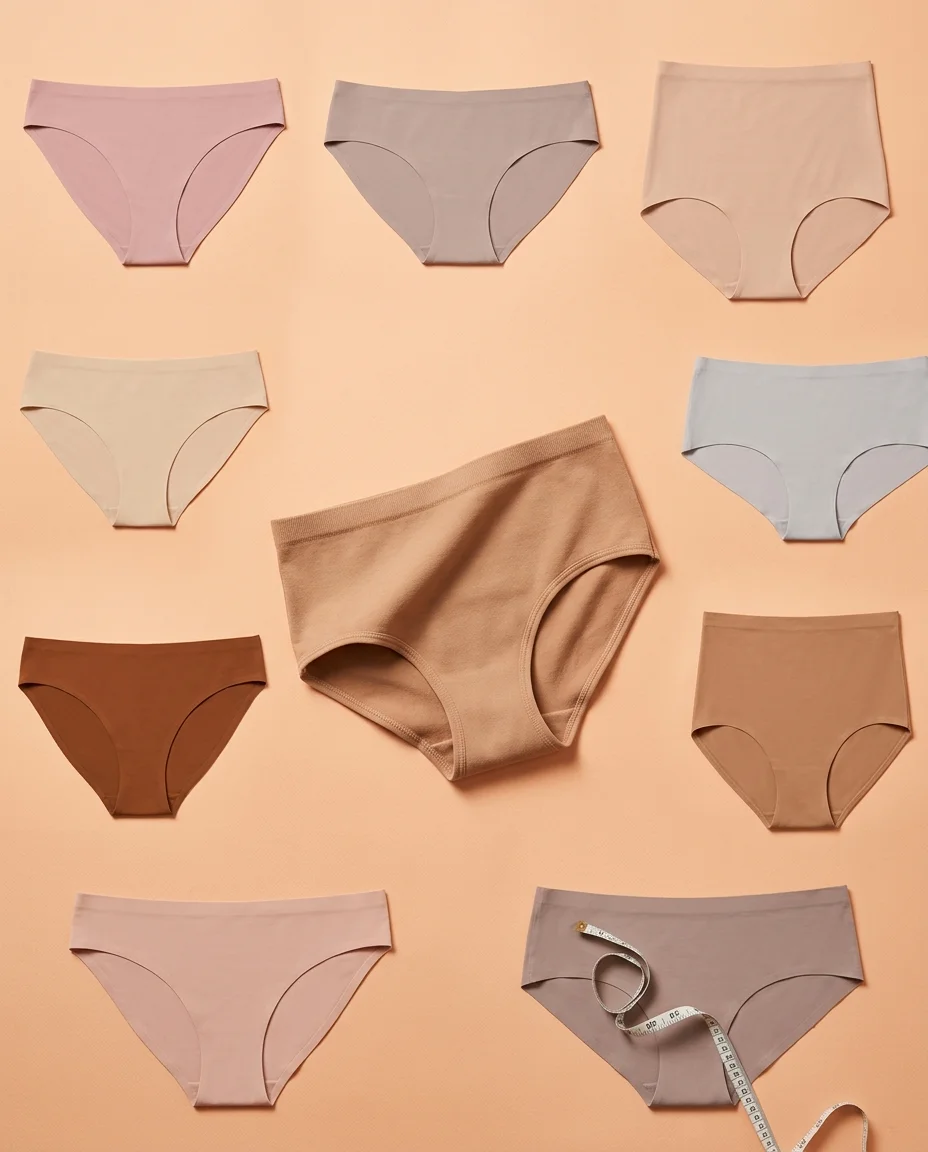
We tested 30+ seamless underwear brands across fabric recovery, waistband tension, and gusset construction. The results: only 6 brands use true circular knitting — most 'seamless' products are simply flat-lock seamed with marketing spin. This guide ranks the best seamless underwear by real performance data, not claims.
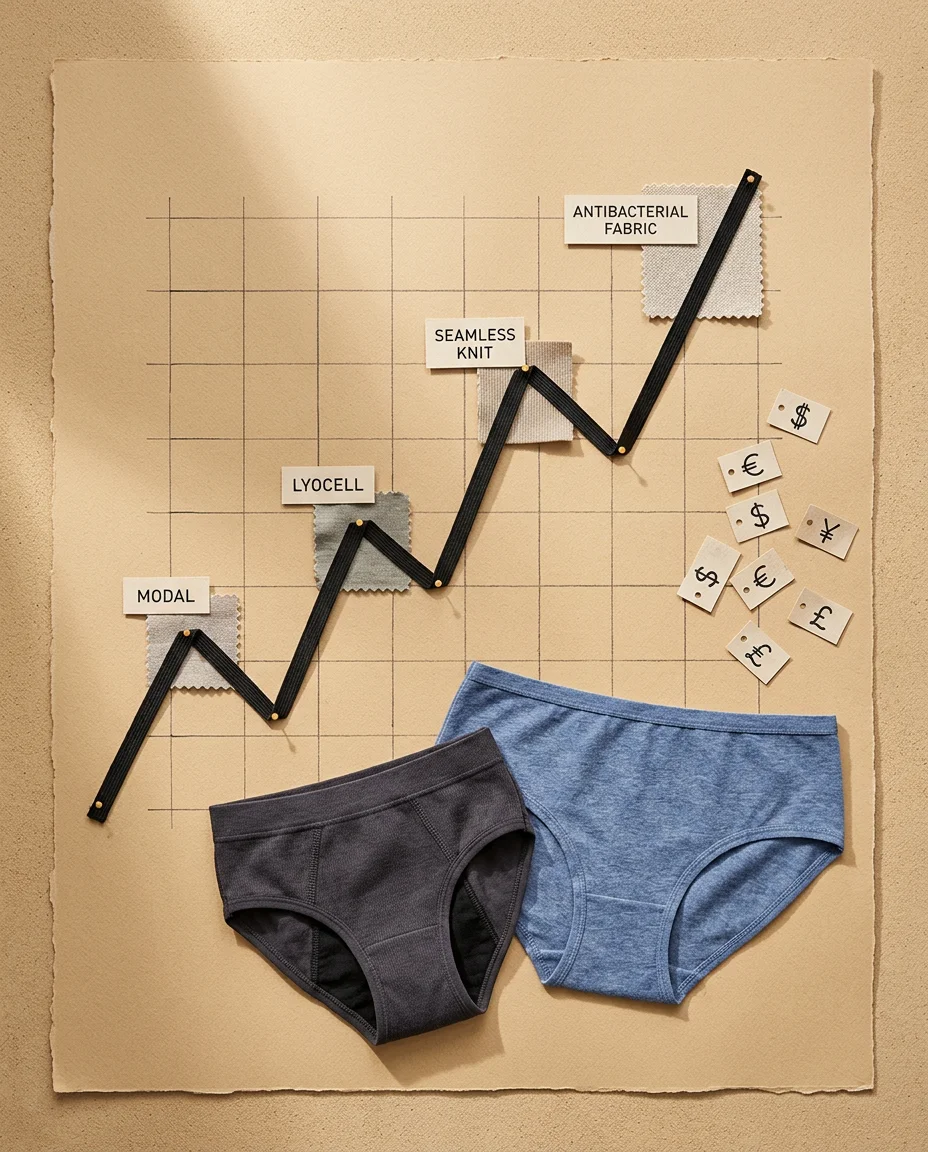
The underwear market is projected to reach $127.4B by 2032. We analyze 2026's trending products — period underwear (+300%), seamless (+110%), plus-size (+130%), and antibacterial Modal — with market data, fabric innovation timelines, and regional growth forecasts for brand planning.