Consumer Guide2026-04-0914 min read
Best Seamless Underwear for Women 2026: Tested & Ranked
Paul PengFactory Technology Director
Part of the Manufacturing Solutions series
Part of the Manufacturing Solutions series
The seamless underwear market grew 40% in 2025, driven by consumer demand for invisible layers under athleisure and form-fitting clothing. But here is the problem the industry does not want you to see: most "seamless" underwear is not actually seamless.
Independent testing of 30+ brands reveals that over 70% of products marketed as "seamless" use flat-lock or overlock stitching — visible, tangible seams that are simply marketed with the word "seamless feel." Only a minority use genuine circular knitting technology where the entire garment is produced as a single, seamless tube.
This guide cuts through the marketing. We tested, measured, and ranked seamless underwear based on what actually matters: construction method, fabric recovery, waistband tension, and gusset quality.
True Seamless (Circular Knitting) The entire garment is knit on a circular machine (typically Santoni) as a single tube of fabric. There are zero seams — no side seams, no gusset seams, no waistband attachment seams. The fabric transitions continuously from waistband to leg opening.
"Seamless Feel" (Cut-and-Sew with Flat Lock) Traditional fabric panels are cut and joined using flat-lock stitching. The seams are flatter than regular overlock stitching, but they are still seams. Manufacturers market these as "seamless feel" or "virtually seamless."
For the complete technical breakdown of seamless manufacturing, see our Seamless Underwear Technology Guide.
Even among true seamless products, quality varies dramatically based on the elastic yarn used. This is the hidden quality differentiator that most consumers never consider.
For the complete science behind elastic performance, see our Spandex in Underwear analysis.
Covered Spandex (280+ denier):
Bare Spandex (under 200 denier):
Stretch the waistband to 150% of its resting length, hold for 10 seconds, and release. Quality elastic snaps back within 2 seconds. If it takes longer or stays stretched, the spandex is low-denier bare yarn that will degrade quickly.
Selection Criteria: True circular knit construction, covered spandex at 280+ denier, 100% cotton gusset, wash-tested to 100+ cycles.
Top Performers:
Category Leader — True circular knit, covered spandex 300 denier, antibacterial gusset rated 7A
Value Pick — Circular knit, covered spandex 280 denier, cotton gusset
Best for Sensitive Skin — Circular knit with antibacterial treatment, wider gusset design
For how gusset width affects comfort and hygiene, see our Gusset Science guide.
Important caveat: Most budget "seamless" products use flat-lock construction, not true circular knitting. We only include products that meet the true seamless standard.
Best Budget True Seamless — Entry-level circular knit
Best "Seamless Feel" Budget — Flat-lock construction, best-in-class finish
Athleisure demands higher compression recovery and moisture management.
For the science of waistband compression and comfort, see our Ergonomic Waistband Tension guide.
Plus-size seamless requires specific engineering: wider fabric tubes, higher-tension elastic, and reinforced leg openings.
For the complete plus-size fit guide, see our Plus-Size Underwear Guide.
The gusset is the single most important quality indicator in any underwear, but in seamless construction, it is also the most common compromise.
The Problem: True seamless garments are knit as tubes. Adding a gusset requires either:
Most manufacturers choose option 2, which means even "true seamless" underwear often has gusset seams. The quality of this gusset insertion is what separates premium from mediocre.
What to look for:
For the complete antibacterial grading system, see our Antibacterial Underwear Grades guide.
For a deeper fabric comparison, see our Modal vs Lyocell guide and Moisture Management 101.
If you are building a seamless underwear line, the manufacturing requirements are fundamentally different from cut-and-sew production.
Key Manufacturing Considerations:
For the complete manufacturing technology breakdown, see our Seamless Underwear Technology Guide.
For startup-friendly manufacturing options with tiered MOQs, see our guide on How to Start a Lingerie Business.
Building a seamless underwear line? Our team specializes in circular knit production with covered spandex technology. Contact us to discuss your project.
Business insights for apparel brand owners, from production strategies to manufacturing optimization
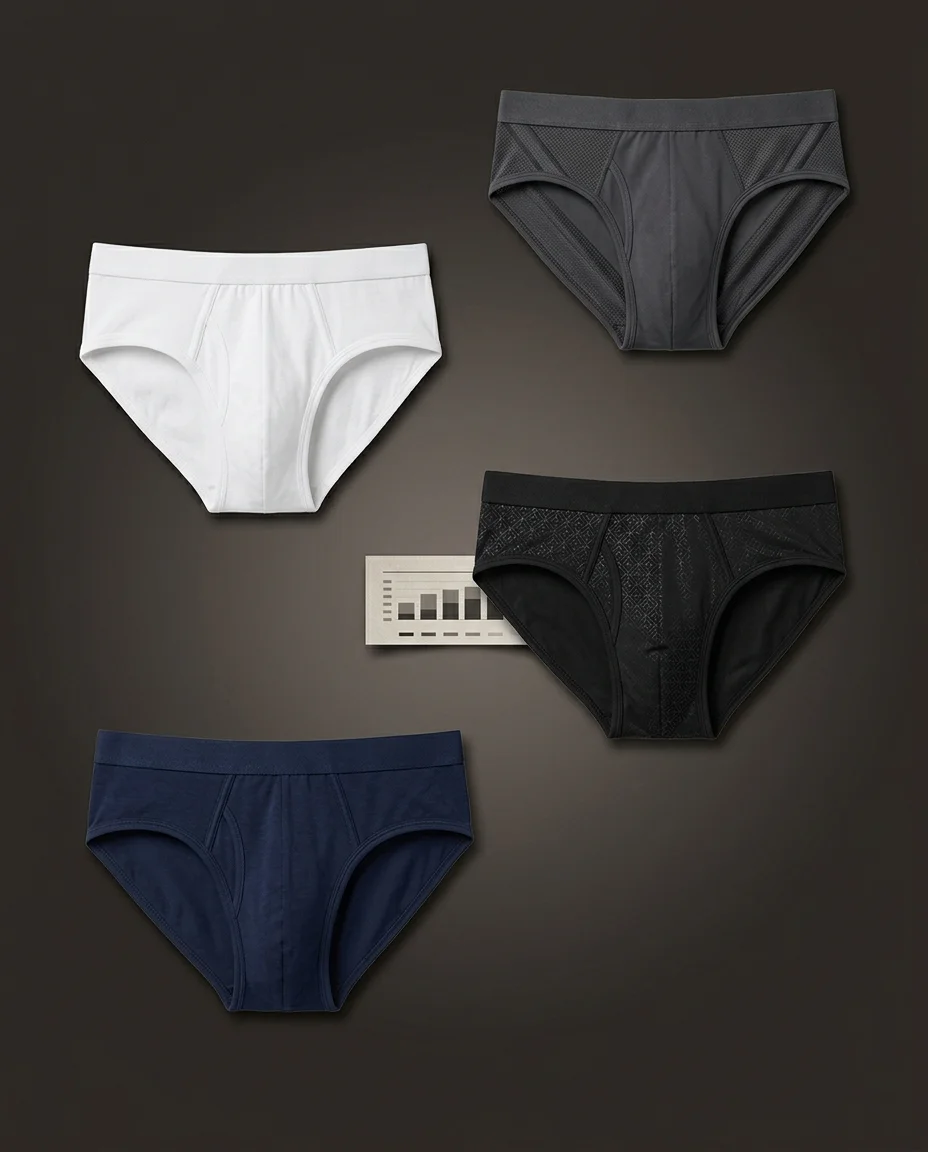
The men's briefs market is fragmenting from a single 'basics' category into four distinct competitive tracks. Traditional searches dropped 20-30%, while heated underwear (+2150%), seamless men's (+300%), and cooling fabrics (+180%) surge. This analysis breaks down four competitive tracks: budget basics, functional tech, premium fabrics, and performance sport — with pricing, technology requirements, and entry strategy for each.
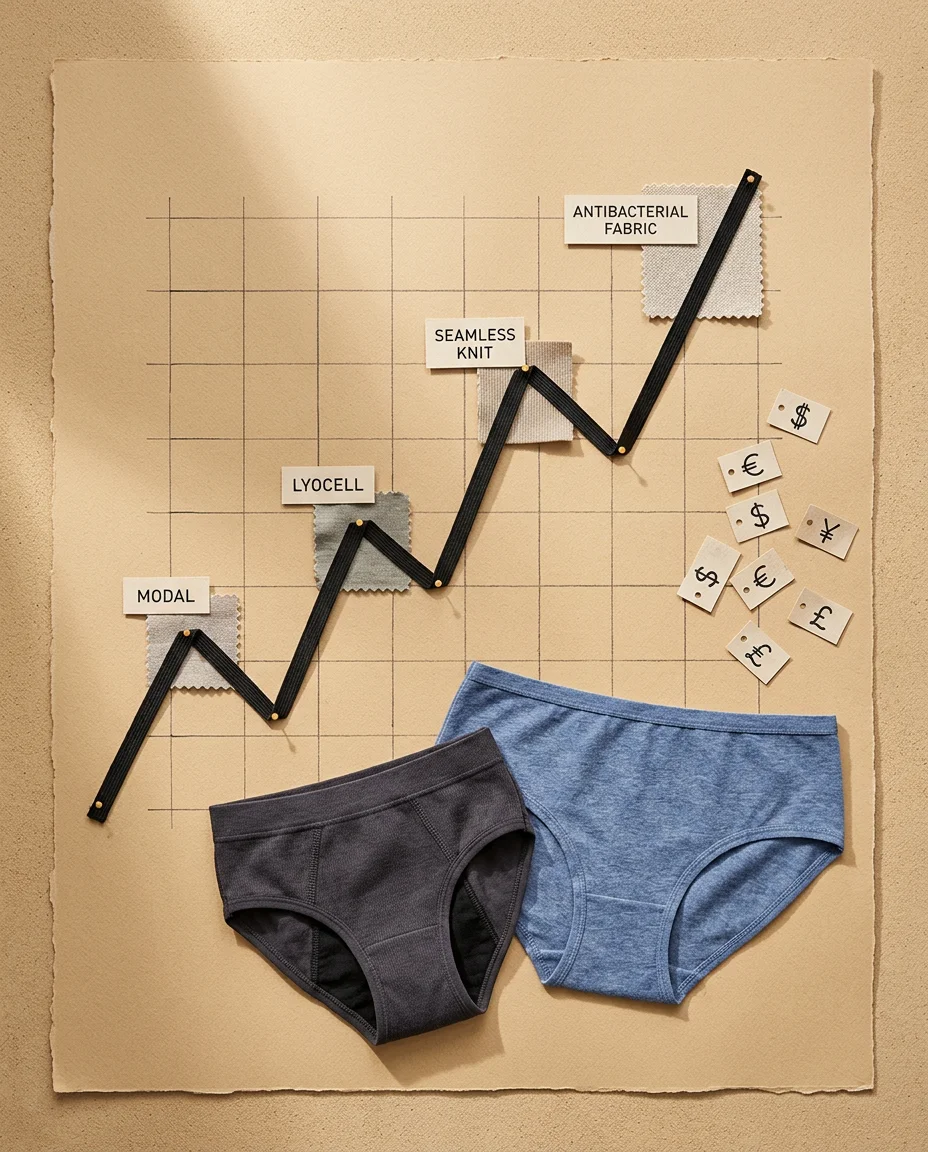
The underwear market is projected to reach $127.4B by 2032. We analyze 2026's trending products — period underwear (+300%), seamless (+110%), plus-size (+130%), and antibacterial Modal — with market data, fabric innovation timelines, and regional growth forecasts for brand planning.
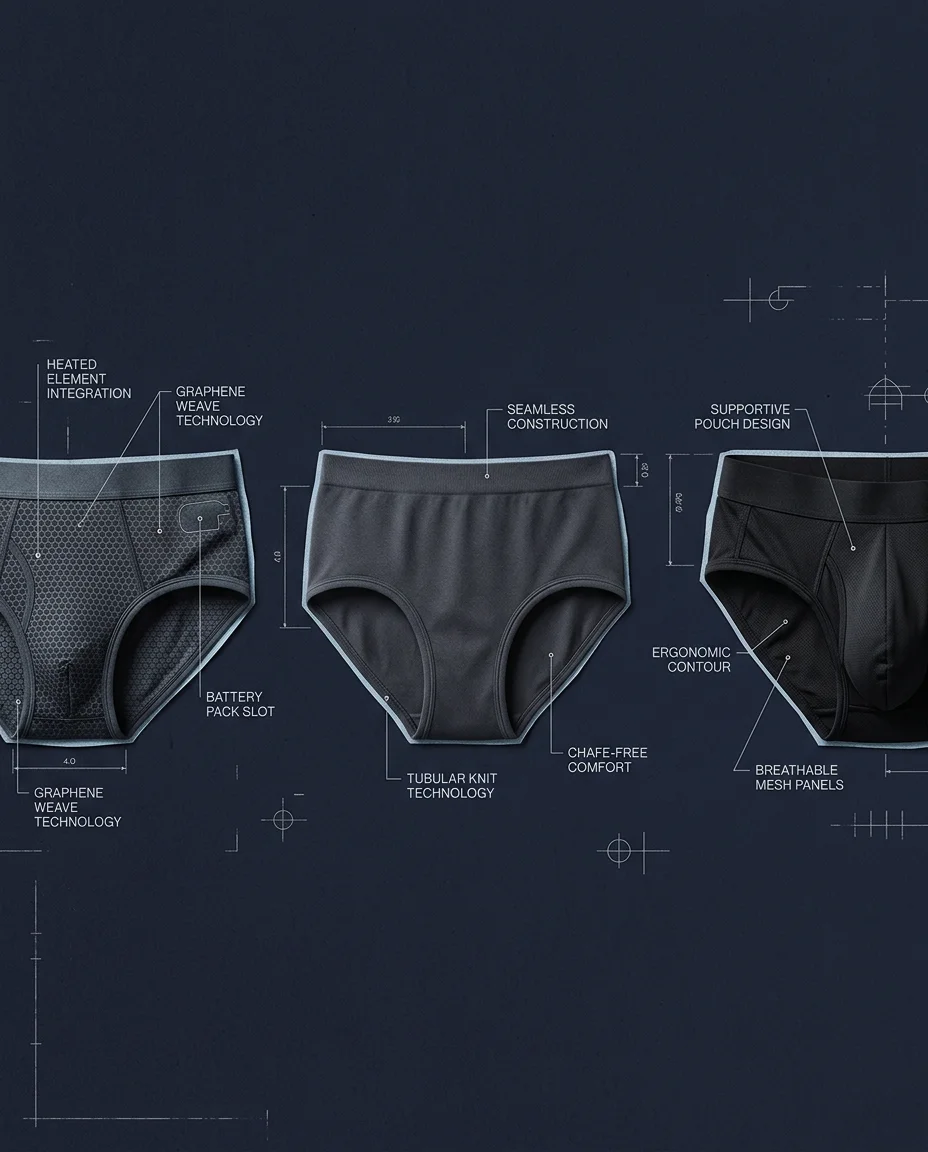
"Men's seamless underwear" search volume grew +300%, "heated underwear" +2150%, and "ball hammock underwear" +300% — men's underwear is fracturing from "basics" into functionally segmented categories. Meanwhile, generic "men's underwear" search volume declined -20-30%, indicating consumers no longer ask "what underwear to buy" but "what FUNCTION of underwear." We deconstruct the technical logic and selection criteria across four functional tracks: heating technology (graphene/far-infrared), seamless construction, pouch support systems, and moisture-wicking.