Product Design2026-04-0512 min read
Plus-Size Underwear Guide: Fabric Selection, Structural Engineering, and Pattern Design Technical Essentials
Paul PengFactory Technology Director
Part of the Manufacturing Solutions series
Part of the Manufacturing Solutions series
Search trends from Q1 2026 reveal a market signal that has been overlooked for far too long:
Key Finding: The plus-size underwear market is upgrading from "availability" to "quality." The +500% surge in lace-related searches shows that consumers are no longer satisfied with "basic functionality" — they demand the same design sensibility and quality as standard sizes. Yet the supply side overwhelmingly executes a "scaled-up standard size" strategy for plus-size lines — this represents a structural gap between demand and supply.
For more analysis on women's underwear market trends, see our Best Women's Underwear Guide 2026.
Fabric selection for plus-size underwear is not simply "more of the same standard fabric" — it requires an independent parameter system.
For detailed performance parameters of Modal fiber, see our Modal vs Lyocell Fabric Deep Comparison.
The waistband is the area with the highest concentration of consumer complaints for plus-size underwear. The top three complaints — waistband marks, waistband loosening, and waistband slipping — all point to the same root cause: brands use the same elastic band specification across all sizes.
"Using the same width/tension elastic band across all sizes." This is the most prevalent error — brands use a 3cm elastic band for sizes S-XL, and for 2XL-4XL they simply cut the same specification longer. The result: on a plus-size waist, the same elastic band stretches at double the rate, concentrating pressure on a narrower area, inevitably producing marks.
Correct approach: For sizes XL and above, use a 4-5cm wide waistband with tension-graded elastic bands — a different elastic tension specification for every 2 size ranges.
For detailed technical parameters and ergonomic analysis of waistband tension engineering, see our Ergonomic Waistband Tension Guide.
Leg roll-up and thigh chafing are the second and third most common complaints for plus-size underwear. Both issues share the same root cause: the fabric's stretch ratio at the thigh circumference exceeds its elastic recovery limit.
Plus-size products require longer legs than standard sizes. This is not an aesthetic preference but a functional requirement: longer legs increase the fabric's contact area with the thigh, reducing pressure per unit area and thereby minimizing the tendency to roll up. We recommend extending plus-size leg length by 1.5-2cm compared to the same style in standard sizes.
Traditional stitched leg openings produce more prominent chafing issues in plus-size products — raised stitching creates continuous friction during thigh movement. Laser-cut edges (without binding) eliminate raised stitching and are the optimal solution for plus-size products. The cost is approximately $0.10-0.15 per piece higher than traditional binding, but significantly improves the wearing experience.
Plus-size fabrics require four-way stretch (elasticity in both warp and weft directions), not just two-way stretch. Thigh circumference changes more dramatically when sitting, standing, and walking; four-way stretch fabric adapts better to these changes, reducing roll-up and constriction. Ensure elastane content ≥ 10% to support four-way stretch.
For application and process analysis of seamless technology in plus-size products, see our Seamless Underwear Technology Guide.
The gusset is the most functionally demanding area of underwear, and this is even more true for plus-size products — larger area means longer seams and more potential friction points.
An emerging PIM technology fabric with stretch up to 300% of standard underwear has appeared at the industry frontier, theoretically allowing one size to fit 50-85kg (110-187 lbs). This has potential value for plus-size underwear size management — eliminating the return risk from size selection. However, current validation data for this technology in plus-size products remains limited. We recommend brands conduct thorough durability testing (elastic recovery rate after at least 50 washes) before formal adoption. For fabric quality testing standards, see our Fabric Quality Testing Guide.
Based on consumer testing and review data, the top 6 pain points for plus-size underwear and their technical solutions:
Plus-size underwear patterns are not "proportionally scaled-up" versions of standard sizes — each size range requires independently designed fabric weight, waistband tension, leg length, and gusset width.
A size S underwear at a 70cm waist has a stretch ratio of 115%, with fabric tension of approximately 0.8N/cm. The same "scaled-up" style in 4XL at a 110cm waist sees the stretch ratio soar to 180%, with fabric tension of approximately 1.5N/cm — nearly double that of size S. This is why "scaled-up" designs inevitably produce marks: it is not a fabric quality issue but a pattern engineering issue. Each size range requires independent pattern design to match its stretch ratio and tension requirements.
For brands planning to develop a plus-size underwear product line, here is a key specification checklist for manufacturer engagement:
We recommend requesting the following test reports from manufacturers:
For detailed testing standards and methodology, see our Fabric Quality Testing Guide.
The plus-size underwear market is undergoing a consumption upgrade from "availability" to "quality." The +500% surge in lace searches and +200% in seamless searches demonstrate that plus-size consumers no longer accept "basic functionality is enough" — they demand the same design sensibility, quality, and comfort as standard sizes.
Yet most brands' plus-size product lines remain stuck at the "scaled-up standard size" stage. Waistband marks, leg roll-up, and thigh chafing — the root causes of these consumer complaints are not fabric quality, but the absence of pattern engineering. Plus-size is not a scaled-up version of standard sizes; it requires an independent parameter system: higher fabric weight (220-240g/m²), wider waistbands (4-5cm), tension-graded elastic bands, extended leg length, laser-cut leg openings, and wider gussets.
For brands planning to develop a plus-size underwear product line, partnering with a manufacturer that has plus-size pattern engineering experience and size grading capabilities is the key to avoiding the "scaled-up" trap and truly meeting plus-size consumer needs.
Data Sources: This article references plus-size underwear search trend data from 2024-2026, multi-brand consumer wear-testing feedback, textile industry testing standards (GB/T 4669, FZ/T 01034, GB/T 19976, FZ/T 62015), and industry reference materials on fabric technology and pattern engineering.
Business insights for apparel brand owners, from production strategies to manufacturing optimization
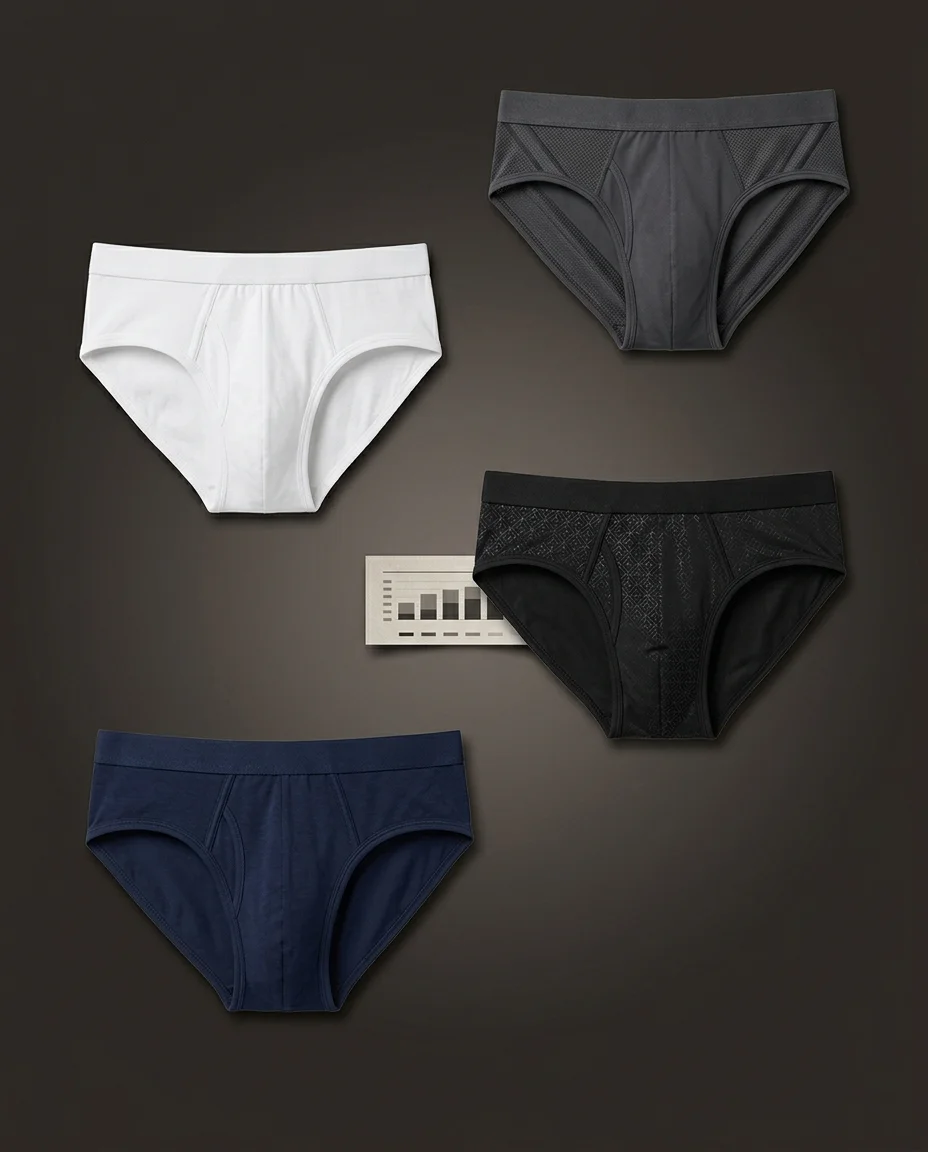
The men's briefs market is fragmenting from a single 'basics' category into four distinct competitive tracks. Traditional searches dropped 20-30%, while heated underwear (+2150%), seamless men's (+300%), and cooling fabrics (+180%) surge. This analysis breaks down four competitive tracks: budget basics, functional tech, premium fabrics, and performance sport — with pricing, technology requirements, and entry strategy for each.
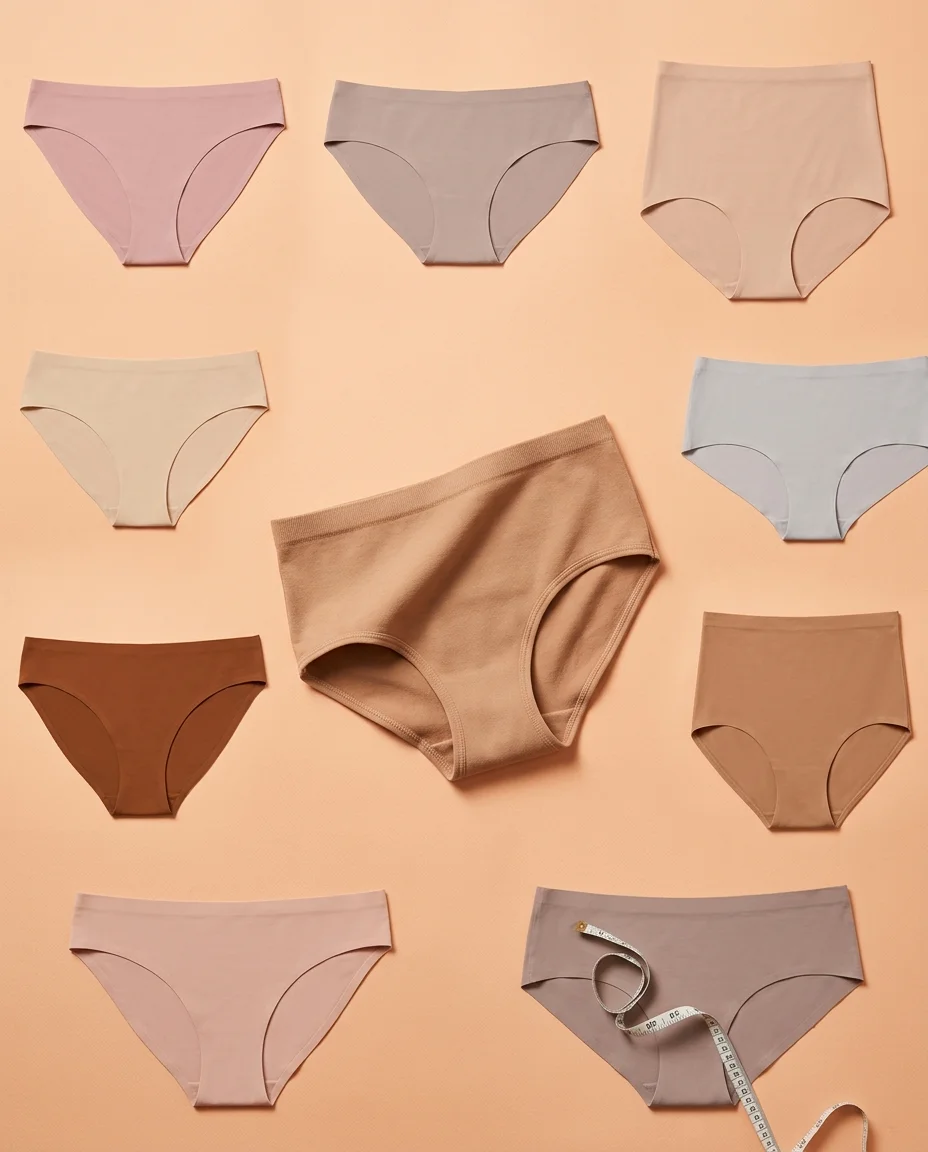
We tested 30+ seamless underwear brands across fabric recovery, waistband tension, and gusset construction. The results: only 6 brands use true circular knitting — most 'seamless' products are simply flat-lock seamed with marketing spin. This guide ranks the best seamless underwear by real performance data, not claims.
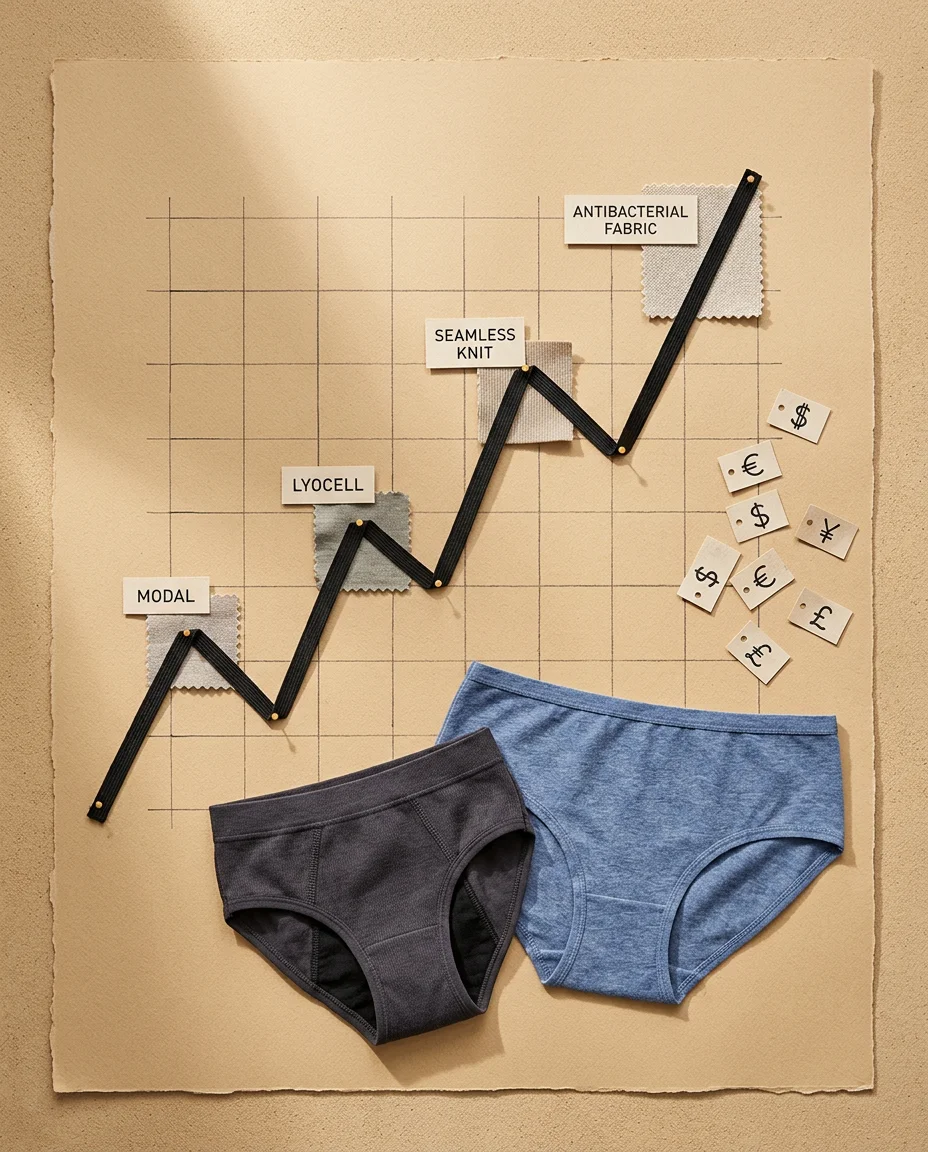
The underwear market is projected to reach $127.4B by 2032. We analyze 2026's trending products — period underwear (+300%), seamless (+110%), plus-size (+130%), and antibacterial Modal — with market data, fabric innovation timelines, and regional growth forecasts for brand planning.