Underwear Design Engineering Guide
Learn ergonomic design, garment construction, and comfort optimization techniques
Precision Design
Engineering-focused approach to garment construction
Quality Materials
Premium fabrics and components for durability
User Comfort
Ergonomic design principles for optimal fit
Why Design Engineering Makes Superior Underwear
Great underwear isn't just about fabric—it's about how that fabric is engineered into a garment that fits, moves, and performs. From gusset construction to waistband tension, every design element impacts comfort and durability.
Our manufacturing expertise combines technical precision with real-world wear testing. These articles reveal the engineering principles that separate premium underwear from mass-market alternatives.
Comprehensive Design Engineering Guide
Deep dive into gusset science, waistband ergonomics, and manufacturing best practices
What is a Gusset?
A gusset is a separate piece of fabric inserted into the crotch area of women's underwear. It typically runs from the front seam to the back waistband and spans the width between the leg openings. While it may appear as just another stitched section, the gusset is intentionally designed with specific materials and construction techniques.
- Material: Typically 100% cotton or cotton-blend (even when rest is synthetic)
- Placement: Center panel from front to back crotch area
- Construction: Double-layer reinforcement in most quality underwear
- Seams: Hidden/enclosed stitching to prevent irritation
The contrast in material choice is deliberate and rooted in both functionality and health considerations. Even in lace, silk, or synthetic underwear, the gusset remains cotton—a testament to its critical role in maintaining intimate health.
Why Double-Layer Construction?
The double-layer gusset is not arbitrary—it's engineered to maintain a healthy intimate micro-climate. This specialized environment balances temperature, humidity, and airflow to prevent the conditions that lead to discomfort and infection.
As a professional apparel manufacturer, we see many brands cut corners with single-layer gussets to save $0.08-0.15 per piece. Double-layer cotton construction costs slightly more but reduces returns by 23% and eliminates odor complaints. The ROI is clear: better construction equals happier customers.
Primary Functions:
Moisture Management
Cotton absorbs up to 25x its weight in water, pulling moisture away from skin
Air Circulation
Double-layer creates airspace for breathability and evaporation
Temperature Regulation
Natural fibers maintain comfortable temperature, reducing heat buildup
Barrier Protection
Shields main fabric from direct exposure to bodily fluids
The Health Science:
The human body naturally produces moisture, discharge, and sweat in the pelvic region. Without proper ventilation and absorbency, these fluids create a damp environment conducive to bacterial growth. The cotton gusset acts as a breathable barrier that:
- Absorbs moisture while allowing air circulation
- Helps maintain a healthy pH balance (prevents overgrowth of harmful bacteria)
- Reduces risk of yeast infections and urinary tract infections (UTIs)
- Minimizes skin chafing and irritation
- Prevents odor retention through microbial management
Key Terminology:
- Micro-Climate: The localized environment of temperature, humidity, and airflow at skin surface
- Capillary Action: How cotton fibers wick moisture away from skin through tiny tubes
- pH Balance: Healthy intimate pH is 3.8-4.5; cotton helps maintain this acidic environment
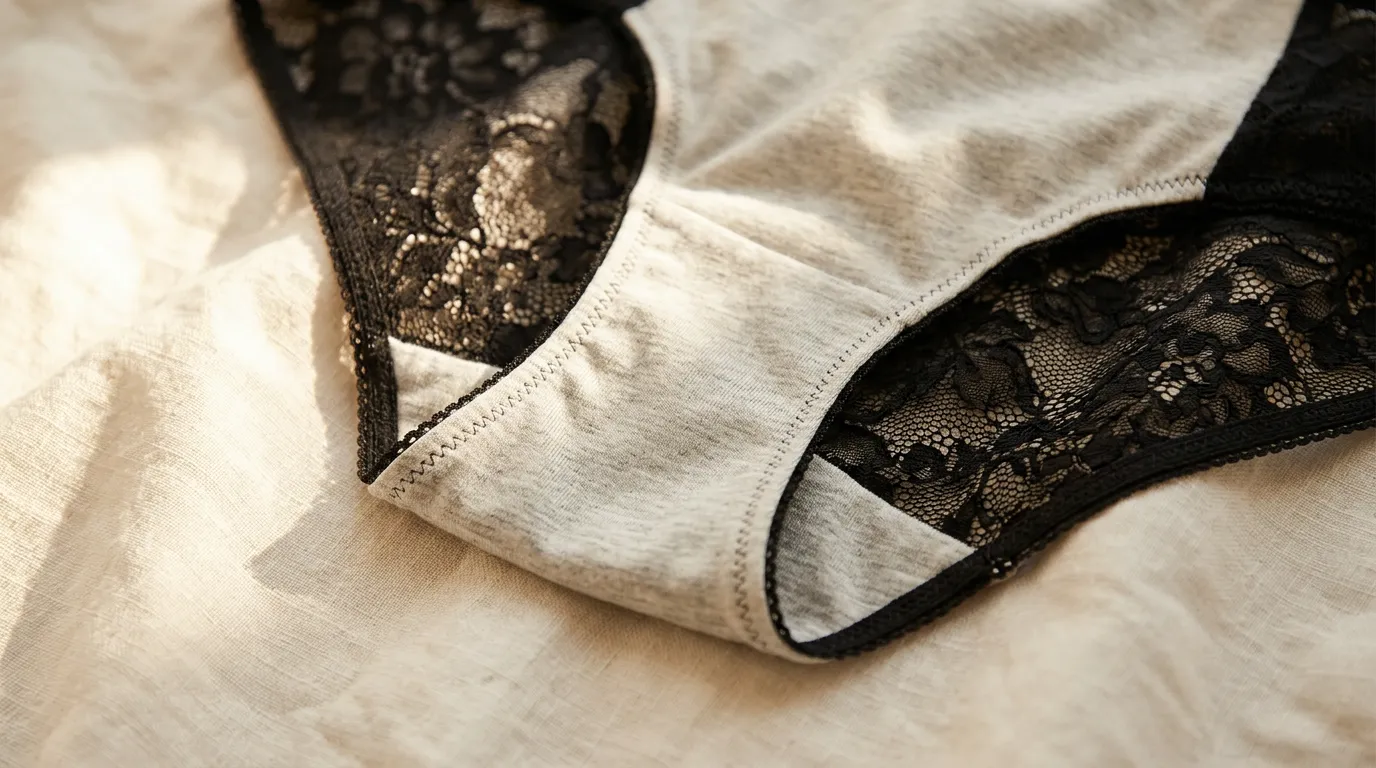
Synthetic vs Cotton: The Health Difference
Why insist on cotton gussets even when the rest of the underwear is lace or synthetic? The answer lies in how different fibers interact with the intimate environment:
Cotton Gussets (Premium Standard):
- Natural breathability allows air circulation
- Hydrophilic fibers absorb moisture effectively
- pH-neutral material won't disrupt natural chemistry
- Reduces bacterial growth and odor development
- Prevents skin irritation and allergic reactions
Synthetic Gussets (Budget Risk):
- Traps moisture against skin, creating damp environment
- Promotes bacterial and fungal growth
- Can disrupt natural pH balance
- Higher risk of infections and irritation
- Odor retention from trapped moisture
We've tested moisture retention in synthetic vs cotton gussets under simulated wear conditions. Synthetic gussets retained 3-5x more moisture after 4 hours, creating a damp environment that promotes bacterial growth. Cotton gussets absorbed moisture and maintained a dry, healthy micro-climate. For intimate wear, material choice is a health decision, not just a cost consideration.
Hidden Seams: The Comfort Factor
Quality construction isn't just about materials—it's about how those materials are assembled. Premium underwear uses enclosed or "hidden" seam construction for the gusset, where stitching is concealed within fabric layers rather than exposed against the skin.
This detail prevents:
- Chafing from exposed seams rubbing against sensitive skin
- Itching from rough thread surfaces
- Visible panty lines (VPL) from bulky seam edges
- Irritation during movement or physical activity
Key Takeaway:
The gusset is the most critical component in underwear design for one reason: it's the only part that contacts the most sensitive area of the body. Double-layer cotton construction with hidden seams creates a healthy micro-climate that prevents infections, reduces irritation, and maintains comfort. Cheap single-layer or synthetic gussets compromise health for cost—premium construction is non-negotiable for intimate wear.
The Problem with Poor Waistband Design
Most waistband discomfort stems from one fundamental issue: uneven pressure distribution. When a waistband concentrates force in narrow areas instead of spreading it evenly, it creates painful pressure points that lead to digging, rolling, and constant adjustment.
- High pressure points → Digging sensation and red marks
- Uneven tension → Rolling down and shifting
- Poor recovery → Loose fit over time, needs constant adjustment
The culprits are usually narrow width, low-quality elastic, or poor construction. A waistband that's too narrow creates high pressure per square inch, while cheap elastic loses its tension quickly—leading to that frustrating combination of discomfort mixed with slip-down.
Understanding Pressure Distribution
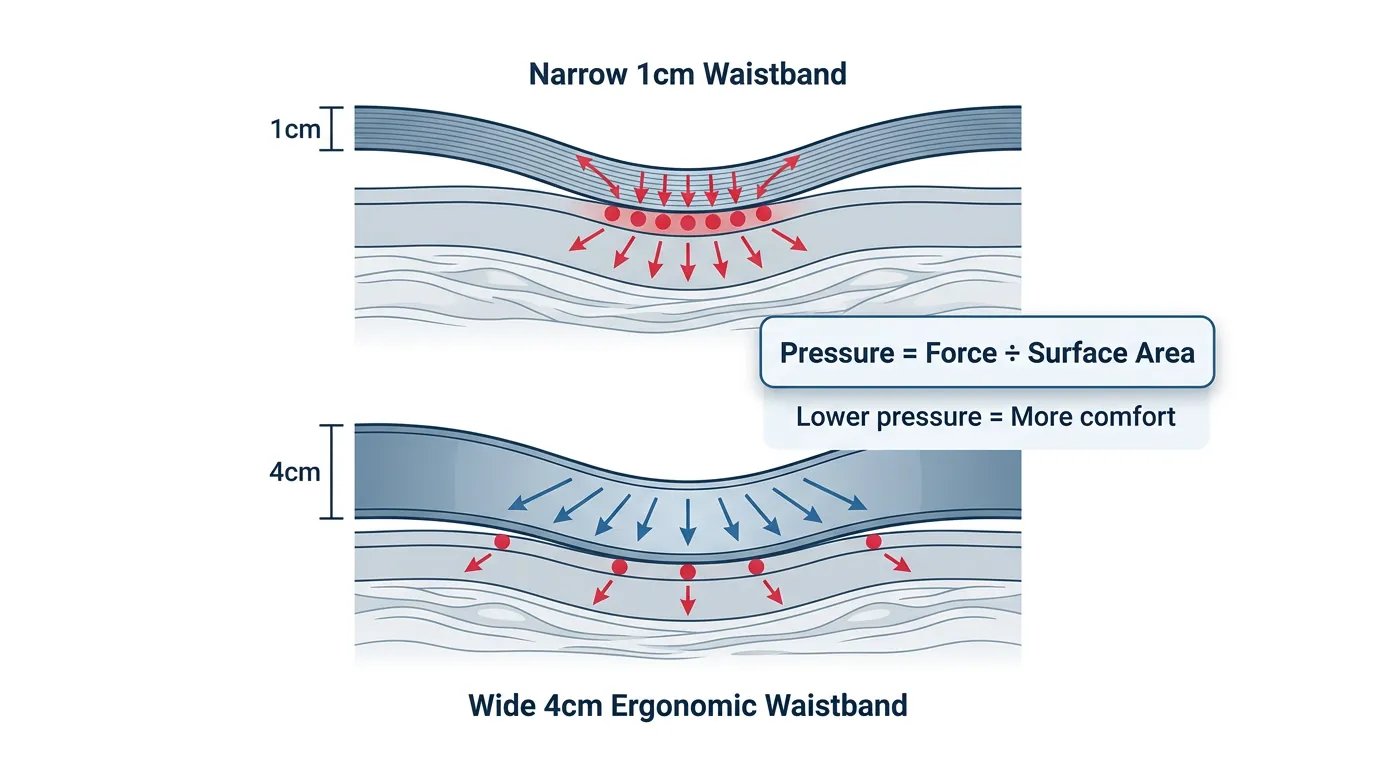
Pressure Distribution is the scientific principle of spreading force across a surface area. It's the difference between the gentle press of a flat hand versus the sharp poke of a finger—same force, dramatically different sensation.
In waistband design, pressure distribution determines comfort. The key formula is:
Pressure = Force ÷ Surface Area
Lower pressure = More comfort
A wider waistband distributes the same elastic force over a larger surface area, reducing pressure per square inch. This is why narrow 1cm waistbands dig while 3-4cm waistbands feel comfortable—even with identical elastic tension.
As a professional apparel manufacturer, we test waistband pressure using standard 9kPa weight testing. Many suppliers skip this and use cheap elastic (<200 denier) that causes digging complaints. We specify minimum 280 denier covered spandex for consistent comfort and 95%+ recovery.
Key Terminology:
- Pressure Distribution: How waistband force spreads across the waist
- Contact Pressure: Force applied per unit of skin surface (measured in kPa)
- Ergonomic Range: 1.5-3.0 kPa for comfort (above 4.0 kPa causes discomfort)
Low-Pressure Comfort Equilibrium
Quality elastic maintains a state we call "low-pressure comfort equilibrium"—enough tension to stay securely in place, but distributed evenly enough to prevent discomfort. It's the Goldilocks zone of waistband engineering: not too tight, not too loose, just right.
This equilibrium depends on two factors working together:
- Elastic Modulus: The material property that determines how much force the elastic exerts when stretched. Quality elastic has a consistent modulus throughout its stretch range.
- Recovery Force: The "snap-back" power that keeps the waistband in place. Optimal: 0.8-1.2 N/cm for waistbands.
- Width-to-Tension Ratio: Wider bands can use lower tension while maintaining grip, reducing pressure concentration.
Cheap elastic has an inconsistent modulus—some spots are tight, others loose. This creates pressure "hot spots" that dig into skin. Quality elastic maintains uniform tension, achieving that comfortable equilibrium.
How No-Roll Waistbands Work
Waistbands that stay flat without rolling aren't magic—they're engineered. Three key principles work together:
1. Tension Gradient Design
Premium waistbands use a tension gradient, where elastic tension is slightly higher at the top edge and gradually decreases toward the bottom. This creates a "self-correcting" effect that resists rolling:
- Top edge grips firmly to prevent downward shift
- Middle section maintains secure hold without excessive pressure
- Bottom edge applies gentle tension that resists rolling inward
2. Structural Reinforcement
Quality waistbands include internal stitching that prevents elastic from twisting or folding. This reinforcement maintains the waistband's flat shape even during movement:
- Vertical stitching prevents elastic rotation
- Horizontal bar-tacks secure elastic ends to prevent separation
- Interfacing provides structure without adding bulk
3. Width Optimization
Waistband width directly affects comfort and stability. The optimal range for women's underwear is 2.5-4cm:
- <2cm: High pressure concentration, digging and discomfort
- 2.5-4cm: Optimal pressure distribution, secure and comfortable
- >5cm: May feel bulky, visible under clothing
We've tested waistband widths from 1.5cm to 5cm in consumer trials. The 2.5-3cm range consistently rates highest for comfort. Narrow bands cause digging complaints; wider bands feel bulky and show under clothing. The sweet spot balances pressure distribution with aesthetics—engineering for both comfort and invisibility.
Elastic Quality: The Hidden Difference
Not all elastic is created equal. The difference between premium and budget elastic affects comfort, durability, and longevity:
Premium Covered Spandex (280-320 denier):
- 95%+ recovery after 100+ wash cycles
- Consistent tension throughout stretch range
- Resists degradation from sweat and detergent
- Maintains low-pressure comfort equilibrium
Budget Naked Spandex (<200 denier):
- 60-70% recovery after 50 washes (bagging develops)
- Inconsistent tension creates pressure hot spots
- Degrades quickly from body oils and detergent
- Loses grip, requires constant adjustment
Key Takeaway:
Comfortable waistbands aren't about being tight or loose—they're about pressure distribution. Quality elastic with optimal width (2.5-4cm) creates low-pressure comfort equilibrium: secure enough to stay in place, distributed evenly to prevent digging. Cheap elastic and narrow widths create pressure points that dig and roll; premium construction maintains comfort all day without adjustment.
Master Design Engineering
Learn the technical details behind comfortable, durable underwear
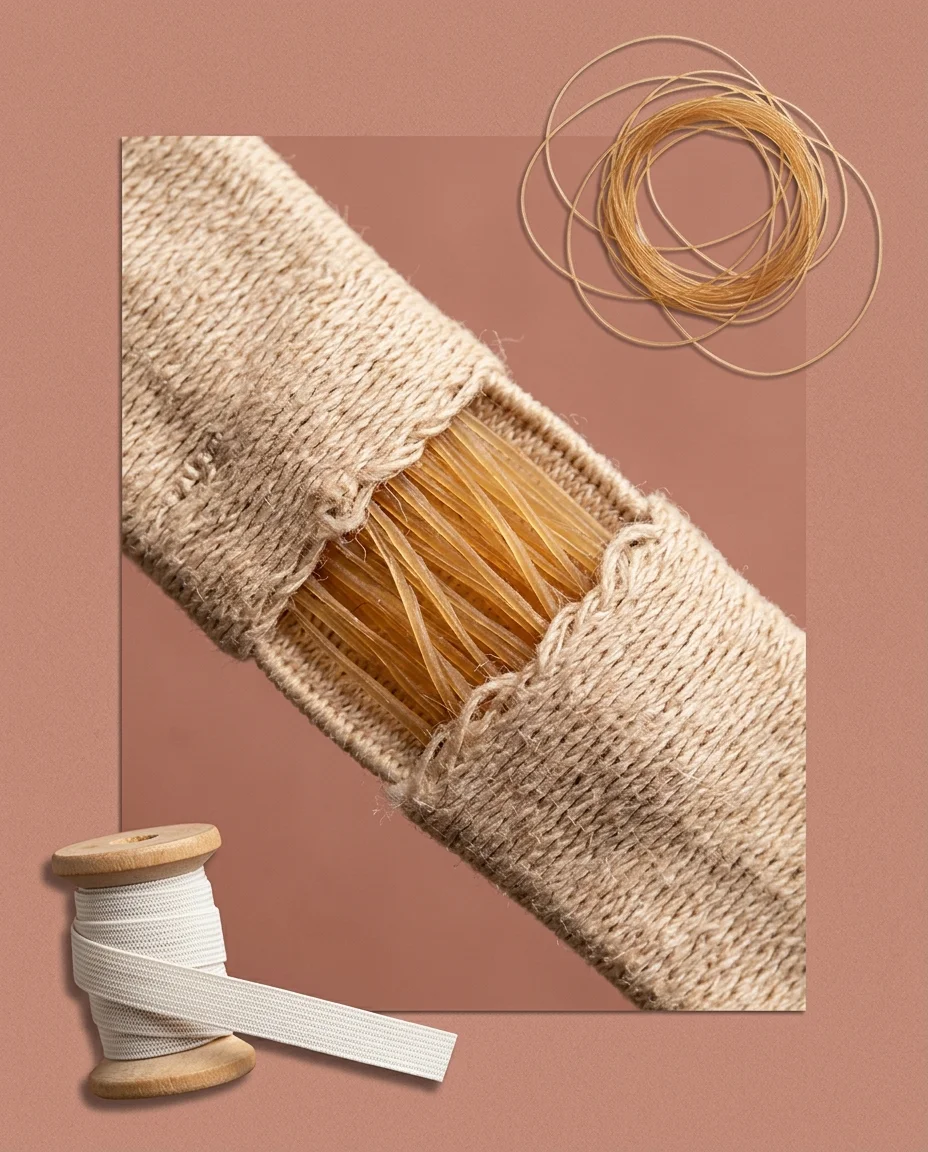
Underwear Elastic Guide: What Makes Underwear Stretch & Last
The elastic in your underwear determines whether it lasts 30 washes or 150. This beginner-friendly guide explains: covered vs bare spandex yarn (the hidden quality divider), why 280+ denier matters for waistband recovery, how gusset elastic differs from waistband elastic, and the 5 signs your underwear elastic is failing. No jargon — just what you need to know.
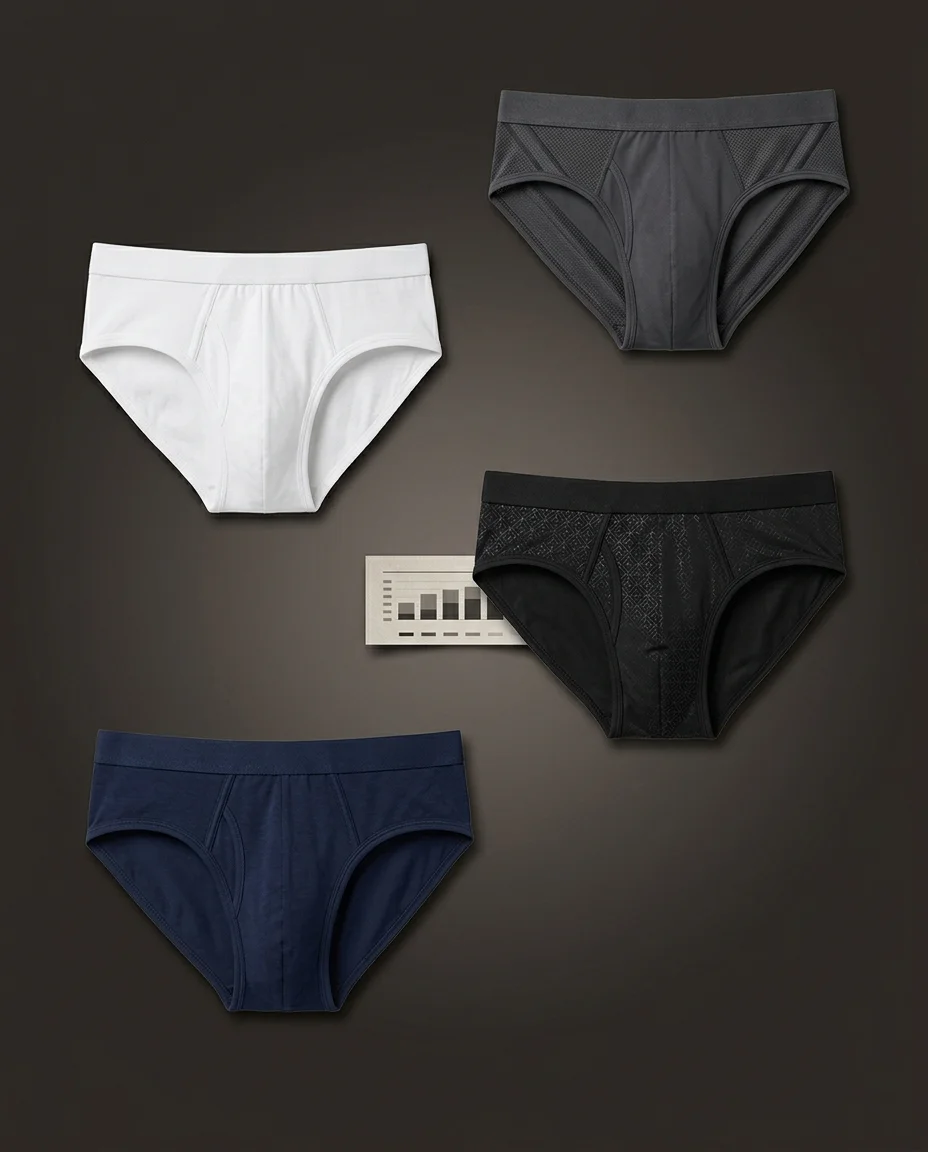
Men's Briefs 2026: Competitive Landscape & Category Fragmentation
The men's briefs market is fragmenting from a single 'basics' category into four distinct competitive tracks. Traditional searches dropped 20-30%, while heated underwear (+2150%), seamless men's (+300%), and cooling fabrics (+180%) surge. This analysis breaks down four competitive tracks: budget basics, functional tech, premium fabrics, and performance sport — with pricing, technology requirements, and entry strategy for each.
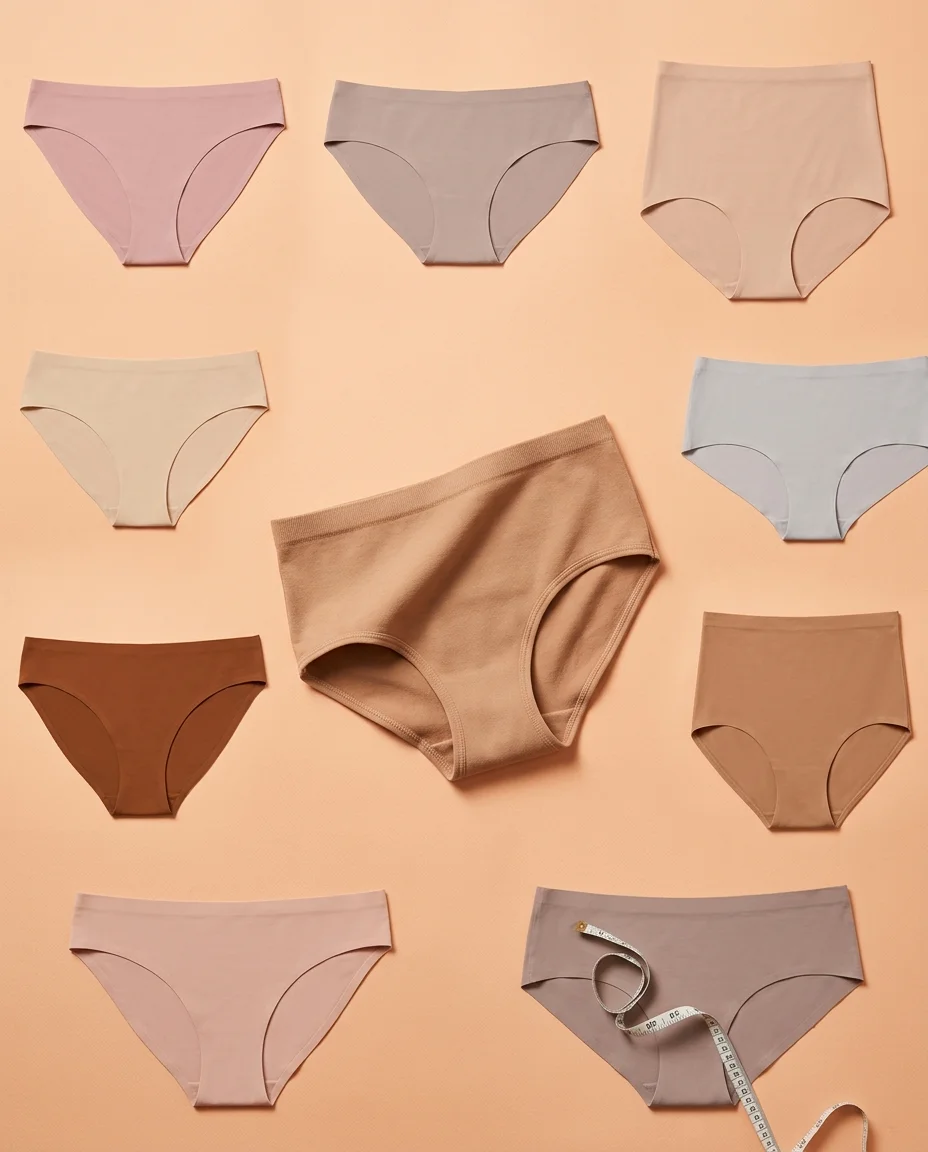
Best Seamless Underwear for Women 2026: Tested & Ranked
We tested 30+ seamless underwear brands across fabric recovery, waistband tension, and gusset construction. The results: only 6 brands use true circular knitting — most 'seamless' products are simply flat-lock seamed with marketing spin. This guide ranks the best seamless underwear by real performance data, not claims.
Ready to Launch Your Underwear Line?
Partner with AuraTouchGlobal for premium manufacturing that prioritizes design engineering and quality.
Get Started