Fabric Science2026-04-0911 min read
Underwear Elastic Guide: What Makes Underwear Stretch & Last
Karl XiaoFactory Production Director
Part of the The Fiber Lab series
Part of the The Fiber Lab series
You probably think about fabric type, fit, and style when choosing underwear. But the single component that determines whether a pair lasts 3 months or 2 years is one most people never consider: the elastic.
Specifically, the spandex (elastane) yarn woven into the waistband, leg openings, and fabric itself. This invisible component controls:
This guide explains elastic in underwear without jargon — what matters, what does not, and how to tell the difference.
For the complete mathematical modeling of elastic performance, see our advanced guide: The Elasticity Equation.
This is the single most important distinction in underwear quality, and it is completely invisible to consumers at the point of purchase.
Spandex filament is used directly, without any wrapping or covering.
Characteristics:
Spandex filament is wrapped in a layer of nylon or polyester yarn, creating a protective sheath.
Characteristics:
The irony: Covered spandex costs only $0.05-0.10 more per pair to manufacture. The quality difference is enormous, but most consumers cannot see or feel the difference at purchase time.
Denier (D) measures the thickness of the elastic yarn. Higher denier means thicker, stronger elastic.
| Denier Range | Quality Level | Recovery After 50 Washes | Typical Price | Best For |
|---|---|---|---|---|
| Under 200D | Budget | 60-70% (degraded) | Under $8 | Short-term, disposable |
| 200-280D | Mid-range | 80-85% | $8-15 | Regular everyday wear |
| 280-320D | Premium | 88-93% | $15-30 | Long-lasting quality |
| 320D+ | Performance | 93%+ | $25+ | Athleisure, shapewear |
Why it matters for the waistband: The waistband undergoes the most stress — it stretches every time you pull the underwear on and off, and it maintains tension all day. Low-denier elastic in the waistband is the number one cause of "waistband rolling" — the elastic fatigues and can no longer hold its flat position.
For the engineering behind waistband tension and comfort, see our Ergonomic Waistband Tension guide.
Elastic is not just in the waistband. It is integrated throughout the garment in several critical locations.
The most visible elastic component. Two construction methods:
Elastic band inserted into a fabric casing: A separate elastic band is threaded through a folded fabric channel at the waist. Common in cotton underwear. The fabric casing protects the elastic but adds bulk.
Elastic yarn knit directly into the fabric: Spandex yarn is integrated into the knit structure itself. Common in seamless and modern underwear. Lower profile but the elastic quality matters more because it is not protected by a fabric casing.
Leg openings use lighter elastic than waistbands because they need to grip without creating visible lines or digging into skin.
Key quality factors:
The fabric itself contains spandex yarn (typically 5-8% spandex in the blend). This gives the entire garment stretch and recovery.
Why the spandex percentage in fabric matters:
The gusset (the lining panel in the crotch area) may or may not contain elastic. For daily comfort:
For everything about gusset design and quality, see our Gusset Science guide.
When to replace: At the first sign of any of these symptoms. Degraded elastic means the garment no longer fits properly, which leads to chafing, poor hygiene, and discomfort.
Spandex degrades from three environmental factors:
Washing best practices:
| Practice | Why It Matters |
|---|---|
| Cold water (30C max) | Heat accelerates spandex degradation by 3-5x |
| Gentle cycle | High agitation causes mechanical fatigue |
| No bleach | Chlorine-based bleach destroys spandex molecular bonds |
| No fabric softener | Coats elastic and reduces recovery by 5-10% |
| Line dry or tumble dry low | High dryer heat is the fastest way to kill elastic |
| Wash before first wear | Removes manufacturing residues that can accelerate degradation |
Realistic expectation: Even with perfect care, covered spandex at 280+ denier will last approximately 150 wash cycles (roughly 2 years of regular wear). Budget bare spandex will fail in 30-50 cycles regardless of care quality.
| Price Per Pair | Elastic Type | Expected Denier | Lifespan (Wash Cycles) | What to Expect |
|---|---|---|---|---|
| Under $5 | Bare spandex | Under 160D | 20-30 | Quick degradation, budget disposable |
| $5-10 | Bare or low covered | 160-200D | 30-60 | Acceptable for 3-6 months |
| $10-18 | Covered spandex | 220-280D | 80-120 | Good quality, 1-2 year lifespan |
| $18-30 | Covered spandex | 280-320D | 120-180 | Premium quality, 2+ year lifespan |
| $30+ | Covered spandex | 320D+ | 150-200+ | Performance grade, longest lasting |
Note: Price is an imperfect proxy for elastic quality — some $15 underwear uses better elastic than $25 alternatives. The denier and covered/bare distinction are more reliable indicators.
If you are developing an underwear line, elastic specification is a critical production decision:
Waistband Specification:
Fabric Blend:
Cost Impact:
For startup-friendly manufacturing with quality elastic specifications, see our How to Start a Lingerie Business guide.
For the hidden costs of poor elastic quality, see our Hidden Cost of Bad Stretch analysis.
Building an underwear line with quality elastic specifications? Our manufacturing team uses covered spandex at 280-320 denier as standard. Contact us to discuss your production requirements.
Deep dive into fabric composition, properties, and performance at the microscopic level
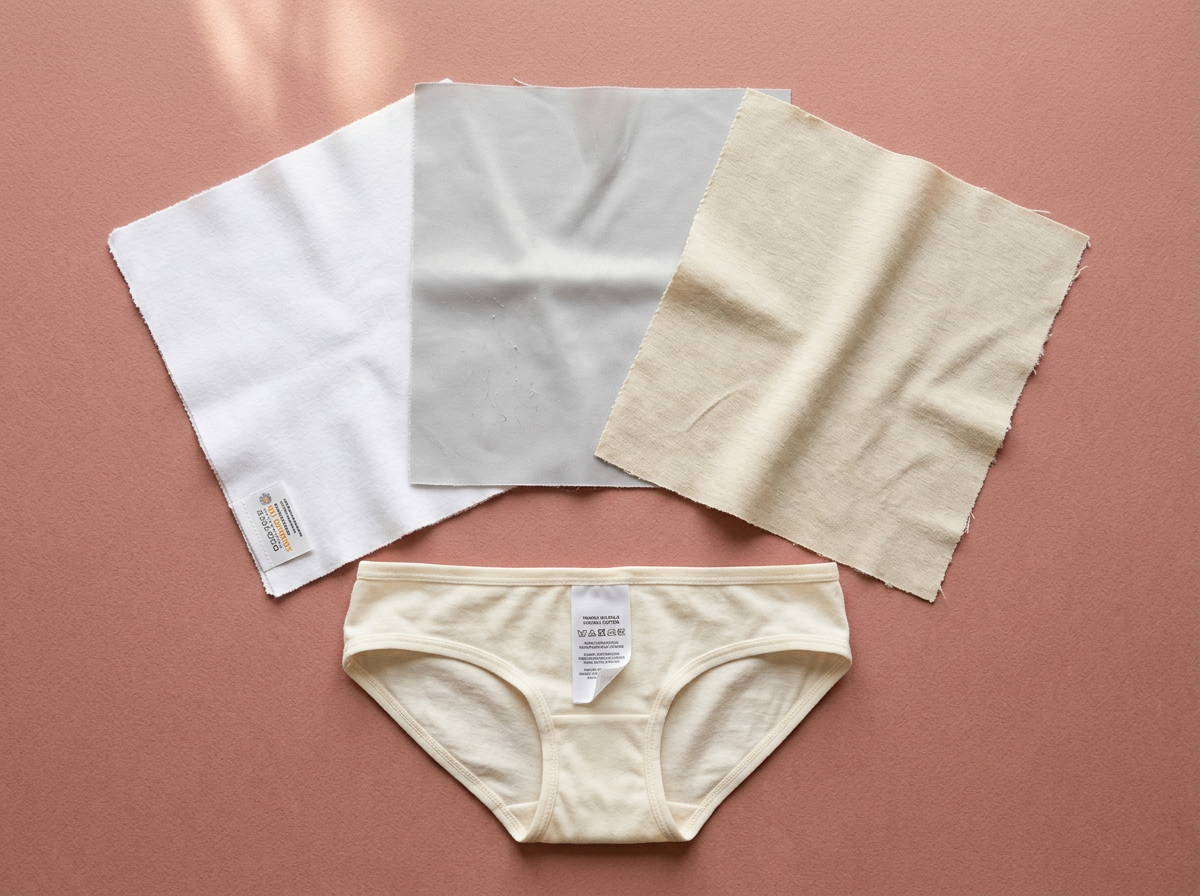
That recurring rash below your waistline. The itch that will not go away. The red marks where your underwear elastic sits. "Underwear rash" and "underwear irritation" searches have grown steadily as consumers discover their underwear may be the hidden cause of skin problems. We analyzed the four fabric-skin interaction mechanisms — bacterial microclimate, chemical contact dermatitis, pressure dermatitis, and antibacterial treatment sensitivity — with test data across 30+ brands.
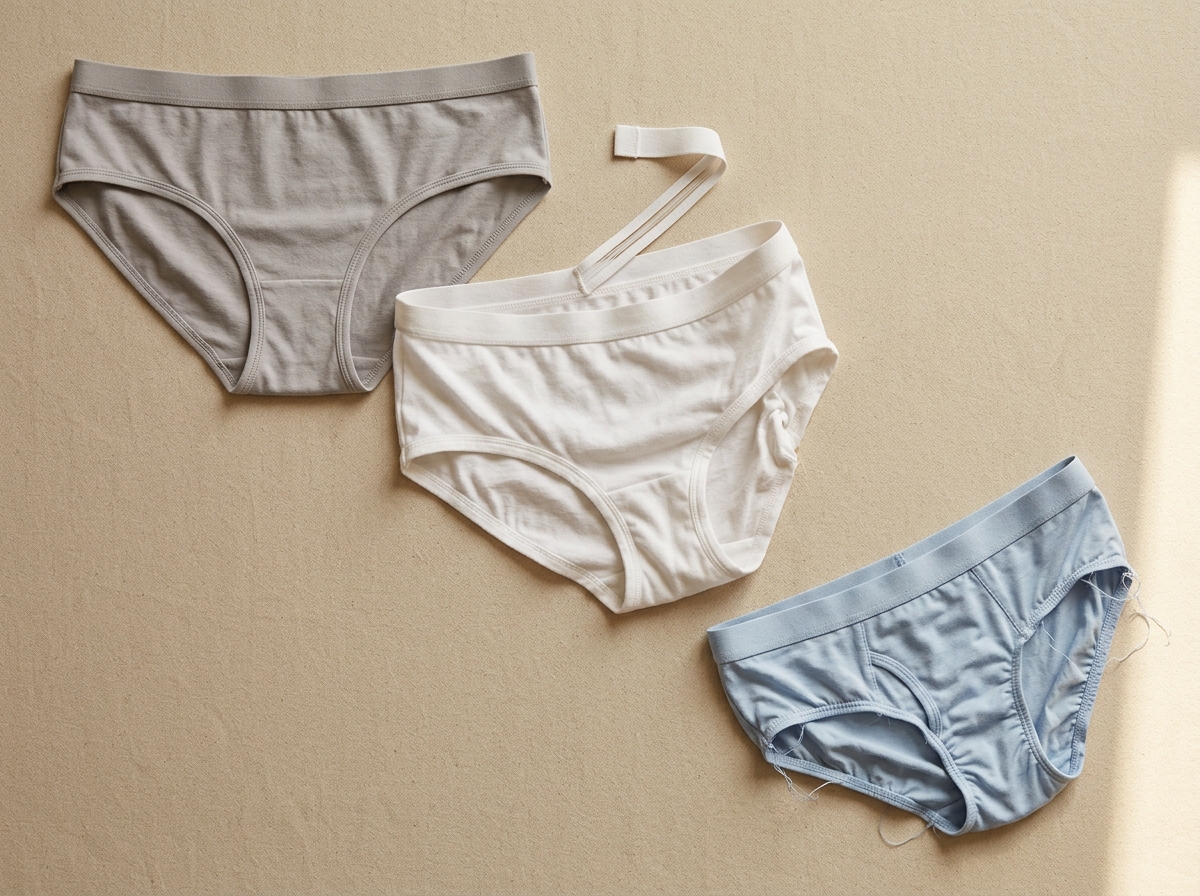
You adjust your underwear five times before lunch. The waistband rolls, the legs ride up, and everything bunches in the wrong places. "Why does my underwear keep riding up" is one of the most searched underwear complaints globally. We break down the four scientific causes — elastic recovery degradation, rise-torso mismatch, leg opening geometry, and fabric stretch ratio — and provide body-type-specific solutions based on testing across 30+ brands.
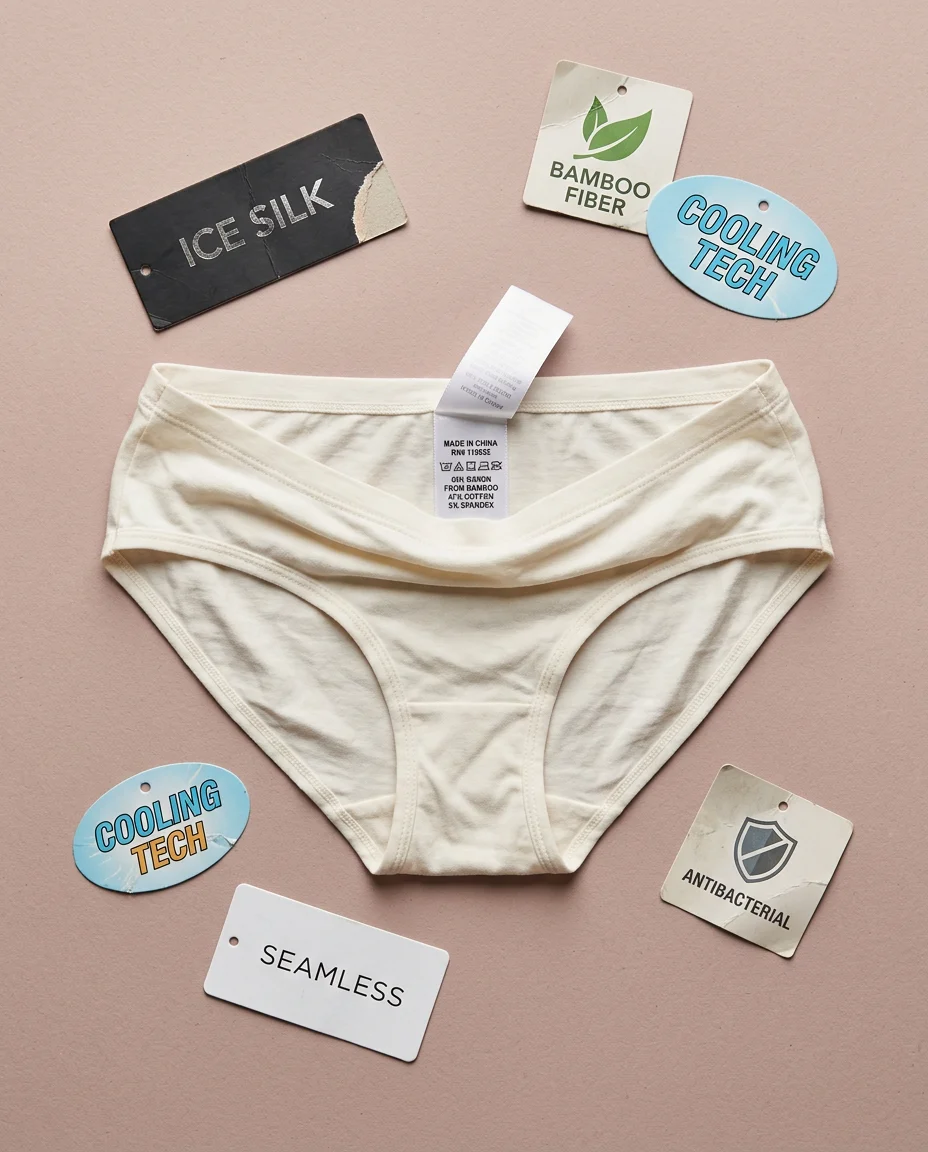
Your underwear label says "ice silk," "bamboo fiber," "seamless," "cooling technology," and "antibacterial." Three of those five terms do not mean what you think they mean. We deconstructed each marketing claim against published fiber science data and found a consistent pattern: the most expensive-sounding terms describe the cheapest materials.