Fabric Science2026-03-238 min read
The Hidden Cost of 'Bad Stretch': How to Cut Your Return Rate by 30%
Paul PengFactory Technology Director
Part of the Manufacturing Solutions series
Part of the Manufacturing Solutions series
For underwear brands, "Size Doesn't Fit" is the #1 reason for returns. But here's the industry secret: It's often not the size chart—it's the Fabric Elasticity.
You've seen the numbers. A 12-15% return rate for e-commerce underwear brands is considered "acceptable." A 20% return rate is "challenging but manageable." But what if I told you that up to 30% of those returns are preventable with the right fabric elasticity strategy?
After 15 years manufacturing underwear for top brands, we've seen it countless times: Brands invest heavily in marketing, design beautiful products, and nail their sizing charts—yet still suffer crushing return rates. The culprit isn't design or sizing. It's fabric that doesn't remember its shape.
Let's break down the hidden costs of "bad stretch" and how premium elastic fabrics can transform your return rate.
Loading video...
For a DTC underwear brand doing $1M in annual revenue with a 15% return rate:
Total annual loss: ~$200,000+ for a $1M brand
Industry data shows that 40-50% of all returns cite "fit issues" or "didn't like how it fit" as the reason. But here's what most brands miss: When customers say "doesn't fit," they often mean "doesn't stay fitted." The garment fit perfectly when they put it on—then bagged out after 2 hours.
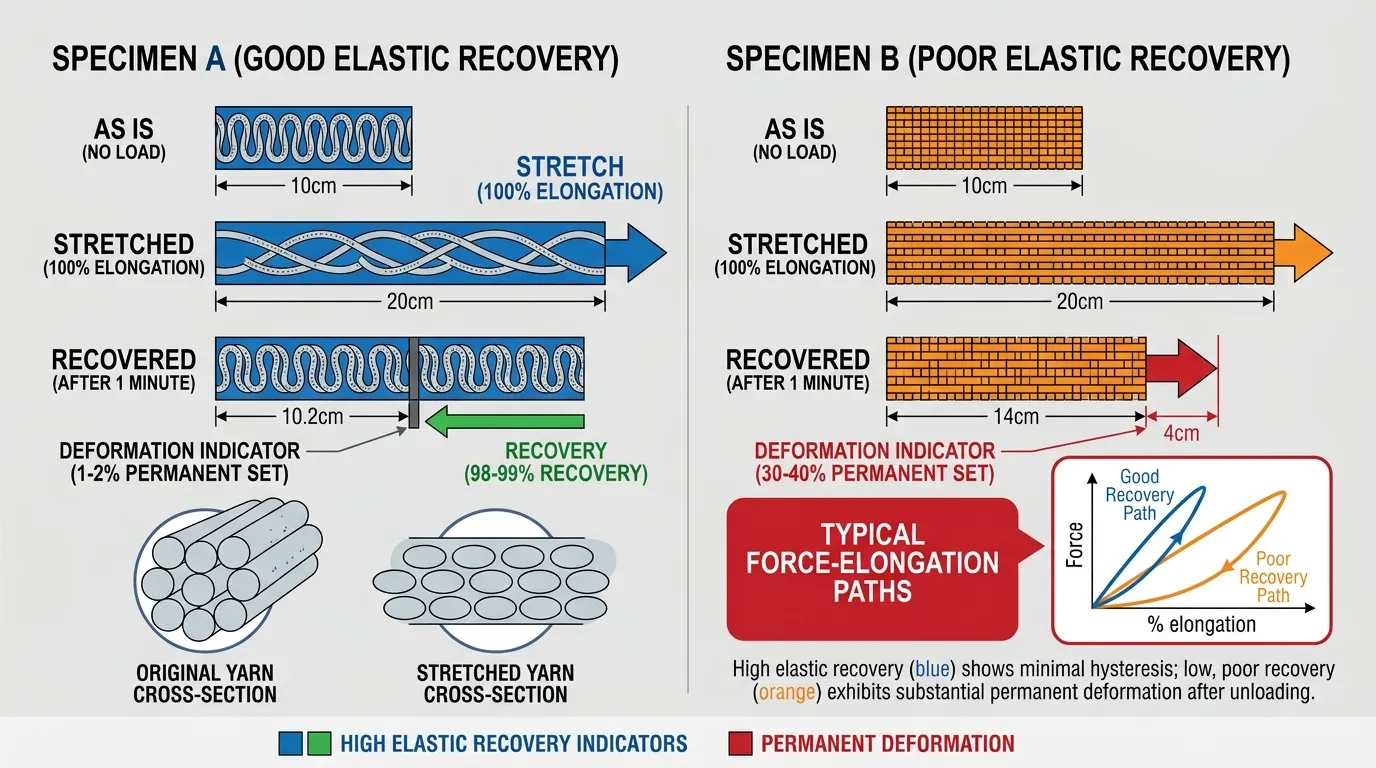
Anyone can make a fabric stretch. But can it snap back? High-quality underwear needs excellent Recovery Rate—the ability to return to its original dimensions after stretching.
The science is simple:
Premium elastic fabrics should achieve:
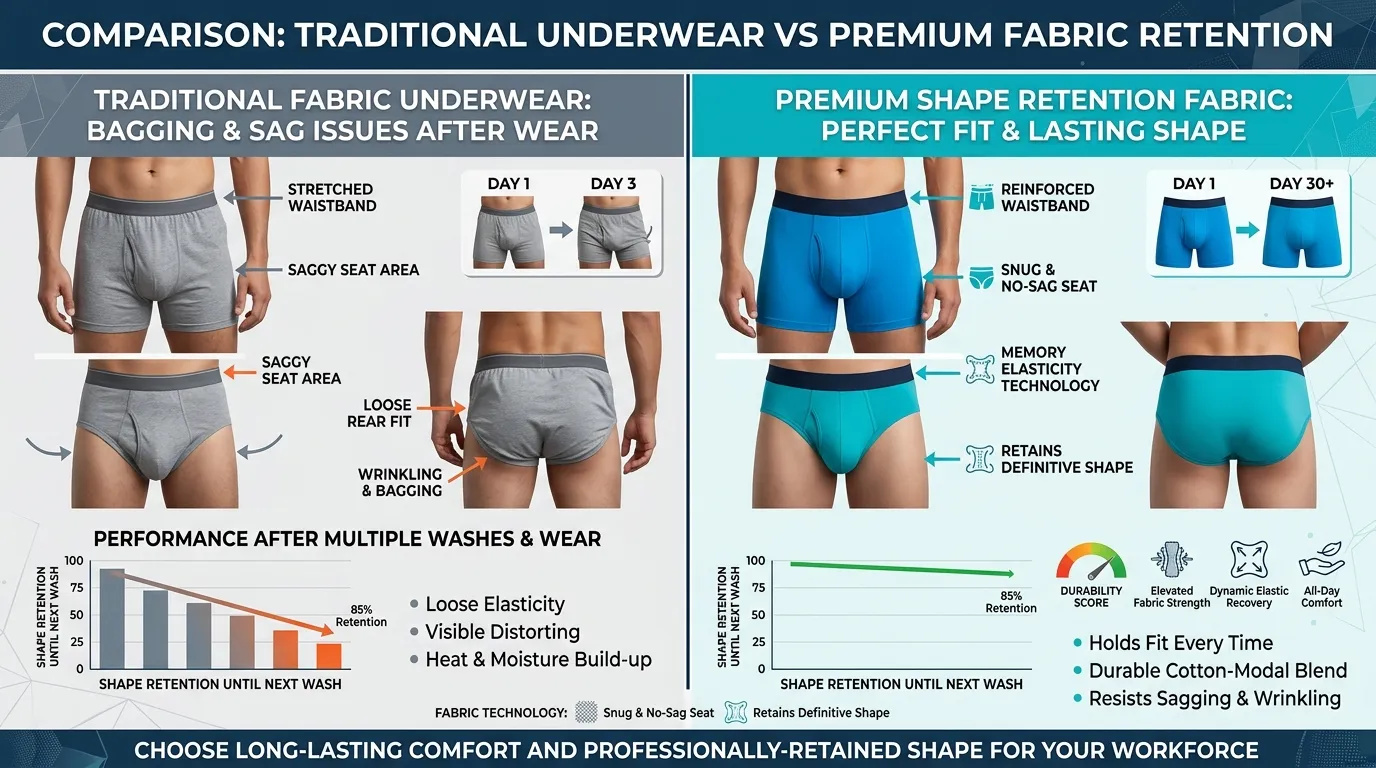
Without excellent recovery, the garment loses shape after 2 hours of wear. The waistband rolls down. The legs bag out. The customer feels unsupported and uncomfortable—leading to returns and negative reviews.
Premium fabrics with high stretch capacity provide better "Body Tolerance"—the ability to comfortably fit a wider range of body shapes and sizes.
This is where the math gets exciting:
When you use fabric with superior elasticity and recovery:
Result: Fewer "size exchanges" and fewer "doesn't fit" returns.
The business impact: Premium elastic fabric costs $0.15-0.25 more per garment—but saves $15-25 in return processing costs per 100 units sold.
Cheap elastic fibers lose their "memory" after a few washes. This is why customer reviews often say: "Great at first, but after a month they're baggy."
The degradation curve:
We test all elastic fabrics to ISO 105-C06 standards (50 wash cycle simulation). Premium spandex maintains 90%+ recovery after 50 washes. Budget elastic often degrades to 65% recovery—meaning the fabric has permanent 35% growth.
This is how you build brand loyalty: The 10th wear feels just as good as the first. Customers don't return underwear that stays fitted. They become repeat buyers.
Not all "5% spandex" fabrics are created equal. Here's what separates premium from budget:
Premium covered spandex (280-320 denier):
Budget bare spandex (140-180 denier):
Factory capability question: "Do you use tension grading or just measurement grading?" Tension grading costs 15-20% more but prevents size-fit inconsistency and ensures uniform recovery across all sizes.
Warning Signs of Inferior Elastic Fabric:
While cotton-spandex blends are the industry standard, modern brands have more options:
Advantages:
Best for: Premium lines, lingerie, DTC brands competing on quality
Cost: $4-5/kg fabric (vs. $3-4/kg for cotton-spandex)
Combed Cotton + Micro-Modal + Spandex (tri-blend):
Best for: Athleisure, performance underwear, premium basics
Cost: $4.50-5.50/kg fabric
For brands targeting the "premium" positioning ($25+ retail), consider Regenerated Cellulose (Micro-Modal) blends. The material quality is perceptible to customers, justifies higher pricing, and delivers superior recovery—reducing returns while increasing margins.
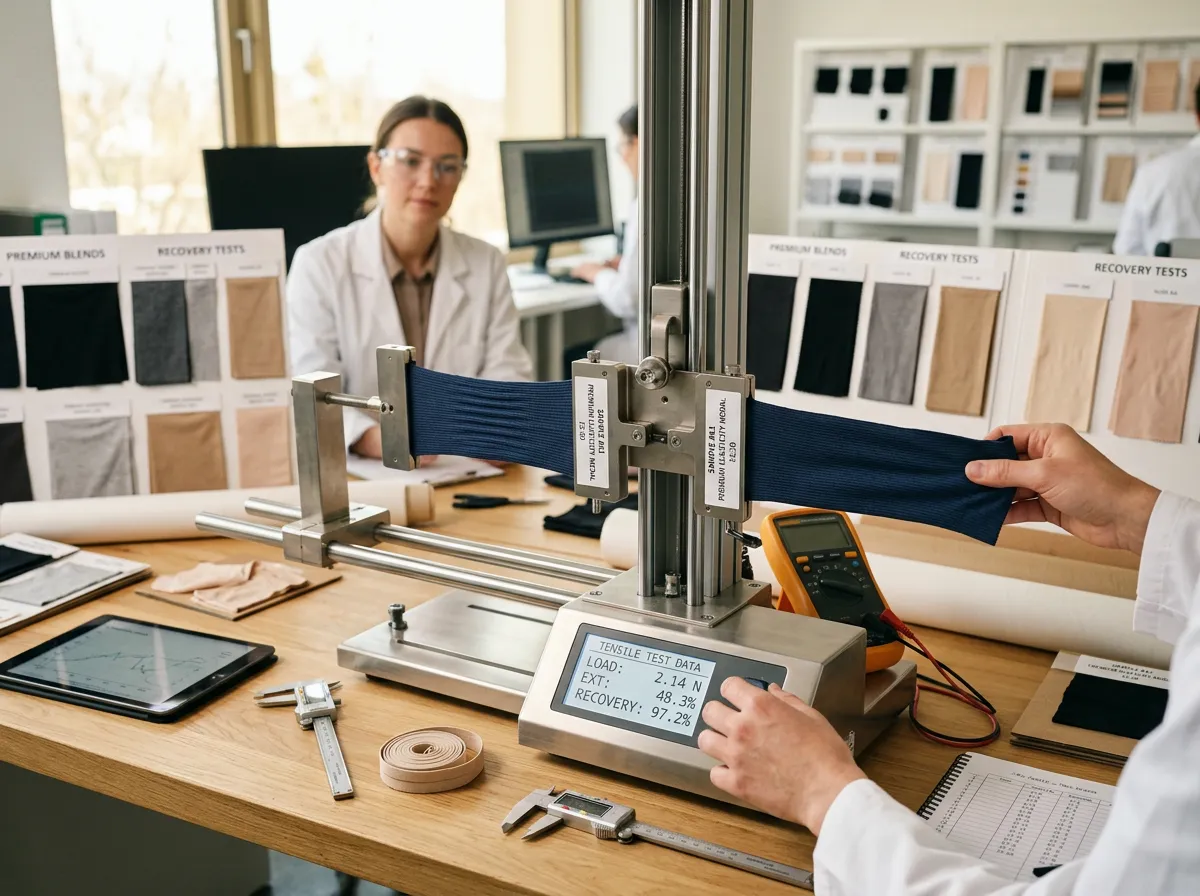
Don't assume elastic fabric performs as promised. Verify with these tests:
Stretch Test:
Recovery Test:
Bagging Test:
Wash Durability Test:
Let's put it all together with a real-world scenario:
Scenario: 10,000 units production run
The lesson: Premium elastic fabric costs $2,000 more in materials but saves $15,525 in return costs. That's a 7.7x return on investment—and we haven't even factored in repeat purchase rate improvements.
Reality: 10% spandex costs 40% more than 5% spandex but provides minimal perceived benefit for standard underwear. The sweet spot is 5% high-quality spandex, not more spandex.
Solution: Use 5% premium spandex for standard styles, reserve 10%+ for athletic/shapewear lines.
Reality: Many factories claim "5% spandex" but actually use 2-3% to save money.
Solution: Request lab analysis, perform burn test, verify with stretch testing.
Reality: Saving $0.15 per garment on fabric costs you $15,525 in returns per 10,000 units.
Solution: Calculate total cost impact including returns, customer churn, and brand reputation—not just per-unit fabric cost.
Reality: A sample that fits perfectly on day 1 but bags out after 20 washes generates negative reviews and returns.
Solution: Always require wash durability testing (20+ cycles) before approving fabric.
Looking for reliable OEM/ODM solutions with high-performance fabrics?
At AuraTouchGlobal, we offer a curated selection of high-stretch fabrics designed for low-return, high-growth brands:
Our Starter Program includes:
This article is part of our "Supply Chain Solutions" series helping underwear brands optimize manufacturing for profitability.
Starter Program: Flexible Supply Chain for Emerging Brands →
Discover how our flexible manufacturing model supports startups with low MOQs, rapid prototyping, and technical guidance to avoid production disasters.
Wholesale vs OEM/ODM: Complete Manufacturing Guide →
Understand the differences between wholesale blank customization and full OEM/ODM manufacturing—and which model fits your brand stage and budget.
Don't let poor fabric elasticity destroy your profit margins.
Contact us today for a free fabric sample pack and technical consultation. We'll help you select the optimal elastic fabric for your brand positioning, target market, and budget—and show you how proper elasticity specifications can dramatically reduce your return rate.
Your customers deserve underwear that stays fitted. Your brand deserves the profit margins that come with low return rates. Let's build something exceptional together.
Sources: This article is based on textile engineering research (ASTM D2594 stretch testing standards, ISO 105-C06 wash durability testing), spandex fiber technical specifications from leading elastane producers, industry return rate analysis from DTC underwear brands, manufacturing cost analysis from China supply chain partners, and fabric performance testing data from our quality control laboratory.
Business insights for apparel brand owners, from production strategies to manufacturing optimization
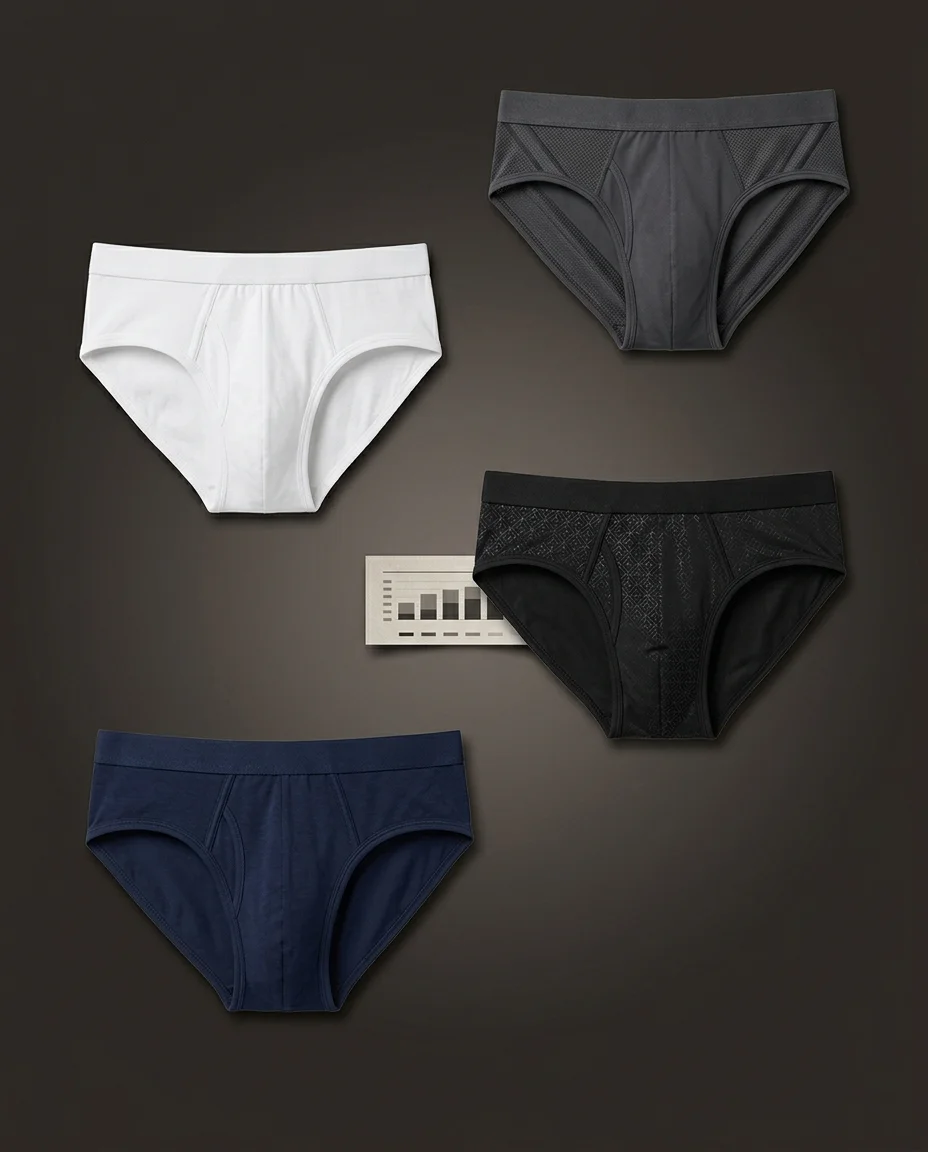
The men's briefs market is fragmenting from a single 'basics' category into four distinct competitive tracks. Traditional searches dropped 20-30%, while heated underwear (+2150%), seamless men's (+300%), and cooling fabrics (+180%) surge. This analysis breaks down four competitive tracks: budget basics, functional tech, premium fabrics, and performance sport — with pricing, technology requirements, and entry strategy for each.
We tested 30+ seamless underwear brands across fabric recovery, waistband tension, and gusset construction. The results: only 6 brands use true circular knitting — most 'seamless' products are simply flat-lock seamed with marketing spin. This guide ranks the best seamless underwear by real performance data, not claims.
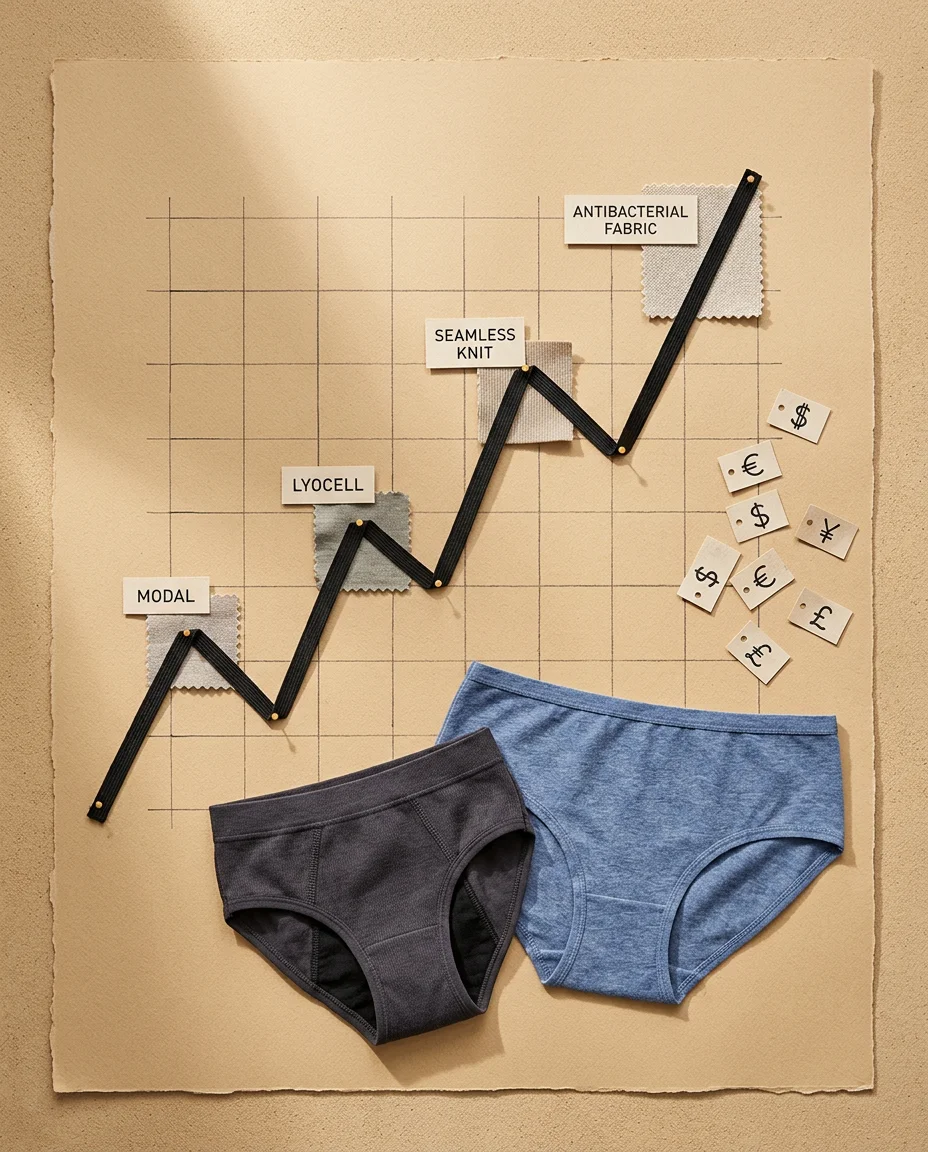
The underwear market is projected to reach $127.4B by 2032. We analyze 2026's trending products — period underwear (+300%), seamless (+110%), plus-size (+130%), and antibacterial Modal — with market data, fabric innovation timelines, and regional growth forecasts for brand planning.