Supply Chain Strategy2026-03-1115 min read
Why Most Emerging Apparel Brands Fail Before Their First Sale (And How to Avoid It)
Paul PengFactory Technology Director
Part of the Manufacturing Solutions series
Part of the Manufacturing Solutions series
For most new fashion brands, the biggest hurdle isn't design—it's manufacturing. After 15 years in the underwear manufacturing industry, we've seen hundreds of passionate entrepreneurs launch with beautiful designs and high hopes, only to watch their dreams die before the first sale.
The problem isn't lack of talent or dedication. It's that most emerging brands fail due to technical production mistakes that could have been prevented with the right factory guidance.
When you focus solely on design while ignoring production feasibility, you're setting yourself up for:
At AuraTouchGlobal, we've manufactured for domestic China's top brands for years. Now we're bringing that expertise to support international emerging brands. Let us show you what apparel supply chain risk really looks like from the factory floor—and how to avoid it.
Loading video...
You design a beautiful size Medium. Your samples fit perfectly. You approve production.
Three weeks later, your 1,000-unit order arrives. You wash one pair to test quality. It's now a size Small.
This is the #1 clothing production mistake we see.
Fabric shrinkage isn't random—it's predictable and controllable. But only if your factory:
The factory perspective: Most emerging brands never ask about shrinkage control. They assume "100% cotton" means stable sizing. It doesn't. Cotton can shrink 5-8% in the first wash. Without pre-shrinking and pattern adjustment, your size Medium becomes a Small—and customers return everything.
Our approach: We pre-shrink all fabrics before cutting and adjust patterns accordingly. We can provide third-party test reports verifying shrinkage rates before production begins.
You approve the PP Sample (Pre-Production Sample). It's perfect.
Then the bulk production arrives. The elastic is cheaper. The stitching is looser. The fabric feels thinner.
This happens when factories treat sampling as marketing, not quality commitment.
Common lingerie manufacturing problems from PP Sample discrepancies:
The factory perspective: Many factories show you one quality level in samples, then produce at a different quality level for bulk. Why? Because the sample price doesn't include profit margins, so they cut corners in production to recover costs.
Our approach: The PP Sample IS the bulk production standard. We document every specification—fabric GSM, stitch density, elastic type, trim suppliers—and production must match. We invite third-party inspection before shipping to verify consistency.
You design a seamless bra with intricate strap detailing. It's gorgeous. It's innovative. It's impossible to manufacture at your target price point.
After contacting 15 factories, you hear the same thing: "MOQ: 1,000 pieces" or "This will cost $18 per unit to produce."
Your $40 retail price business model is dead before it started.
The factory perspective: Many designs are created without understanding manufacturing constraints. Seamless machinery requires $200,000+ investment. Complex strap configurations need specialized operators. Some constructions simply can't be done profitably below certain volumes.
Our approach: We review designs for production feasibility BEFORE you invest in samples. We'll tell you:
When evaluating manufacturing partners, ask about their quality verification standards. A factory that can't discuss these details isn't a partner—they're just production capacity.
Martindale Abrasion Resistance:
We can coordinate third-party Martindale testing to verify fabric durability before you commit to bulk orders.
Fabric GSM Specifications:
GSM affects hand-feel, durability, and cost. We verify GSM matches specifications for every production run.
Stitch Density:
Higher stitch density = stronger seams but slower production. We balance durability with efficiency based on your brand positioning.
Shrinkage Tolerance:
We pre-shrink all fabrics and provide third-party test reports verifying shrinkage rates.
Washing and Perspiration Resistance:
We can coordinate third-party color fastness testing for both washing and perspiration resistance to verify your products meet international standards.
Before investing in sampling, get a professional manufacturing assessment of your design. We review tech packs for production feasibility, cost optimization, and material compatibility — at no charge for emerging brands exploring their first production run. Send us your tech pack, reference photos, or even a sketch, and receive detailed feedback within 48 hours.
Deep Dive into Technical Standards:
Want to understand exactly what separates premium quality from budget grade? We've published detailed guides on the technical standards that matter:
Many emerging brands invest thousands in professional tech packs, then send them to factories without technical review. This is a mistake.
A good supplier doesn't just execute your tech pack—they review it for production optimization before sampling begins.
Pattern Grading Verification:
Fabric Compatibility Checks:
Construction Feasibility Assessment:
Cost Optimization Suggestions:
The factory perspective: A tech pack is a starting point, not a final specification. The most successful brands treat factory review as a collaborative optimization process, not just price negotiation.
Our approach: We review every tech pack before sampling begins. We identify potential issues, suggest optimizations, and provide cost impact analysis. You decide what to implement—we provide the technical expertise to inform your decision.
At AuraTouchGlobal, we created our Starter Program specifically for brands that are starting small but dreaming big. We're not just production capacity—we're technical partners who help you avoid apparel supply chain risk.
We understand you can't commit to 1,000 pieces when testing a new concept.
Contact our team for specific tiers based on your product type and design complexity.
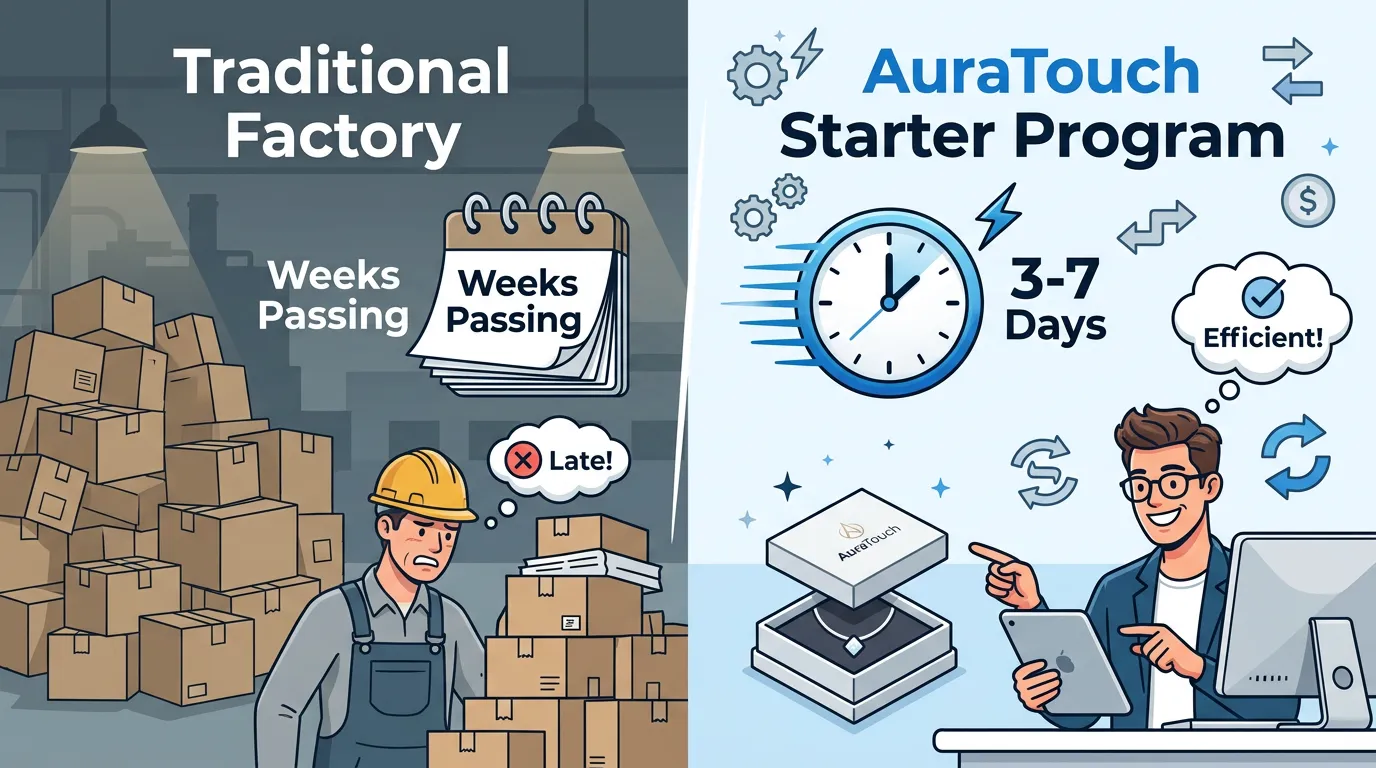
Speed is your competitive advantage.
This is what separates us from typical factories:
Traditional factories are optimized for mass production. They lose money on small orders.
We've built our operation differently:
Flexible Workshop:
Technical Expertise:
Quality Commitment:
This article is Part 1 of our three-part guide to building a successful apparel brand without falling into common manufacturing traps.
Part 2: How to Create Your Own Lingerie Brand →
A complete step-by-step guide to launching a lingerie brand, from design positioning to production launch. Learn how to prepare design materials, find manufacturing partners who understand startups, and navigate the prototyping process.
How to Start a Lingerie Business: The Complete Startup Roadmap →
The business side of launching a brand — legal setup, financial planning, market validation with 150 units, and scaling strategies. The guide that bridges product creation and profitable business operations.
Part 3: Balancing MOQ and Production Costs →
A survival guide for startup underwear brands navigating the tension between low minimums and production costs. Learn when to accept higher unit costs for flexibility, when to negotiate larger runs, and how to scale production intelligently.
Looking for a reliable partner for your 2026 collection?
Most emerging brands fail due to clothing production mistakes that could have been prevented with factory guidance. Don't let technical risks destroy your brand before launch.
Whether you have:
Our Starter Program provides:
Contact us today to discuss your project. We'll provide a free technical review of your design concepts and a custom quote for your first production run.

Your customers are waiting. Let's build something amazing together—with technical expertise that prevents production disasters before they happen.
Business insights for apparel brand owners, from production strategies to manufacturing optimization
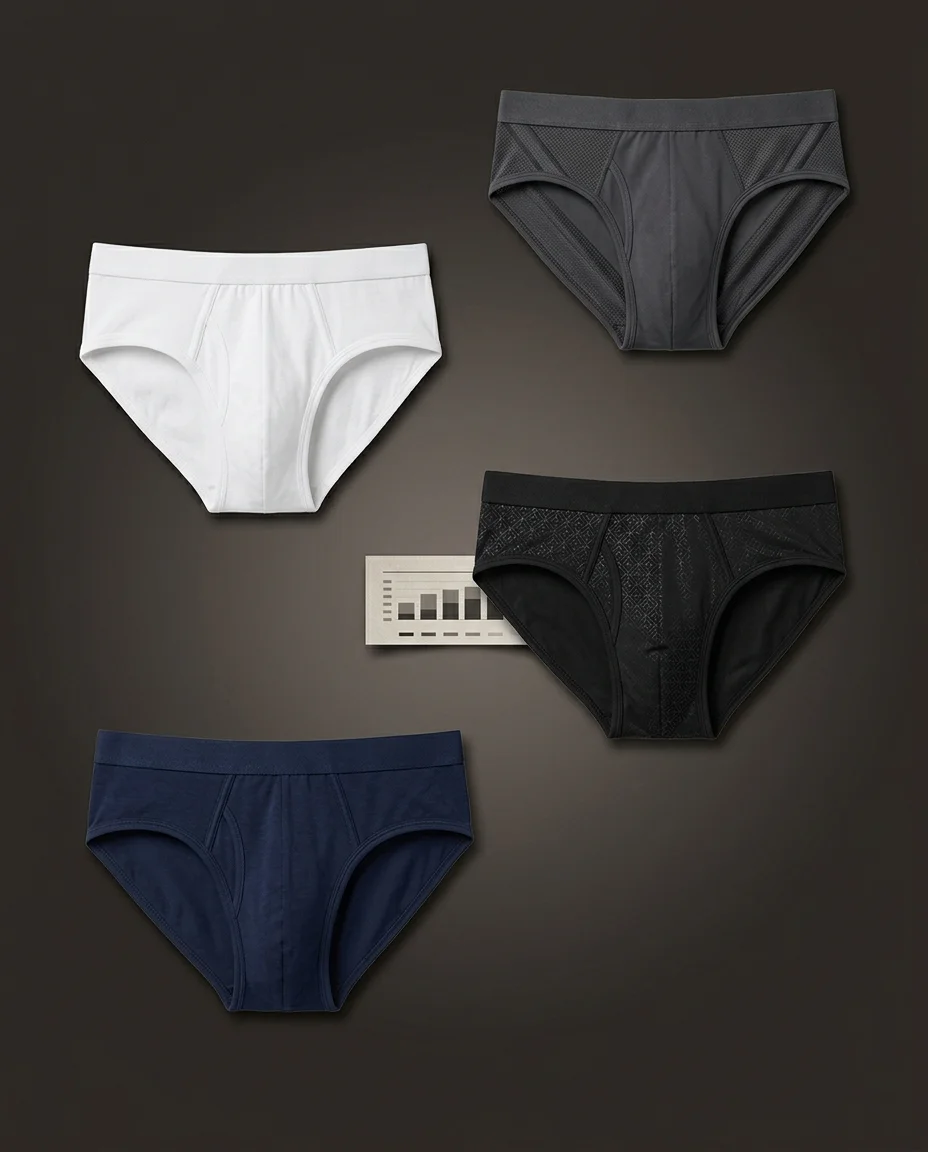
The men's briefs market is fragmenting from a single 'basics' category into four distinct competitive tracks. Traditional searches dropped 20-30%, while heated underwear (+2150%), seamless men's (+300%), and cooling fabrics (+180%) surge. This analysis breaks down four competitive tracks: budget basics, functional tech, premium fabrics, and performance sport — with pricing, technology requirements, and entry strategy for each.
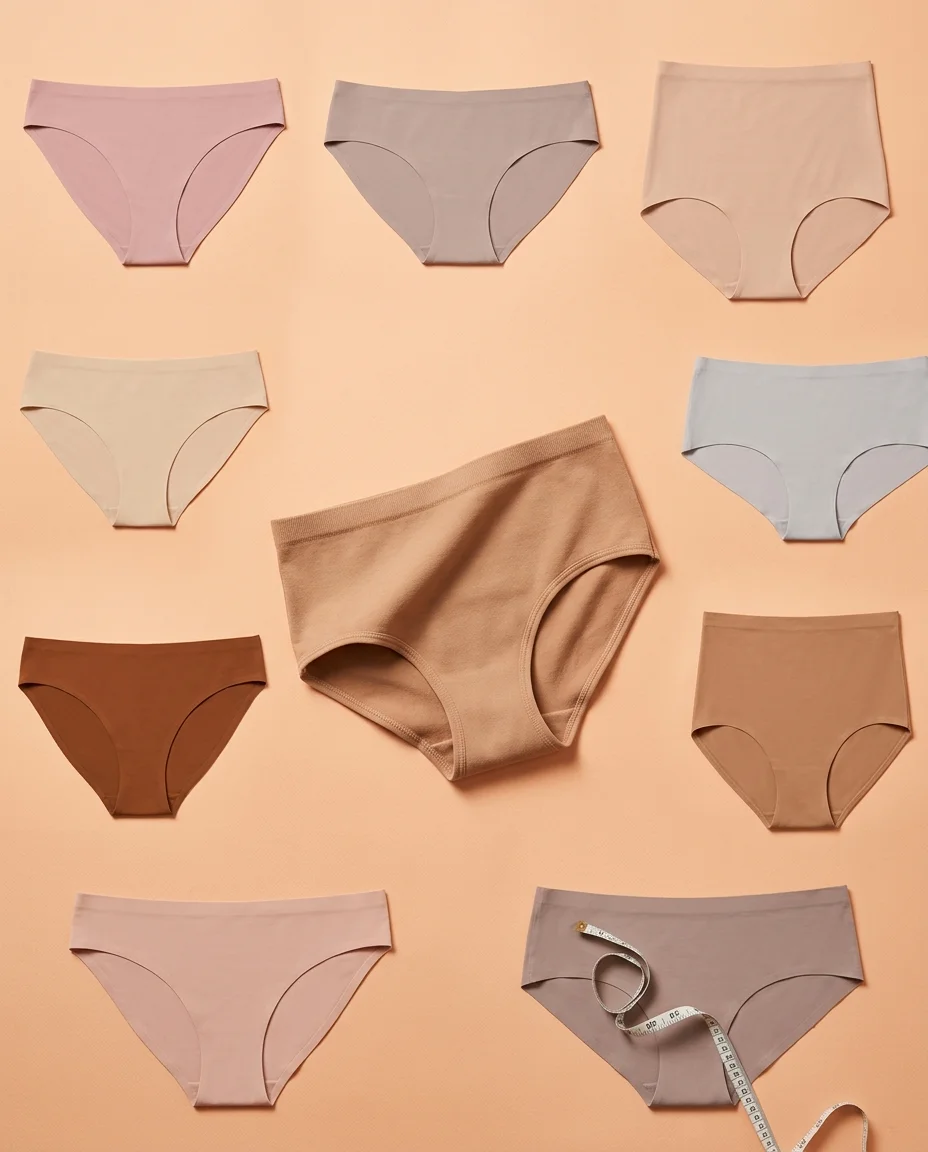
We tested 30+ seamless underwear brands across fabric recovery, waistband tension, and gusset construction. The results: only 6 brands use true circular knitting — most 'seamless' products are simply flat-lock seamed with marketing spin. This guide ranks the best seamless underwear by real performance data, not claims.
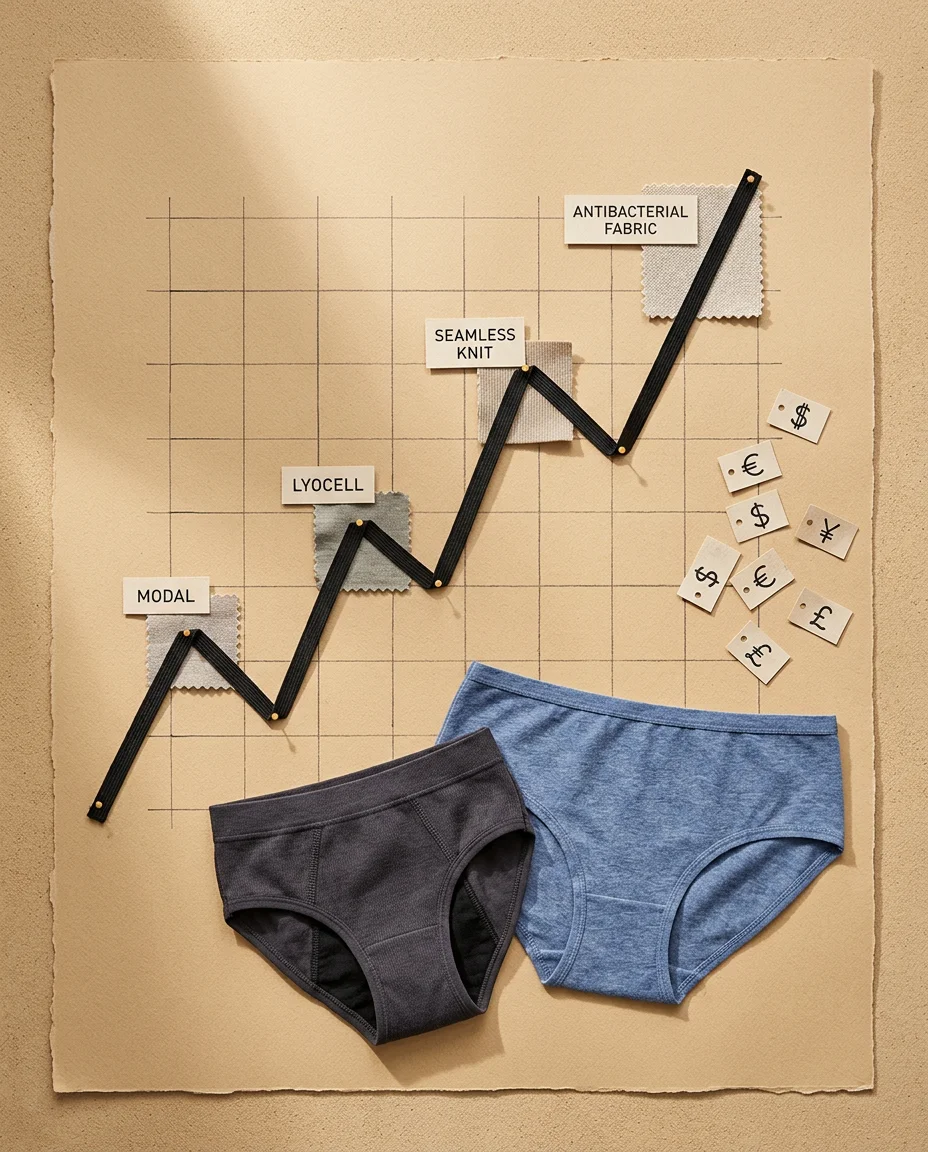
The underwear market is projected to reach $127.4B by 2032. We analyze 2026's trending products — period underwear (+300%), seamless (+110%), plus-size (+130%), and antibacterial Modal — with market data, fabric innovation timelines, and regional growth forecasts for brand planning.