Fabric Science2026-04-1213 min read
Is Your Underwear Causing Skin Problems? The Fabric-Skin Health Connection
Karl XiaoFactory Production Director
Part of the The Fiber Lab series
Part of the The Fiber Lab series
You changed your laundry detergent. You switched body wash. You saw a dermatologist who prescribed a cream that helped temporarily — but the rash came back. The one thing you never changed? The underwear sitting against your skin for 16+ hours a day.
Growing awareness that underwear fabric drives dermatological issues
The skin in the underwear zone is different from skin anywhere else on your body. It is thinner, has higher density of sweat glands, experiences higher humidity, and is subject to sustained mechanical pressure and friction for most of the day. These conditions make it uniquely vulnerable to fabric-induced skin problems — and uniquely responsive to the right fabric choices.
This article maps the four scientific mechanisms by which underwear fabric affects skin health, identifies which fabrics and construction features are problematic vs. protective, and provides condition-specific recommendations backed by testing data from 30+ brands.
The enclosed environment created by underwear against skin produces a microclimate with elevated temperature and humidity. Whether this microclimate promotes or inhibits bacterial growth depends almost entirely on the fabric.
The science: Human skin surface has a natural pH of 4.5-5.5 (mildly acidic), which inhibits bacterial growth. When fabric traps sweat and prevents evaporation, the local humidity rises above 80% relative humidity. At this moisture level, bacterial reproduction accelerates exponentially. Bacterial metabolism then raises the local pH above 6.0, creating an alkaline environment that further irritates skin and compromises the skin barrier function.
The data shows a direct correlation: fabrics with higher moisture regain and faster drying times keep the skin microclimate closer to its natural acidic pH, preventing the bacterial overgrowth cycle that causes irritation, odor, and rashes.
The percentage of moisture a fiber can absorb from the air relative to its dry weight. Higher moisture regain means the fiber can absorb more sweat from the skin surface, keeping the skin drier. Cotton absorbs 7-8.5%, modal absorbs 11.5-12.5%, and polyester absorbs only 0.4-0.6%. This is why polyester underwear feels clammy — it cannot absorb sweat, so the moisture stays on your skin.
Polyester underwear — including most "moisture-wicking" athletic underwear — does not absorb moisture. It moves moisture along the fiber surface through capillary action (wicking), but if the moisture cannot evaporate (because underwear is, by definition, covered by outer clothing), it pools on the skin. The result: a warm, wet, bacteria-promoting microclimate. In testing, polyester underwear showed bacterial colony counts 4-6x higher than Tencel after 8 hours of wear.
Not all skin reactions are caused by bacteria. Many are allergic or irritant contact dermatitis triggered by chemical residues in the fabric:
Formaldehyde resins: Used in "wrinkle-free" and "easy-care" treatments. Banned in some countries above certain thresholds, but still present in many imported garments. Formaldehyde is a known skin sensitizer and can cause both allergic contact dermatitis and respiratory irritation.
Azo dyes: Synthetic dyes used to color fabrics. Some azo dyes release aromatic amines that are skin sensitizers and, in some cases, classified as carcinogens. EU Regulation (EC) No 1907/2006 (REACH) restricts certain azo dyes in textiles.
Heavy metals: Lead, cadmium, and chromium can be present in fabric dyes and pigments. These accumulate with repeated skin contact and can cause both acute irritation and long-term health concerns.
OEKO-Tex certification has multiple product classes. For underwear, look specifically for Product Class II certification, which tests for direct skin contact scenarios with stricter limits than Class III (no skin contact) or Class IV (furnishing materials).
One particularly deceptive source of skin irritation comes from "ice silk" marketing. In testing across multiple brands:
The term "ice silk" is not a regulated fiber name. It is a marketing term that can be applied to anything from pure polyester to nylon-spandex blends to genuine regenerated cellulose with a cooling finish. Consumers with sensitive skin who buy "ice silk" underwear expecting a natural, skin-friendly fabric may instead receive the most bacteria-promoting synthetic available.
The third skin problem mechanism is purely mechanical — sustained pressure and friction from elastic waistbands and leg openings.
How it works: Elastic bands create continuous pressure against the skin. When this pressure exceeds capillary blood pressure (approximately 30-40 mmHg), blood flow to the skin is reduced. The affected skin becomes hypoxic (oxygen-deprived), which triggers an inflammatory response — the red lines, itching, and irritation consumers commonly experience.
The severity depends on three factors:
Narrow bands (under 2 cm): Concentrate pressure on a small area. Red marks appear within 1-2 hours. Common in budget and fashion underwear.
Wide bands (3+ cm): Distribute the same total tension over a larger area, reducing pressure per square centimeter by 50%+. Red marks are rare even after full-day wear.
Exposed elastic: Direct contact between rubber/spandex and skin creates friction plus chemical sensitivity risk (rubber accelerators are common allergens).
Fabric-covered elastic: A layer of fabric between the elastic and skin eliminates direct friction and reduces chemical exposure. The standard for skin-safe underwear.
Correct tension: The waistband should be snug enough to stay in place without leaving marks. A simple test: you should be able to slide two fingers between the band and your skin without resistance.
Excessive tension: If the band leaves a visible indent or red line after removal, it is too tight. This is not a sign of "good support" — it is a sign of restricted circulation.
Antibacterial underwear has grown in popularity, particularly in Asian markets where "7A antibacterial" claims are heavily marketed. But the antibacterial treatments themselves can cause skin problems in sensitive individuals.
The "7A" antibacterial rating (common in Chinese-market underwear) refers to the number of wash cycles the antibacterial effect survives — not the strength of the antibacterial action. 7A means the fabric retains its antibacterial properties after 150 washes. This is a durability claim, not a potency claim. Consumers should not assume 7A-treated underwear is more effective at preventing skin problems — in fact, the treatment itself may cause sensitivity in some individuals.
If you are experiencing underwear-related skin problems but are not sure which fabric or feature is causing it, run this structured test:
Baseline (Week 1-2): Switch exclusively to OEKO-Tex certified 100% organic cotton underwear with wide fabric-covered waistbands. Document your skin condition daily (photograph any visible irritation, note itch level on 1-10 scale).
Evaluate (Day 14): If your skin condition has improved, your previous underwear was a contributing factor. If there is no change, the cause may be non-fabric-related (consult a dermatologist).
Reintroduction (Week 3-4): If baseline showed improvement, reintroduce one fabric type per 3-day period. Try modal first (generally well-tolerated), then bamboo, then synthetic. Note any skin reactions within 24-48 hours of each reintroduction.
Identify and avoid: Once you identify the triggering fabric, you have a permanent guideline for underwear purchases. Most people can tolerate multiple fabrics — the culprit is often one specific material or treatment.
Always verify OEKO-Tex Standard 100 Product Class II (direct skin contact) or GOTS Organic certification. These are the only reliable indicators that the fabric has been tested for harmful chemical residues. Marketing claims like "skin-friendly" or "hypoallergenic" have no standardized testing requirements.
For daily wear in the underwear zone, natural and regenerated cellulose fibers (organic cotton, modal, Tencel) consistently outperform synthetics in moisture management, breathability, and bacterial microclimate control. Reserve synthetic blends for specific athletic applications where rapid evaporation is more important than absorption.
Look for: fabric-covered elastic (not exposed), wide waistbands (3+ cm), flatlock or seamless construction at skin contact points, and a gusset lining made from the same certified fabric as the main garment. The gusset is the most skin-sensitive area — a cotton gusset in a synthetic garment is insufficient.
All new underwear should be washed before first wear to remove manufacturing residues (sizing agents, dyes, finishing chemicals). Use a fragrance-free, dye-free detergent and a vinegar rinse to neutralize any remaining processing chemicals.
Fabric testing data: Independent blind-test evaluations across 30+ brands with multiple testers, supplemented by third-party laboratory moisture management, breathability, and antibacterial efficacy tests (AATCC/ISO standards).
Dermatological framework: Standard dermatological literature on textile contact dermatitis, including published research on formaldehyde sensitization, azo dye allergic reactions, and pressure-induced dermatitis from elastic garments.
Antibacterial treatment data: Textile industry antibacterial testing methodology and consumer sensitivity data from independent testing laboratories.
Search trend data: Google Trends analysis of underwear skin problem related queries, 2024-2026.
Related articles for deeper reading:
Deep dive into fabric composition, properties, and performance at the microscopic level
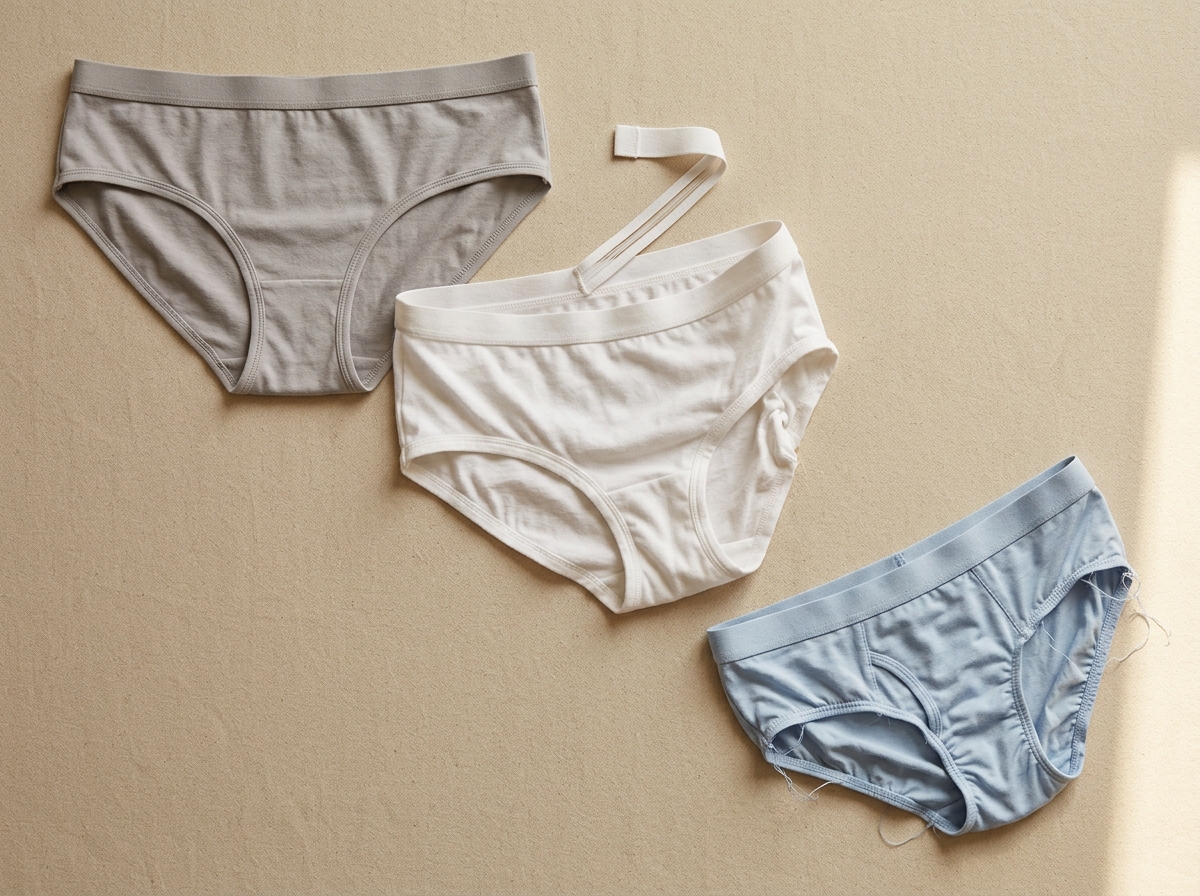
You adjust your underwear five times before lunch. The waistband rolls, the legs ride up, and everything bunches in the wrong places. "Why does my underwear keep riding up" is one of the most searched underwear complaints globally. We break down the four scientific causes — elastic recovery degradation, rise-torso mismatch, leg opening geometry, and fabric stretch ratio — and provide body-type-specific solutions based on testing across 30+ brands.
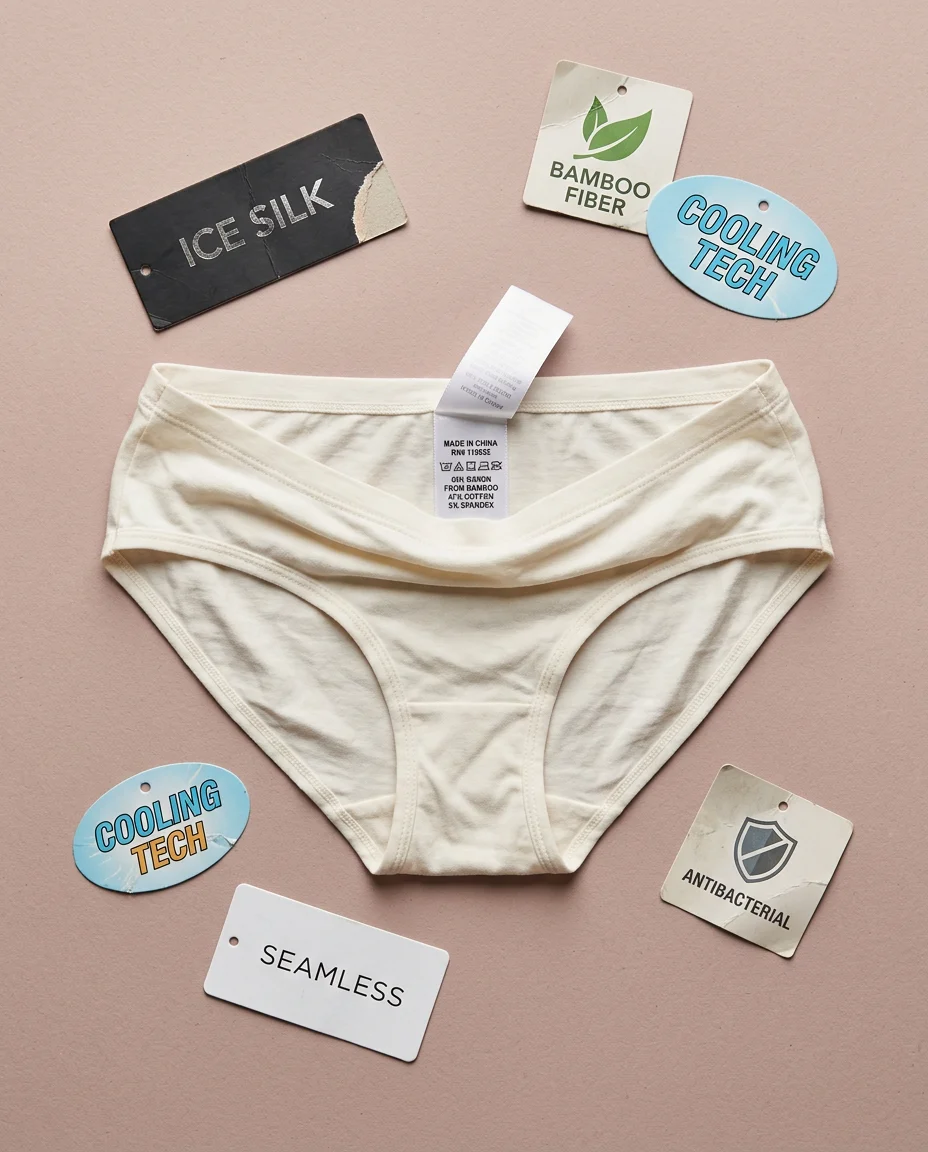
Your underwear label says "ice silk," "bamboo fiber," "seamless," "cooling technology," and "antibacterial." Three of those five terms do not mean what you think they mean. We deconstructed each marketing claim against published fiber science data and found a consistent pattern: the most expensive-sounding terms describe the cheapest materials.
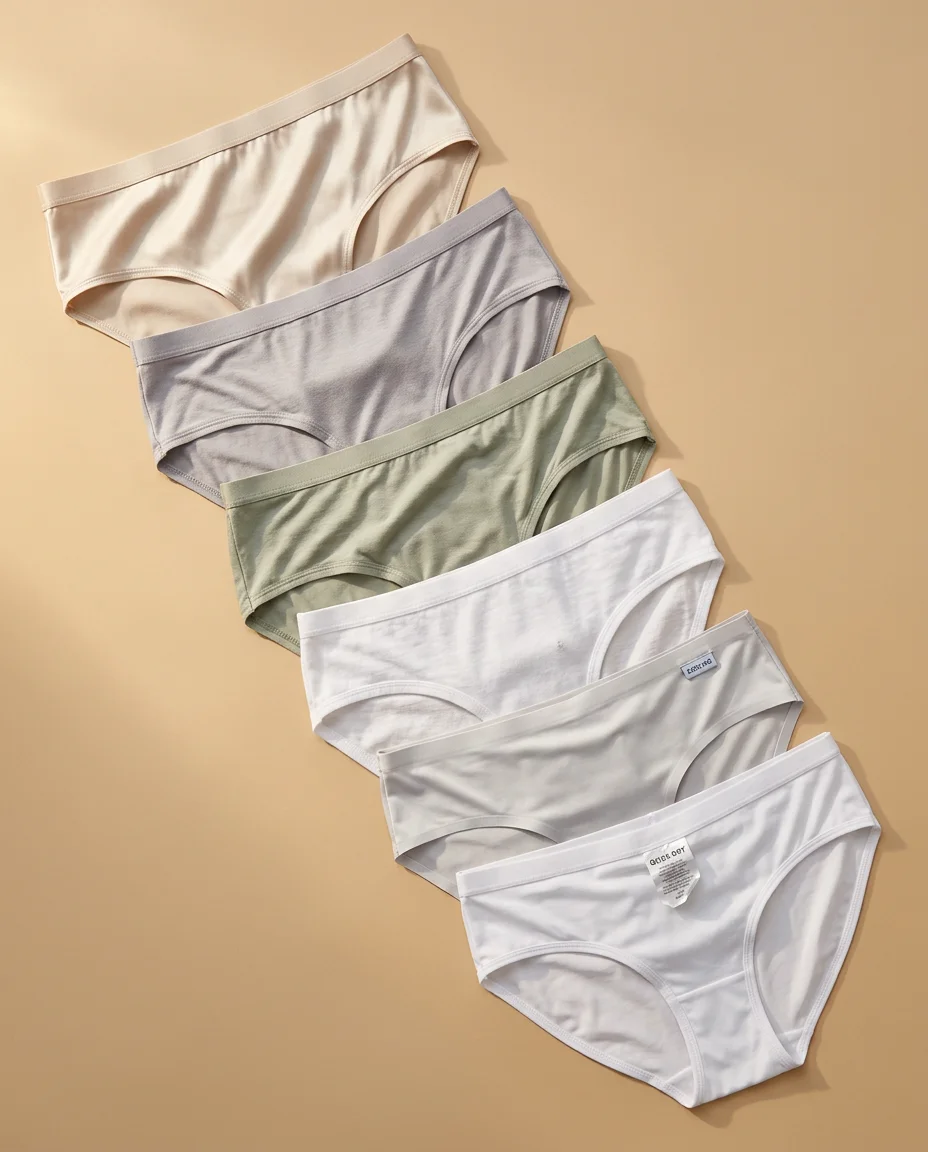
Six fabrics, one question: which one actually keeps you cool? We ranked common summer underwear materials by Q-max contact cooling, sustained heat dissipation, and moisture vapor transmission — and found that the three most heavily marketed fabrics are also the three worst performers after 30 minutes of wear.