Fabric Science2026-04-0310 min read
"Ice Silk" Underwear Exposed: What This Marketing Term Actually Hides
Karl XiaoFactory Production Director
Part of the The Fiber Lab series
Part of the The Fiber Lab series
Search for "ice silk underwear" on any e-commerce platform and you will find thousands of listings promising cool, breathable comfort. The problem? "Ice silk" is not a fiber type. It is a marketing term with no standardized definition, and the actual composition of products carrying this label varies wildly — from Modal blends to 100% polyester. We traced the term's origin, analyzed actual product compositions, and reviewed export compliance requirements to help brands and consumers understand what they are really buying.
The term "ice silk" (冰丝) did not originate from textile science. According to industry sources, it was coined in the 1990s by Montagut (梦特娇), a French fashion brand popular in East Asian markets at the time.
The original meaning was straightforward:
Both fabrics had genuine visual appeal — excellent drape and a distinctive sheen that resembled silk. A Montagut polo shirt in these fabrics could last 10–20 years. But they were heavy, hot to wear outdoors, and eventually fell out of fashion as lighter alternatives emerged.
The original Montagut "ice silk" products were actually high-quality nylon-viscose blends. The problem is not the original fabric — it is that the term has been co-opted and diluted over three decades to the point where it now means nothing specific.
We analyzed composition data across multiple products marketed as "ice silk" underwear. The results reveal a term that has been stretched beyond any recognizable meaning:
The common thread: "skin-friendly but not breathable." Most "ice silk" products use synthetic fibers that feel smooth to the touch but lack the moisture management properties of genuine regenerated cellulose fibers.
The "cooling" sensation of ice silk comes from the smooth surface of synthetic fibers, which conducts heat away from skin on first contact. This effect lasts 5–15 minutes — until the fabric equilibrates to body temperature. After that, the synthetic composition often traps heat and moisture against the body, creating the exact opposite of the promised cooling effect.
To understand why some "ice silk" products feel luxurious while others feel cheap, we need to look at fiber diameter — the single most important physical measurement that determines how a fabric feels against skin.
Four natural silk fibers bundled together equal the diameter of a single cotton fiber. This is why silk and high-count Modal feel fundamentally different from cotton or synthetic fibers — the finer the fiber, the lower the friction against skin.
100-count Lenzing Modal has a fiber diameter of 10–15μm — nearly identical to natural silk (10–12μm). This is not marketing; it is a measurable physical property that explains the similar hand feel.
Most budget "ice silk" uses coarser synthetic fibers (20–30μm) with a surface treatment that creates initial smoothness. After 10–20 washes, the treatment wears off, exposing the coarser fiber structure.
Premium products use dual-layer construction: inner Modal (10–15μm) for skin comfort + outer nylon/spandex for structure and moisture discharge. Cost is ~3× higher but delivers genuine performance.
A common misconception is that "ice silk" products are premium fabrics. In reality, knitted fabrics are priced by weight, and the economics tell a different story:
Cost ranking (per piece, by material): Regenerated Cellulose (Modal) > Cotton > Nylon
However, there is a critical nuance: a single cotton underwear piece weighs approximately the same as two "ice silk" (nylon) pieces. Modal is expensive per kilogram but lighter per garment. This means:
This pricing structure explains why budget brands favor "ice silk" labeling — it allows them to use the cheapest fiber (nylon/polyester) while charging a premium based on the "silk" association.
For brands producing underwear for international markets, using "ice silk" on product labels is not just misleading — it may be illegal.
The FTC requires that textile products be labeled with the generic fiber name and percentage by weight. "Ice silk" is not a recognized generic fiber name. Acceptable names include:
The EU requires similar accurate fiber identification. Additionally, if a product claims specific performance properties (cooling, antibacterial), these claims must be substantiated with test data compliant with relevant EU standards.
Per international textile regulations, brands should use "Regenerated Cellulose" or the specific fiber name ("Modal," "Lyocell," "Viscose") rather than generic terms like "Bamboo" or "Ice Silk." If the fiber is derived from bamboo but processed into viscose, the correct label in the US is "Rayon (from bamboo)" or "Viscose (from bamboo)" — not "Bamboo fiber." For a complete analysis of "bamboo fiber" from marketing term to regenerated cellulose fiber science framework, see our Bamboo Underwear Breathability Deep Dive.
"Ice silk" is a 1990s marketing invention that has outlived its usefulness. In 2026, with consumers more educated and regulators more strict, brands gain more by being transparent about fiber composition than by hiding behind ambiguous marketing terms. Modal and regenerated cellulose fibers have genuine, measurable advantages in fiber diameter, moisture management, and hand feel — advantages that deserve to be communicated accurately.
For brands seeking accurate fabric specification and export-compliant labeling, working with a manufacturing partner who understands international textile terminology requirements and can provide proper fiber certification documentation is essential. The right partner helps you turn genuine material science into compelling, compliant product stories.
Sources: This article references textile fiber identification regulations (FTC Textile Fiber Products Identification Act, EU Regulation No 1007/2011), fiber diameter data from textile engineering references, industry sourcing data on knitted fabric pricing by weight, and historical analysis of the "ice silk" marketing term's evolution from its 1990s origin.
Deep dive into fabric composition, properties, and performance at the microscopic level
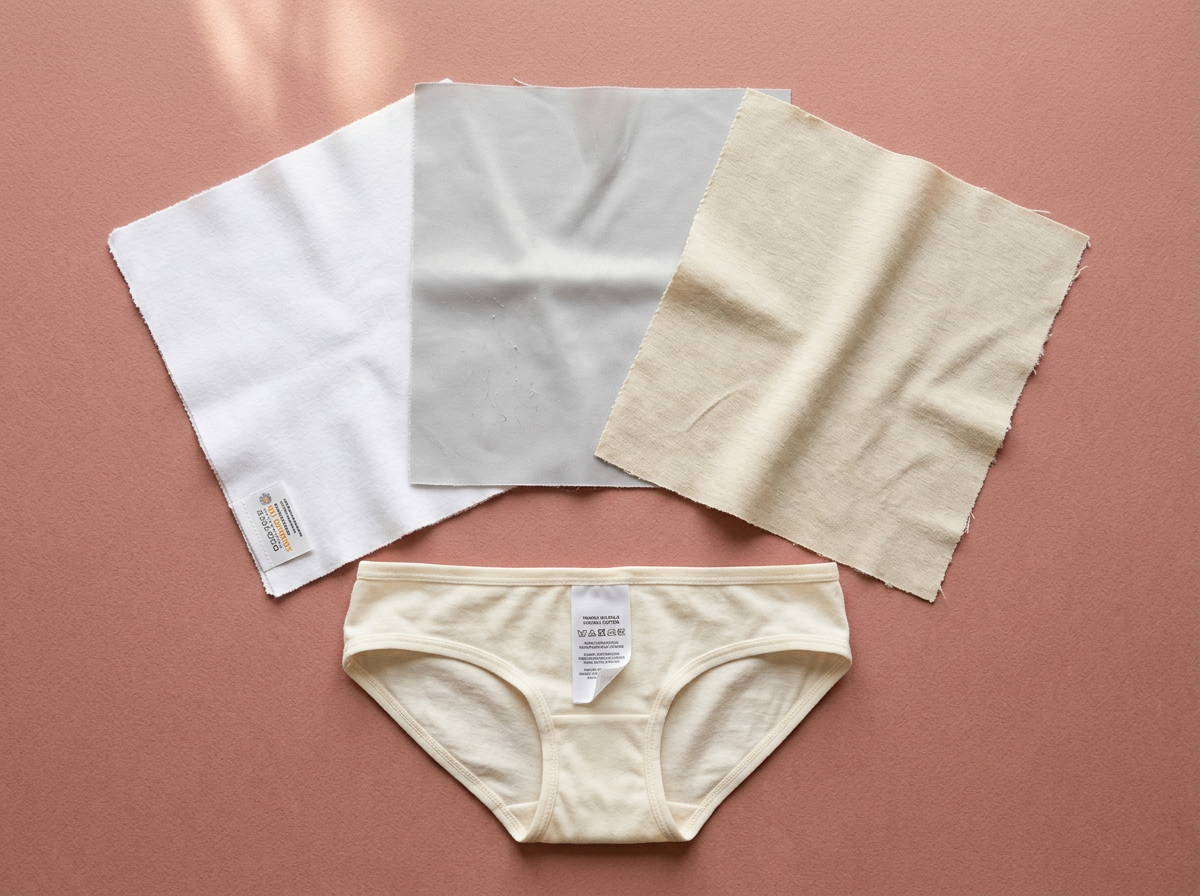
That recurring rash below your waistline. The itch that will not go away. The red marks where your underwear elastic sits. "Underwear rash" and "underwear irritation" searches have grown steadily as consumers discover their underwear may be the hidden cause of skin problems. We analyzed the four fabric-skin interaction mechanisms — bacterial microclimate, chemical contact dermatitis, pressure dermatitis, and antibacterial treatment sensitivity — with test data across 30+ brands.
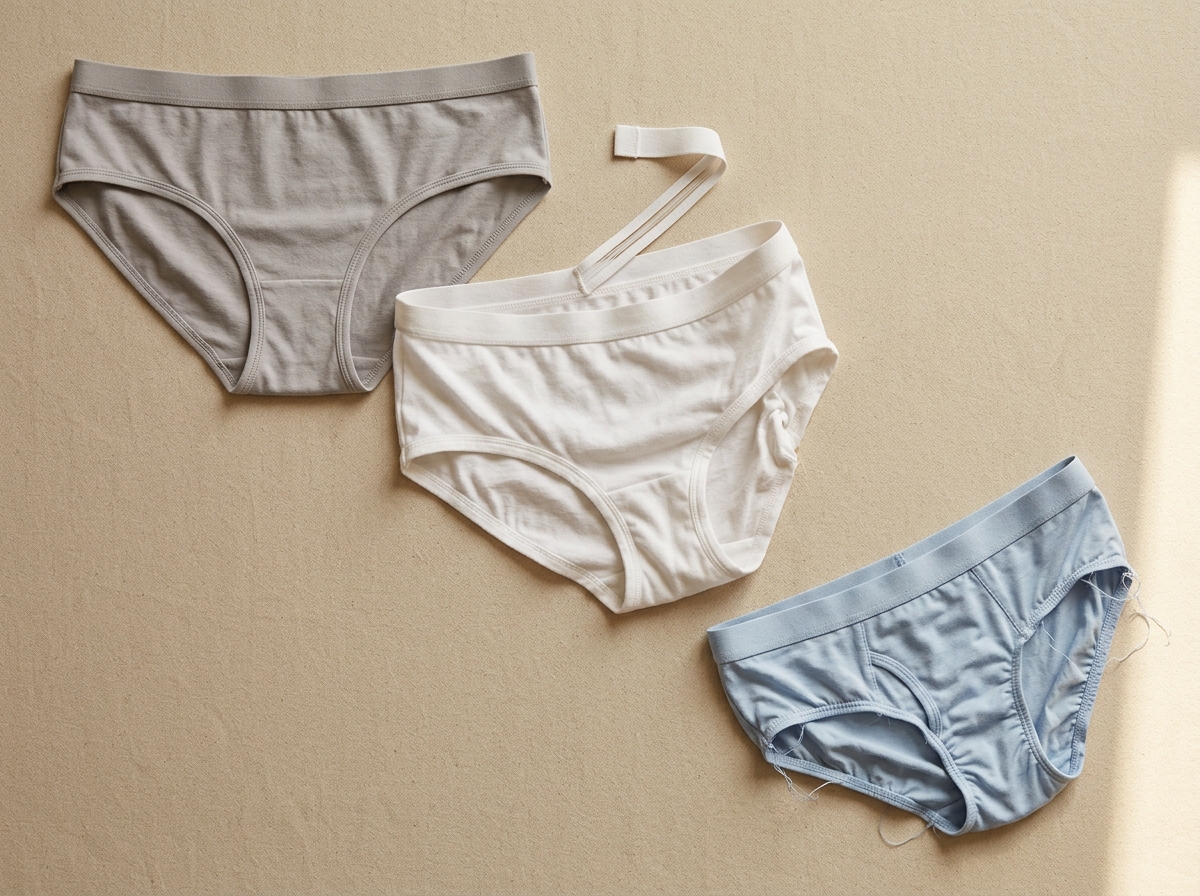
You adjust your underwear five times before lunch. The waistband rolls, the legs ride up, and everything bunches in the wrong places. "Why does my underwear keep riding up" is one of the most searched underwear complaints globally. We break down the four scientific causes — elastic recovery degradation, rise-torso mismatch, leg opening geometry, and fabric stretch ratio — and provide body-type-specific solutions based on testing across 30+ brands.
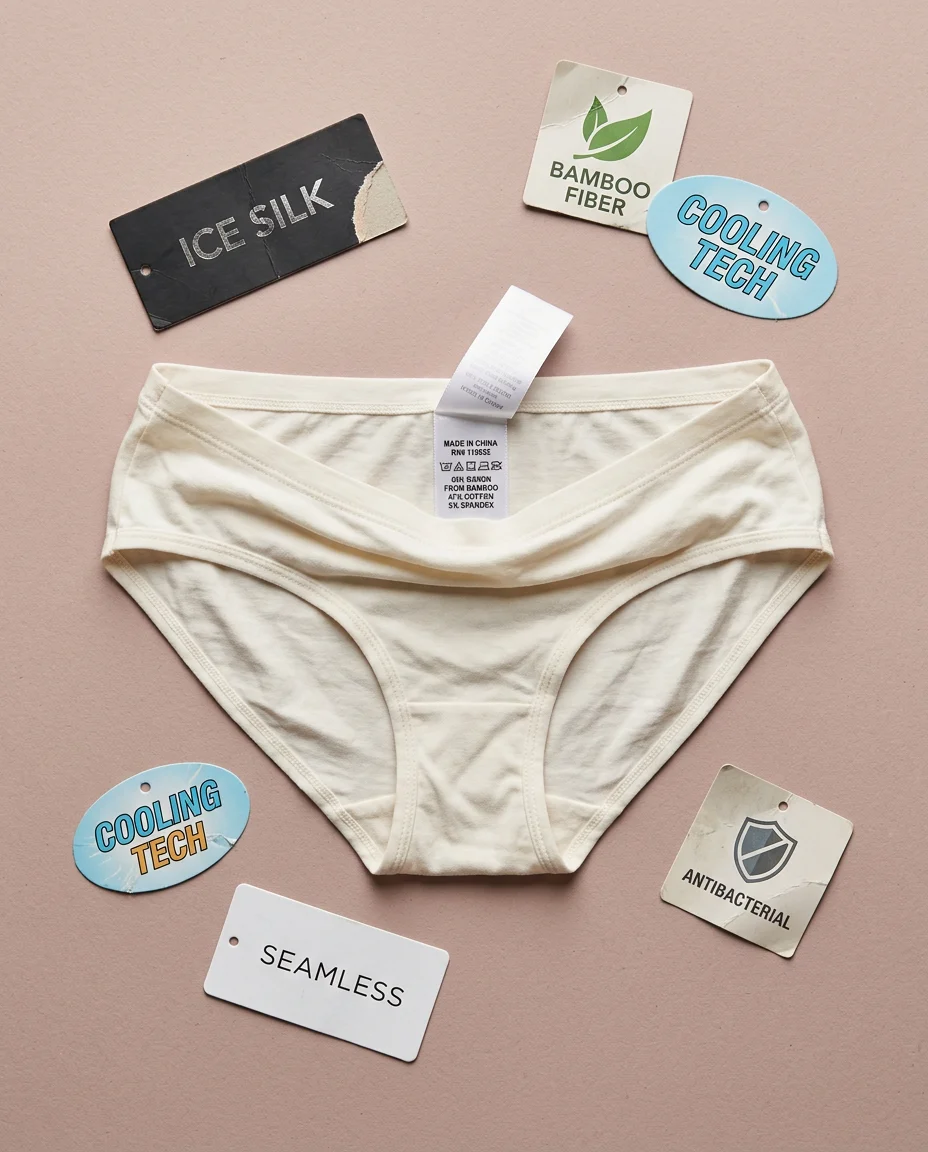
Your underwear label says "ice silk," "bamboo fiber," "seamless," "cooling technology," and "antibacterial." Three of those five terms do not mean what you think they mean. We deconstructed each marketing claim against published fiber science data and found a consistent pattern: the most expensive-sounding terms describe the cheapest materials.