Industry Trends2026-04-1114 min read
5 Underwear Marketing Terms That Lie to You — And the Fiber Science Behind Each One
Karl XiaoFactory Production Director
Part of the The Fiber Lab series
Part of the The Fiber Lab series
Your underwear label lists five impressive-sounding terms. Three of them do not mean what you think they mean, and two of the three describe materials that are cheaper to produce than basic cotton.
This is not an accident. The underwear industry has perfected the art of dressing up inexpensive synthetic materials in premium-sounding language. "Ice silk" sounds luxurious — but it is often just nylon, the cheapest fiber in underwear production. "Bamboo fiber" sounds natural and sustainable — but it is usually viscose rayon, a chemically processed semi-synthetic. "Cooling technology" sounds innovative — but it often refers to a surface coating that washes off after 30 launderings.
We deconstructed the five most common marketing terms against published fiber science data, regulatory definitions, and lab testing results.
Consumers increasingly searching for what these terms actually mean
A premium, silk-like natural fiber with cooling properties. The word "silk" implies luxury and natural origin. "Ice" implies cooling.
"Ice silk" is not a recognized fiber type in any international textile standard. It is a marketing term coined in the 1990s by Montagut, a French brand, to describe nylon + viscose blends. Today, products labeled "ice silk" can contain:
The US Federal Trade Commission (FTC) does not recognize "ice silk" as a valid fiber name. Under the Textile Fiber Products Identification Act, all textile products must be labeled with recognized generic fiber names and percentages. "Ice silk" is not on that list. The same applies under EU Regulation No 1007/2011. If a product uses "ice silk" on its legal label (not just marketing materials), it may be in violation of textile labeling laws.
The term creates a premium perception around materials that are, in most cases, the cheapest synthetic fibers available. A product labeled "ice silk" that is actually Modal is decent underwear — but the cooling comes from the Modal, not from the "ice silk" label. For the complete investigation, see our Ice Silk Underwear Exposed analysis and our Ice Silk vs Real Cooling Fabrics comparison.
Underwear made from natural bamboo fibers — sustainable, antibacterial, and eco-friendly because bamboo grows quickly without pesticides.
Approximately 95%+ of "bamboo fiber" underwear sold globally is viscose rayon made from bamboo pulp. The manufacturing process:
Bamboo is harvested and broken down into cellulose pulp using sodium hydroxide and carbon disulfide — the same chemicals used to make regular viscose rayon from wood pulp.
The cellulose solution is extruded through spinnerets into a sulfuric acid bath, regenerating the cellulose into continuous filaments — again, identical to standard viscose rayon production.
The resulting fiber is chemically identical to viscose rayon from any other plant source. There is no molecular difference between "bamboo viscose" and "wood viscose" — the bamboo origin provides no unique fiber properties.
The FTC has specifically addressed this issue. In 2009 and again in 2015, the FTC sent warning letters to retailers stating that textiles made from bamboo pulp using the viscose process must be labeled as 'rayon' or 'viscose rayon' — not 'bamboo.' The FTC's position: 'Rayon made from bamboo is rayon — it does not retain any of the original bamboo's natural properties.'
Bamboo viscose does have good moisture absorption (12–14%) and breathability — but these properties come from the viscose process, not from bamboo. Regular viscose from wood pulp performs identically. For the full analysis, see our Bamboo Underwear Breathability deep dive.
Underwear with absolutely no seams, stitches, or construction lines — a perfectly smooth, second-skin garment.
"Seamless" underwear is made using circular knitting machines ( Santoni machines are the industry standard) that knit a tube of fabric in one continuous piece, eliminating side seams. However:
There is an important distinction between 'seamless' construction and 'invisible' appearance. Seamless refers to the knitting technology (no side seams). Invisible refers to how the underwear looks under clothing (no visible lines through outer garments). A seamless garment can still show lines if it has thick waistbands or leg elastic. For the complete comparison, see our Seamless vs Invisible Underwear analysis.
Seamless construction genuinely reduces chafing from side seams and can improve comfort — this is a real benefit, not a false claim. But consumers should understand that "seamless" means "no side seams," not "no stitches anywhere." The quality of seamless underwear still depends heavily on fiber composition, waistband design, and gusset construction.
Advanced textile engineering that actively reduces body temperature through innovative fiber design or treatment.
"Cooling" is an unregulated performance claim with no standardized definition or testing requirement. It can refer to:
Read the fiber composition. If the primary fiber is Modal or Lyocell, the cooling is a genuine fiber property that lasts the garment's lifetime. If the primary fiber is polyester or nylon with 'cooling technology,' you are paying for a surface treatment that will wash off. For detailed cooling performance data across all common fabrics, see our Summer Underwear Fabric Ranking.
In our fabric ranking analysis, we found that the fabrics with the best sustained cooling performance (Lyocell, Modal) rarely use the term "cooling technology" — because their cooling is inherent to the fiber, not a marketed feature. Conversely, the fabrics with the worst sustained cooling (polyester, nylon) most frequently use "cooling technology" claims — because they need the marketing to compensate for the fiber's natural heat-trapping properties.
The underwear actively kills bacteria, preventing odor and maintaining hygiene throughout the day.
"Antibacterial" is a real property with measurable standards — but only when specific test grades are cited. Without grade specification, the claim is meaningless:
The most credible antibacterial claims cite specific test standards: GB/T 20944 (China), ISO 20743 (international), AATCC 100 (US), or JIS L 1902 (Japan). If a product claims antibacterial properties without citing any test standard, the claim cannot be independently verified. For a complete guide to what each grade means, see our Antibacterial Underwear Grades Explained.
Silver-ion and zinc-based antibacterial treatments are legitimate technology. However, independent testing has shown that these treatments lose 40–60% effectiveness after 30–50 washes. The antibacterial claim may be accurate on day one but becomes progressively less true over the garment's lifetime — something brands rarely disclose.
A transparent underwear label tells you:
These are not aspirational standards — they are legal requirements in the US (FTC), EU (Regulation 1007/2011), and most major markets. The fact that many brands do not meet them does not make them optional; it makes those brands non-compliant.
The consumer education curve is accelerating. Google Trends data shows rising search volume for "what is ice silk," "is bamboo fiber real," and "does cooling underwear actually work." Consumers are actively investigating the claims they see on labels.
Brands that lead with transparent fiber specification and verifiable performance data have a structural advantage:
For technical guidance on fiber specification, export labeling compliance, and antibacterial grade certification, see our complete library of fabric science analyses.
Sources: This article references FTC Textile Fiber Products Identification Act, EU Regulation No 1007/2011, GB/T 20944 antibacterial testing standards, ISO 20743 textile antibacterial testing, published fiber specification data from Lenzing AG, and Google Trends search data for underwear marketing term queries (2026 Q1).
Related articles:
Deep dive into fabric composition, properties, and performance at the microscopic level
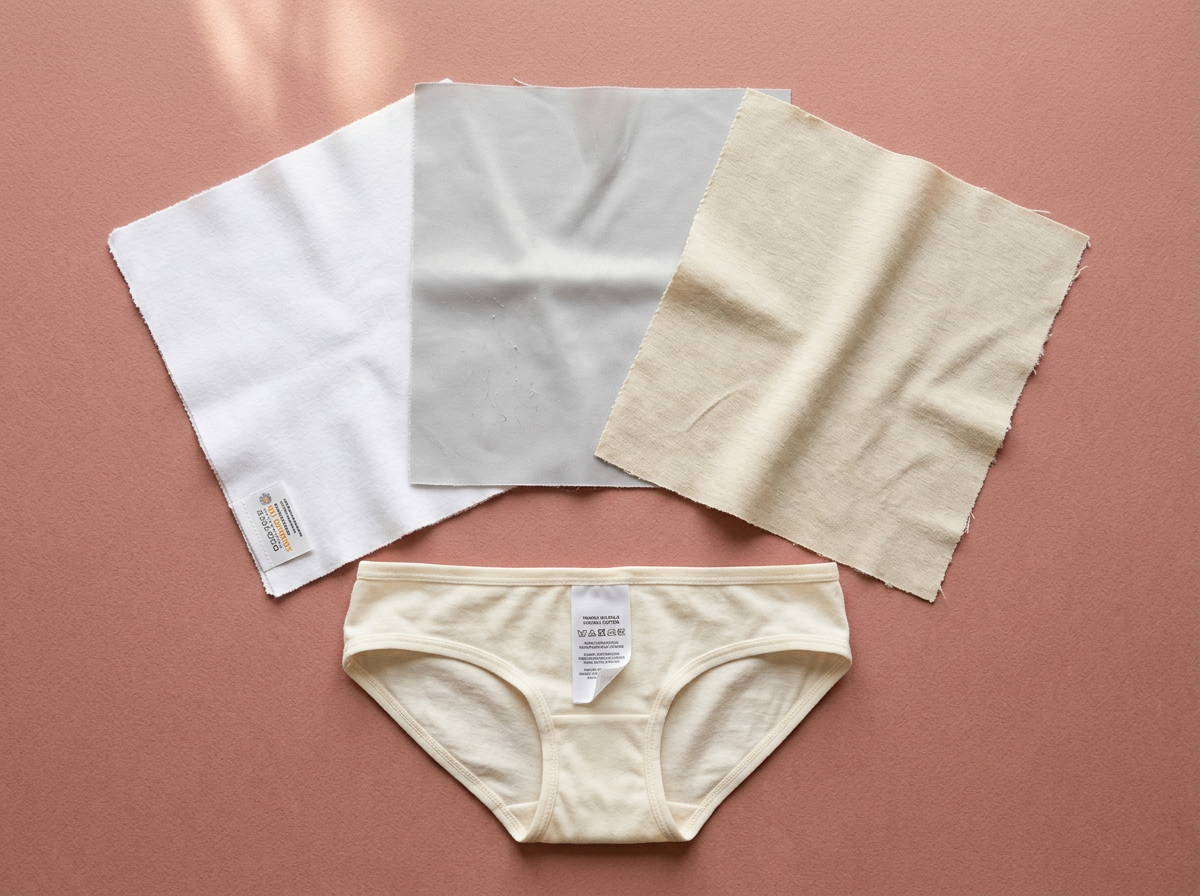
That recurring rash below your waistline. The itch that will not go away. The red marks where your underwear elastic sits. "Underwear rash" and "underwear irritation" searches have grown steadily as consumers discover their underwear may be the hidden cause of skin problems. We analyzed the four fabric-skin interaction mechanisms — bacterial microclimate, chemical contact dermatitis, pressure dermatitis, and antibacterial treatment sensitivity — with test data across 30+ brands.
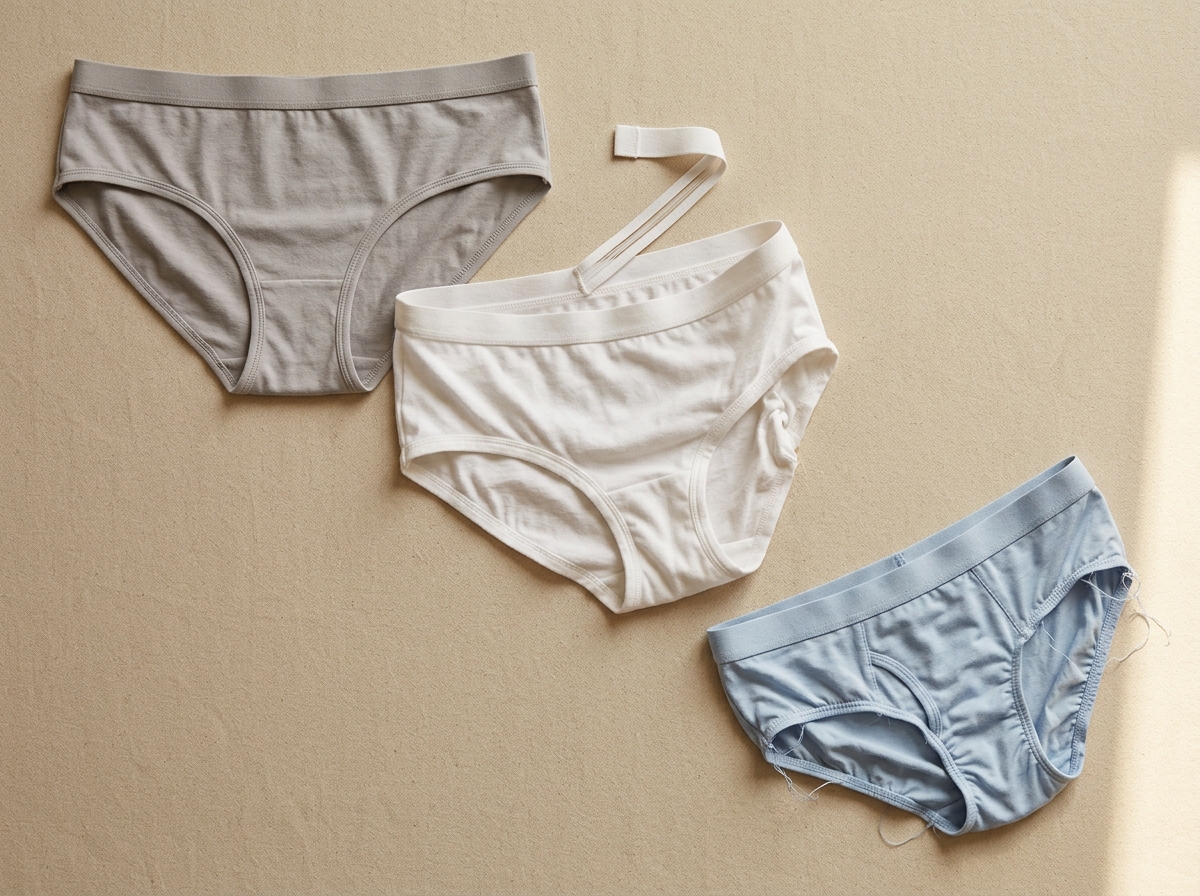
You adjust your underwear five times before lunch. The waistband rolls, the legs ride up, and everything bunches in the wrong places. "Why does my underwear keep riding up" is one of the most searched underwear complaints globally. We break down the four scientific causes — elastic recovery degradation, rise-torso mismatch, leg opening geometry, and fabric stretch ratio — and provide body-type-specific solutions based on testing across 30+ brands.
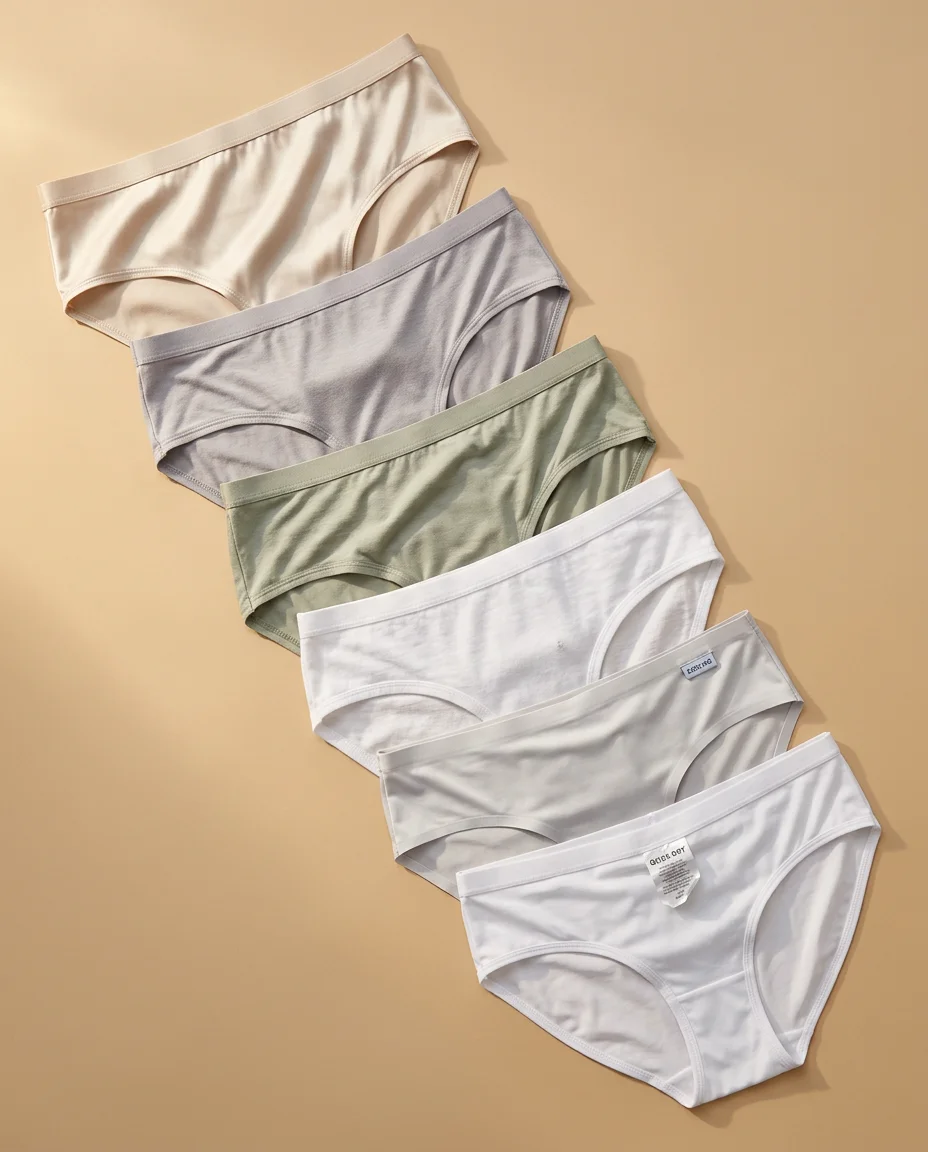
Six fabrics, one question: which one actually keeps you cool? We ranked common summer underwear materials by Q-max contact cooling, sustained heat dissipation, and moisture vapor transmission — and found that the three most heavily marketed fabrics are also the three worst performers after 30 minutes of wear.