Fabric Science2026-04-1111 min read
Summer Underwear Fabric Ranked by Real Cooling Performance (Not Marketing Claims)
Karl XiaoFactory Production Director
Part of the The Fiber Lab series
Part of the The Fiber Lab series
Six fabrics claim to keep you cool. Only three actually do after 30 minutes.
Every underwear brand selling summer products uses the same words: "cooling," "breathable," "ice silk," "moisture-wicking." But these are marketing terms, not performance guarantees. We took six common summer underwear fabrics and ranked them by measurable cooling criteria — initial contact cooling, sustained heat dissipation, and moisture management. The results are unambiguous.
Search volumes peak April–August as consumers seek cooling solutions
Most fabric rankings use a single metric and declare a winner. This is how "ice silk" keeps winning best-of lists — it excels at one metric (initial contact cooling) while failing at the two that matter for all-day comfort.
We evaluate each fabric across three independent dimensions:
A fabric that feels cool on first touch but traps heat after 30 minutes is worse than a fabric with moderate initial cooling but excellent sustained performance. You wear underwear for 12–16 hours — the first 15 seconds are irrelevant compared to the next 12 hours.
Composite Score: 9.2/10
Lyocell wins because it delivers strong performance across all three dimensions. Its nanofibril structure creates microscopic air channels that provide continuous heat escape, while its moisture absorption capacity enables evaporative cooling throughout the day.
Composite Score: 8.8/10
Modal's 12–15% moisture absorption rate is the highest of any common underwear fabric. This means it can absorb more sweat per gram of fabric than anything else on this list — keeping your skin drier. Its fiber diameter (10–15 μm for 80+ count) is comparable to natural silk, providing a luxurious hand feel.
For most consumers, Modal is the practical sweet spot: near-top cooling performance at a mid-range price. For a detailed comparison of Modal against other regenerated cellulose fibers, see our Modal vs Lyocell analysis.
Composite Score: 7.5/10
Bamboo viscose is chemically identical to regular viscose rayon — the bamboo source material provides no inherent cooling advantage. The cooling comes from the viscose process, which creates a fiber structure with good moisture absorption. This is not a negative; it simply means the bamboo label is a marketing distinction, not a performance one.
For the full breakdown of what "bamboo fiber" actually means, see our Bamboo Underwear Breathability deep dive.
Composite Score: 6.5/10
Cotton is the baseline most consumers compare against. It is naturally breathable and affordable, but its 7–8% moisture absorption is significantly lower than Modal or Lyocell. More importantly, cotton tends to hold onto absorbed moisture rather than transporting it away from the skin — which is why cotton underwear feels damp and stuffy in high humidity.
The hardening problem is real: cotton fibers undergo structural changes after repeated washing, especially in hard water. For the science behind this, see our Why Cotton Underwear Gets Hard investigation.
Composite Score: 4.0/10
Nylon-based "ice silk" has the highest Q-max of any fabric on this list — it genuinely feels the coolest on first touch. But this is where the good news ends. After the initial cooling effect fades (5–15 minutes), nylon's hydrophobic nature and low air permeability create a heat and moisture trap against the body.
The 4–5% moisture absorption rate means that for every gram of nylon fabric, only 0.04–0.05 grams of moisture can be absorbed. The rest pools between fabric and skin. For the complete analysis of why this happens, see our Ice Silk vs Real Cooling Fabrics comparison.
Composite Score: 2.5/10
Polyester ranks last despite being the most common "cooling" fabric in budget underwear. Its 0.4% moisture absorption is the lowest of any fabric commonly used in underwear — it literally cannot absorb sweat. The "quick-dry" property is real but misleading: the fabric does not hold moisture (so it dries fast on the surface), but it also does not let moisture vapor pass through its structure.
Budget polyester underwear with "cooling" treatments (typically silicone-based coatings) provides an initial cooling sensation that degrades after 10–30 washes, leaving behind a standard polyester garment with no cooling properties whatsoever.
For the complete science on why polyester underwear causes odor, rashes, and discomfort, see our Polyester Underwear Odor investigation.
The pattern is clear: synthetic fabrics win the first-impression test and lose the all-day test. Regenerated cellulose fibers (Lyocell, Modal, bamboo viscose) deliver consistent, sustained cooling because their fiber structure manages moisture continuously.
Find the fiber composition section — it is legally required on all textiles in the US (FTC), EU (Regulation 1007/2011), and most other markets. If the primary fiber is nylon or polyester, the "cooling" claim is based on a surface treatment, not the fiber itself.
Check for fiber count or brand specification — brands using quality Modal or Lyocell will specify the count (80+ for Modal) or the fiber producer (Lenzing, Birla). Generic "Modal" without count specification may be lower quality.
Verify the gusset composition separately — many "Modal" or "bamboo" underwear products have polyester gussets. The gusset is the single most important area for breathability. It should be 100% cotton or Modal. See our Gusset Science analysis.
The disconnect between marketing claims and actual performance creates a significant market opportunity:
For brands developing summer underwear lines, leading with verifiable cooling performance data rather than marketing terms is both honest and commercially effective. The Ice Silk vs Real Cooling Fabrics analysis provides a detailed framework for specifying genuinely cool summer underwear.
Sources: This article references Q-max measurement standards, published fiber specification data from Lenzing AG (Modal and Tencel), moisture absorption rates from textile engineering references (AATCC, ISO standards), and independent fabric testing data evaluating thermal comfort across six common underwear materials.
Related articles:
Deep dive into fabric composition, properties, and performance at the microscopic level
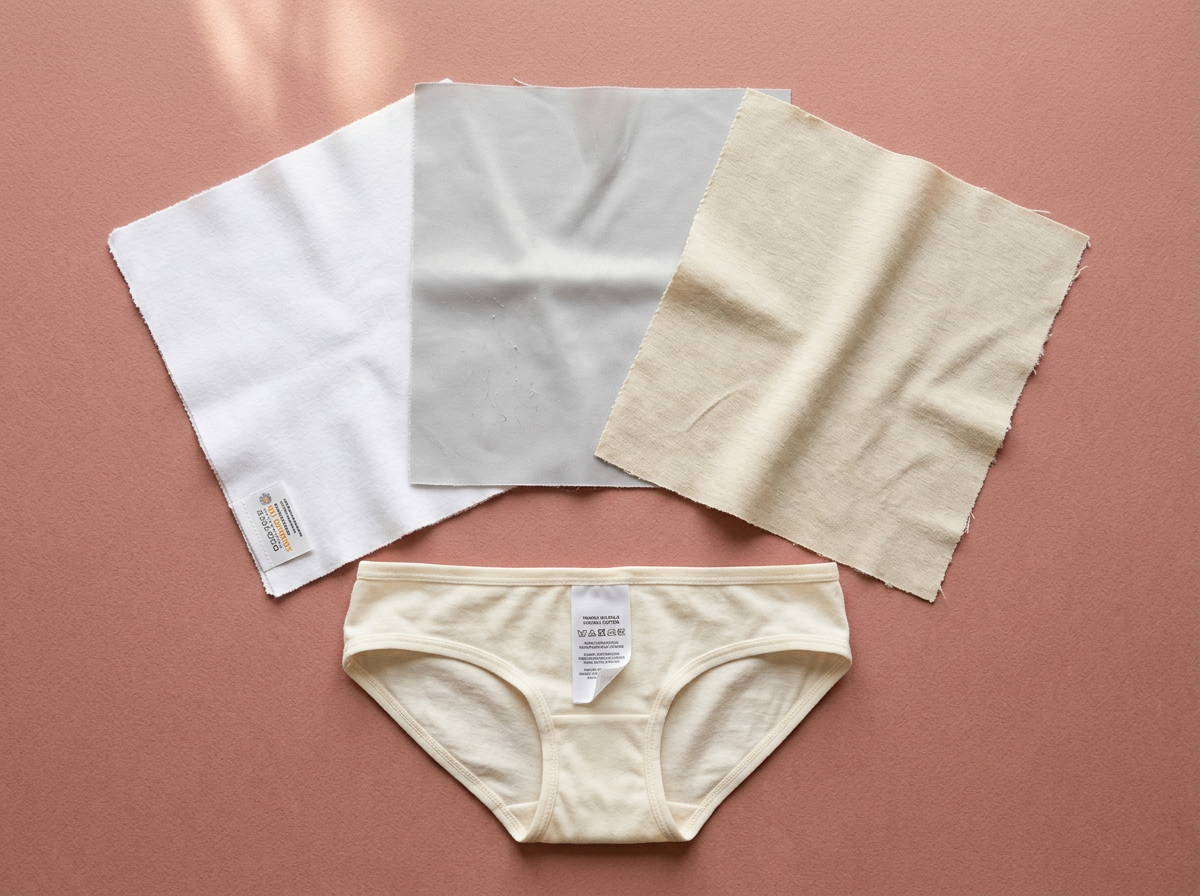
That recurring rash below your waistline. The itch that will not go away. The red marks where your underwear elastic sits. "Underwear rash" and "underwear irritation" searches have grown steadily as consumers discover their underwear may be the hidden cause of skin problems. We analyzed the four fabric-skin interaction mechanisms — bacterial microclimate, chemical contact dermatitis, pressure dermatitis, and antibacterial treatment sensitivity — with test data across 30+ brands.
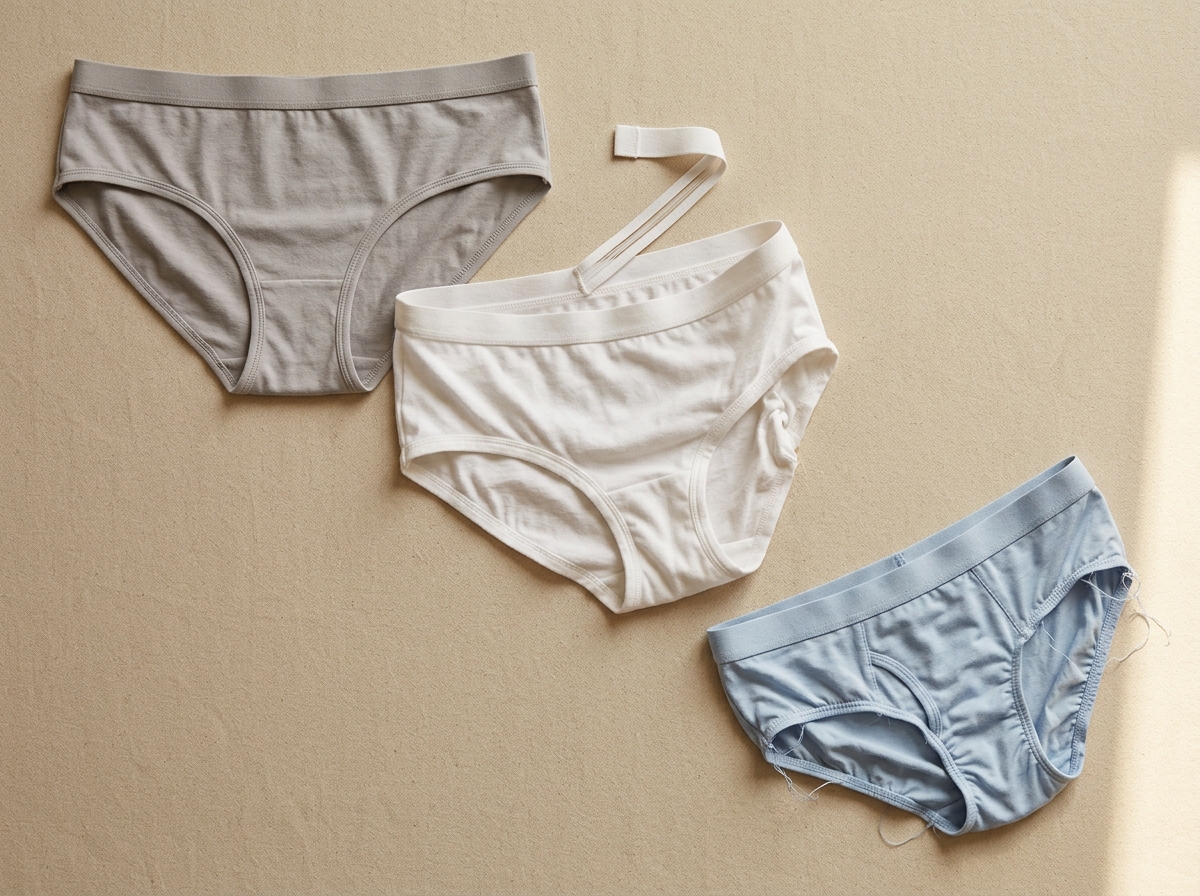
You adjust your underwear five times before lunch. The waistband rolls, the legs ride up, and everything bunches in the wrong places. "Why does my underwear keep riding up" is one of the most searched underwear complaints globally. We break down the four scientific causes — elastic recovery degradation, rise-torso mismatch, leg opening geometry, and fabric stretch ratio — and provide body-type-specific solutions based on testing across 30+ brands.
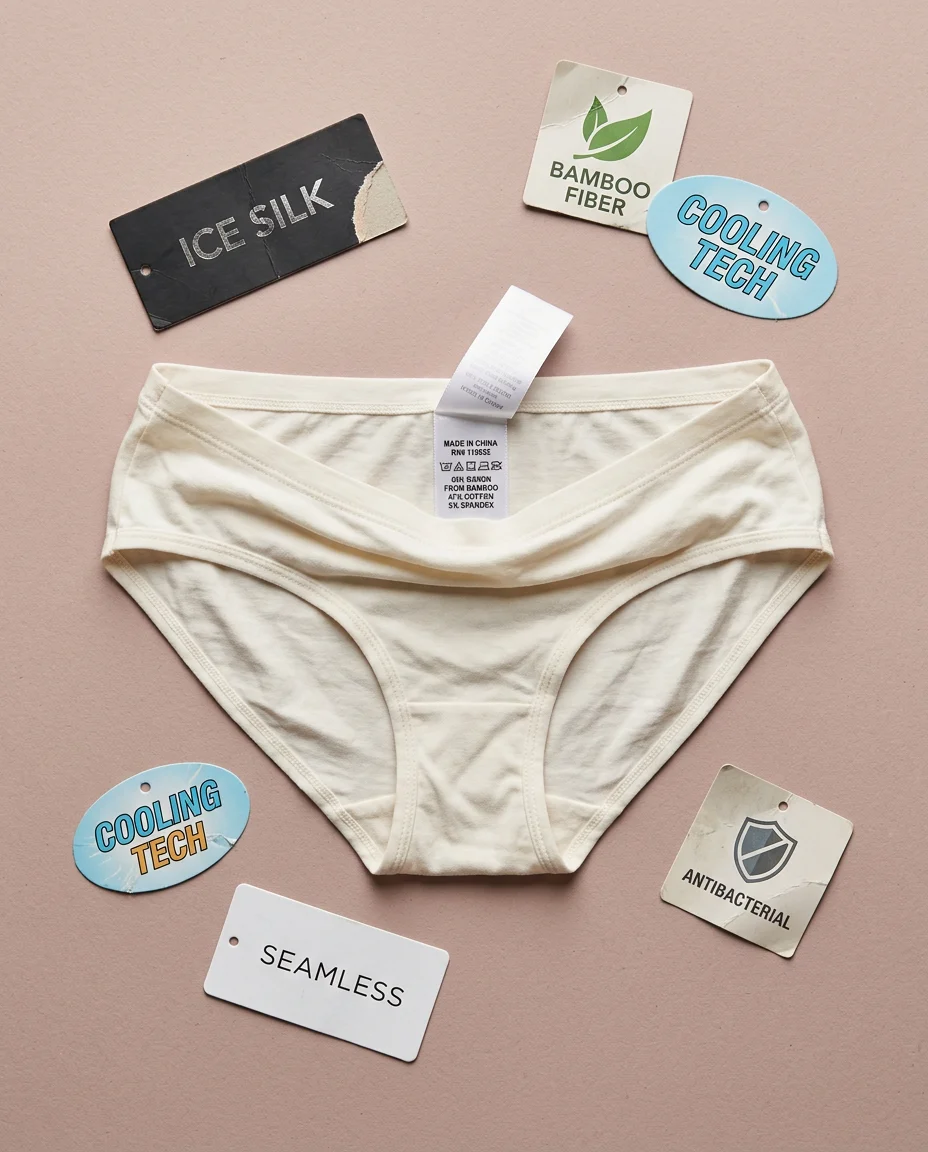
Your underwear label says "ice silk," "bamboo fiber," "seamless," "cooling technology," and "antibacterial." Three of those five terms do not mean what you think they mean. We deconstructed each marketing claim against published fiber science data and found a consistent pattern: the most expensive-sounding terms describe the cheapest materials.