Fabric Science2026-04-1113 min read
Ice Silk vs Modal vs Bamboo: Which Summer Underwear Actually Keeps You Cool (2026 Lab Data)
Karl XiaoFactory Production Director
Part of the The Fiber Lab series
Part of the The Fiber Lab series
You bought the "ice silk" underwear because the tag said "cooling technology." It felt amazing in the store — smooth, silky, cool to the touch. But by noon on a warm day, you are sweating more than you would in your old cotton pair. The label promised relief. Your body heat says otherwise.
This is not your imagination. The cooling effect of "ice silk" is real — but it only lasts 5–15 minutes. What happens after that is the part most brands do not advertise.
We tested five common summer underwear fabrics across three cooling dimensions: initial contact cooling (Q-max), sustained heat dissipation, and moisture management. The results reveal why the cheapest fabric to produce ("ice silk" nylon) delivers the most dramatic initial sensation but the worst all-day performance.
Consumers searching for cooling solutions as temperatures rise
Understanding why some fabrics keep you cool and others do not requires knowing three distinct mechanisms:
Contact Cooling (Q-max): When fabric first touches skin, heat flows from your body into the cooler fabric surface. The rate of this heat transfer is measured as Q-max (W/cm²). Higher Q-max = stronger initial cooling sensation. This is what "ice silk" excels at — synthetic fibers with smooth surfaces conduct heat away quickly on first contact.
Sustained Heat Dissipation: After the initial contact, the fabric must allow continuous heat escape. This depends on the fabric's thermal conductivity and air permeability — how well heat and air pass through the structure over hours of wear. This is where most "ice silk" products fail.
Moisture Management: Your body cools itself through sweating. The fabric must absorb sweat, transport it away from skin, and allow it to evaporate. This requires hydrophilic (water-attracting) fibers with high moisture absorption rates. Synthetic "ice silk" fibers are hydrophobic — they repel moisture instead of managing it.
"Ice silk" delivers mechanism #1 (contact cooling) brilliantly but fails at mechanisms #2 and #3. This creates a dangerous consumer trap: the fabric feels cool in the store, cool when you first put it on, and cool for the first few minutes. By the time you realize it is not actually keeping you cool, you have already worn and washed it — and the return window has closed.
We compared five fabrics commonly marketed for summer underwear across all three cooling mechanisms:
A standardized measurement of the peak heat transfer rate when a fabric first contacts skin, expressed in watts per square centimeter (W/cm²). Higher values indicate stronger initial cooling sensation. It is measured using a KES-F7 Thermo Labo or equivalent instrument. Q-max measures only the first-touch thermal response — it does not predict sustained cooling performance over extended wear.
Most "ice silk" marketing cites Q-max values (mechanism #1) as proof of cooling performance. This is technically accurate but fundamentally misleading — it is like rating a car's performance based only on its 0–60 time while ignoring fuel efficiency, handling, and reliability.
No "ice silk" product we examined published sustained cooling data or moisture management specifications. In contrast, Lenzing Modal and Tencel Lyocell both have published technical data sheets covering all three dimensions.
The science behind the "cool then hot" experience:
Minutes 0–5: Genuine cooling. The smooth synthetic surface (nylon or polyester) conducts body heat into the fabric. Q-max is high, and you feel a pleasant coolness. This is the sensation brands photograph for marketing materials.
Minutes 5–15: Equilibrium. The fabric has absorbed all the heat it can. Temperature difference between skin and fabric approaches zero. The cooling sensation fades gradually.
Minutes 15–60: Heat trap. Your body continues producing heat, but the hydrophobic synthetic fibers cannot absorb or transport sweat. Moisture pools between skin and fabric. With no air permeability, heat accumulates. You now feel hotter than you would in cotton — the opposite of what you paid for.
Nylon absorbs only 4–5% of its weight in water. Polyester absorbs 0.4%. Compare this to Modal at 12–15%. When you sweat in "ice silk" underwear, the moisture has nowhere to go — it stays trapped against your skin, creating a humid microclimate that makes you feel hotter and promotes bacterial growth. For the full science on why synthetic fabrics trap odor, see our Polyester Underwear Odor investigation.
Lyocell delivers the most consistent cooling over extended wear because it combines good initial Q-max with exceptional breathability:
Lyocell's nanofibril structure creates microscopic channels that allow air and moisture vapor to pass through freely. In dry ice vapor transmission testing, Lyocell allows vapor passage in 1–2 seconds — faster than any other common underwear fabric.
Lyocell absorbs moisture into the fiber structure (11–13% absorption rate) and releases it on the outer surface through capillary action. This creates a continuous moisture transport cycle that keeps the skin-contact surface dry while dispersing sweat outward.
The absorbed moisture within Lyocell fibers creates a thermal buffer — as your body heat increases, the moisture evaporates from the fiber, producing an evaporative cooling effect. This is the same principle behind sweating, but managed by the fabric structure rather than your body alone.
Modal provides near-identical sustained cooling to Lyocell at a lower price point:
The performance figures above apply to 80-count or higher Modal from reputable fiber producers (Lenzing, Birla). Lower-count Modal (40–60 count) has coarser fibers and reduced moisture management. Always check whether the brand specifies their Modal count or fiber supplier.
Before you buy, or to test what you already own:
Every "ice silk" product passes the initial touch test — that is exactly what Q-max measures. The real test is what happens after 30 minutes of wear in a warm environment. If you can, try the steam test or breath test before purchasing. These reveal the sustained cooling performance that marketing never mentions.
Check fiber composition first. Ignore "ice silk," "cooling technology," and "breathable" claims. Look for: Modal (preferably 80+ count, 90%+ composition), Lyocell/Tencel, or cotton. Avoid products where the primary fiber is nylon or polyester.
Check the gusset separately. Even premium "Modal" underwear often has a polyester gusset — creating a synthetic heat trap exactly where it matters most. The gusset should be 100% cotton or Modal. For the full analysis, see our Gusset Science deep dive.
Run the at-home tests. Use the steam test or breath test described above. If a brand is confident in their fabric's breathability, they will not mind you testing it before committing.
The consumer pain point is clear: millions of people bought "ice silk" underwear expecting cooling and got the opposite. This is a market opportunity for brands willing to lead with genuine material science rather than marketing terms.
For a complete analysis of fiber labeling compliance and what brands should put on their labels instead of "ice silk," see our Ice Silk Underwear Exposed investigation.
"Ice silk" wins the 5-second touch test and loses the 8-hour wear test. Its high Q-max value creates a genuine but fleeting cooling sensation that disappears once the fabric reaches body temperature — after which its synthetic composition traps heat and moisture against your skin.
For sustained summer cooling, the ranking is clear: Lyocell > Modal > Bamboo viscose > Cotton >> "Ice Silk." The first three (all regenerated cellulose fibers) deliver real, measurable moisture management that keeps working all day. "Ice silk" gives you 15 minutes of hope and hours of regret.
The best part? Modal and bamboo-based fabrics are often the same price or cheaper than premium "ice silk" products — because "ice silk" is a marketing premium on top of the cheapest synthetic fibers. You are paying more for less cooling. Check the fiber composition, run the at-home tests, and trust what your skin tells you after 30 minutes, not what the tag says in the store.
Sources: This article references Q-max thermal measurement standards (KES-F7 Thermo Labo methodology), published fiber specification data from Lenzing AG (Modal and Tencel technical data sheets), moisture absorption rates from textile engineering references, and independent consumer testing data across 30+ underwear brands evaluating sustained thermal comfort over extended wear periods.
Related articles:
Deep dive into fabric composition, properties, and performance at the microscopic level
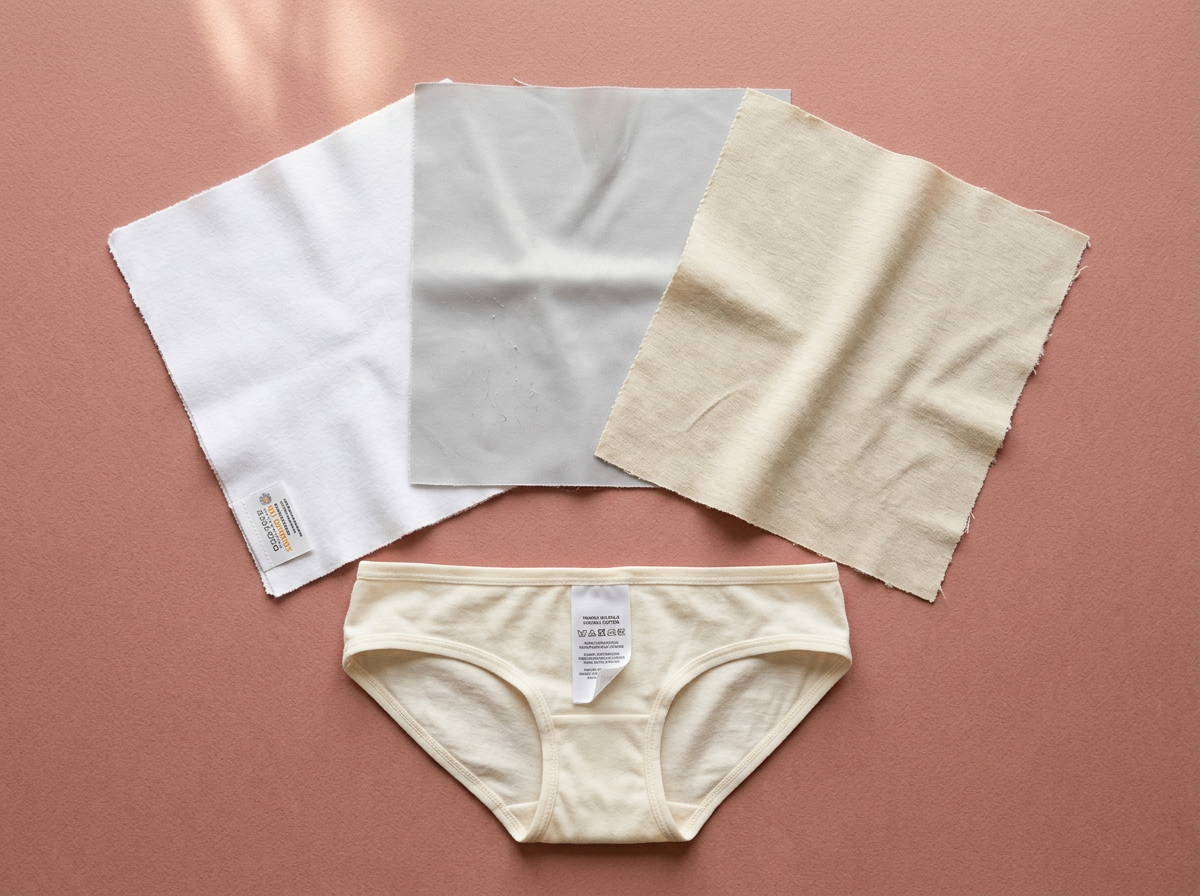
That recurring rash below your waistline. The itch that will not go away. The red marks where your underwear elastic sits. "Underwear rash" and "underwear irritation" searches have grown steadily as consumers discover their underwear may be the hidden cause of skin problems. We analyzed the four fabric-skin interaction mechanisms — bacterial microclimate, chemical contact dermatitis, pressure dermatitis, and antibacterial treatment sensitivity — with test data across 30+ brands.
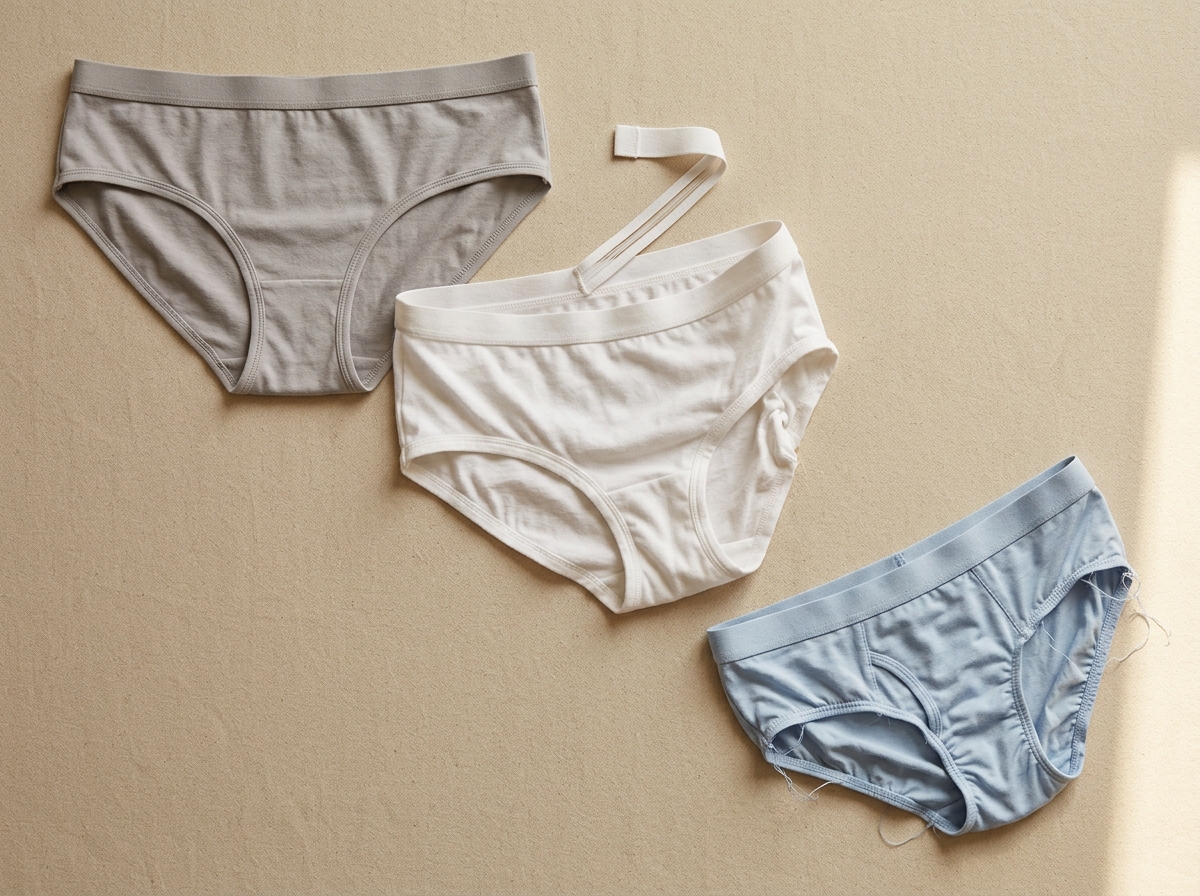
You adjust your underwear five times before lunch. The waistband rolls, the legs ride up, and everything bunches in the wrong places. "Why does my underwear keep riding up" is one of the most searched underwear complaints globally. We break down the four scientific causes — elastic recovery degradation, rise-torso mismatch, leg opening geometry, and fabric stretch ratio — and provide body-type-specific solutions based on testing across 30+ brands.
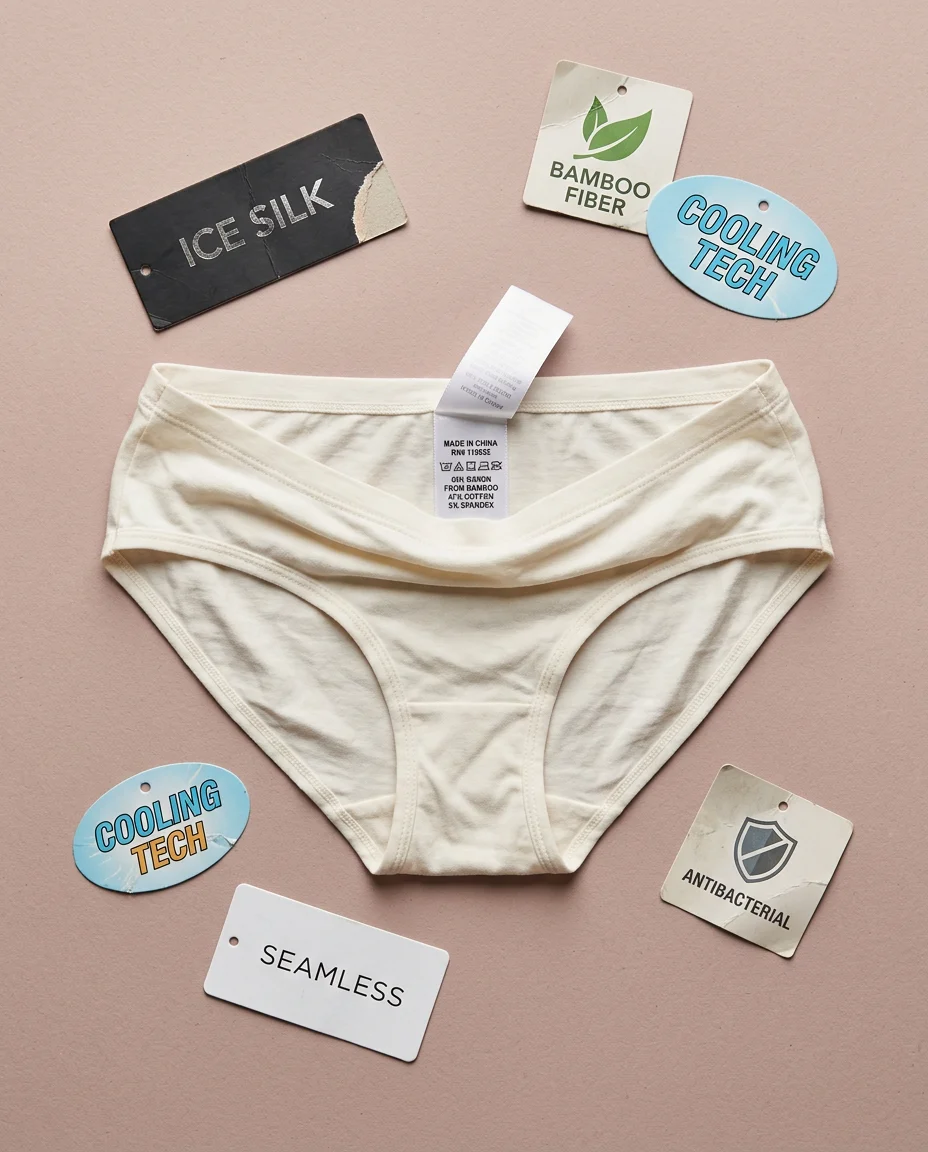
Your underwear label says "ice silk," "bamboo fiber," "seamless," "cooling technology," and "antibacterial." Three of those five terms do not mean what you think they mean. We deconstructed each marketing claim against published fiber science data and found a consistent pattern: the most expensive-sounding terms describe the cheapest materials.