Fabric Science2026-04-0511 min read
Is Bamboo Underwear Breathable? The Science Answer
Karl XiaoFactory Production Director
Part of the The Fiber Lab series
Part of the The Fiber Lab series
"is bamboo underwear breathable" — this search query grew 120% in 2026. Another related query, "bamboo underwear reviews," surged by 400%. Consumers are asking the same question: is bamboo underwear actually breathable?
But the question itself has a fundamental flaw. "Bamboo fiber" is not an accurate fiber classification. Before answering "is it breathable," we need to first understand what consumers are actually buying.
According to our industry research, nearly all underwear products marketed as "bamboo fiber" have labels listing the actual composition as "regenerated cellulose fiber" or "viscose" — not "bamboo fiber." This distinction is not merely a terminology issue; it directly affects your ability to accurately assess a garment's performance.
A noteworthy gender difference: women's bamboo underwear search volume grew +30%, while men's actually declined -10%. During the same period, men's organic cotton underwear searches grew +40–60%. This indicates that male consumers are shifting away from "bamboo fiber" toward materials with clear certification standards — organic cotton clearly commands higher trust.
This article uses the scientific term "regenerated cellulose fiber." When discussing consumer search habits and market regulation, we reference the common term "bamboo fiber." For a similar methodology of deconstructing marketing terminology, see our exposé on "ice silk" underwear — both "ice silk" and "bamboo fiber" are marketing terms that need to be redefined within a scientific framework.
What most consumers and brands don't realize is that "bamboo fiber" actually refers to two completely different technical pathways:
Natural Bamboo Bast Fiber — Physical Extraction Pathway
Fibers are extracted directly from bamboo through mechanical or physical means, preserving bamboo's natural cellulose structure. This process has low yield and extremely high cost. The resulting fabric retains bamboo's natural hollow structure, which theoretically provides excellent breathability and moisture absorption.
Market status: Virtually non-existent in the underwear market. Natural bamboo bast fiber production costs 5–10 times that of conventional viscose, and it is currently used primarily in high-end home textiles and specialty industrial materials.
Bamboo Pulp Fiber (Regenerated Cellulose) — Chemical Dissolution Pathway
Bamboo is processed into pulp, then dissolved through chemical solvents (typically carbon disulfide or NMMO), and finally regenerated into fiber through a spinning process. This process completely transforms the fiber's original structure — the resulting fiber is chemically identical to wood-pulp viscose or Modal.
Market status: Nearly 100% of underwear products marketed as "bamboo fiber" follow this pathway. Product labels list "regenerated cellulose fiber," "viscose," or "Modal."
Consumers believe "bamboo fiber underwear" possesses bamboo's natural properties (antibacterial, breathable, eco-friendly), but these characteristics belong to natural bamboo bast fiber — not the bamboo-pulp regenerated cellulose fiber they are actually purchasing. The performance of the latter depends on the physical parameters of regenerated cellulose fiber itself, with no direct relationship to bamboo as a raw material. It's like brandy made from grapes — you wouldn't claim brandy has the nutritional value of grapes.
Setting aside the terminology debate, let's answer consumers' core question with data. How breathable is regenerated cellulose fiber (viscose/Modal) made from bamboo pulp?
Regenerated cellulose fiber outperforms cotton in moisture absorption, which is determined by its physical structure:
Conclusion: Regenerated cellulose fiber made from bamboo pulp is indeed more breathable than cotton, but this is not due to "bamboo" — it's an inherent physical property of regenerated cellulose fiber. The same moisture absorption and breathability can be achieved using beechwood (Modal) or eucalyptus (Lyocell) as raw materials.
For detailed technical parameters on Modal and Lyocell fiber performance, see our Modal vs Lyocell Fabric Deep Comparison.
Is "bamboo fiber" underwear breathable? If the product uses regenerated cellulose fiber made from bamboo pulp (which is the vast majority of cases on the market), the answer is more breathable than cotton. Moisture absorption rate is approximately 12.5–13.5%, significantly higher than cotton's 7–8.5%. But this advantage comes from the inherent physical properties of regenerated cellulose fiber, regardless of whether the raw material is bamboo.
Consumer testing data reveals a contradictory phenomenon: among products labeled "bamboo fiber," some offer excellent breathability while others feel hot and stuffy. The reasons include:
Many products marketed as "bamboo fiber" actually contain significant amounts of synthetic fiber. For example, one product labeled "bamboo fiber underwear" has an actual composition of viscose (from bamboo) 60% + nylon 30% + spandex 10% — nylon and spandex have far lower breathability than regenerated cellulose fiber, dragging down the overall breathability performance.
Even with identical fiber composition, fabric weight (g/m²) ranges from 120 to 240. Low-weight fabrics (120–150 g/m²) are lighter and more breathable but less durable; high-weight fabrics (200+ g/m²) are thicker but with reduced breathability. Consumers cannot determine fabric weight from the "bamboo fiber" label alone.
Some low-priced products undergo structural changes in the fabric after 10–20 washes, with reduced inter-fiber spacing and significantly decreased breathability. This relates to fiber quality and finishing processes, not the raw material source.
2026 data reveals an interesting gender divergence:
| Dimension | Women | Men |
|---|---|---|
| Bamboo underwear search trend | +30% | -10% |
| Organic cotton underwear search trend | +40% | +40–60% |
| Trust driver | Sustainability narrative + soft touch | Functional verification + certification standards |
| Information sensitivity | More focused on brand story and material origin | More focused on specific performance data and compliance claims |
Our analysis: Male consumers take a more pragmatic, skeptical approach toward claims about "bamboo fiber's" antibacterial and breathability properties. When regulatory bodies like the FTC publicly penalize "bamboo fiber" false advertising, male consumers are more inclined to choose materials with clear certification systems (GOTS, OEKO-TEX). Organic cotton has the GOTS certification framework supporting its claims, while "bamboo fiber" claims have been refuted at the regulatory level.
The implication for brands: If your target audience includes male consumers, using accurate fiber classifications (Modal/viscose/Lyocell) rather than the "bamboo fiber" marketing term will earn higher trust.
Major textile market regulatory bodies worldwide have clear — and increasingly strict — positions on "bamboo fiber" labeling:
The most common mistake export brands make is writing "bamboo fiber" on product labels. Whether bamboo pulp is processed into viscose or Modal, the correct label is "Rayon (from bamboo)," "Viscose (from bamboo)," or "Modal" — depending on the actual fiber type and processing method. The FTC has issued over $2.5 million in cumulative fines for "bamboo fiber" false labeling.
We compiled actual label data from multiple "bamboo fiber" underwear products currently on the market:
Key finding: The last case is the most representative — a product marketed as "bamboo fiber cooling" may actually use wood-source Modal rather than bamboo-source viscose. This further demonstrates that "bamboo fiber" as a marketing term has become decoupled from actual raw materials.
For brands developing or selling underwear products, here is a terminology migration guide from "bamboo fiber" to a scientific framework:
For in-depth analysis of regenerated cellulose fiber performance, we recommend reading our Modal vs Lyocell Fabric Deep Comparison. For scientific deconstruction of other marketing terms, see our exposé on "ice silk" underwear.
Core principle: Fiber type ≠ Raw material source. Bamboo is a raw material source; viscose/Modal/Lyocell are fiber types. Both can be mentioned simultaneously ("viscose fiber made from bamboo pulp"), but the raw material source cannot replace the fiber type (viscose cannot be called "bamboo fiber"). Using cotton as an analogy: we say "cotton underwear" because cotton fiber is itself the fiber type; but we don't call polyester "petroleum fiber" — even though its raw material is indeed petroleum.
Returning to the original question: "Is bamboo underwear breathable?"
Short answer: If you're purchasing regenerated cellulose fiber underwear made from bamboo pulp (which is nearly all "bamboo fiber" products on the market), its breathability is indeed superior to cotton — moisture absorption rate of 12.5–13.5% vs cotton's 7–8.5%.
Complete answer: This breathability advantage comes from the physical properties of regenerated cellulose fiber, with no causal relationship to bamboo as a raw material. The same performance can be achieved with beechwood-source Modal or eucalyptus-source Lyocell — and the latter two have clearer certification systems and fewer compliance controversies.
"Bamboo fiber" is a marketing term being phased out by global regulatory authorities. The FTC has issued over $2.5 million in cumulative fines, and both the EU and China require accurate generic fiber names. For consumers, we recommend checking the actual fiber composition on labels rather than marketing terminology. For brands, building product stories with accurate fiber classifications and verifiable performance data will earn greater long-term trust than relying on the "bamboo fiber" label.
Data Sources: This article references US Federal Trade Commission (FTC) Textile Fiber Products Identification Act enforcement records, EU Textile Regulation (EU No 1007/2011), China Textile Fiber Content Labeling Standard (GB/T 29862), fiber diameter and moisture absorption data from textile engineering reference materials, and multi-brand consumer-tested fabric composition analysis data.
Deep dive into fabric composition, properties, and performance at the microscopic level
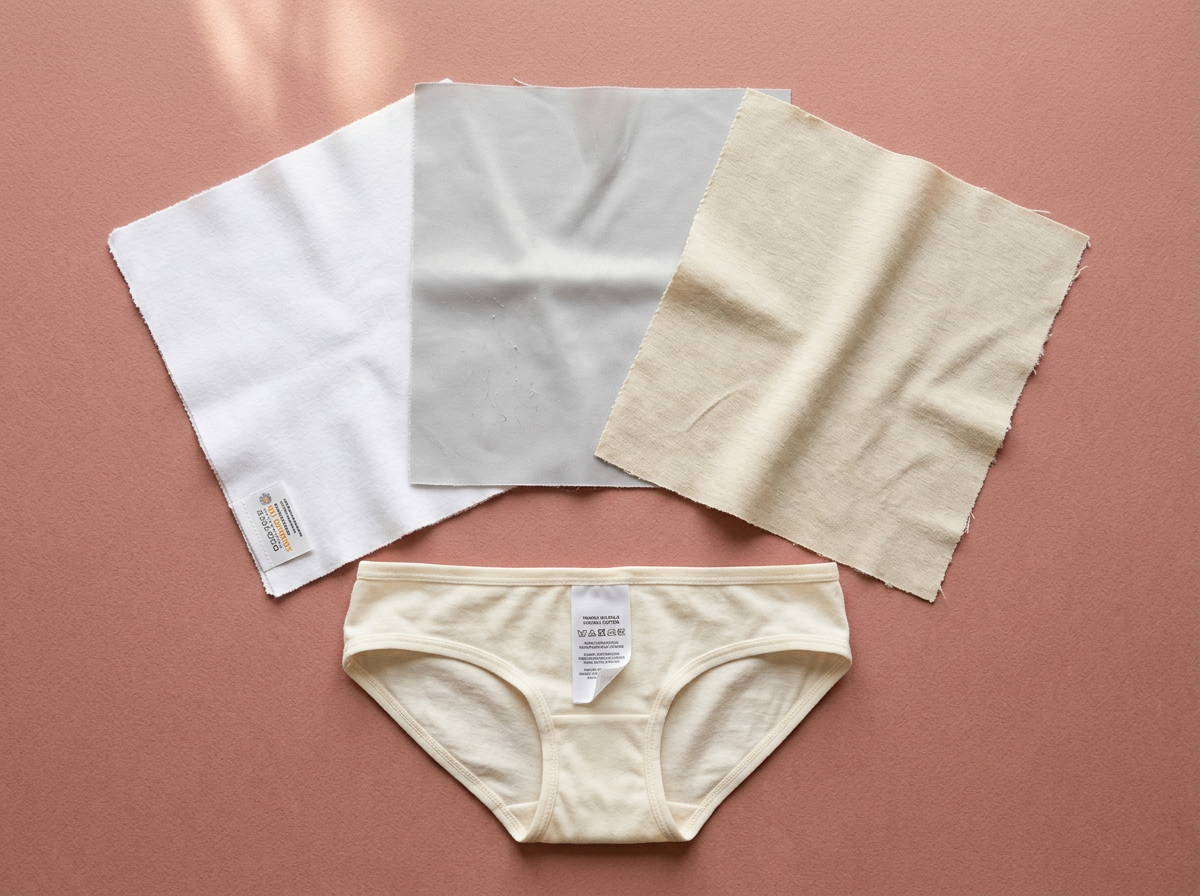
That recurring rash below your waistline. The itch that will not go away. The red marks where your underwear elastic sits. "Underwear rash" and "underwear irritation" searches have grown steadily as consumers discover their underwear may be the hidden cause of skin problems. We analyzed the four fabric-skin interaction mechanisms — bacterial microclimate, chemical contact dermatitis, pressure dermatitis, and antibacterial treatment sensitivity — with test data across 30+ brands.
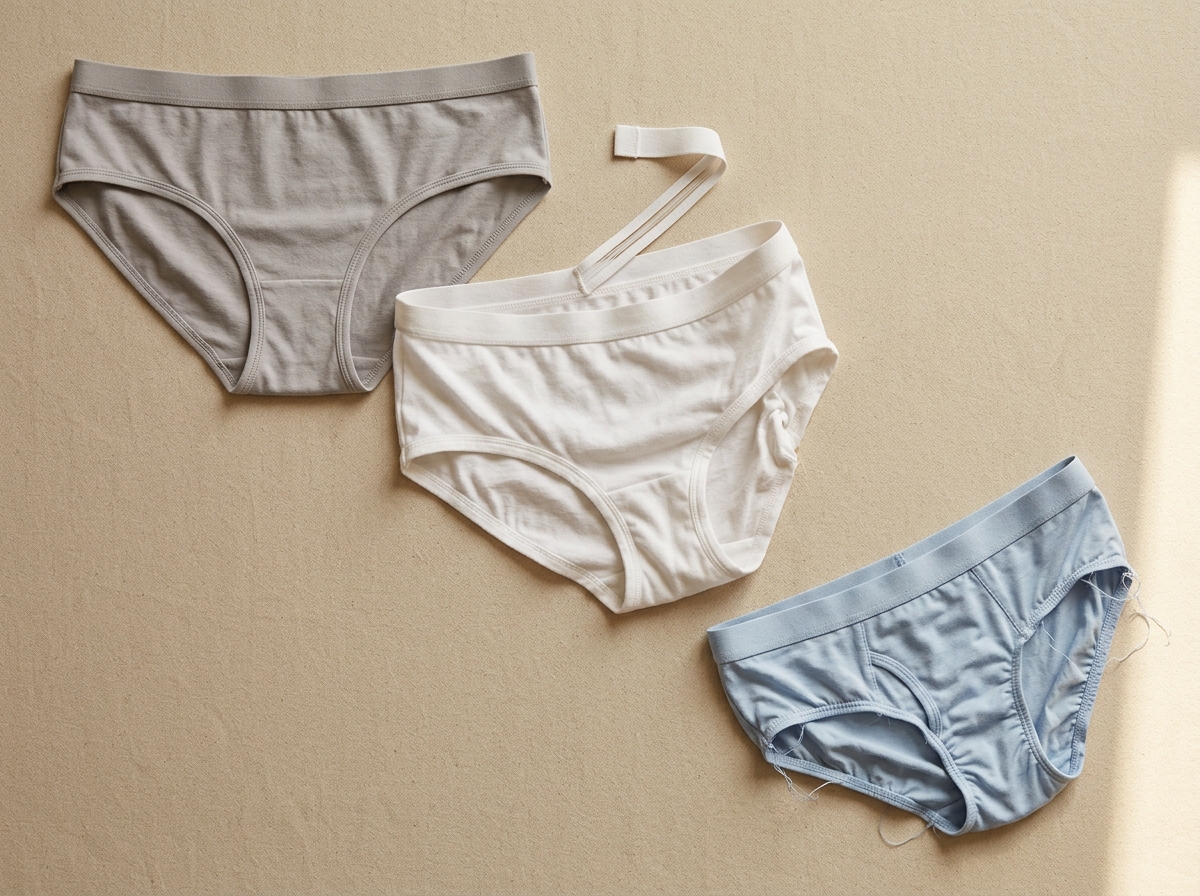
You adjust your underwear five times before lunch. The waistband rolls, the legs ride up, and everything bunches in the wrong places. "Why does my underwear keep riding up" is one of the most searched underwear complaints globally. We break down the four scientific causes — elastic recovery degradation, rise-torso mismatch, leg opening geometry, and fabric stretch ratio — and provide body-type-specific solutions based on testing across 30+ brands.
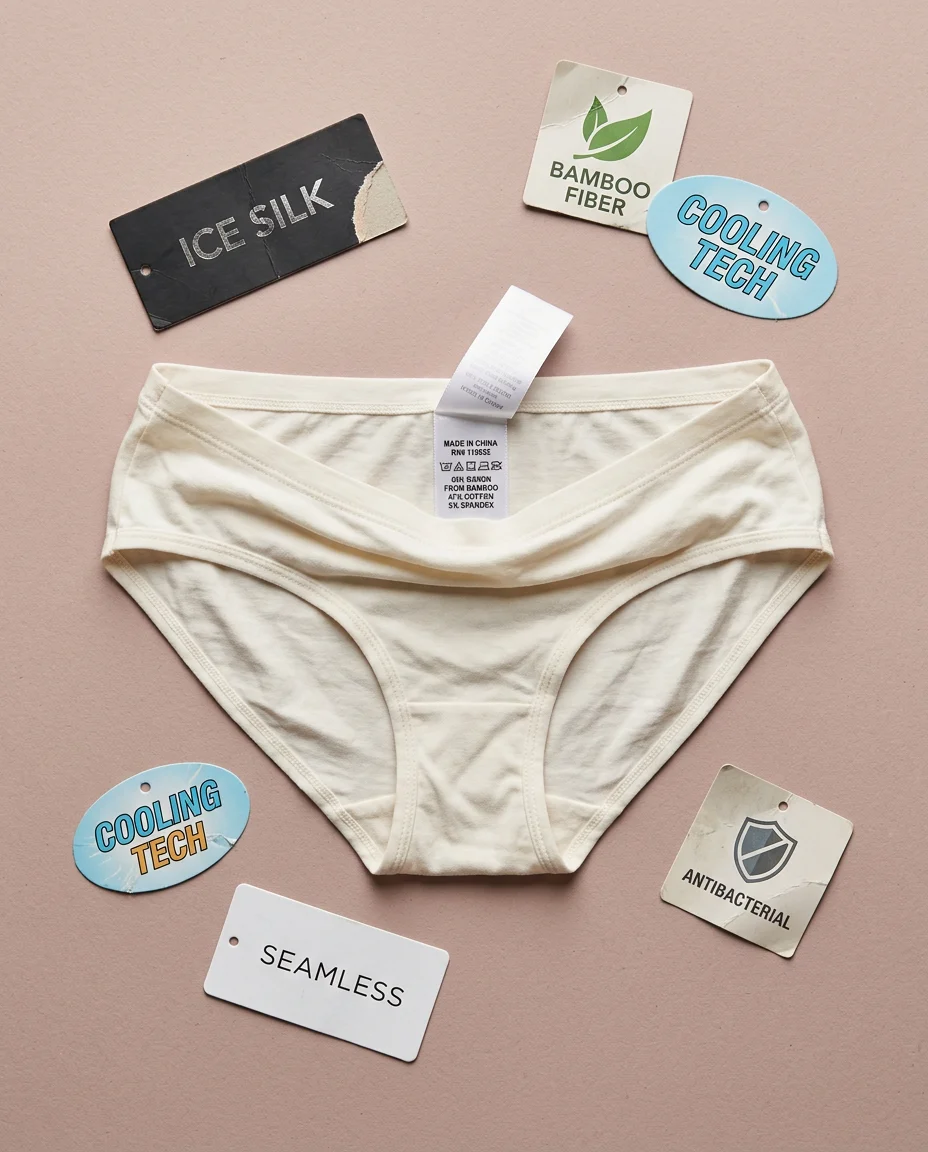
Your underwear label says "ice silk," "bamboo fiber," "seamless," "cooling technology," and "antibacterial." Three of those five terms do not mean what you think they mean. We deconstructed each marketing claim against published fiber science data and found a consistent pattern: the most expensive-sounding terms describe the cheapest materials.