Fabric Science2026-04-0510 min read
The Real Value of Organic Cotton Underwear: Performance Testing, Skin Sensitivity & Brand Sourcing Guide
Paul PengFactory Technology Director
Part of the The Fiber Lab series
Part of the The Fiber Lab series
Q1 2026 search data sent a clear signal: "organic cotton underwear" is no longer a niche query. Men's organic cotton underwear search volume grew +40-60%, and the organic cotton T-shirt category surged +850%. Behind these numbers lies a shift in consumer behavior — from "organic is nice to have" to "I need to verify it's real."
However, consumer testing data also revealed a troubling phenomenon: some brands labeled as "organic cotton" only use organic cotton in the outer fabric, while the gusset and other areas in direct skin contact remain conventional cotton. In a blind evaluation of 34 underwear styles, one brand's organic cotton product was directly assessed by testers as "organic cotton = greenwashing, feels the same as regular cotton, thick and stifling."
This means two things: First, the real value of organic cotton in underwear needs objective evaluation; second, "greenwashing" organic cotton is eroding consumer trust — which is unfair to brands genuinely committed to organic cotton.
This article focuses on organic cotton's performance specifically in the underwear category. For differences in cultivation practices, environmental impact, and fiber quality comparisons between organic and conventional cotton, refer to our Organic Cotton vs. Conventional Cotton Deep Dive.
A common pattern found in consumer testing: products marketed as "organic cotton underwear" do use organic cotton for the body fabric, but the gusset (the area in direct contact with the most sensitive skin) uses conventional cotton or even synthetic blends. This is equivalent to cutting corners at the most critical "organic" location — when the gusset safety is precisely why consumers choose organic cotton.
Underwear is fundamentally different from other apparel categories. Organic cotton's advantages on a T-shirt are "icing on the cake," but on underwear they may be "decisive."
Maximum Skin Contact Area, Most Sensitive Zones
Underwear covers the body's thinnest, most sensitive skin areas — the groin, buttocks, and intimate regions. Chemical residues that might be "tolerable" on a T-shirt can cause contact dermatitis, itching, and rashes in these areas. The irritation risk from pesticides, defoliants, formaldehyde, and heavy metals residual in conventional cotton is significantly amplified at these sites.
The Amplification Effect of Heat and Moisture
Intimate areas are naturally warmer and more humid. Heat and moisture accelerate the skin's absorption of chemical residues — which means organic cotton's purity has practical value in these areas that exceeds surface-level metrics. A study on contact dermatitis found that chemical irritation response rates in enclosed, moist environments are 3-5 times higher than in dry environments.
Prolonged Continuous Exposure
Underwear is worn for 12-24 hours at a time — far exceeding T-shirts (4-8 hours) or outerwear (occasional wear). Extended exposure increases the cumulative contact dose of any chemical residues in the fabric. GOTS-certified organic cotton prohibits synthetic chemicals throughout the entire production process, eliminating this risk at the source.
Durability Validation Under High-Frequency Washing
Underwear is washed far more frequently than other garments (daily or every other day). Organic cotton fibers are typically longer (hand-picking reduces damage), maintaining structural integrity through hundreds of wash cycles better than conventional cotton. This means organic cotton underwear may have a longer actual service life, partially offsetting the initial premium.
Category-Driven Consumer Awareness
"Organic cotton vs cotton" search volume surged 250% — and this search behavior is most concentrated in the underwear category. Underwear is the category where consumers most actively seek organic materials, and this demand trend continues to accelerate in 2026.
The core value of organic cotton in underwear is not about being "more eco-friendly" — it's about eliminating chemical irritants. Here are the residues that may exist in conventional cotton and their effects on sensitive areas:
Organic cotton fibers are typically long-staple — because hand-picking avoids the fiber breakage caused by mechanical harvesting. Longer fibers produce smoother yarn with fewer protruding fiber ends. In underwear, this means it feels softer from the very first wear, and gets softer with every wash — whereas conventional cotton may feel increasingly rough as short fibers break and pill. For detailed data, see our Organic Cotton vs. Conventional Cotton Deep Dive.
Consumer testing data shows that an "organic cotton" label does not always mean the entire product uses organic cotton. Here are the typical practices found in testing:
Scope Certificate: Proves that a factory has the capability to produce GOTS-certified products — but does not prove that the specific product you purchased uses certified organic cotton.
Transaction Certificate (TC): Proves that the specific batch of fabric you purchased is genuinely certified organic cotton — this is the key document brands should request from manufacturers.
Any manufacturer serious about organic cotton should provide a TC without hesitation. If they only show a Scope Certificate and refuse to provide a TC, that is a clear warning signal.
Let's use data to answer the question every brand asks: how much more does organic cotton underwear actually cost, and is it worth it?
Organic cotton additional cost: approximately $300-600 / 1,000 units
Potential returns:
Net impact: Through premium pricing alone, the organic cotton additional cost is typically recouped within the first 100 units sold — this does not even include return rate reductions and brand equity appreciation.
For brands planning to launch an organic cotton underwear product line, here are the key steps when working with manufacturers:
Verify GOTS-Certified Suppliers
Request the manufacturer's GOTS Scope Certificate and verify their certification status and validity period. Confirm that the certification body (such as Control Union, IMO, OneCert, etc.) is a GOTS-recognized certifier.
Request Transaction Certificates (TC)
Every production batch should be accompanied by a GOTS Transaction Certificate. A TC proves that the specific fabric batch used in your order is genuinely certified organic cotton — this is the key document that distinguishes genuine organic cotton from greenwashing.
Confirm Segregated Processing Requirements
Organic cotton must be processed on dedicated production lines to prevent cross-contamination with conventional fibers. Confirm that the manufacturer has segregated processing capability — including separate spinning, weaving, dyeing, and finishing operations.
Third-Party Testing Verification
Support and cooperate with independent laboratory testing (SGS, Intertek) to verify:
Complete Documentation Trail
Ensure every production batch comes with a complete document chain: GOTS Transaction Certificate + organic cotton procurement traceability documents + third-party test reports. These documents are not only compliance requirements but also core assets in the brand's marketing trust chain.
When communicating with manufacturers in tech packs, organic cotton products require additional notations:
Organic cotton underwear demand is transitioning from "niche" to "mainstream." The 2026 search data is unambiguous — the +40-60% growth among men means this is no longer a "women's health" topic but a cross-gender health consumption trend.
However, the risk of greenwashing organic cotton is growing in parallel. Brands face a choice: build a genuine organic cotton product line, or just play at the edges of marketing. The former requires investment in GOTS certification, segregated processing, and complete traceability systems, but earns long-term trust and premium pricing power; the latter has lower short-term costs but faces exposure through consumer testing and regulatory risks.
For brands evaluating an organic cotton underwear product line, engaging early with a manufacturing partner that has GOTS certification capability and segregated processing experience is an effective way to reduce trial-and-error costs and ensure full-chain compliance.
For a comprehensive comparison of women's underwear across all fabric types and price tiers — including organic cotton's position relative to modal and regenerated cellulose — see our Best Underwear for Women 2026 Guide.
Organic cotton is one important piece of the sustainability puzzle, but not the whole picture. For a comprehensive four-dimension sustainability evaluation framework covering all underwear fabrics, see our Sustainable Underwear Material Science Guide.
Data Sources: This article references 2024-2026 organic cotton underwear search trend data, Global Organic Textile Standard (GOTS) certification requirements, Textile Exchange organic cotton market reports, multi-brand consumer testing fabric composition and hand-feel evaluation data, and textile industry testing standards (GB 18401, GB/T 29862, relevant ISO standards).
Deep dive into fabric composition, properties, and performance at the microscopic level
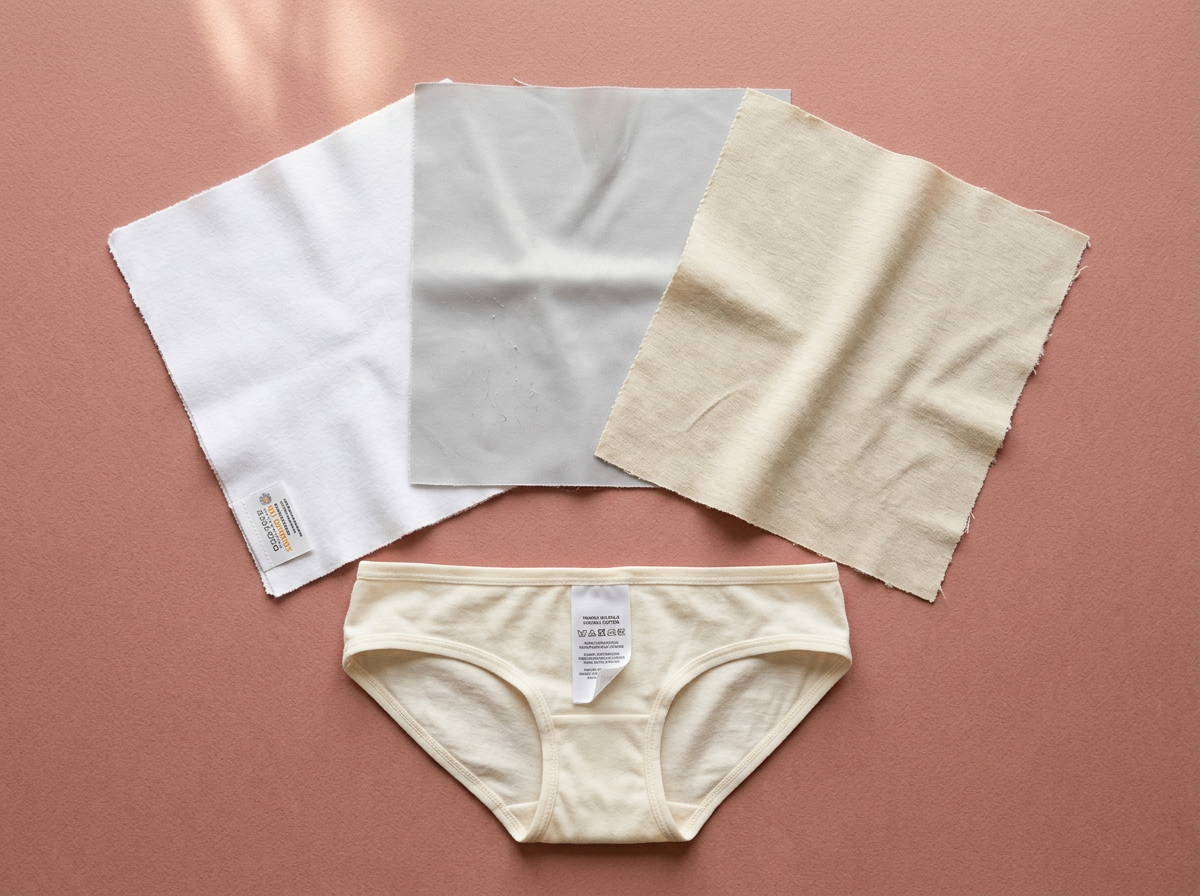
That recurring rash below your waistline. The itch that will not go away. The red marks where your underwear elastic sits. "Underwear rash" and "underwear irritation" searches have grown steadily as consumers discover their underwear may be the hidden cause of skin problems. We analyzed the four fabric-skin interaction mechanisms — bacterial microclimate, chemical contact dermatitis, pressure dermatitis, and antibacterial treatment sensitivity — with test data across 30+ brands.
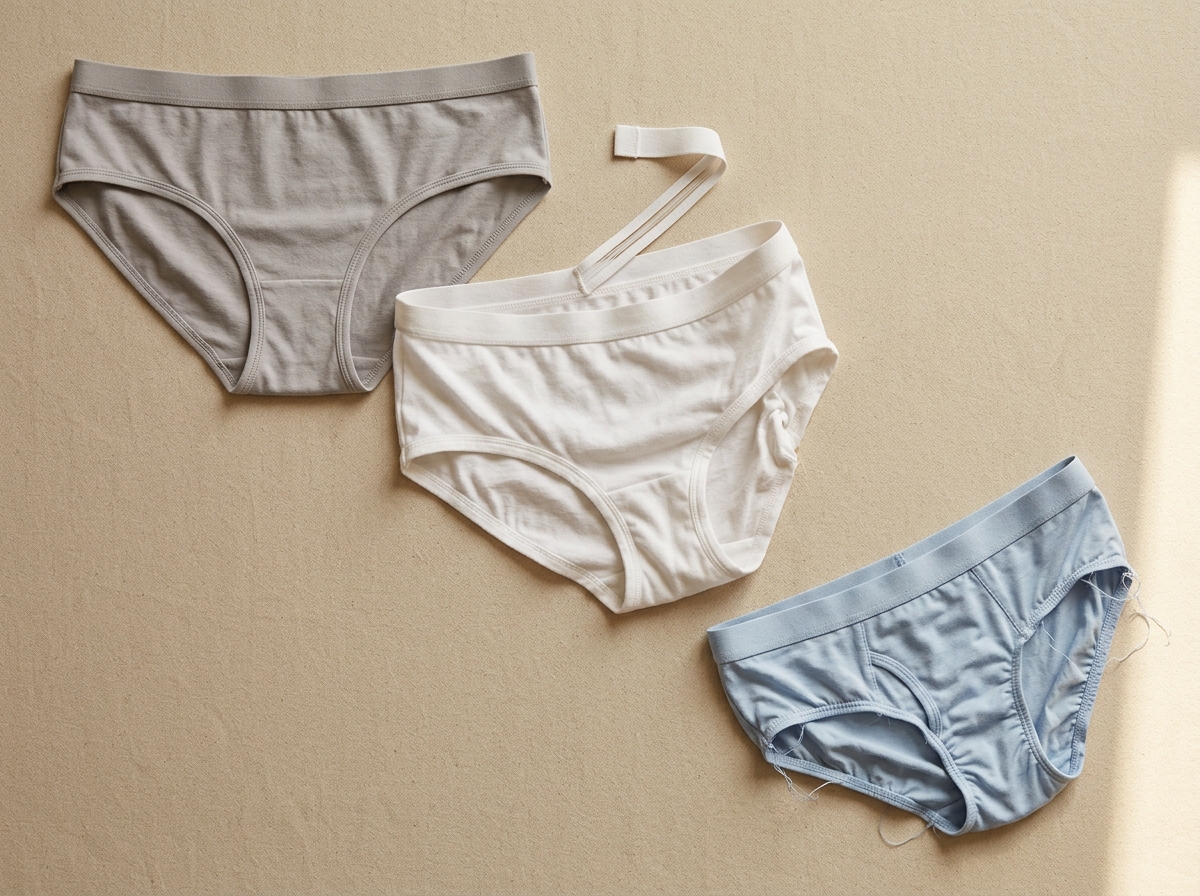
You adjust your underwear five times before lunch. The waistband rolls, the legs ride up, and everything bunches in the wrong places. "Why does my underwear keep riding up" is one of the most searched underwear complaints globally. We break down the four scientific causes — elastic recovery degradation, rise-torso mismatch, leg opening geometry, and fabric stretch ratio — and provide body-type-specific solutions based on testing across 30+ brands.
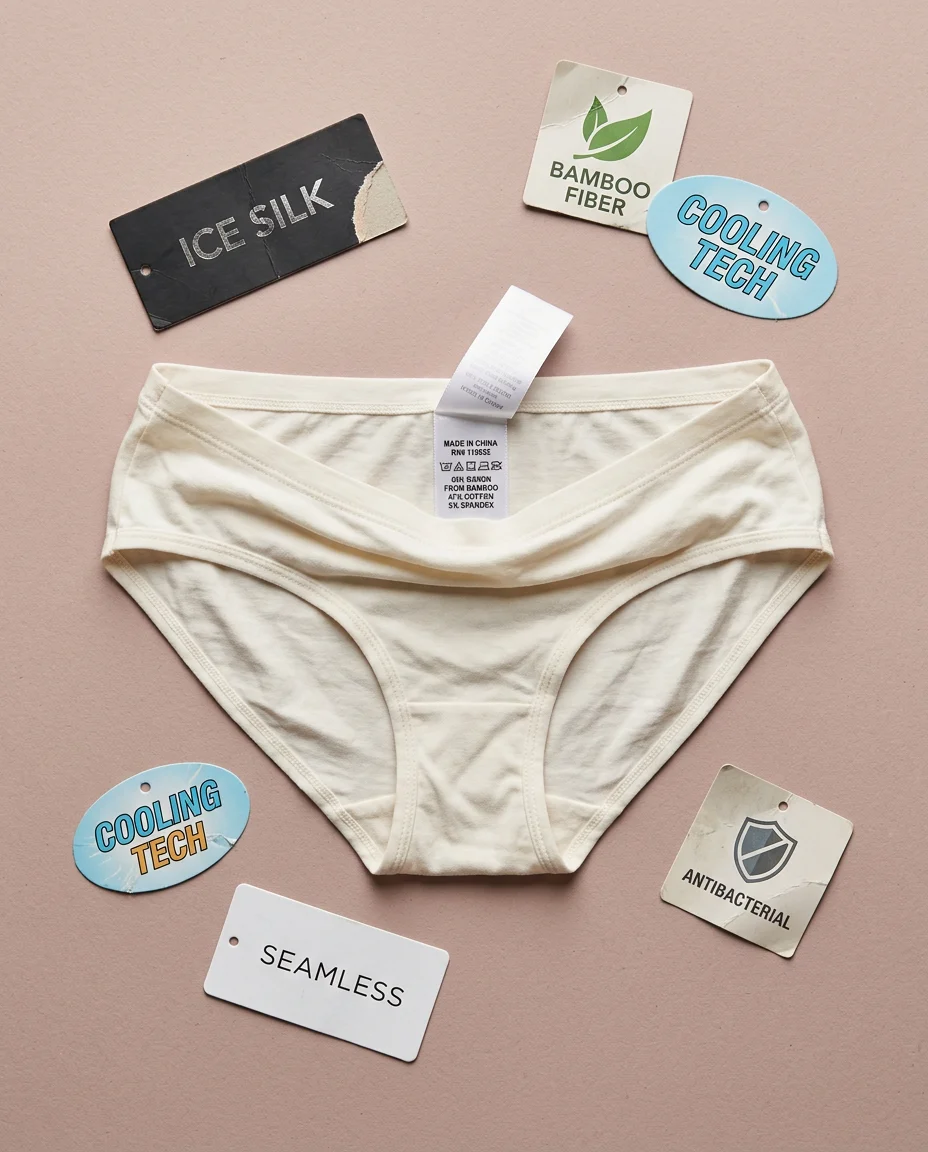
Your underwear label says "ice silk," "bamboo fiber," "seamless," "cooling technology," and "antibacterial." Three of those five terms do not mean what you think they mean. We deconstructed each marketing claim against published fiber science data and found a consistent pattern: the most expensive-sounding terms describe the cheapest materials.