Fabric Science2026-04-0612 min read
Sustainable Underwear Guide 2026: Material Science Beyond Greenwashing
Part of the The Fiber Lab series
Part of the The Fiber Lab series
2026 search data reveals an interesting divergence:
Consumers demand evidence, not labels
Interpretation: Consumers are getting smarter. "What is sustainable fashion" growing 160% shows they want to learn — but "sustainable fabrics" declining 30% shows they no longer accept a brand slapping an "eco-friendly" label and calling it done. This is a shift from "accepting marketing" to "demanding evidence."
The purpose of this article is to provide a material science-based evaluation framework to help you navigate between brand marketing language and genuine sustainability.
True sustainability is not a "yes or no" judgment — it's a comprehensive assessment across four dimensions:
Dimension 1: Raw Material Sourcing — Where Does It Come From?
The environmental footprint of raw materials is the starting point for sustainability. Core questions:
Most common greenwashing: Claiming "natural" or "plant-based" while the cultivation process uses significant pesticides/fertilizers/water resources.
Dimension 2: Production Process — How Is It Made?
The conversion from raw material to fabric is the core variable in sustainability. The same raw material processed with different methods can have a 10x difference in environmental footprint.
Key metrics:
Most common greenwashing: Promoting "made from X material" (raw material level) while remaining silent about the environmental impact of the production process.
Dimension 3: Product Lifespan — How Long Does It Last?
One pair of underwear worn 100 times is more sustainable than three pairs each worn 33 times — even if the former has a slightly higher production environmental footprint.
Key factors affecting product lifespan:
Most overlooked: Blind-test data across 34 brands showed Modal underwear had a significantly lower daily cost ($0.02-0.04/day) than most cotton brands. Better durability = lower replacement frequency = lower long-term environmental footprint.
Dimension 4: End-of-Life Disposal — Where Does It Go?
What happens to underwear after disposal is the final link in sustainability, but also the most frequently ignored.
Biodegradability comparison:
Real-world challenge: The vast majority of underwear today is blended (natural fibers + spandex), which creates technical obstacles for both recycling and biodegradation. Truly "biodegradable" underwear remains extremely rare.
4-dimension comparison across 7 common underwear fabrics (hover to highlight)
Overall ratings are not absolute "good or bad" judgments but weighted assessments across four dimensions. Lyocell/Tencel receives the highest rating primarily because its NMMO closed-loop process is one of the most environmentally efficient solutions in all fiber production. Modal falls slightly behind Lyocell on the production side (chemical recovery rate not as high as NMMO) but performs best on the product lifespan dimension. Organic cotton's weakness is water consumption — producing 1kg of organic cotton still requires approximately 10,000L of water, an inherent limitation of plant fibers.
Sustainability is not defined by marketing copy — it's verified through third-party certification. Here are the most relevant certifications in the underwear industry:
Interpretation: Top right = high search interest + high growth rate (consumer momentum). "Modal underwear" (+60%) and "bamboo fiber underwear" (+50%) show strong growth momentum, reflecting specific consumer demands for sustainable fiber underwear. "Sustainable underwear brands" slightly declined in growth (-7%), but maintained an absolute lead with a search interest of 100, indicating that sustainability has become a mainstream baseline for purchasing decisions. Additionally, the search growth for "bamboo vs cotton underwear" (+20%) shows consumers are carefully researching and comparing rather than buying blindly.
Some issues aren't as black-and-white as certifications, but are worth attention from consumers and brands:
Organic cotton eliminates pesticides and chemical fertilizers, but water consumption remains an inherent limitation of cotton.
Closed-loop vs. traditional process — the most dramatic difference in production sustainability
Liters of water per kilogram of fiber produced — organic cotton uses 40x more water than Lyocell
Producing 1kg of organic cotton requires approximately 10,000L of water — a stark contrast to Lyocell's 200-300L/kg. Additionally, some brands labeled "organic cotton" only use it on the outer layer, while the gusset and other critical contact areas remain conventional cotton.
For detailed analysis of this issue, see our Organic Cotton Underwear Deep Dive.
Bamboo grows quickly and doesn't require pesticides — making "bamboo fiber" sound sustainable. But virtually all "bamboo fiber" underwear on the market actually uses regenerated cellulose fiber (viscose) made from bamboo pulp, with a production process fundamentally no different from traditional viscose. The US FTC has issued over $2.5 million in penalties for misleading "bamboo fiber" marketing.
For complete analysis of bamboo fiber compliance risks, see our Bamboo Underwear Breathability Decoded.
Period underwear shows a +70% cross-search growth with sustainable underwear. Its sustainability logic is clear: one pair of reusable period underwear lasting 2-3 years replaces approximately 200-400 disposable pads/tampons. However, it's worth noting that the high-absorption layer of period underwear typically contains synthetic fibers (PU membrane, polyester layers), making end-of-life disposal more complex.
The vast majority of underwear today is a blend of natural/regenerated fibers with spandex (e.g., Modal 92% + spandex 8%). Spandex is not biodegradable, and in blends it is nearly impossible to separate and recycle. This means even if the main fabric is a sustainable fiber, adding spandex creates end-of-life disposal challenges. The industry is currently developing biodegradable elastic fibers (e.g., Roica V550), but these are not yet commercially available at scale.
Sustainable underwear assessment requires looking beyond marketing labels and examining four dimensions scientifically:
For our top-rated women's underwear selections across all fabric types — with sustainability as one of the evaluation dimensions — see our Best Underwear for Women 2026 Guide.
For a complete technical comparison of regenerated cellulose fibers (Modal, Lyocell, viscose), see Regenerated Cellulose Fiber Science Overview and Modal vs Lyocell In-Depth Comparison.
Data sources: This article references Google Trends 2026 Q1 search trend data, fiber production process parameters from Lenzing's 2024 annual sustainability report, global fiber production and market share data from Textile Exchange's 2024 Materials Market Report, US Federal Trade Commission (FTC) enforcement records on "bamboo fiber" labeling, GOTS and OEKO-TEX official certification standard documents, and product lifespan data from consumer blind tests of 34 brands by 10 independent testers.
Deep dive into fabric composition, properties, and performance at the microscopic level
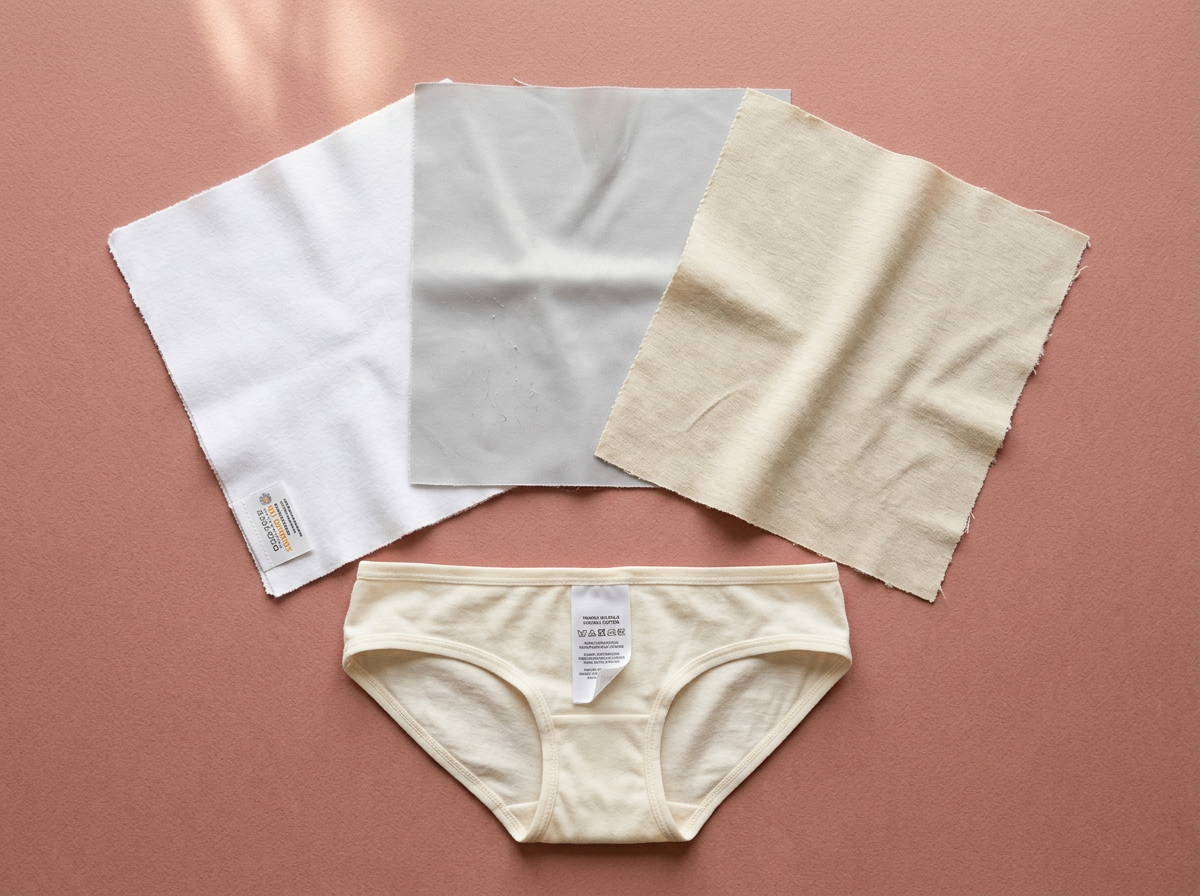
That recurring rash below your waistline. The itch that will not go away. The red marks where your underwear elastic sits. "Underwear rash" and "underwear irritation" searches have grown steadily as consumers discover their underwear may be the hidden cause of skin problems. We analyzed the four fabric-skin interaction mechanisms — bacterial microclimate, chemical contact dermatitis, pressure dermatitis, and antibacterial treatment sensitivity — with test data across 30+ brands.
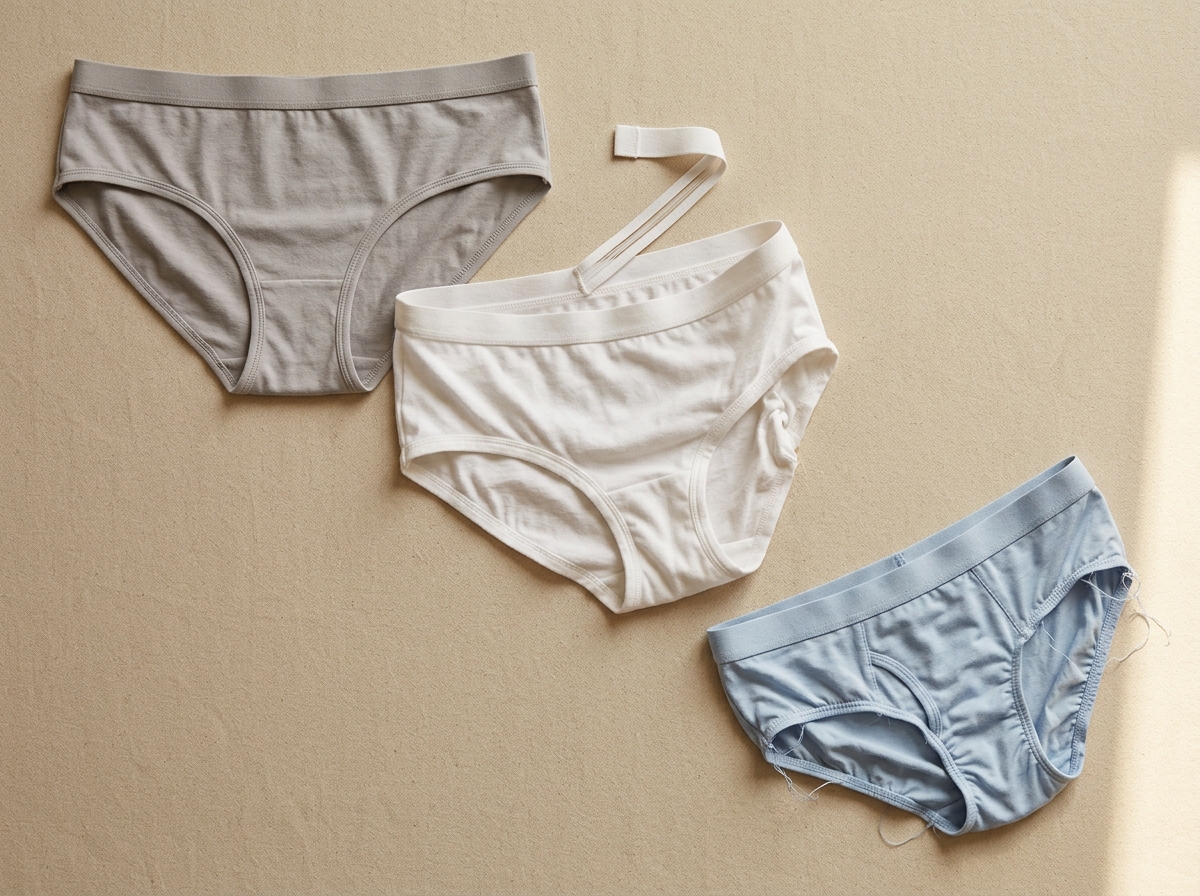
You adjust your underwear five times before lunch. The waistband rolls, the legs ride up, and everything bunches in the wrong places. "Why does my underwear keep riding up" is one of the most searched underwear complaints globally. We break down the four scientific causes — elastic recovery degradation, rise-torso mismatch, leg opening geometry, and fabric stretch ratio — and provide body-type-specific solutions based on testing across 30+ brands.
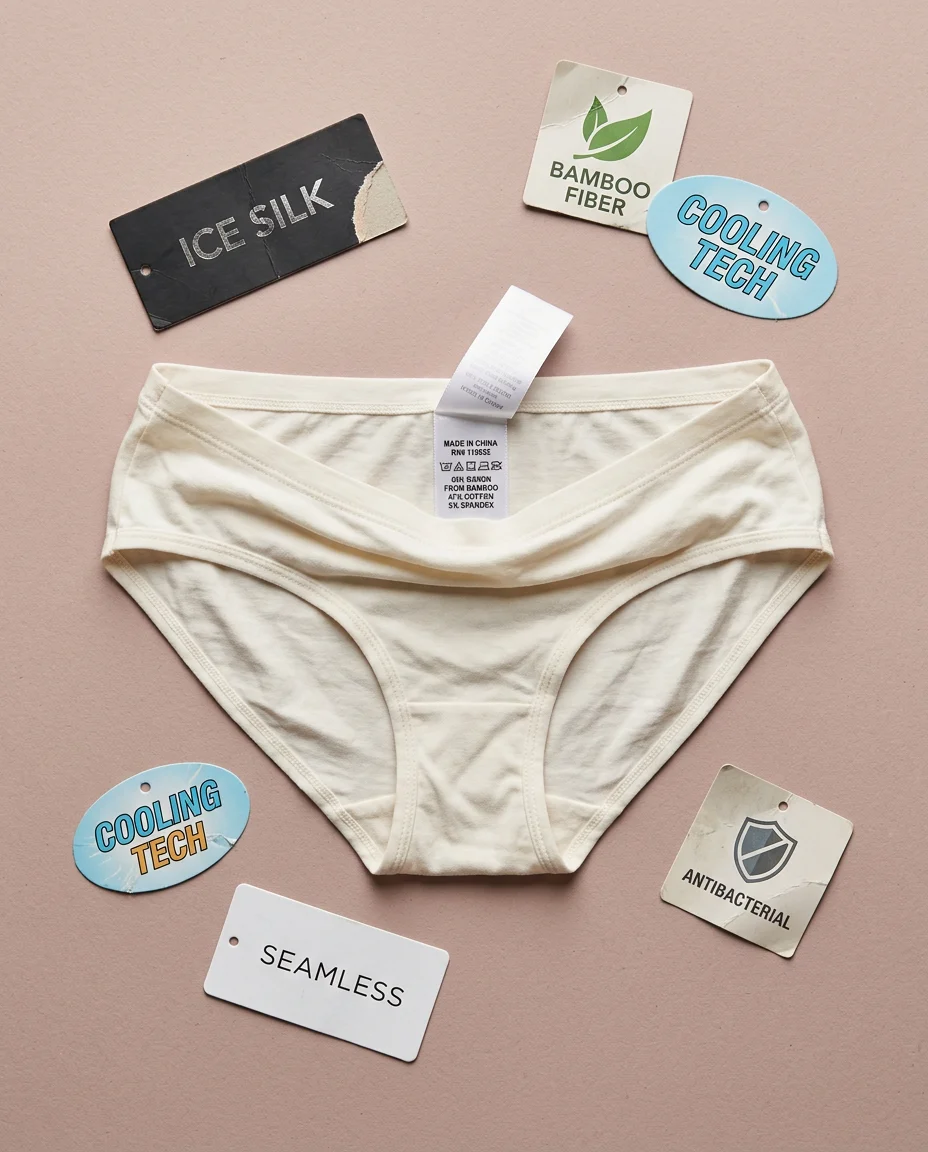
Your underwear label says "ice silk," "bamboo fiber," "seamless," "cooling technology," and "antibacterial." Three of those five terms do not mean what you think they mean. We deconstructed each marketing claim against published fiber science data and found a consistent pattern: the most expensive-sounding terms describe the cheapest materials.