Fabric Science2026-04-0412 min read
Modal vs Lyocell Fabric Comparison: Complete Guide for Underwear Brands
Karl XiaoFactory Production Director
Part of the The Fiber Lab series
Part of the The Fiber Lab series
In Q1 2026, two fabric search terms simultaneously hit peak values: "what is modal" search interest reached the maximum score of 100, while "lyocell fiber" searches grew 100%. Consumers are asking — and so are brands — what exactly is the difference between these two similarly-named fabrics?
Adding to the confusion, "tencel vs lyocell" searches also grew by 60%. What many people don't realize: Tencel is simply a trademark name for Lyocell.
We systematically compared Modal and Lyocell across every key difference — from raw material to finished product — based on fiber-level testing data, test results from 30+ brands, and production-side process parameters.
Modal is a semi-synthetic regenerated cellulose fiber primarily derived from beech wood pulp. During manufacturing, the wood pulp is chemically dissolved and then extruded through a spinning process to form fibers. Modal belongs to the second generation of "modified viscose" products, offering higher wet strength and lower shrinkage compared to traditional viscose rayon.
In the fabric hierarchy, Modal fibers can achieve a diameter of 10-15 microns — natural silk has a diameter of 10-12 microns. This means premium Modal can virtually replicate the touch of real silk.
Lyocell is also a regenerated cellulose fiber, but primarily derived from eucalyptus pulp, with some products using mixed hardwood pulp. Lyocell is the third generation of regenerated cellulose fiber, produced using the NMMO solvent spinning process (N-Methylmorpholine N-oxide), which is a closed-loop system — solvent recovery exceeds 99.5%, making it widely recognized as one of the most environmentally friendly manufactured fiber production processes.
Lyocell's fiber diameter falls in the 11-15 micron range, similar to Modal, but with a fiber cross-section closer to circular, giving Lyocell fabric better drape and a higher dry strength/wet strength ratio.
Tencel is a registered trademark of Lenzing AG for its Lyocell fibers.
All Tencel is Lyocell, but not all Lyocell is Tencel. Only Lyocell fibers produced by Lenzing can use the "Tencel" brand name on product labels. Similar fibers from other manufacturers (such as Aditya Birla Group's Birla Lyocell) can only be labeled as "Lyocell" or "Regenerated Cellulose."
Label Compliance Note: When exporting to Western markets, regardless of brand, the composition label should state "Lyocell" or "Lenzing Lyocell" (if using Lenzing fibers) rather than just "Tencel." The US FTC and EU Textile Regulation require generic fiber names.
This distinction is critical for brands: Lyocell fibers using the Tencel brand typically cost 15-25% more than non-Lenzing Lyocell. Whether this premium is worth paying depends on the target market's sensitivity to brand recognition — in Western D2C markets, the "Tencel" brand name does genuinely boost consumer trust.
Several key findings deserve deeper examination:
The wet strength difference is the most underrated metric. Lyocell's wet strength retention is approximately 85%, far exceeding Modal's 60%. This means in washing and sweating scenarios, Lyocell fabric better maintains its structural integrity. For underwear — a product category with high-frequency washing — this difference accumulates over time into a significant durability gap.
Modal has slightly higher moisture absorption. Modal's moisture absorption rate is approximately 50% higher than cotton, while Lyocell's is about 40% higher. For intimate underwear applications, Modal has a slight advantage in moisture management.
Softer fibers: Modal fiber cross-sections are bean-shaped with smoother surfaces, creating less friction against skin. Tested data: 100-count Lenzing Modal has a fiber diameter of only 10-15 microns, approaching natural silk (10-12 microns), creating a "naked feel" when worn.
Slightly better moisture absorption: Modal's moisture absorption rate is approximately 1 percentage point higher than Lyocell. In intimate underwear scenarios, this translates to better sweat management capability.
Higher wet strength: Lyocell's wet tenacity is approximately 1.7x that of Modal, meaning the fabric is less likely to thin or deform after washing.
Better drape: Lyocell fiber cross-sections are closer to circular, giving the fabric a more natural drape, suitable for outerwear or loungewear categories.
Outstanding environmental credentials: The NMMO closed-loop process achieves over 99.5% solvent recovery, making it the most environmentally friendly manufactured fiber production process currently available.
Inner Modal + Outer Lyocell: The inner layer uses Modal against the skin (soft and moisture-absorbing), while the outer layer uses Lyocell (strong and moisture-wicking). This dual-layer design is increasingly common in premium underwear, costing approximately 3x that of standard underwear, but resolving the "comfort vs. durability" trade-off.
From real-world testing feedback: the dual-layer design allows body heat to pass through the fabric, so even extended wear doesn't feel stuffy.
Modal fabric has a unique thread count grading system that directly affects hand feel and durability. This is the most commonly overlooked technical parameter when brands select Modal.
Why does thread count matter? Higher count means finer, denser yarn with a touch closer to silk. 100-count Lenzing Modal achieves fiber diameter of 10-15 microns — natural silk is 10-12 microns. This means premium Modal can virtually "pass" as silk in tactile feel.
However, thread count and durability do not have a linear relationship. 80-count is currently the optimal value-for-money choice — smooth enough, no pilling, no deformation, and without the special care requirements of 100-count.
Lyocell fabric typically does not use "thread count" as a primary grading metric; more common parameters are fiber linear density (dtex) and fabric weight (GSM). In underwear applications, Lyocell fabric GSM typically falls in the 120-180g/m² range.
Based on blind testing data from 34 brands and third-party laboratory testing, fabric type shows clear correlation with overall scores:
The data reveals an important trend: Modal fabric holds an absolute advantage in overall scoring. The Top 3 are all Modal products, with testers consistently reporting "this is the underwear I'll repurchase forever."
Even more noteworthy is the price-quality relationship: CK Pure Cotton (nearly $28/piece) delivers a wearing experience far inferior to a $4/piece Modal product. This validates Modal's crushing advantage on the value-for-money dimension.
A very small percentage of consumers may be allergic to the wood pulp components in Modal fabric, with reactions potentially including skin itching or rash. While this risk is very low (estimated below 1%), brands should mention it in product descriptions and consider offering pure cotton alternatives in their product lines.
Lyocell (eucalyptus pulp-based) allergy cases are even rarer, but individual variation cannot be entirely ruled out.
If your product line focuses on intimate underwear (underwear, loungewear): choose Modal. Modal's softness and skin-friendliness are irreplaceable in intimate applications. The 50-80 count optimal value range is sufficient for most brand needs.
If your product line focuses on sustainability or outerwear categories: choose Lyocell. The NMMO closed-loop process's environmental credentials make for a powerful marketing story. Lyocell's stronger wet tenacity and drape also suit products that need structural presence.
If targeting the premium segment: consider the dual-layer engineering approach. Inner Modal (skin-friendly, moisture-absorbing) + Outer Lyocell (strong, moisture-wicking) is the current technical optimum, but at approximately 3x the cost of standard underwear.
Cost Reference: Lyocell (especially Tencel-branded) raw material costs are typically 15-30% higher than Modal. However, if the target market is sensitive to environmental certification (such as Europe), this premium can be recovered through brand markup.
Modal and Lyocell are not an "either/or" choice — each has clearly defined advantage scenarios:
If your brand is planning fabric selection for its product lines, we recommend starting from product positioning and working backward to match fabric type and parameters — rather than blindly pursuing the "newest" or "most expensive" fabric. Fabric selection should serve wearing experience and brand story, not the other way around.
If you're looking for a manufacturing partner capable of executing Modal, Lyocell, or dual-layer engineering solutions, explore XiaoTex's fabric R&D capabilities — their R&D center has full-scale production capacity from 50-count to 100-count Modal, as well as Lyocell blending and dual-layer structure manufacturing experience.
Deep dive into fabric composition, properties, and performance at the microscopic level
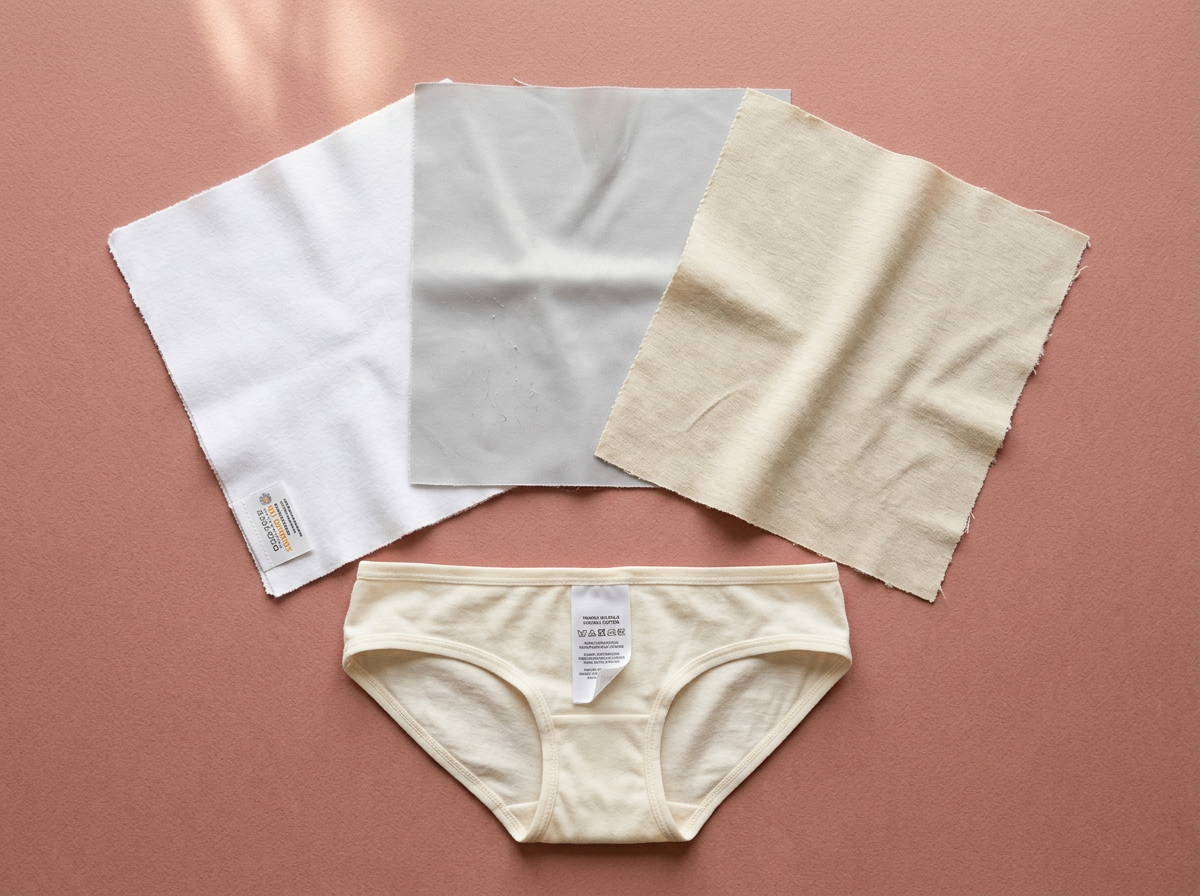
That recurring rash below your waistline. The itch that will not go away. The red marks where your underwear elastic sits. "Underwear rash" and "underwear irritation" searches have grown steadily as consumers discover their underwear may be the hidden cause of skin problems. We analyzed the four fabric-skin interaction mechanisms — bacterial microclimate, chemical contact dermatitis, pressure dermatitis, and antibacterial treatment sensitivity — with test data across 30+ brands.
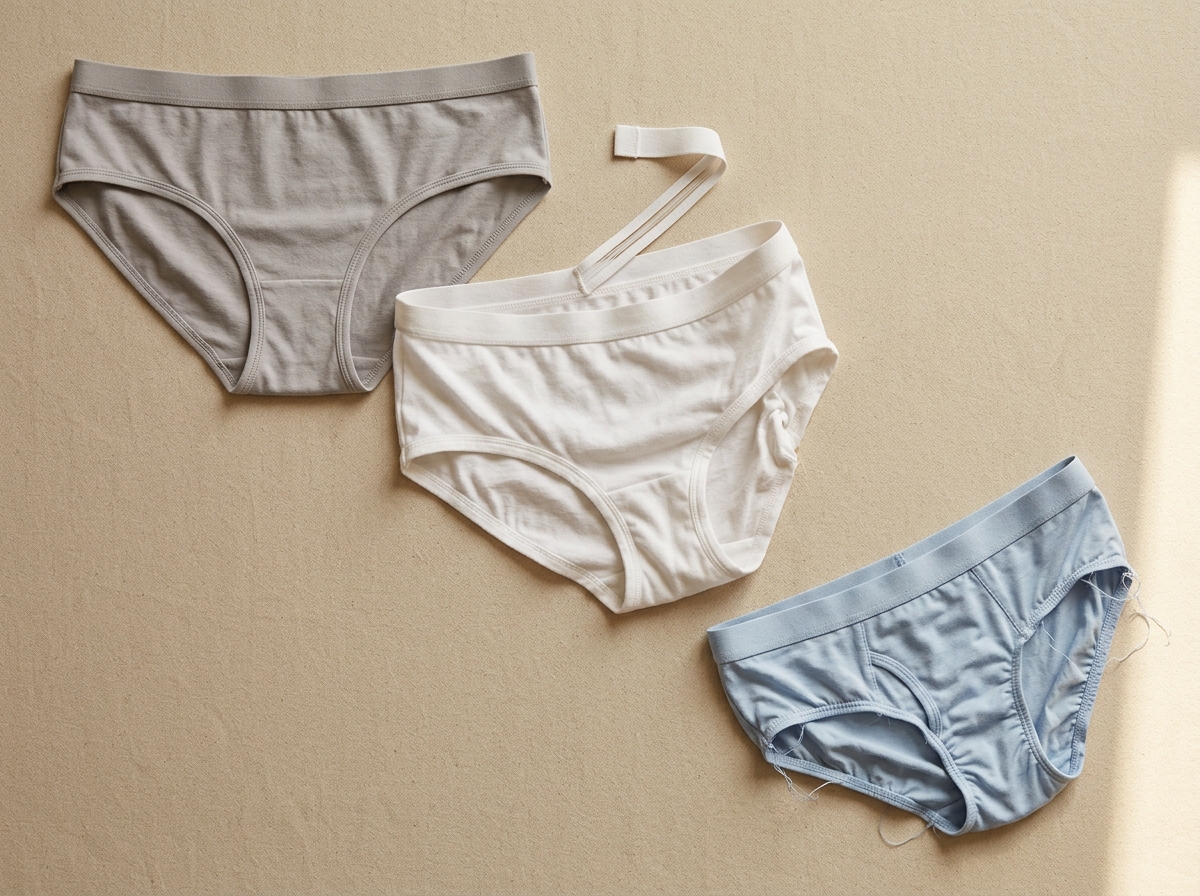
You adjust your underwear five times before lunch. The waistband rolls, the legs ride up, and everything bunches in the wrong places. "Why does my underwear keep riding up" is one of the most searched underwear complaints globally. We break down the four scientific causes — elastic recovery degradation, rise-torso mismatch, leg opening geometry, and fabric stretch ratio — and provide body-type-specific solutions based on testing across 30+ brands.
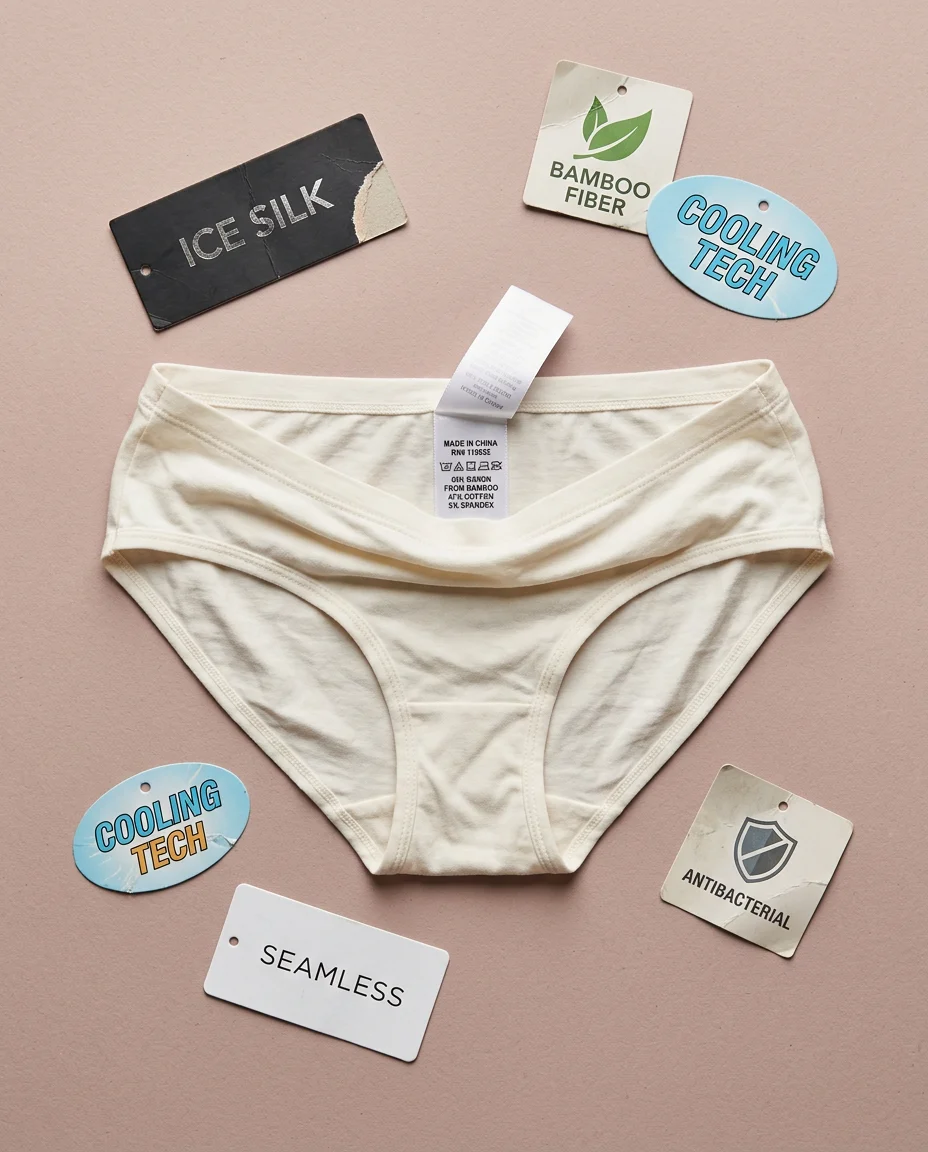
Your underwear label says "ice silk," "bamboo fiber," "seamless," "cooling technology," and "antibacterial." Three of those five terms do not mean what you think they mean. We deconstructed each marketing claim against published fiber science data and found a consistent pattern: the most expensive-sounding terms describe the cheapest materials.