Industry Trends2026-04-0414 min read
Best Underwear for Women 2026: Fabric Science Reviews
Paul PengFactory Technology Director
Part of the Manufacturing Solutions series
Part of the Manufacturing Solutions series
"Best underwear women" search interest reached 100 (peak) in Q1 2026, up 30% year-over-year. Even more notable are the sub-trends: "best cotton underwear" grew 40%, plus-size underwear demand surged 130%, and seamless styles grew 110%. Behind these numbers is a consumer shift from "just buy whatever" to "choose based on need." We built a systematic buying framework across three dimensions — fabric type, wearing scenario, and price tier — to help consumers and brands understand where the real value in women's underwear lies.
Search behavior reflects demand direction. Here are the key search trends for the women's underwear category in Q1 2026:
Three trends deserve attention: (1) Plus-size underwear's +130% growth indicates a massive supply gap; (2) Seamless styles' +110% reflects consumers' pursuit of "invisible feel"; (3) "Best cotton underwear" is growing faster than "best underwear women," indicating fabric awareness is driving purchase decisions.
For the full market context behind these search trends — including category-level growth data, regional market analysis, and fabric innovation forecasts — see our 2026 Trending Underwear Market Analysis.
Fabric choice directly determines the wearing experience of women's underwear. We systematically compared three major fabric systems across 8 dimensions including raw material, moisture management, hand feel, and durability:
True pure cotton means 95%+ cotton content, with the gusset ideally being 100% cotton. There is a significant quality difference between Class A (infant-grade) and Class B (standard). Cotton's advantages are natural skin-friendliness, good warmth, and accessible pricing. But cotton yellows, stiffens, and pills after washing, deforms significantly, and has poor moisture release after absorption — making it stuffy in summer. Best suited for daily home wear and fall/winter warmth scenarios.
The best moisture absorption and wicking performance among the three fabrics, with a naturally light cooling sensation. Raw materials are primarily plant-based (such as bamboo), where cellulose is chemically restructured into fibers through a manufacturing process. Note that "antibacterial" properties diminish with washing and should not be over-marketed. The fabric is relatively fragile and cannot withstand vigorous scrubbing. Best suited for summer and athletic scenarios.
Modal's fiber diameter is only 10-15 microns (close to silk at 10-12 microns), moisture absorption rate is 50% higher than cotton, and it has the softest, smoothest hand feel. Higher thread count means better quality — 80-count and above essentially resists deformation and pilling. Downsides include potential sensitivity for some skin types and relatively high pricing for premium products. It is the best choice for most wearing scenarios. For a detailed comparison of Modal and other regenerated cellulose fibers, see our Modal vs Lyocell Fabric Deep Dive.
Modal quality correlates directly with thread count. Here is the actual wearing performance of common count grades on the market:
50-count is the entry threshold for modal; quality improvement only becomes noticeable at 60-count and above. For best value, choose 60-80 count; for ultimate hand feel, choose 100-count Lenzing Modal. Modal products below 50-count are not recommended — they deform too quickly, making the daily cost actually higher.
No fabric is absolutely better — only better matched to the scenario. We built a selection matrix across four daily scenarios:
Many cheap underwear products use high proportions of polyester. While inexpensive, this creates three problems: (1) Not breathable, causing stuffiness and odor retention; (2) May cause skin sensitivity and itching; (3) Extremely low moisture absorption, leading to strong wet-sticky feeling after exercise. When checking composition labels, exercise caution with products where polyester exceeds 30%.
We analyzed products across 5 price segments from basics to luxury, recalculating true value-for-money based on "cost per wear per day":
A $12 David Archy Modal worn for 6 months costs approximately $0.07/day; an $80 Gucci worn for 4 months (cotton quality isn't necessarily more durable) costs approximately $0.67/day. Luxury underwear's daily cost is nearly 10x that of best-value options, yet the wearing experience improvement is nowhere near 10x. Making decisions based on daily cost rather than unit price is the key to avoiding the brand premium trap.
In a blind test involving 10 independent testers, the following women's underwear brands stood out:
The top 3 are all modal fabrics — consistent with the men's underwear blind test results, further validating modal's dominant position in consumer wearing experience.
Plus-size underwear is the fastest-growing sub-category in 2026, with search interest surging 130% year-over-year. But the design requirements for plus-size underwear are fundamentally different from standard sizes:
The +130% search growth far outpaces market supply growth. Most brands' plus-size lines are simply "standard sizes scaled up" rather than independently designed. True plus-size underwear requires a complete redesign from pattern and fabric ratio through sewing techniques. Modal + 8-10% spandex at 200-240g/m² fabric weight is currently the best solution — providing adequate support while maintaining soft skin-friendliness. For a complete technical guide on plus-size underwear fabric selection, waistband tension grading, leg structure, and pattern engineering, see our Plus-Size Underwear Technical Guide. For detailed seamless technology analysis, see our Seamless Underwear Technology Guide.
From a brand and supply chain perspective, building a women's underwear product line requires covering the intersection of fabric, scenario, and price dimensions. Here is a market-validated product line matrix:
The core of your product line should be "Modal main line + scenario extensions." The Modal main line covers the largest consumer segment (daily wear), while athletic and plus-size lines each target a high-growth niche. The essential cotton line retains price-sensitive consumers, and the premium line builds brand positioning. We do not recommend entering the luxury price tier directly — $50+ pricing without brand heritage is difficult to gain market acceptance. The key is ensuring each product line's fabric ratio and craftsmanship are genuinely verifiable, not marketing concepts.
The 2026 women's underwear market shows three clear consumer trends:
First, fabric awareness is driving purchase decisions. "Best cotton underwear" growing 40% versus the overall market's 30% shows consumers increasingly focus on fabric itself rather than brand names. Modal swept the top three in blind testing, while cotton retains irreplaceable value at the basics price tier.
Second, niche demand is exploding. Plus-size +130%, seamless +110%, period-specific +60% — these numbers show that "one-size-fits-all" product strategies are outdated. Brands need to build differentiated product lines by scenario and consumer segment.
Third, the correlation between price and quality is weak. Daily cost analysis reveals that $10-15 modal products achieve the optimal balance point of comfort and durability. $50-100 luxury brands cost nearly 10x per day compared to best-value options, but the quality gap is nowhere near that magnitude.
For consumers who want to go deeper into sustainability evaluation — understanding which fabrics are genuinely eco-friendly versus merely marketed as such — our Sustainable Underwear Material Science Guide provides a four-dimension framework for cutting through greenwashing.
Final advice for consumers: Evaluate underwear value by daily cost, not unit price. Judge quality by fabric composition, not brand name. 60-80 count modal is currently the best overall performance choice.
Advice for brands: Consumers have already signaled demand direction through their search behavior. Build product lines covering modal main + scenario extensions, and establish trust through verifiable fabric data (fiber diameter, thread count, antibacterial grade). This is the key to winning in this market. Collaborating with a manufacturing partner who understands fabric engineering and consumer behavior trends is the core step in translating market insights into product competitiveness.
Data Sources: This article references Q1 2026 women's underwear search trend data, independent tester blind evaluation results across 30+ brands, global mainstream brand fabric parameter and retail pricing comparative analysis. Fabric performance data is based on textile engineering standards (GB/T 20944, ISO 20743) and regenerated cellulose fiber laboratory testing parameters.
Business insights for apparel brand owners, from production strategies to manufacturing optimization
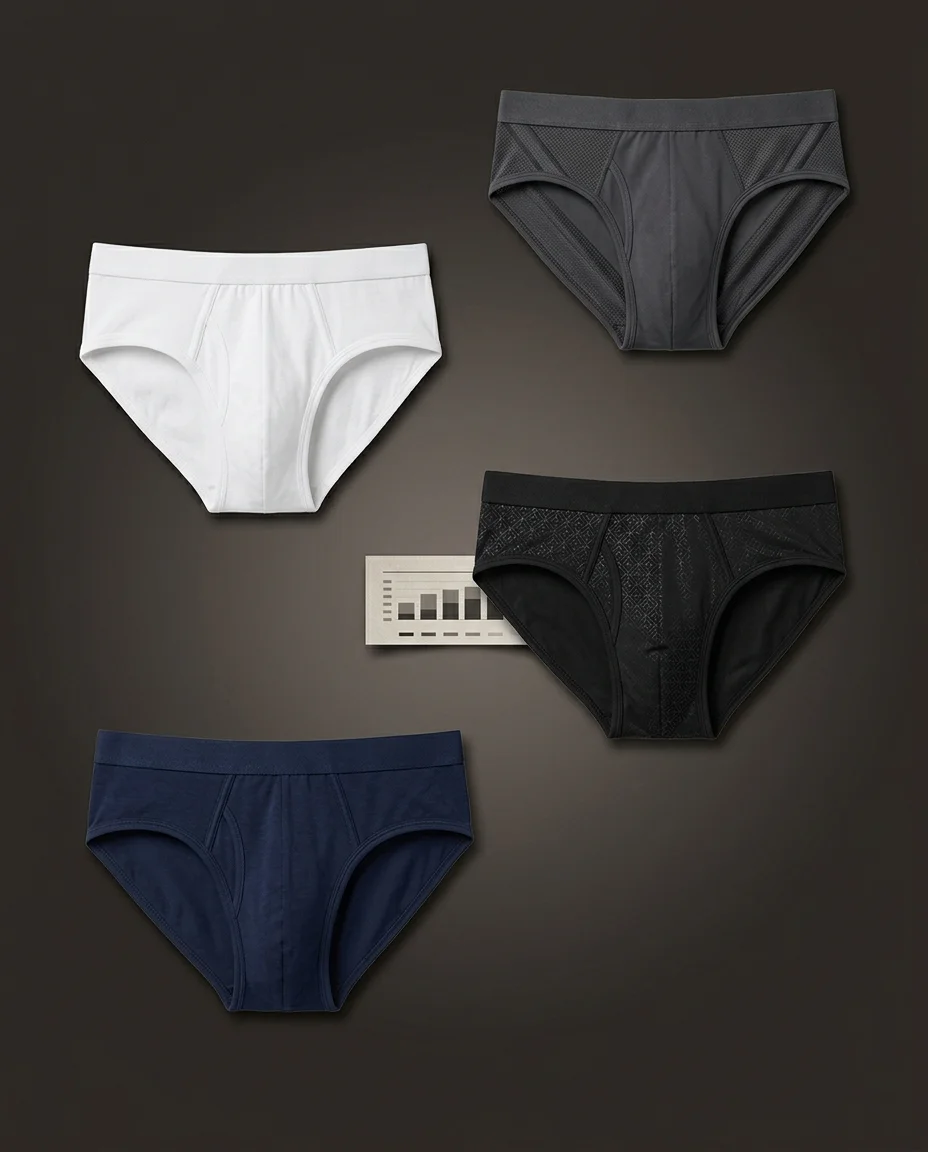
The men's briefs market is fragmenting from a single 'basics' category into four distinct competitive tracks. Traditional searches dropped 20-30%, while heated underwear (+2150%), seamless men's (+300%), and cooling fabrics (+180%) surge. This analysis breaks down four competitive tracks: budget basics, functional tech, premium fabrics, and performance sport — with pricing, technology requirements, and entry strategy for each.
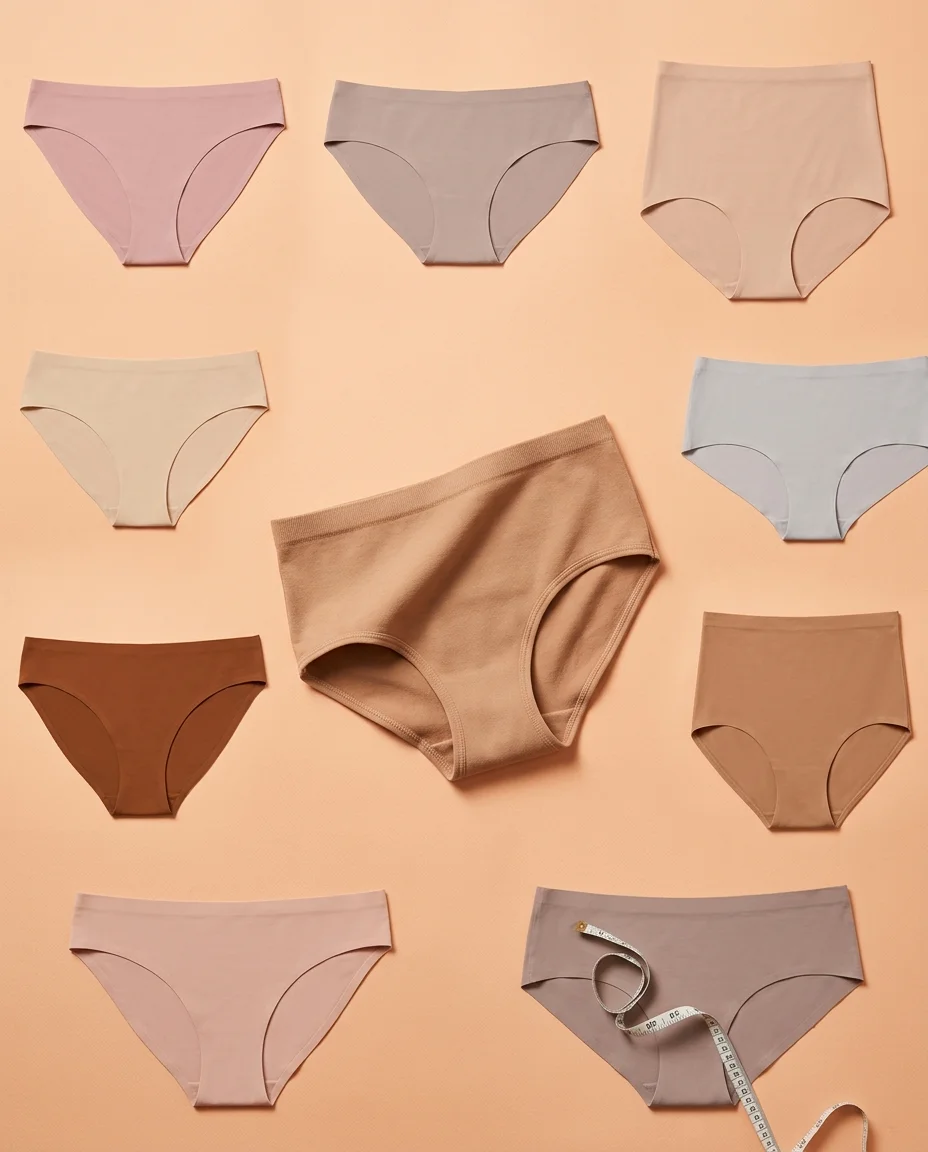
We tested 30+ seamless underwear brands across fabric recovery, waistband tension, and gusset construction. The results: only 6 brands use true circular knitting — most 'seamless' products are simply flat-lock seamed with marketing spin. This guide ranks the best seamless underwear by real performance data, not claims.
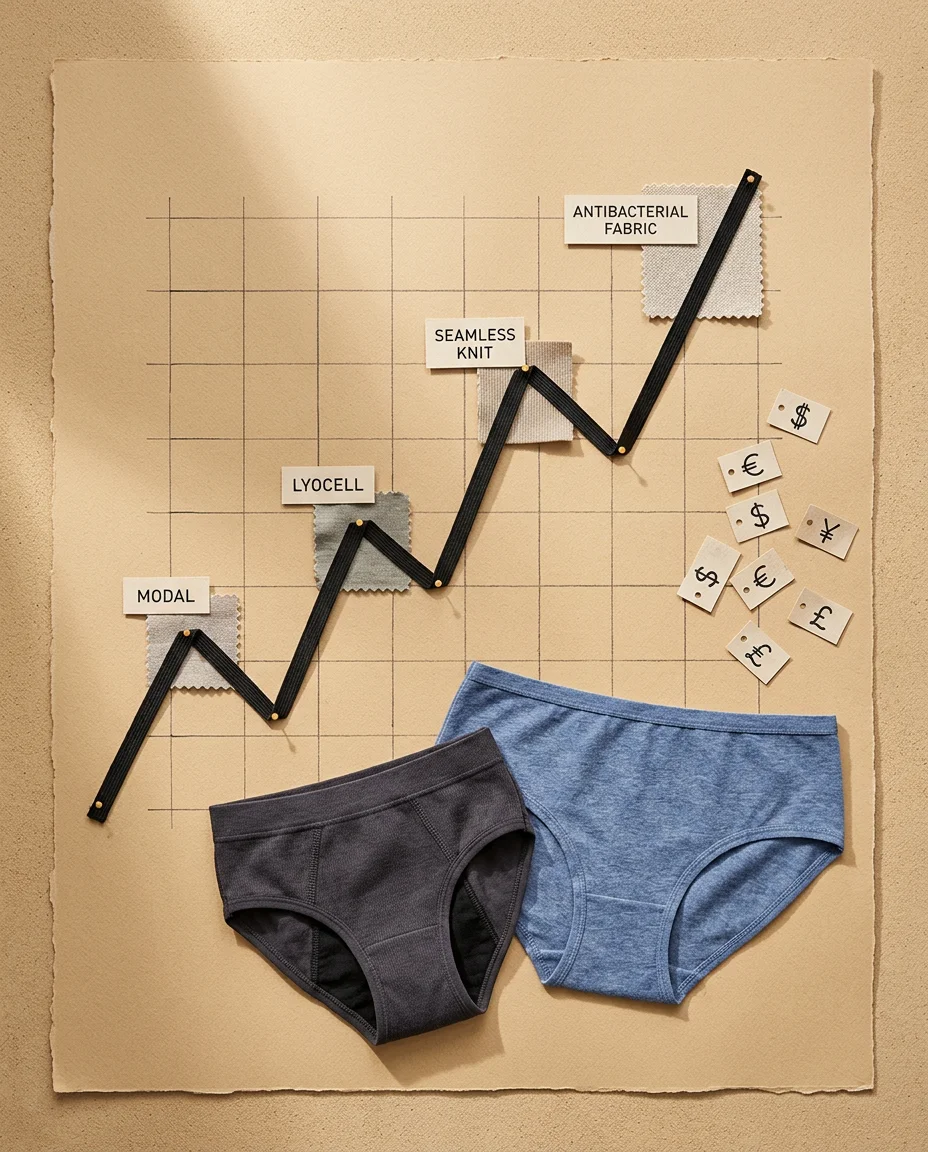
The underwear market is projected to reach $127.4B by 2032. We analyze 2026's trending products — period underwear (+300%), seamless (+110%), plus-size (+130%), and antibacterial Modal — with market data, fabric innovation timelines, and regional growth forecasts for brand planning.