Fabric Science2026-04-0411 min read
What is Seamless Underwear: Complete Technology & Benefits Guide
Karl XiaoFactory Production Director
Part of the The Fiber Lab series
Part of the The Fiber Lab series
Open any underwear recommendation thread on social media and "seamless" is virtually everywhere. Men's seamless underwear searches have grown 300%, plus-size seamless has grown 250%, and "what is seamless underwear" educational queries have grown 50%. But what does "seamless" actually mean? Is it the same as "one-piece"? Why do some products labeled seamless offer a less-than-ideal wearing experience? We break down the entire process — from Santoni knitting machines to leg opening finishing — to help brands and consumers build technical understanding of this category.
Seamless Underwear is produced using circular knitting technology on specialized knitting machines (such as Italian Santoni machines) in a single formation process. The fabric is knitted directly into a tubular structure without cutting and sewing multiple fabric pieces together. Only minimal auxiliary processes are needed at key areas like the gusset and waistband.
The key to this definition is "single formation" — the fabric goes from yarn to finished garment in one continuous machine process, rather than the traditional sequence of weaving fabric, cutting pieces, and sewing them together.
The fundamental difference between traditional and seamless underwear lies in the manufacturing workflow. Traditional underwear follows a three-step "weave → cut → sew" process, while seamless underwear uses an integrated "yarn directly knitted into garment" workflow.
Seamless knitting has lower fabric utilization than traditional cut-and-sew. The traditional method can arrange pattern pieces tightly like a puzzle, achieving 80-85% fabric utilization. Circular knitting generates additional yarn consumption when adjusting sizes and area densities, with actual fabric utilization around 70-75%. This directly increases the production cost of seamless underwear.
The more comfortable the underwear, the smoother it feels. Why is it smoother? Fewer seam interfaces — because seams are typically thicker than the fabric itself. No side seams means no raised stitching lines, allowing the fabric to lie flatter against body curves without leaving marks. This is the core source of wearing comfort in the seamless category.
Leg opening finishing (the edge treatment at the thigh opening) is the most直观 reflection of quality differences in seamless underwear. Three mainstream techniques each have their pros and cons:
Laser cutting uses high temperature to instantly melt fabric edges, creating a natural seal. The cut surface is smooth with no fraying, and does not affect the elasticity of surrounding fabric. If your underwear's leg openings use laser cutting, it's a strong indicator of a premium product. The downside is high equipment investment and higher per-unit processing cost compared to other methods.
Hot melt "invisible" finishing has become a common marketing point in recent years, but the actual experience often falls short. The adhesive forms a hardened layer at the fabric edge — you can feel it the moment you touch it. More critically, the adhesive zone completely locks out fabric elasticity, making the edge area noticeably less stretchy than the body. After multiple washes, the adhesive may also age, causing edge peeling or detachment.
Overlock is the most traditional leg opening finishing method, using stitching to wrap the fabric edge and prevent unraveling. Low cost and mature craftsmanship, but the edge has a raised seam. In tight-fitting scenarios (such as layering under yoga pants), the stitching may cause friction discomfort on the inner thigh. Suitable for cost-sensitive mass-market products.
The quality ranking is clear: Laser Cutting > Overlock > Hot Melt Adhesive. Note that hot melt adhesive ranks last — while the "invisible" marketing concept sounds more premium, the actual wearing experience and durability both fall short of traditional overlock.
The waistband is the second most critical component affecting seamless underwear's wearing experience. Three mainstream waistband structures each suit different scenarios:
For deep technical parameters on waistband tension engineering (elastic modulus, denier specifications, pressure distribution standards), see our Waistband Tension Science Guide.
"Got loose after a few wears" is the most common consumer complaint about seamless underwear. This isn't an individual brand's quality issue — it's a structural characteristic of circular knit fabric.
The elasticity of circular knit fabric comes from the spandex fiber network. When the fabric is repeatedly stretched (during wearing, movement, washing), the spandex fibers gradually develop "elastic fatigue" — recovery drops from the initial 95%+ to 80% or lower. At this point, the fabric cannot fully return to its original dimensions, manifesting as looseness, leg riding up, and waistband sagging.
Key influencing factors:
For the seamless underwear category, we recommend a baseline fabric ratio of: Modal 85-90% + Spandex 8-10% (or nylon/modal blend + spandex). This ratio has higher spandex content than traditional underwear's "95/5" standard because circular knit fabric needs additional elastic recovery to compensate for the lack of structural constraint from cutting and sewing. Keep fabric weight in the 180-220g/m² range — sufficient for shape stability without being overly heavy.
For brands, the following parameters must be clearly specified when submitting seamless underwear tech packs to manufacturers:
Many brands omit "leg opening finishing method" and "area knitting density" from their tech packs, causing factories to default to the most economical options (overlock + standard density). These two parameters significantly impact finished product quality — if you're positioning your product as mid-to-premium, make sure to explicitly specify them in your tech pack.
Seamless underwear is not a marketing gimmick — it is a manufacturing process with a clear technical definition. Circular knitting's single-pass formation eliminates side seams, and 3D contour knitting on Santoni machines achieves body-hugging fit without cutting. But "seamless" does not automatically mean "comfortable" — the craftsmanship choices across three dimensions (leg opening finishing, waistband type, and fabric ratio) determine whether the final product feels like a "second skin" or "something that goes loose after two wears."
Laser-cut leg openings, elastic band waistbands, and Modal 85-90% + Spandex 8-10% fabric ratios — this is the current quality baseline for the seamless underwear category. For brands, completely specifying these parameters in the tech pack is the first step toward ensuring finished products meet expectations.
If you're evaluating seamless underwear supply chain solutions and need comprehensive technical support from yarn specifications to finished product inspection, explore our Seamless Underwear Production Services. From 150-piece trial orders to 2,000+ piece ODM customization, a complete process parameter system and quality inspection workflow ensures consistent quality across every production batch.
Data Sources: This article is based on seamless knitting equipment technical parameters, knitted fabric elastic recovery rate testing data (ASTM D3107 standard), seamless underwear category search trend analysis, and cost-quality comparison data across three leg opening finishing techniques from production practice.
Deep dive into fabric composition, properties, and performance at the microscopic level
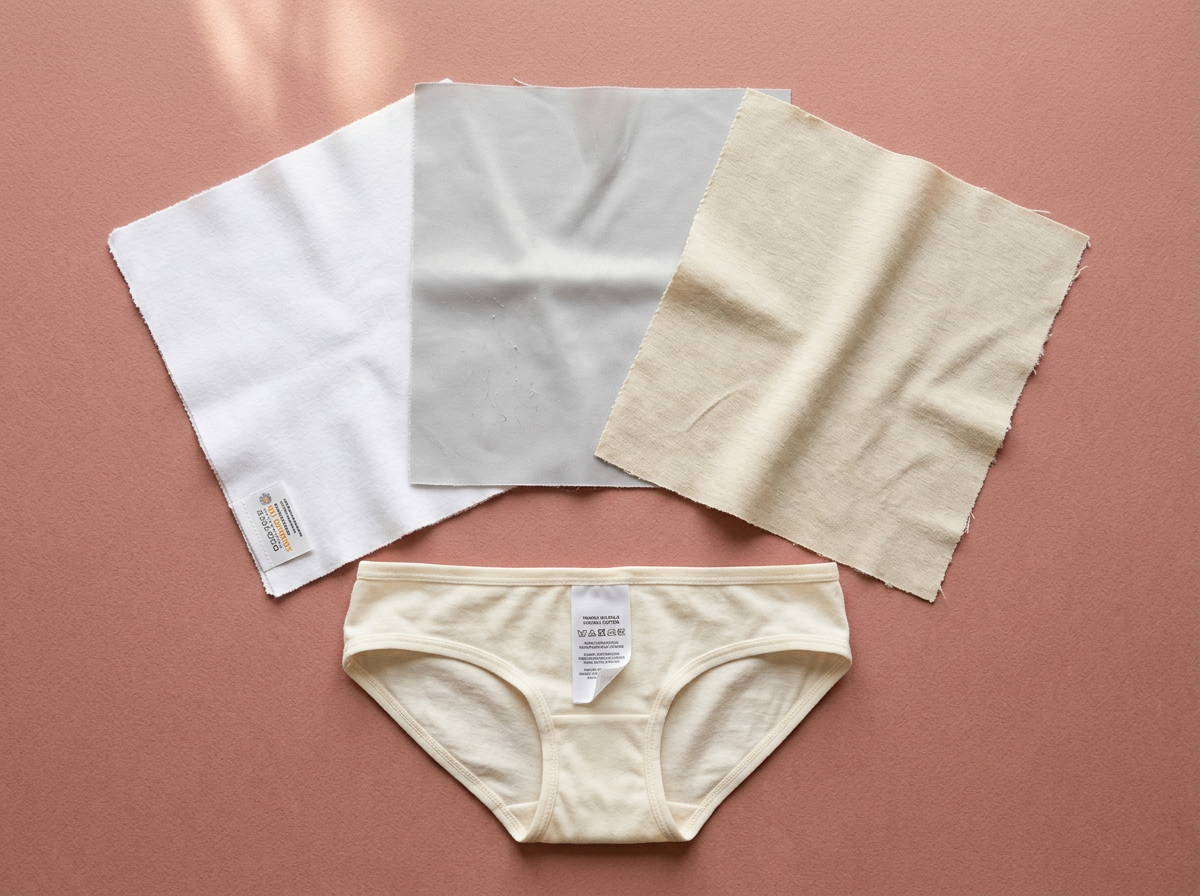
That recurring rash below your waistline. The itch that will not go away. The red marks where your underwear elastic sits. "Underwear rash" and "underwear irritation" searches have grown steadily as consumers discover their underwear may be the hidden cause of skin problems. We analyzed the four fabric-skin interaction mechanisms — bacterial microclimate, chemical contact dermatitis, pressure dermatitis, and antibacterial treatment sensitivity — with test data across 30+ brands.
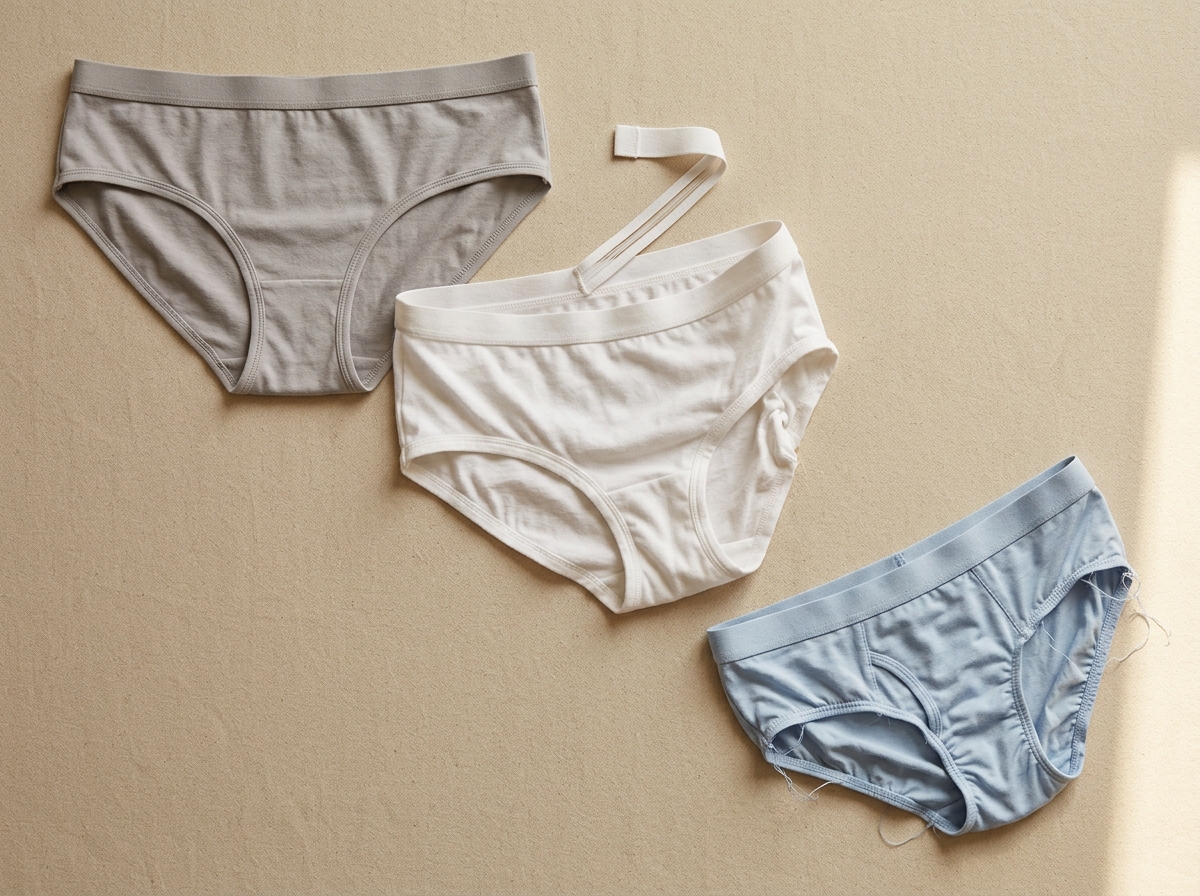
You adjust your underwear five times before lunch. The waistband rolls, the legs ride up, and everything bunches in the wrong places. "Why does my underwear keep riding up" is one of the most searched underwear complaints globally. We break down the four scientific causes — elastic recovery degradation, rise-torso mismatch, leg opening geometry, and fabric stretch ratio — and provide body-type-specific solutions based on testing across 30+ brands.
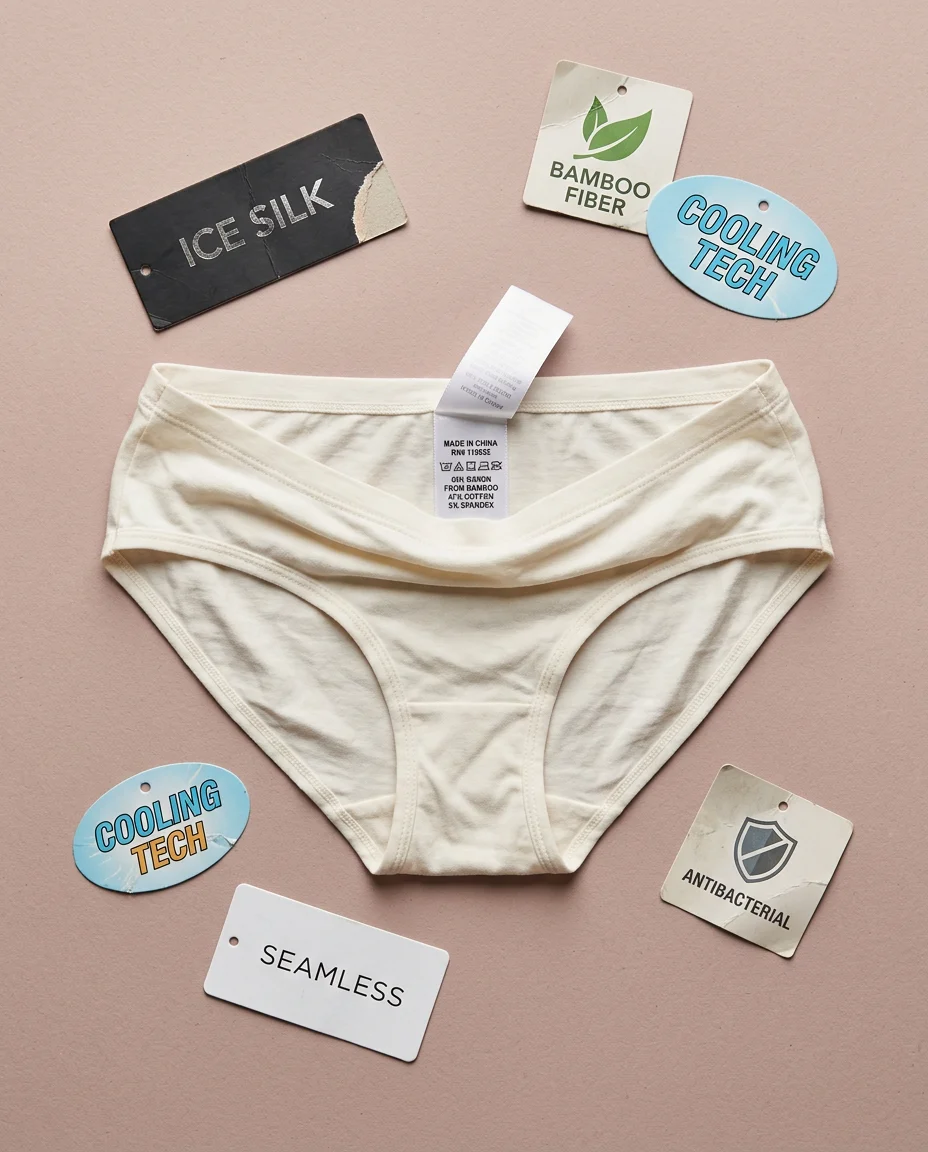
Your underwear label says "ice silk," "bamboo fiber," "seamless," "cooling technology," and "antibacterial." Three of those five terms do not mean what you think they mean. We deconstructed each marketing claim against published fiber science data and found a consistent pattern: the most expensive-sounding terms describe the cheapest materials.