Fabric Science2026-04-0614 min read
Regenerated Cellulose Fiber Science Overview: From Wood Pulp to Underwear — The Evolution of Fabric
Paul PengFactory Technology Director
Part of the The Fiber Lab series
Part of the The Fiber Lab series
If you purchased a premium underwear garment in 2026, it was probably not made of cotton.
The results of a 34-brand blind test (10 testers, 103 days) were striking: the top 3 underwear brands all use Modal fabric — a regenerated cellulose fiber. And this is no accident — Modal comprehensively outperforms cotton across three core metrics of moisture absorption, softness, and durability, with 6 out of 10 testers selecting Modal products as their "favorite" among 34 tested brands.
Regenerated Cellulose Fiber (RCF) is quietly reshaping the underwear industry. Global RC fiber production reached approximately 8.4 million tons in 2025, accounting for 6-7% of total global fiber production, growing at approximately 8% annually. Lyocell (the fastest-growing RC fiber category) is expanding at a compound annual growth rate of 8-20%.
This article is a comprehensive overview/hub article for regenerated cellulose fibers — covering all major categories, production processes, and performance parameters of the RC fiber family. For in-depth comparisons of specific fibers, see:
One-sentence definition: Regenerated cellulose fibers are made by dissolving natural cellulose (wood pulp, bamboo pulp, cotton linters, etc.) and re-spinning it into fibers.
Raw Material Collection
The primary raw material is wood pulp — from beech trees (Modal), eucalyptus (Lyocell/Tencel), pine/spruce (viscose), and others. Cotton linters and bamboo pulp are also used as raw materials but represent a small proportion in underwear fabrics.
Sustainability key: Whether the wood comes from sustainably managed plantations (FSC certified). Lenzing, the world's largest RC fiber producer, has committed to 100% certified wood sourcing.
Dissolution and Regeneration
Cellulose is dissolved in chemical solvents to form a viscous spinning solution (dope). The dope is then extruded through a spinneret into a coagulation bath, where the cellulose precipitates to form continuous filament fibers.
The core difference between RC fibers lies in this step — the choice of solvent and process conditions.
Post-Processing
Includes washing (removing residual solvents), drawing (improving fiber orientation and strength), cutting (into staple fibers or maintaining filaments), and finishing (improving textile processing performance).
Key understanding: The chemical composition of regenerated cellulose fibers is essentially the same as cotton fiber — both are cellulose. The difference is that the fiber's physical form has been reshaped. Think of it this way: cotton fiber is "naturally formed cellulose," RC fiber is "dissolved and reshaped cellulose" — like an ice cube versus a carved ice sculpture. Same material, different form.
Viscose was the first commercially produced RC fiber (1894) and remains the highest-volume category (approximately 75% of total RC fiber production). The production process uses carbon disulfide (CS₂) as a solvent — this is viscose's biggest environmental controversy. CS₂ is toxic, and traditional processes have low recovery rates, leading to environmental pollution.
In underwear applications: Entry-level "regenerated cellulose fiber" products typically use viscose. In terms of performance, viscose's softness and moisture absorption exceed cotton, but wet strength is extremely low — strength in the wet state is only 50-60% of the dry state. This means viscose underwear is prone to deformation and shrinkage during washing.
Price positioning: Lowest. Factory-direct price is approximately 10-20% lower than cotton.
Modal is "modified viscose" — produced through an improved viscose process that gives the fiber a higher degree of polymerization (longer molecular chains). The result is finer fibers (10-15μm, close to silk's 10-12μm), higher wet strength (1.5-2x that of viscose), and lower shrinkage (2-3% vs viscose's 5-8%).
Dominance in underwear:
For Modal's yarn count system (40s to 100s) and performance tiers, see Modal vs Lyocell Fabric In-Depth Comparison.
Lyocell is the fastest-growing category in the RC fiber family — compound annual growth rate of 8-20%. Its core advantage is the NMMO solvent closed-loop process, with solvent recovery exceeding 99.5%, making it the most environmentally efficient solution in all RC fiber production.
Lyocell's other advantage is wet strength — strength in the wet state is 1.7x that of Modal and 3-4x that of viscose. This makes Lyocell perform better in scenarios requiring durability.
About Tencel: Tencel is Lenzing's brand name for Lyocell — all Tencel is Lyocell, but not all Lyocell is Tencel. The Tencel brand premium is approximately 10-20%, but it comes with Lenzing's supply chain assurance and certification system.
Cupro uses cotton linters (a byproduct of cotton processing) as raw material, dissolved in a copper oxide ammonium solution and then spun. The fibers are extremely fine (0.5-1.0μm) with a silk-like hand feel, sometimes called "artificial silk" (though this name is also used for viscose).
In underwear applications: Very limited. Cupro is primarily used in premium linings and decorative fabrics due to its high price (approximately 2-3x that of Modal) and limited production capacity. Asahi Kasei's Bemberg is currently the most well-known Cupro fiber brand.
Look at the key data in the table above:
The RC fiber space is a "disaster zone" for marketing terminology. Here are the three most common sources of confusion:
Marketing claim: "Natural bamboo fiber, antibacterial, breathable, eco-friendly and healthy."
Scientific fact: Virtually all "bamboo fiber" underwear on the market uses regenerated cellulose fiber (viscose) made from bamboo pulp through the viscose process. Bamboo is merely the raw material source, not a fiber type. The FTC has issued over $2.5 million in penalties. See Bamboo Underwear Decoded.
Marketing claim: "Ice silk fabric, cool and breathable."
Scientific fact: "Ice silk" is not a standard name for any fiber. It may refer to nylon + spandex blends, viscose, or even polyester + cooling agent coatings. This term has no technical meaning. See "Ice Silk" Underwear Exposed.
Marketing claim: "Tencel fabric, softer than cotton."
Scientific fact: Tencel is Lenzing's brand name for Lyocell — not an independent fiber type. All Tencel is Lyocell, but not all Lyocell is Tencel. Brands using non-Lenzing Lyocell should not label their products as "Tencel."
For complete technical comparison and brand decision frameworks between Modal and Lyocell, see Modal vs Lyocell Fabric In-Depth Comparison.
Viscose remains the absolute volume leader (approximately 75%), but Lyocell is the growth engine (8-20% CAGR vs viscose's 5.2% CAGR). Modal's growth numbers are less headline-grabbing than Lyocell's, but in the specific underwear market, Modal's actual penetration rate far exceeds Lyocell — because underwear's demand for softness happens to be Modal's strongest advantage. Lenzing's 2024 annual report shows overall RC fiber production growing at 8%, indicating market demand continues to accelerate.
Regenerated cellulose fibers are not "substitutes" — in many scenarios, they are already the preferred solution with performance exceeding cotton:
If you remember only one thing when choosing underwear fabric: read the actual fiber composition on the label, not the marketing terms. Modal and Lyocell are standardized generic fiber names with clear ISO standard definitions — which means you can trust these names on labels.
For in-depth technical comparisons of specific fibers, see:
If you're looking for a manufacturing partner capable of Modal, Lyocell, or dual-layer engineered solutions, explore XiaoTex's fabric R&D capabilities — their R&D center has full-range production capacity from 50s to 100s Modal, plus production experience in Lyocell blends and dual-layer structures.
Data sources: This article references fiber production and process parameter data from Lenzing's 2024 annual and sustainability reports, global fiber market share data from Textile Exchange's 2024 Materials Market Report, cellulose fiber market size forecasts from Fortune Business Insights and Mordor Intelligence, consumer blind-test data from 10 independent testers evaluating 34 brands over 103 days, US Federal Trade Commission (FTC) enforcement records on "bamboo fiber" labeling, and fiber physical performance parameters from textile engineering reference materials.
Deep dive into fabric composition, properties, and performance at the microscopic level
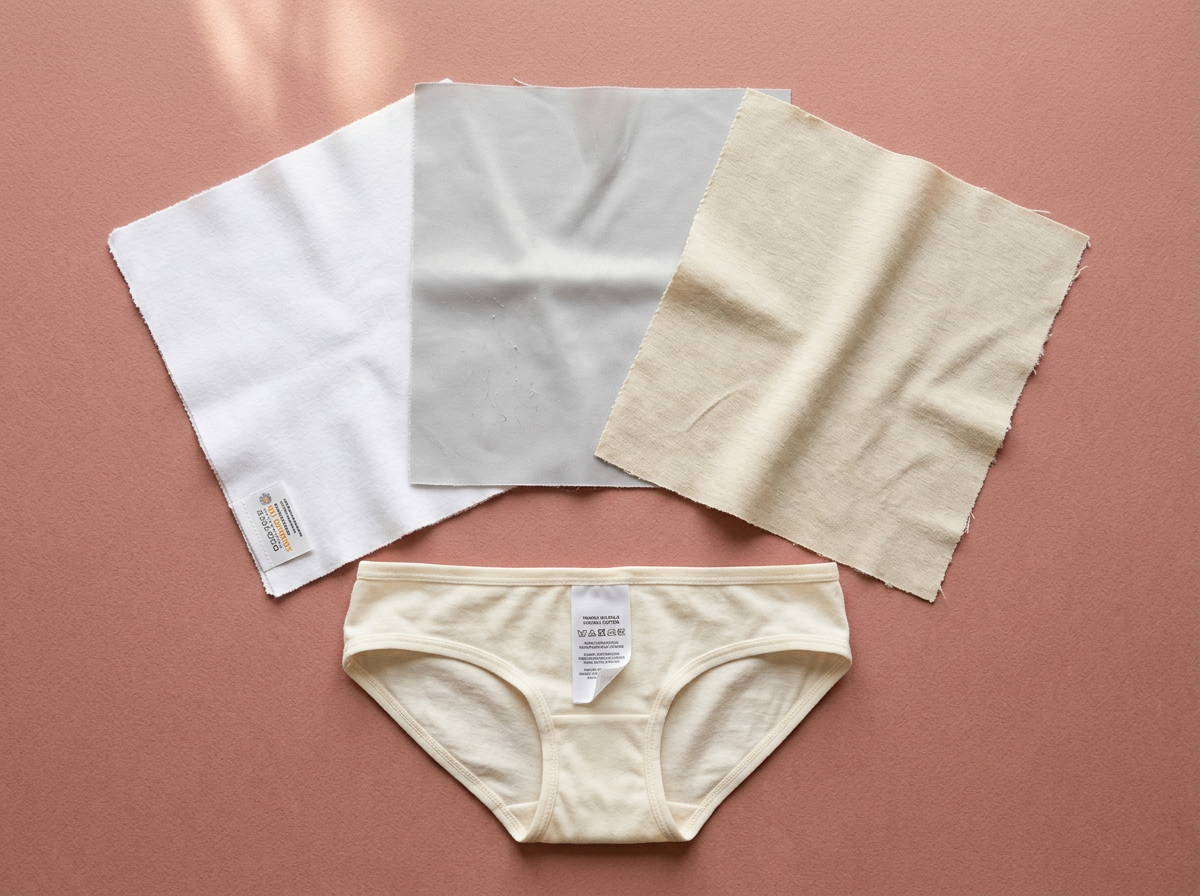
That recurring rash below your waistline. The itch that will not go away. The red marks where your underwear elastic sits. "Underwear rash" and "underwear irritation" searches have grown steadily as consumers discover their underwear may be the hidden cause of skin problems. We analyzed the four fabric-skin interaction mechanisms — bacterial microclimate, chemical contact dermatitis, pressure dermatitis, and antibacterial treatment sensitivity — with test data across 30+ brands.
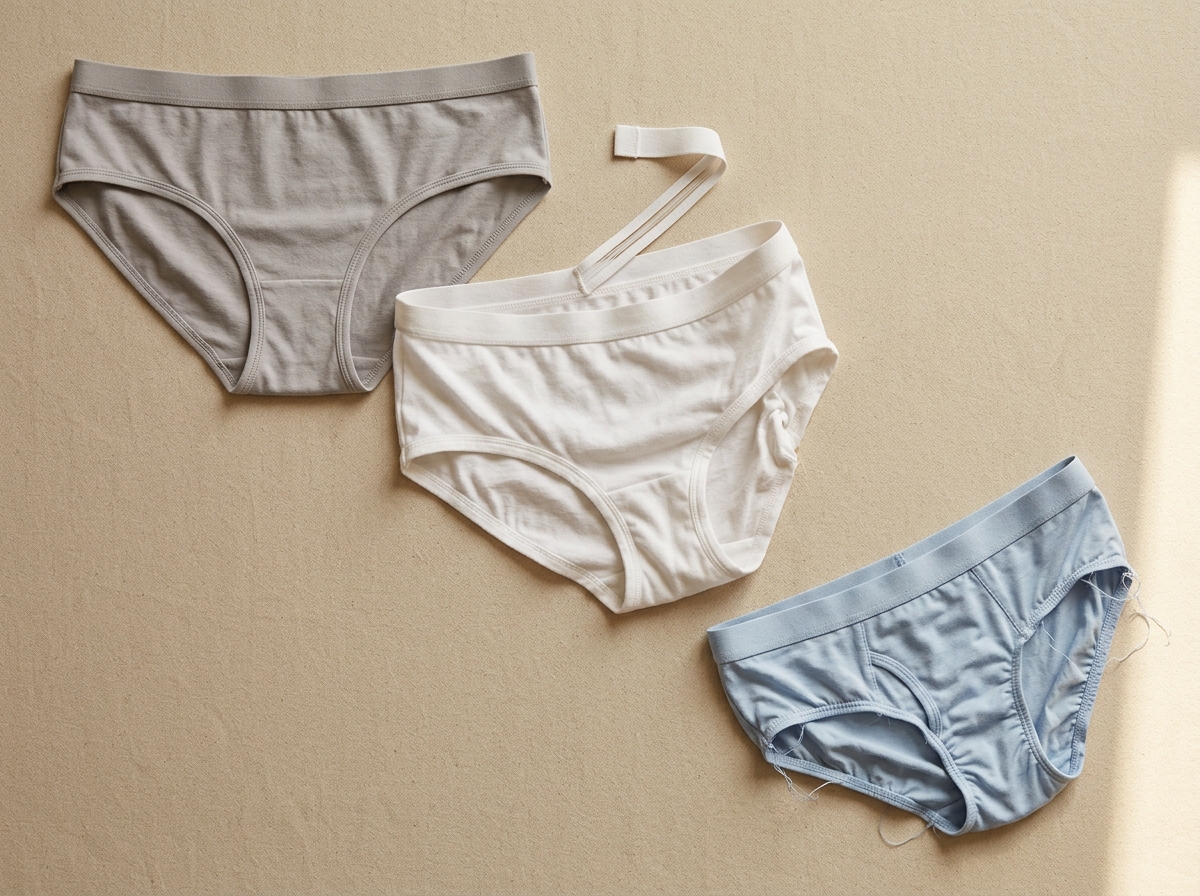
You adjust your underwear five times before lunch. The waistband rolls, the legs ride up, and everything bunches in the wrong places. "Why does my underwear keep riding up" is one of the most searched underwear complaints globally. We break down the four scientific causes — elastic recovery degradation, rise-torso mismatch, leg opening geometry, and fabric stretch ratio — and provide body-type-specific solutions based on testing across 30+ brands.
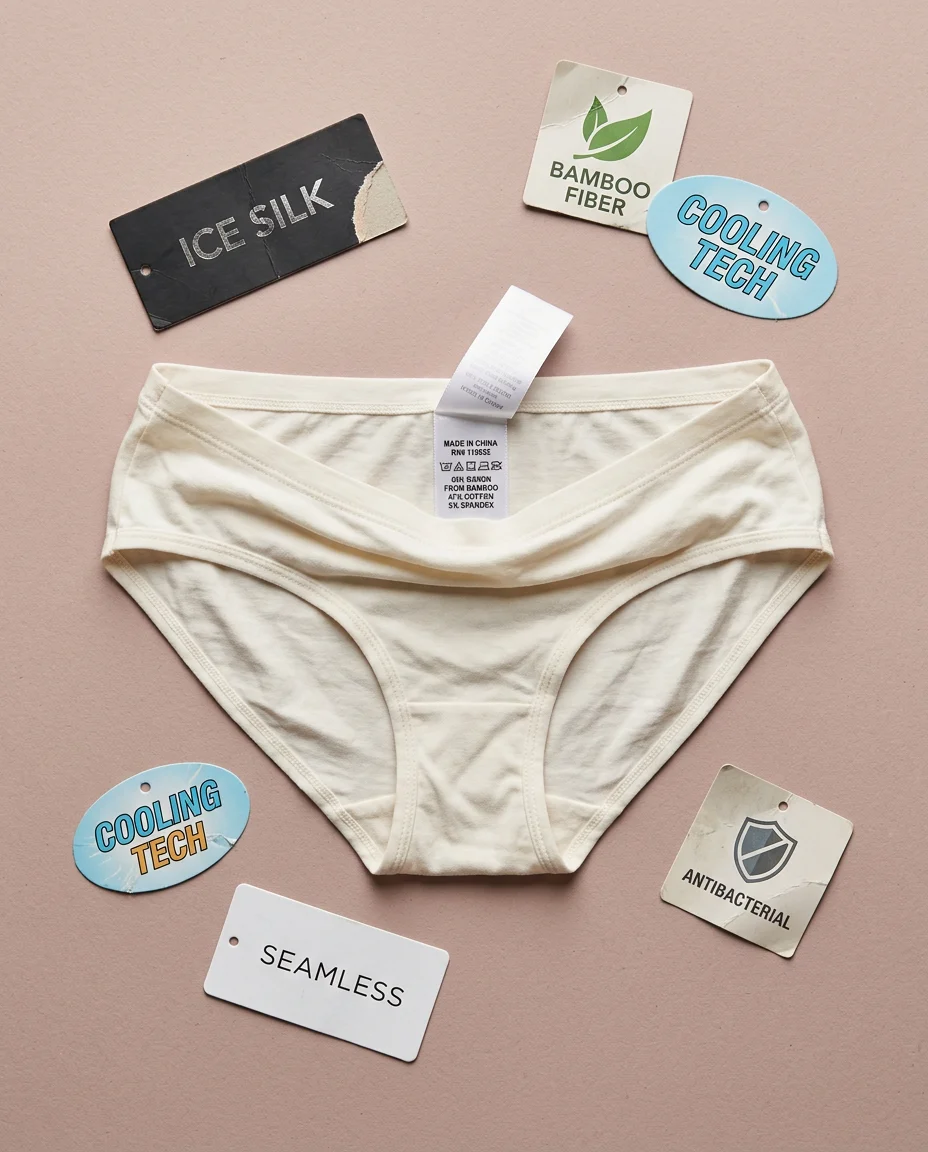
Your underwear label says "ice silk," "bamboo fiber," "seamless," "cooling technology," and "antibacterial." Three of those five terms do not mean what you think they mean. We deconstructed each marketing claim against published fiber science data and found a consistent pattern: the most expensive-sounding terms describe the cheapest materials.