Fabric Science2026-04-1011 min read
Why Cotton Underwear Gets Hard After Washing: The Science of Fabric Stiffness
Karl XiaoFactory Production Director
Part of the The Fiber Lab series
Part of the The Fiber Lab series
"Cotton underwear" search interest reached its highest level in 2026 Q1, growing 50-350% across related queries. Consumers clearly want cotton — but what they do not expect is that the "natural, breathable" underwear they purchased will feel like cardboard after a few washes.
Consumer demand at record high — but satisfaction is another story
This is not a minor inconvenience. Across 30+ brands tested in blind evaluations, consumer complaints about cotton hardening were among the most frequent negative feedback — particularly for premium cotton brands where expectations were highest.
Independent blind-test evaluations across premium brands reveal a consistent pattern:
The data is clear: premium cotton underwear can harden after as few as 3 washes, while high-quality Modal shows no perceptible hardening even after 50+ washes.
Consumers often assume more expensive cotton underwear will resist hardening. In testing, the opposite was frequently true — some premium cotton brands (priced at $20-40/pair) hardened faster than mid-range options because their heavier fabric weight trapped more minerals and detergent per square inch.
How it works: When cotton is washed in hard water (which affects over 60% of US households and most of Europe and Asia), calcium (Ca²⁺) and magnesium (Mg²⁺) ions dissolve into the wash water. These positively charged ions are attracted to the negatively charged hydroxyl groups (-OH) on cotton cellulose fibers.
Once bonded, these minerals do not rinse out. With each wash cycle, the mineral layer grows:
Calcium and magnesium ions bond ionically to cellulose fiber surfaces. Over repeated washes, they form a microscopic mineral crust between fibers that increases fabric stiffness and reduces flexibility. This process is cumulative and irreversible without chemical intervention (acid treatment).
Why cotton is particularly vulnerable: Cotton fibers have a hollow, twisted ribbon structure with a large surface area. This structure provides many bonding sites for mineral ions. Modal and Lyocell fibers, by contrast, have a smoother, rounder cross-section with fewer exposed binding sites.
How it works: Modern detergents contain surfactants, enzymes, optical brighteners, and fragrance compounds. In hard water, surfactants partially react with calcium and magnesium ions to form insoluble "soap scum" that deposits on fabric surfaces.
Even in soft water, using too much detergent (a common consumer behavior — most people use 2-3x the recommended amount) causes residue to accumulate in the spaces between fibers.
The spaces between cotton fibers are what make fabric feel soft and pliable. When these spaces fill with detergent residue and mineral deposits, the fabric loses its "loft" — the three-dimensional structure that creates softness. The result is a flat, stiff, board-like feel.
The cycle compounds itself:
How it works: A landmark study by Hokkaido University researchers discovered the primary mechanism behind cotton towel (and underwear) stiffness after natural drying: bound water cross-linking.
During washing: Cotton fibers absorb water and swell. The individual fibers (40-60 micrometers in diameter) separate slightly, creating the soft, pliable feel of freshly washed cotton.
During air drying: As water evaporates, a thin layer of "bound water" remains on fiber surfaces. These water molecules form hydrogen-bond bridges between adjacent fibers — effectively creating microscopic "glue" points.
After drying is complete: The hydrogen-bond network between fibers creates rigidity. Each individual cross-link is weak, but collectively across millions of fiber junctions in a single garment, they produce perceptible stiffness.
With repeated cycles: Each wash-dry cycle adds more cross-links and mineral deposits. Cotton fibers also undergo mechanical fatigue — their natural crimp (the spiral twist that gives cotton loft) gradually flattens under the stress of washing machine agitation and centrifugal spinning.
Why this matters for underwear specifically: Underwear is washed more frequently than most garments (after every wear) and is made from thinner, lighter cotton that has less structural resilience to begin with. A cotton T-shirt might last 50+ washes before noticeable stiffening; cotton underwear often shows hardening within 10-20 washes.
The fundamental reason Modal resists hardening better than cotton comes down to fiber diameter:
Cotton fibers at 40-60μm are 3-4x thicker than Modal fibers. When these thick fibers undergo structural collapse (flattening, crimp loss, mineral encrustation), the change in hand feel is dramatically more noticeable. Modal's finer fibers have less surface area per fiber for mineral deposition, and their smoother cross-section provides fewer binding sites for hydrogen-bond cross-linking.
If you live in a hard water area and want underwear that stays soft, 80-count or higher Modal is the most practical choice. The fiber diameter (15-20μm) is close enough to silk that mineral deposition and cross-linking have minimal perceptible impact even after 50+ washes.
Not all cotton — or Modal — is created equal. Yarn count (measured in "counts" or "Ne") directly correlates with how quickly a fabric hardens:
Hot water accelerates mineral bonding to cotton fibers. Cold water (30°C / 86°F) reduces the rate of calcium/magnesium deposition by approximately 40% compared to hot water (60°C / 140°F). Cold water also causes less fiber structural stress.
1 cup of white vinegar per wash load dissolves mineral deposits and breaks down detergent residue. Vinegar's acetic acid (CH₃COOH) chelates calcium ions, preventing them from bonding to cellulose. The vinegar smell dissipates completely during drying.
Most washing machine detergent caps mark lines that are 2-3x the actual required amount. For underwear (light soil load), use half the minimum recommended amount. This single change can reduce residue buildup by 50%+.
Tumble drying mechanically breaks the bound-water cross-links that form between cotton fibers. The tumbling action prevents hydrogen bonds from setting into rigid networks. If line drying is necessary, add a vinegar rinse to minimize cross-linking.
If your cotton underwear has already become stiff:
Vinegar soak: Submerge the hardened underwear in a solution of 1 cup white vinegar per gallon of warm water for 30 minutes. This dissolves mineral deposits.
Citric acid rinse: Add 2 tablespoons of citric acid powder to the rinse cycle. This removes remaining detergent residue and lowers fabric pH to skin-friendly levels.
Tumble dry on low: The mechanical action breaks cross-links. Avoid high heat, which can damage elastic waistbands.
Vinegar and citric acid treatments can partially restore softness by removing mineral and detergent buildup. However, they cannot reverse fiber structural damage — flattened crimp, broken fibers, and permanent cross-links remain. If cotton underwear has been hardened for months, no treatment will fully restore its original feel.
If you are tired of cotton underwear hardening, the most effective solution is switching to a fabric that inherently resists the problem:
Search trend data: Google Trends analysis of "cotton underwear" related queries, 2026 Q1.
Fabric testing data: Independent blind-test evaluations across 30+ brands with 10 testers over 103 days, supplemented by third-party laboratory breathability and moisture-wicking tests (AATCC standards).
Scientific references:
Related articles for deeper reading:
Deep dive into fabric composition, properties, and performance at the microscopic level
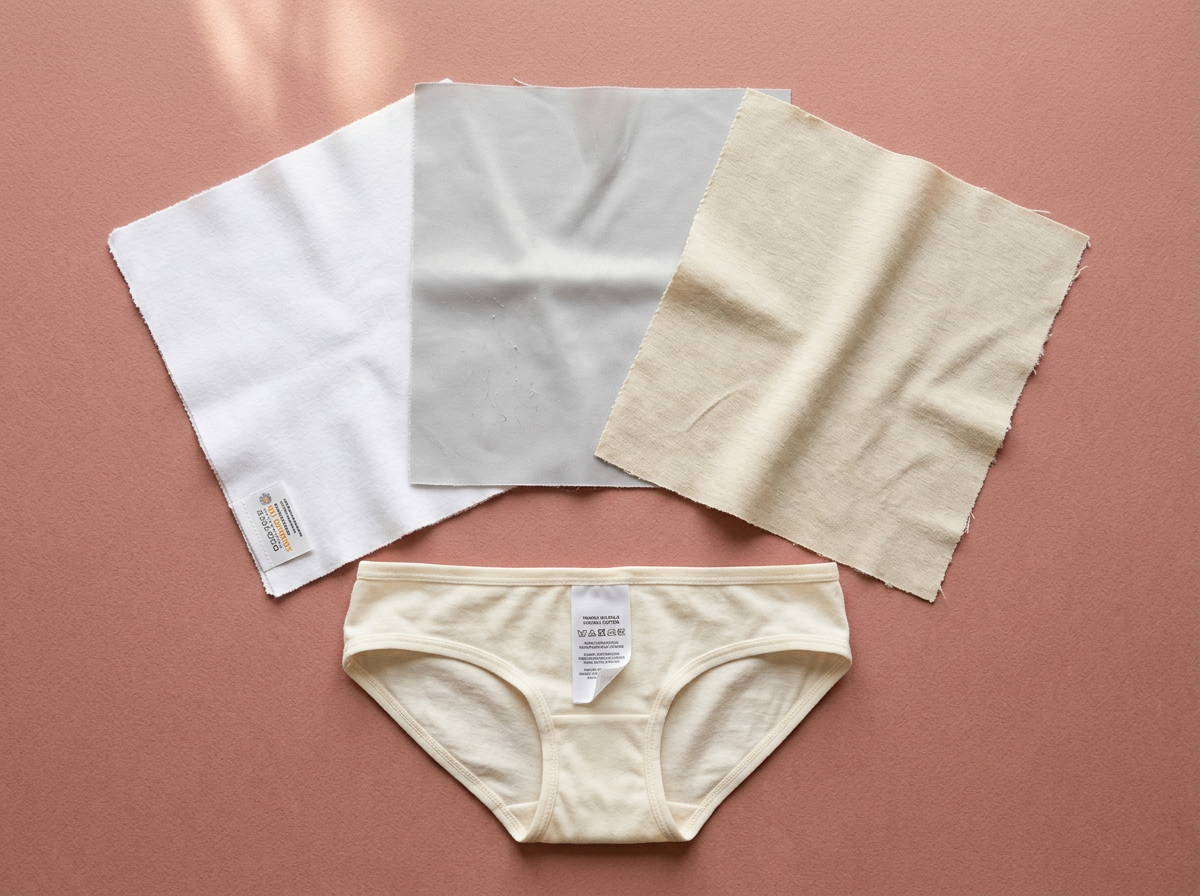
That recurring rash below your waistline. The itch that will not go away. The red marks where your underwear elastic sits. "Underwear rash" and "underwear irritation" searches have grown steadily as consumers discover their underwear may be the hidden cause of skin problems. We analyzed the four fabric-skin interaction mechanisms — bacterial microclimate, chemical contact dermatitis, pressure dermatitis, and antibacterial treatment sensitivity — with test data across 30+ brands.
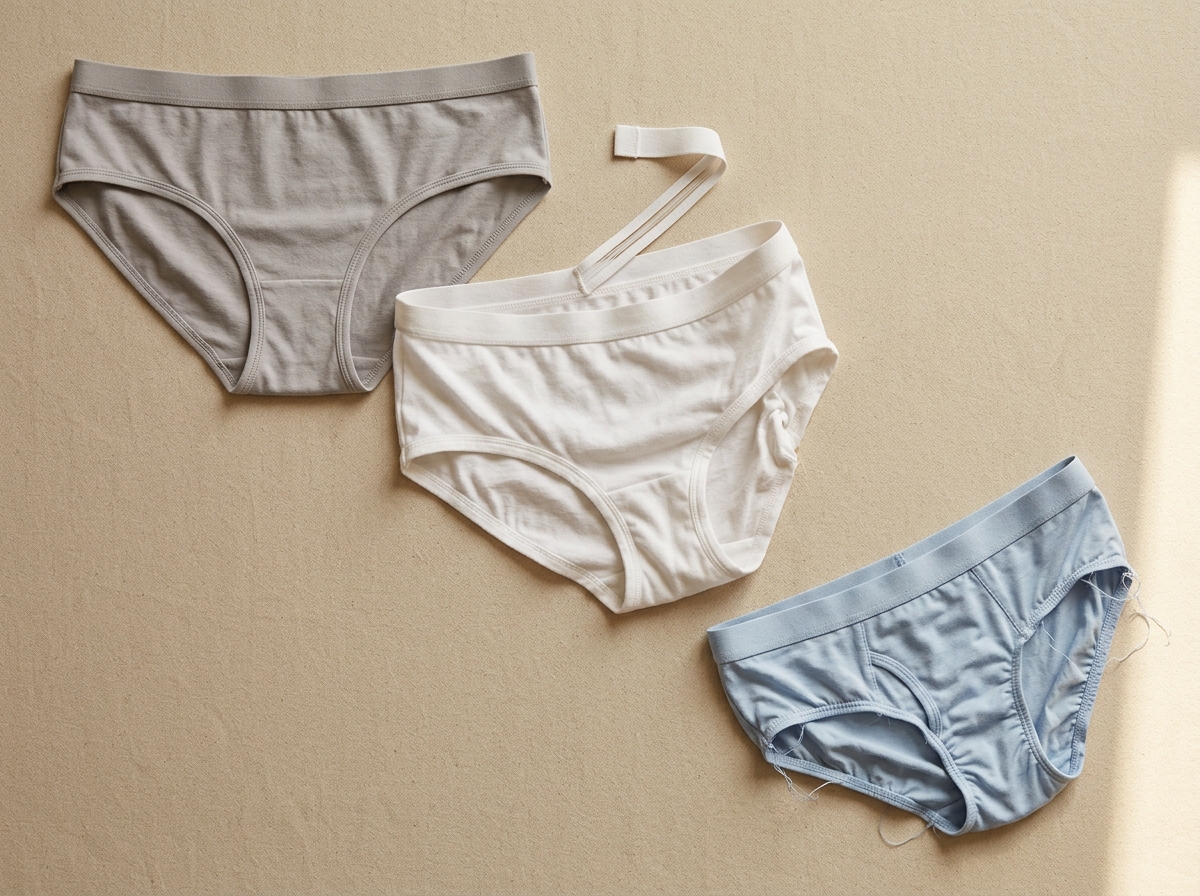
You adjust your underwear five times before lunch. The waistband rolls, the legs ride up, and everything bunches in the wrong places. "Why does my underwear keep riding up" is one of the most searched underwear complaints globally. We break down the four scientific causes — elastic recovery degradation, rise-torso mismatch, leg opening geometry, and fabric stretch ratio — and provide body-type-specific solutions based on testing across 30+ brands.
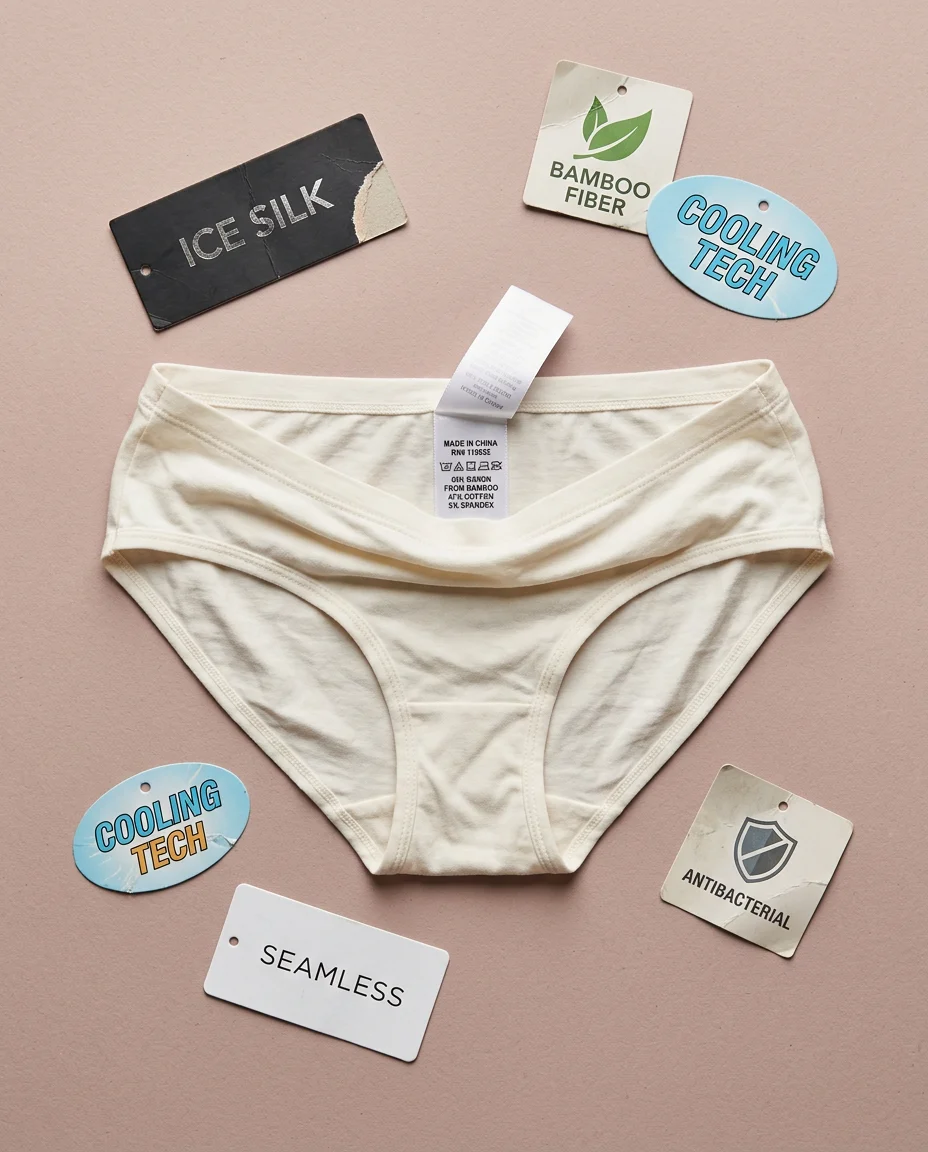
Your underwear label says "ice silk," "bamboo fiber," "seamless," "cooling technology," and "antibacterial." Three of those five terms do not mean what you think they mean. We deconstructed each marketing claim against published fiber science data and found a consistent pattern: the most expensive-sounding terms describe the cheapest materials.