Fabric Science2026-04-0610 min read
Seamless Underwear vs Invisible Underwear: The Real Difference (Technical Analysis + Scenario Guide)
Karl XiaoFactory Production Director
Part of the The Fiber Lab series
Part of the The Fiber Lab series
2026 search data tells a clear story:
Core issue: Most consumers — and even many brands — use "seamless" and "invisible" as synonyms. But they solve completely different problems with completely different technical approaches.
For a complete technical breakdown of seamless underwear (Santoni circular knitting machines, edge finishing, waistband solutions), see our Seamless Underwear Technology Guide. This article focuses on a direct comparison of the seamless and invisible concepts.
Seamless — Structural Level
Refers to underwear with no side seam lines. Made in a single pass on Santoni circular knitting machines to produce a tubular fabric, then finished with laser cutting or thermal bonding for edges and waistbands.
Technical essence: Eliminating physical stitching. The problems solved are "friction" and "compression" — seams are the most common source of friction and pressure in underwear.
Verifiable standard: Turn the underwear inside out and check the side seam area for any joining line. None = seamless.
Invisible — Visual Level
Refers to underwear that is visually undetectable under tight outerwear. Achieved through low-rise design (sitting below outer pant waistlines), ultra-thin fabrics, and skin-tone/dark colors matching outer garments.
Technical essence: Visual concealment. The problem solved is "visibility" — making underwear not appear through outer clothing.
Verifiable standard: Put on tight outer pants and check in a mirror for any visible underwear lines. None = invisible.
Many consumers believe "invisible underwear = seamless underwear." In reality, most products labeled "invisible" are seamed ultra-thin low-rise styles — they are indeed "invisible" visually, but side seams still exist. Conversely, a seamless garment with a waistband that sits above outer pants may actually show lines under tight clothing. They solve problems on entirely different dimensions.
Cost difference: Seamless underwear requires significantly higher equipment investment — a Santoni circular knitting machine costs approximately 10-15x more than a conventional flat sewing machine. However, the seamless process eliminates the side-seam assembly step, which can reduce labor costs in high-volume production. For small batches, invisible underwear typically has a lower per-unit cost.
The "ultra-thin" fabric (120-160g/m²) that invisible underwear relies on is inherently an enemy of durability. In blind testing by 10 independent testers, fabrics below 150g/m² began showing thinning, pilling, and elasticity loss after 20-30 washes. If you want an "invisible" effect, we recommend choosing 160-180g/m² thin seamless styles — achieving a better balance between invisibility and durability.
"Seamless" and "invisible" are not synonyms — they solve problems on different dimensions:
Consumers and brands alike should stop conflating these two concepts. If you prioritize comfort, choose seamless. If you prioritize not being seen under tight clothing, choose invisible. If you want both, choose ultra-thin seamless — that's the optimal solution given 2026 technology.
For more on seamless underwear manufacturing technology, see our Seamless Underwear Technology Guide. For men-specific seamless underwear considerations, see our Men's Functional Underwear Guide.
Data sources: This article references Google Trends 2026 Q1 search trend data, blind-test data from 10 independent testers evaluating 34 brands over 103 days (specifically regarding fabric weight and durability), textile engineering reference materials comparing circular knitting versus flat cutting process parameters, and underwear retail market product pricing structure analysis.
Deep dive into fabric composition, properties, and performance at the microscopic level
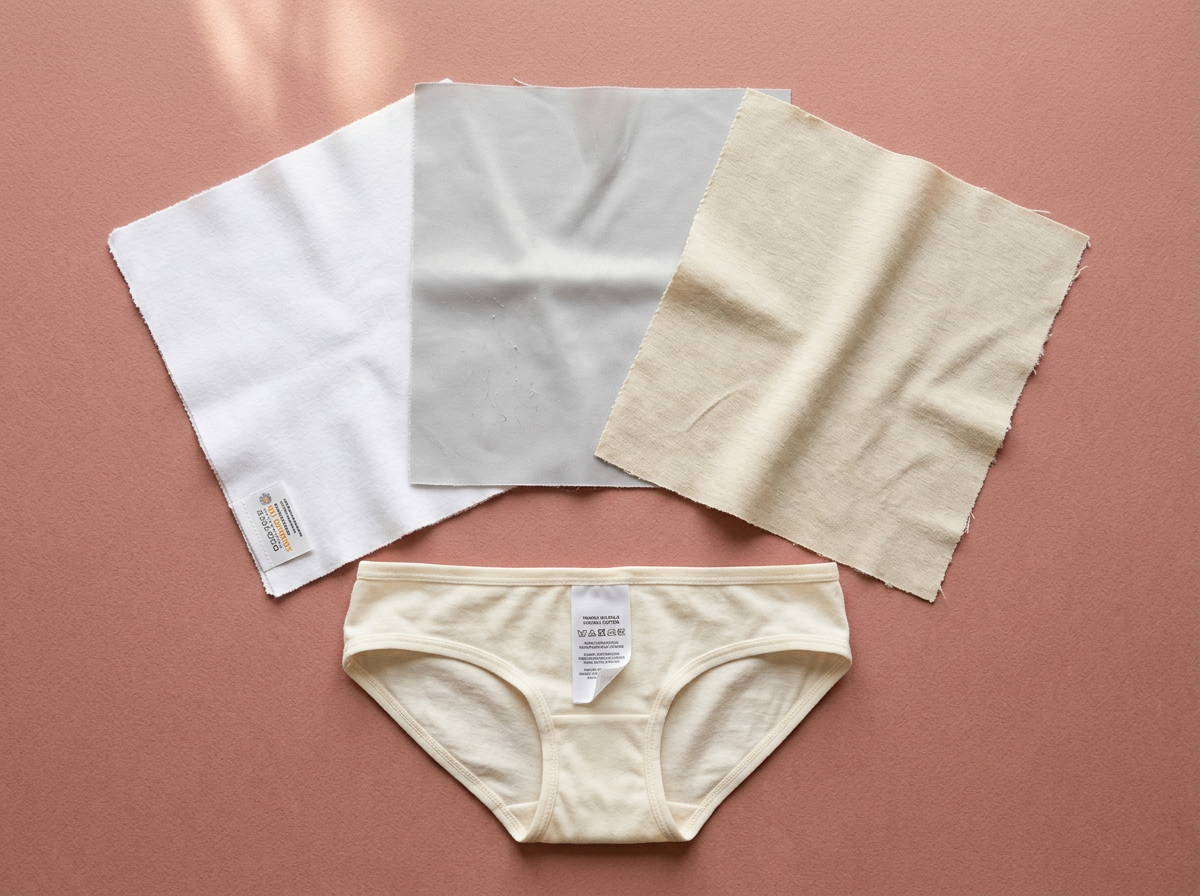
That recurring rash below your waistline. The itch that will not go away. The red marks where your underwear elastic sits. "Underwear rash" and "underwear irritation" searches have grown steadily as consumers discover their underwear may be the hidden cause of skin problems. We analyzed the four fabric-skin interaction mechanisms — bacterial microclimate, chemical contact dermatitis, pressure dermatitis, and antibacterial treatment sensitivity — with test data across 30+ brands.
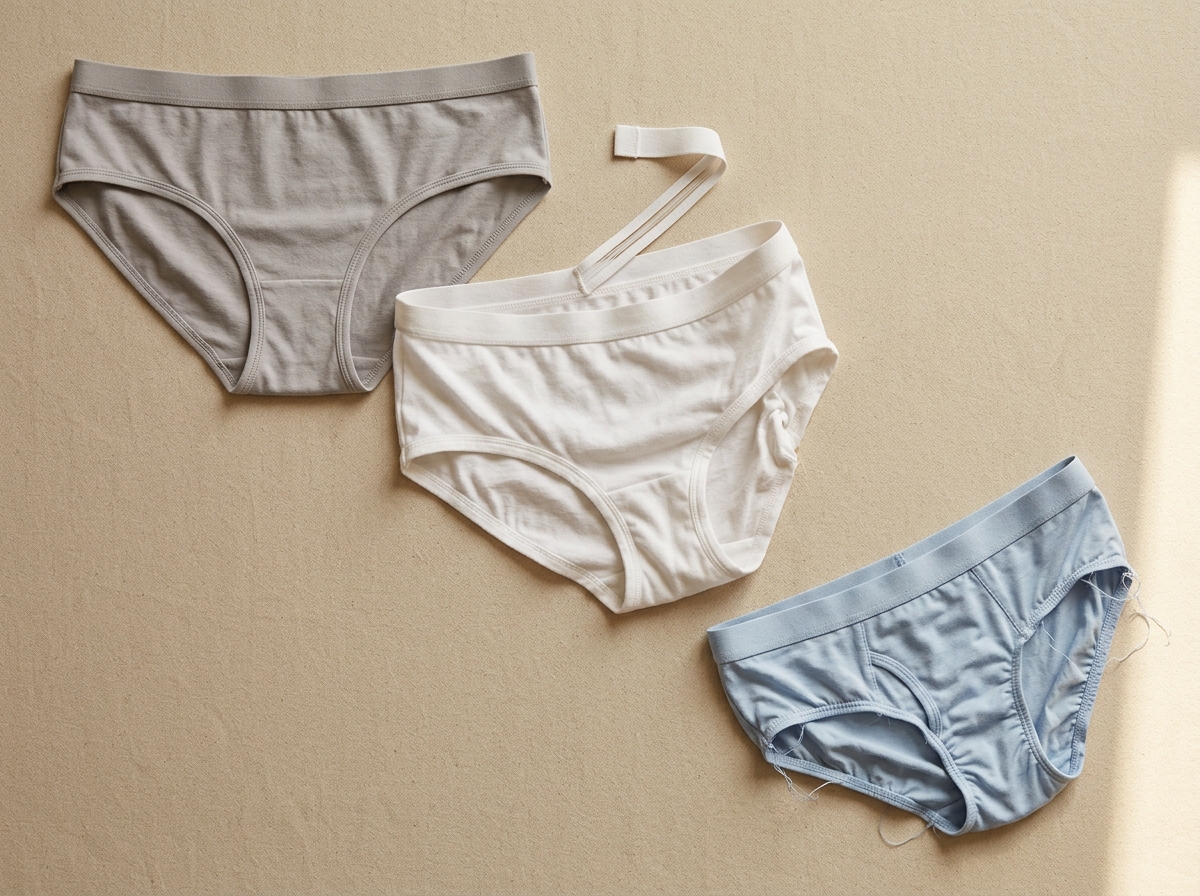
You adjust your underwear five times before lunch. The waistband rolls, the legs ride up, and everything bunches in the wrong places. "Why does my underwear keep riding up" is one of the most searched underwear complaints globally. We break down the four scientific causes — elastic recovery degradation, rise-torso mismatch, leg opening geometry, and fabric stretch ratio — and provide body-type-specific solutions based on testing across 30+ brands.
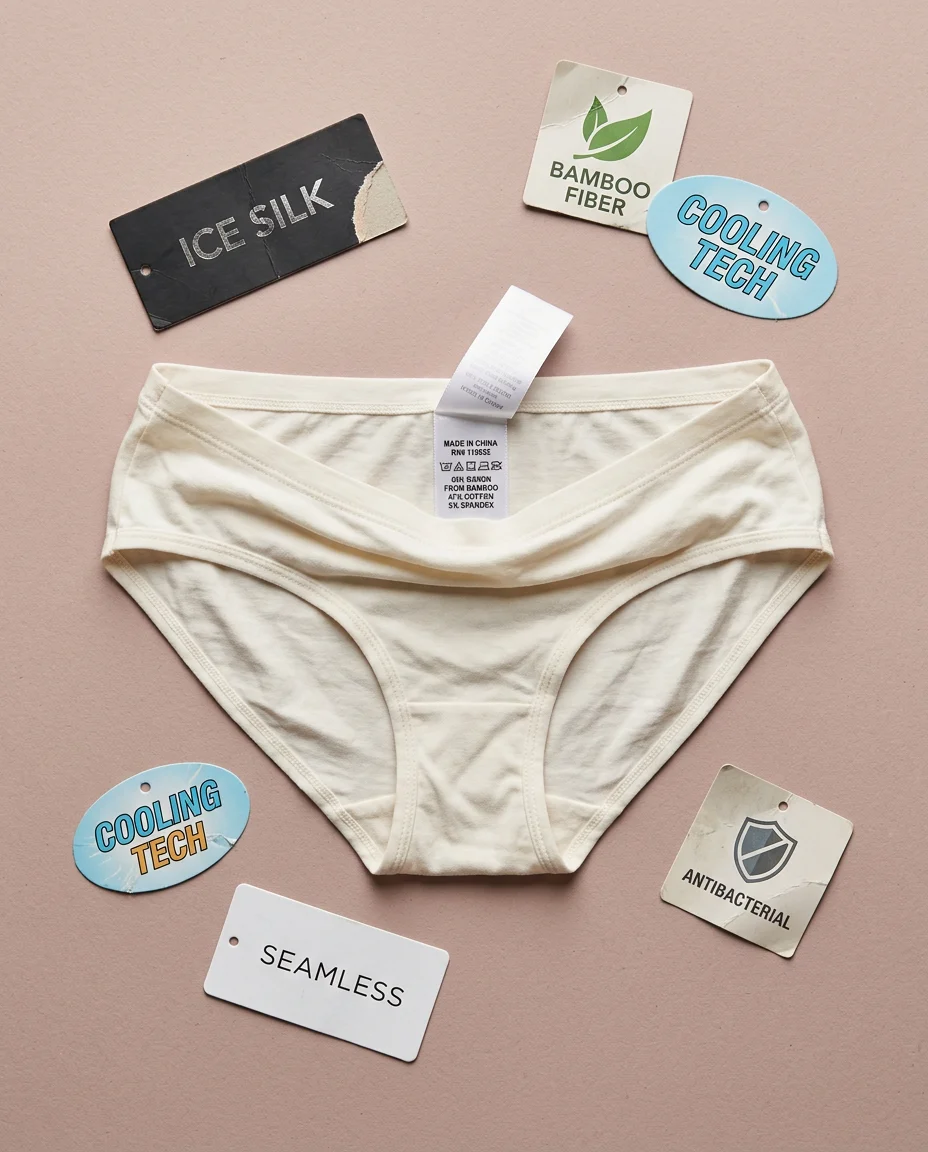
Your underwear label says "ice silk," "bamboo fiber," "seamless," "cooling technology," and "antibacterial." Three of those five terms do not mean what you think they mean. We deconstructed each marketing claim against published fiber science data and found a consistent pattern: the most expensive-sounding terms describe the cheapest materials.