Brand Growth2026-04-1311 min read
Period Underwear for Girls & Teens: A Parent's Science-Based Buying Guide (2026)
Karl XiaoFactory Production Director
Your daughter just got her first period — or you see it coming — and the search for the right menstrual products begins. "Period underwear for girls" has surged 60% in searches in early 2026, with "teen period underwear" and "girls period underwear" climbing just as fast. Parents are turning to period underwear because it offers something pads and tampons cannot: leak protection without the learning curve of insertion, the bulk of a pad, or the waste of disposables.
But the buying process raises questions that most product roundups do not answer. Is it safe for young, still-developing skin? How much absorption does a 12-year-old actually need? What about PFAS chemicals? And why does the sizing seem so confusing?
This guide addresses each question with lab data, pediatric health references, and manufacturer specifications — not affiliate links or brand promotions.
Rising demand driven by parents and young users
Before choosing a product, parents need to understand how adolescent menstruation differs from adult menstruation — because the product requirements are different.
A teen's lighter average flow means she likely does not need the highest absorbency products. But her irregular cycle means she cannot predict which days will be heavy. The practical recommendation: start with 1 pair of light absorbency (5-15 mL) and 2 pairs of moderate absorbency (15-25 mL). This covers most scenarios without over-investing.
Period underwear absorbency is measured in milliliters (mL). Here is what those numbers mean in practice:
| Absorbency Level | Capacity | Tampon Equivalent | When a Teen Needs It |
|---|---|---|---|
| Light | 5-10 mL | 1-2 regular tampons | First/last days, spotting, first period |
| Moderate | 15-25 mL | 2-4 tampons | Most regular flow days |
| Heavy | 25-40 mL | 4-6 tampons | Uncommon for teens unless medically indicated |
| Super/Overnight | 40-60+ mL | 6-10 tampons | Overnight protection only |
Practical tip: Independent testing consistently shows actual absorbency is 10-30% below brand claims. Buy one absorbency level higher than you think you need.
This is the question parents ask most often. Here is what the evidence says.
PFAS (per- and polyfluoroalkyl substances) are synthetic chemicals sometimes used in waterproof barriers. They have been linked to hormone disruption, immune effects, and developmental concerns — exactly the category of chemicals parents want to keep away from developing bodies.
The good news: the period underwear industry has largely moved away from PFAS after independent testing in 2020-2021 detected them in several brands. By 2025-2026, most established brands have reformulated and provide third-party testing documentation.
What to look for when shopping:
Pediatric dermatologists note that adolescent skin has a thinner stratum corneum (outer layer) and higher transepidermal water loss than adult skin. This means teens are more susceptible to contact dermatitis from synthetic fabrics, dyes, and chemical treatments. If your teen has sensitive skin or eczema, prioritize organic cotton top layers and avoid synthetic-blend gussets.
Period underwear does not carry the same Toxic Shock Syndrome risk as tampons (because it is not inserted into the vagina). However, blood and moisture in a warm environment do support bacterial growth:
| Wear Duration | Bacterial Level | Recommendation for Teens |
|---|---|---|
| 0-4 hours | Low | Safe for school with moderate flow |
| 4-8 hours | Moderate | Change after school if possible |
| 8-12 hours | High | Maximum recommended; change immediately after |
| 12+ hours | Very High | Never recommended for any age |
For school days: Most teens can wear a moderate-absorbency pair through a 6-7 hour school day. Pack a fresh pair in a discreet waterproof pouch for after-school changes if needed.
Period underwear sizing is fundamentally different from regular underwear sizing, and the stakes are higher because a poor fit means leaks.
Measure, do not guess. Use a soft measuring tape around the narrowest part of the waist and the widest part of the hips. Write down both measurements in centimeters. Do not rely on age-based sizing — a 13-year-old can wear anywhere from XS to L depending on her build.
Check the brand-specific chart. Every brand sizes differently. A "medium" in Knix corresponds to different measurements than a "medium" in Thinx. Always cross-reference your teen's measurements with the specific brand's size chart before ordering.
Do not size up for growth. This is the most common mistake. Period underwear must fit snugly against the body to prevent gaps where fluid can bypass the absorbent gusset. If it is loose, it will leak — regardless of how much absorbent material is inside. Buy the correct size now, and replace when she grows out of it.
Prioritize hip measurement over waist. For period underwear, the hip measurement is more critical because the absorbent gusset must sit flush against the perineal area. If waist and hip measurements fall in different size categories, choose based on the hip.
| Issue | What Happens | Solution |
|---|---|---|
| Rapid growth spurts | Fit becomes too tight or loose within months | Buy 5-6 pairs (enough for one cycle) rather than large quantities |
| Between sizes | One measurement falls between size categories | Size down, not up — snug fit prevents leaks |
| Body shape changes | Hip-to-waist ratio shifts during puberty | Re-measure every 6 months |
| Comfort complaints | Teen says it feels too tight | Check for red marks; some compression is normal, pain is not |
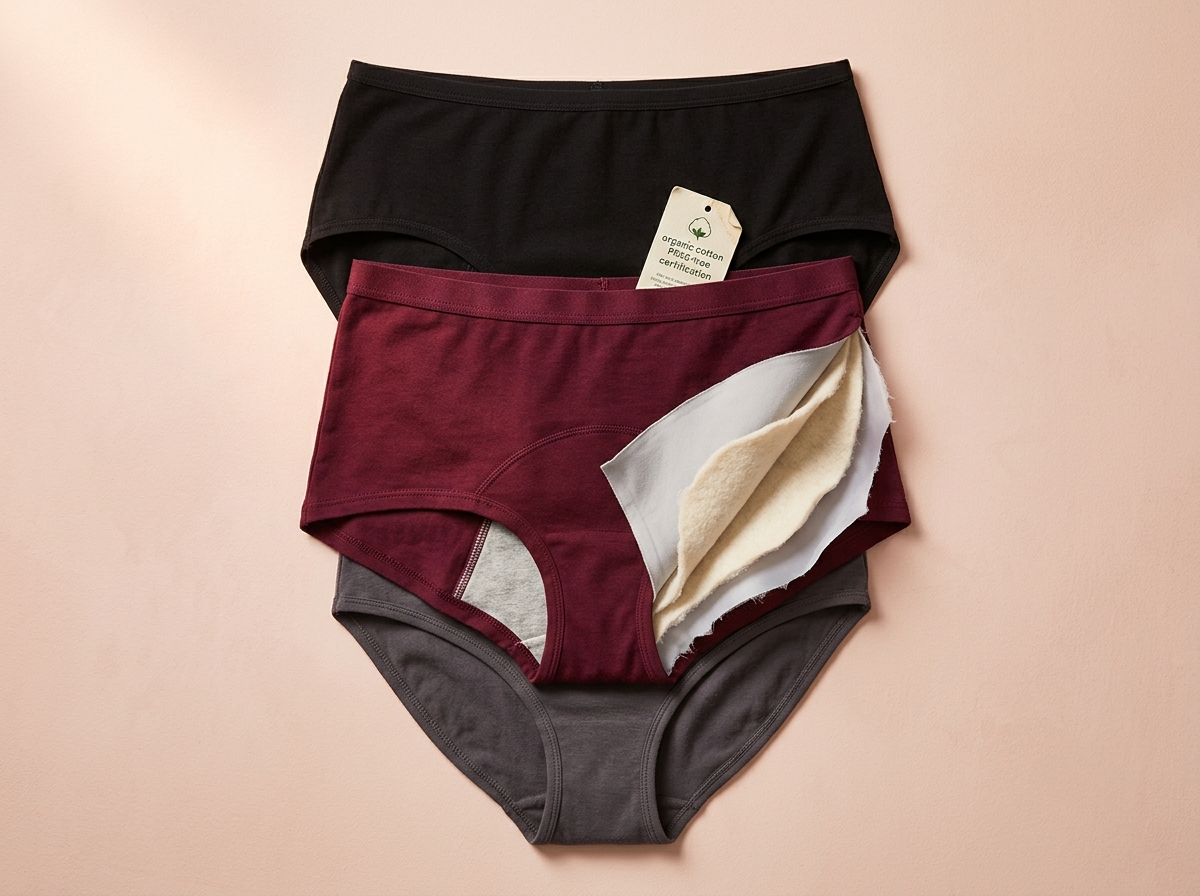
The top layer (the layer in direct contact with skin) matters more for teens than for adults because of higher skin sensitivity.
For a first period or a teen with any skin sensitivity history, organic cotton top layer is the safest choice. Once she is comfortable with period underwear and has no skin reactions, she may prefer synthetic-knit options for their drier feel during physical activity.
Use this checklist before making a purchase:
Safety Checklist:
Absorbency Checklist:
Sizing Checklist:
Care Checklist:
The economic case is strongest over 2+ years, but only if you factor in potential size replacements during growth spurts. For a teen who may need new sizes every 12-18 months, the cost advantage narrows — but the waste reduction and convenience gains remain significant.
Period underwear works well for most teens, but there are situations where it may not be the best primary option:
Search trend data: Google Trends analysis of period underwear queries related to girls, teens, and parents, Q1 2026.
Flow volume data: Pediatric gynecology references and adolescent health data from the American College of Obstetricians and Gynecologists (ACOG).
Safety and PFAS data: Independent testing reports from environmental health organizations, brand-published third-party certifications, and OEKO-TEX certification database.
Market sizing data: FortuneBusinessInsights global period panties market forecast report (2026-2036).
Related articles for deeper reading: