Brand Analysis2026-04-0512 min read
Knix vs Thinx: Period Underwear Brand Deep Dive (2026 Market Landscape Analysis)
Paul PengFactory Technology Director
Part of the Manufacturing Solutions series
Part of the Manufacturing Solutions series
The brand landscape of the period underwear category is undergoing its first large-scale restructuring since the category's inception.
The data is unambiguous: Thinx — the category pioneer that nearly single-handedly brought period underwear into the mainstream in the 2010s — is losing market share at a rate of 5-8% per year. Meanwhile, Knix is rising at 7-10% annually, and Ruby Love is experiencing explosive growth at 250% year-over-year. This pattern of "pioneer decline, challenger rise" is not uncommon in consumer product categories, but what makes the period underwear segment distinctive is this: the core of brand trust is not design or marketing, but safety and functional reliability.
The central driver of this brand migration is Thinx's PFAS trust crisis. In 2023, Thinx settled a PFAS class-action lawsuit for $5M. When consumers discovered that a brand built on "safe, sustainable" positioning might contain "forever chemicals," the collapse of trust was inevitable.
For the technical principles, absorbent structures, antibacterial grades, and compliance requirements of period underwear, refer to our complete period underwear technical guide. This article focuses on brand-level comparison and market landscape analysis.
Knix and Thinx represent two different technical philosophies in the period underwear space.
Knix's technology iteration direction is making the absorbent layer thinner while maintaining or increasing absorbency. Its core technical characteristics:
Knix's technology roadmap is fundamentally pursuing the unification of functionality and everyday wear experience — making period underwear not a "functional product" but an "upgraded version of everyday underwear." Essity's acquisition of 80% of Knix at a $410M valuation (completed February 2026) is largely an endorsement of this technology roadmap.
Thinx's technology roadmap is more traditional:
Neither Knix nor Thinx discloses its antibacterial grade (3A/5A/7A/10A system). For menstrual use — where blood provides an ideal bacterial growth medium — antibacterial performance is a safety baseline, not a bonus feature. New entrants can use disclosed antibacterial grades as a differentiation point. For a detailed explanation of antibacterial grades, see our antibacterial grade deep dive.
Pricing strategies in the period underwear market are diverging into three clear product tiers:
The current market lacks a strong competitor in the $18-25 range. This price point sits below the "premium" positioning of Knix/Thinx and above the "low-price" strategy of white-label/new brands. For new entrants, offering products with 7A+ antibacterial grade and 20ml+ absorbency in this price range could simultaneously capture both "value-for-money" and "quality" consumer segments.
Thinx's brand decline did not happen overnight. It is a textbook case of a functional product trust collapse process:
PFAS Exposure (Early 2023)
Media reports revealed that Thinx products contained PFAS (per- and polyfluoroalkyl substances), compounds known as "forever chemicals" linked to health risks. For a period underwear brand built on "safe, sustainable" positioning, this allegation was devastating.
$5M Settlement and Trust Erosion
Thinx settled the class-action lawsuit for $5M (consumers could receive $7 per pair, up to 3 pairs = $21). The settlement did not admit fault — but in consumer perception, the settlement itself constituted an "admission." When consumers discovered that a brand marketed as "safe" might contain harmful chemicals, the cracks in trust became irreparable.
Compounding Quality Control Scrutiny
After the PFAS incident, consumers began scrutinizing other aspects of Thinx with stricter standards. Multiple independent reviews showed significant variation in absorbency performance across different production batches of Thinx products. For a functional product that requires repeat purchases, quality consistency is the decisive factor for repurchase rates — and Thinx failed to rebuild confidence on this front.
Competitor Trial and Consumer Migration
Trust-shaken consumers began actively searching for alternatives — the growth in "thinx vs knix" search volume confirms this behavior. Knix captured some of the migrating demand with thinner technology and a younger brand image; Ruby Love captured another segment of price-sensitive migrating consumers with lower prices.
Accelerated Brand Migration
Thinx's decline (-5-8%/yr) and Knix's rise (+7-10%/yr) formed a stark scissors divergence. Even more notable is Ruby Love's +250% growth rate — it is not only capturing Thinx's lost customers but also expanding the entire category's user base.
The Thinx case demonstrates that in the functional underwear category:
Ruby Love's growth rate is the most remarkable in the entire period underwear category. A +250% annual growth rate far exceeds the category average.
Growth driver analysis:
Precise price positioning: The $15-28/pair price range, below Thinx ($25-40) and Knix ($28-42), precisely targets the price-sensitive group who "want to try period underwear but don't want to spend $30+."
Beneficiary of category education phase: "What is period underwear" search volume grew 70% — a massive wave of new consumers is trying period underwear for the first time. Ruby Love's lower prices reduce the trial barrier, making it the "first try" default choice.
Filling the trust vacuum: After Thinx's trust crisis, consumers demand more from "safety." Ruby Love explicitly labels its products as PFAS-free, directly addressing consumers' safety anxieties.
Ruby Love's absorbency (~20-35ml) is lower than Knix and Modibodi. As category education gradually completes, consumers may upgrade from "does it exist?" to "which is better?" — at which point absorbency and durability will become more important competitive dimensions. Whether the $15-28 price range can sustain quality over the long term is an ongoing challenge for Ruby Love.
Based on search trend and brand keyword data analysis, we have mapped the 2026 period underwear category's brand migration directions:
The decisive factor for consumer repurchase is not "what's the maximum absorbency?" but "is the quality of every single pair consistent?" Thinx's quality control instability — significant absorbency performance variation across batches — damaged brand reputation more fatally than "insufficient absorbency." New entrants should prioritize quality control consistency above all else.
"Period underwear without PFAS" search volume has grown +320%. Consumers have elevated "PFAS-free" from a bonus feature to a baseline requirement. Any new entrant still using PFAS-containing waterproofing solutions is entering the 2026 market with a built-in trust deficit.
The $18-25 price range currently lacks a strong competitor. This range can simultaneously attract both "Thinx replacement" and "quality upgrade" consumers. 7A antibacterial, 20ml+ absorbency, non-PFAS solution — offering these specifications in this price range represents a differentiation window.
For brand owners planning to enter the period underwear category, the following are the key parameters to clarify when engaging with manufacturers:
When communicating with manufacturers, confirm the following capabilities:
The 2026 period underwear market presents three key characteristics:
Surging end-user demand: The global period underwear market is projected to grow from $200M in 2026 to $1.1B by 2036, a compound annual growth rate of 17%. This is not a saturating market — it is one that is still rapidly expanding.
Category education completed: "What is period underwear" searches grew 70% — a massive wave of new consumers is entering the category. Brand education costs are declining.
Competitive landscape not yet consolidated: Category pioneer Thinx is stalling (-5-8%/yr), Knix is rising but has not yet formed a monopoly, and Ruby Love has proven the explosive power of a value-for-money route. For new entrants, the window is open.
Key success factors for entering this category: prioritize technical parameters (absorbency ≥ 20ml, rewet time ≥ 30 minutes, antibacterial grade 7A+), non-PFAS waterproofing as standard, quality control consistency over single-test peak performance, and public transparency as a new competitive dimension.
For brand owners evaluating the viability of a period underwear product line, engaging in preliminary discussions with manufacturing partners who have multi-layer composite gusset manufacturing experience and can coordinate third-party antibacterial and absorbency performance testing is an effective way to reduce trial-and-error costs.
Data Sources: This article references 2024-2026 period underwear search trend data, public transaction information on Essity's acquisition of Knix, public records of the Thinx PFAS class-action lawsuit, third-party laboratory absorbency performance test reports, multi-brand consumer testing data, and global period underwear market forecast reports.
Business insights for apparel brand owners, from production strategies to manufacturing optimization
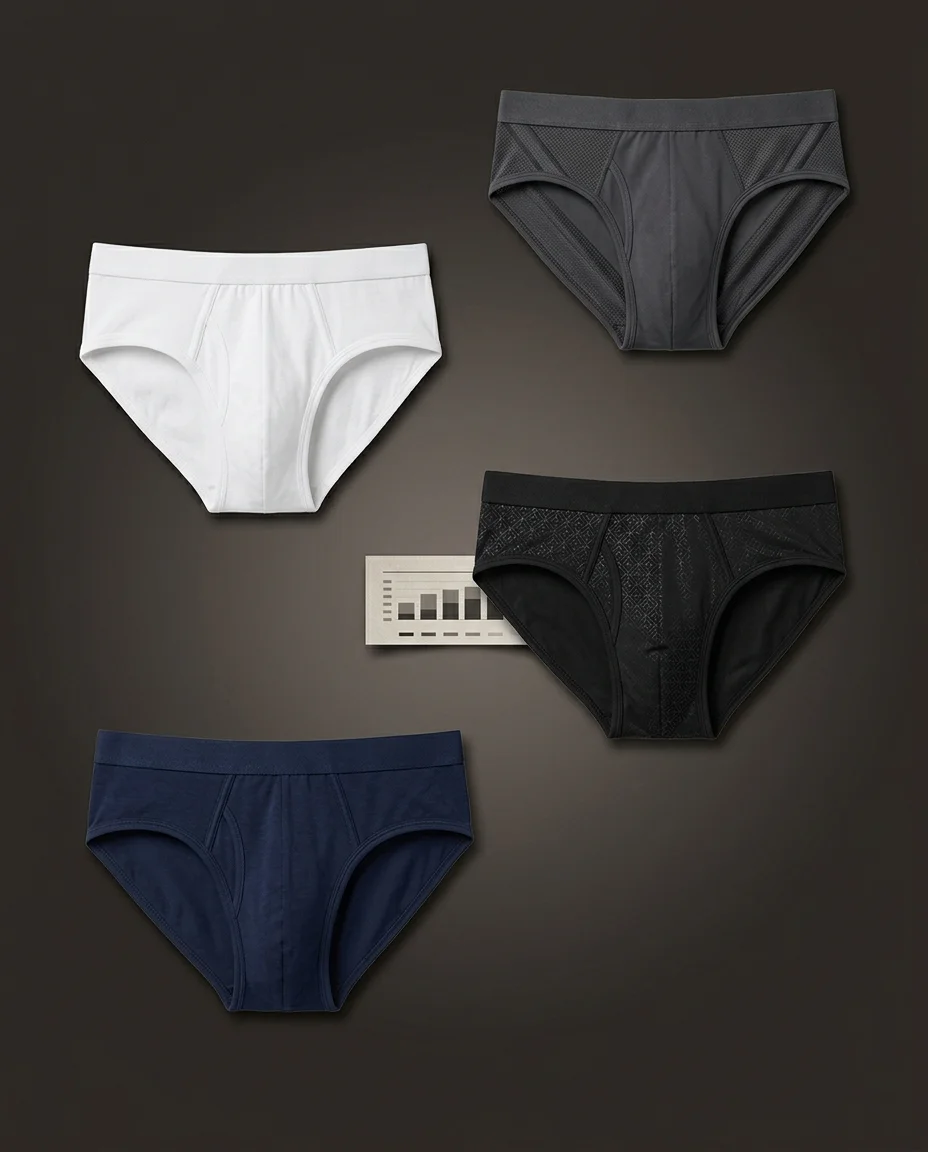
The men's briefs market is fragmenting from a single 'basics' category into four distinct competitive tracks. Traditional searches dropped 20-30%, while heated underwear (+2150%), seamless men's (+300%), and cooling fabrics (+180%) surge. This analysis breaks down four competitive tracks: budget basics, functional tech, premium fabrics, and performance sport — with pricing, technology requirements, and entry strategy for each.
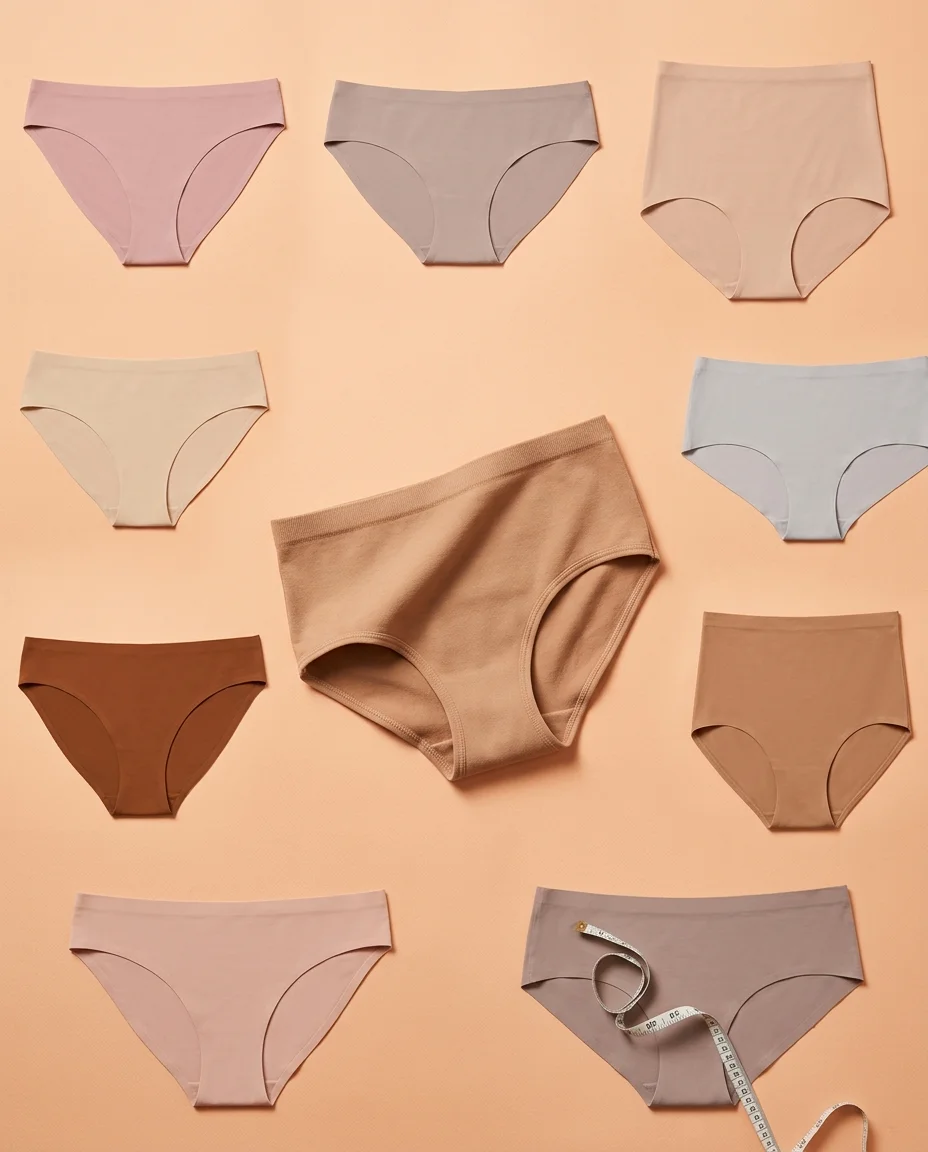
We tested 30+ seamless underwear brands across fabric recovery, waistband tension, and gusset construction. The results: only 6 brands use true circular knitting — most 'seamless' products are simply flat-lock seamed with marketing spin. This guide ranks the best seamless underwear by real performance data, not claims.
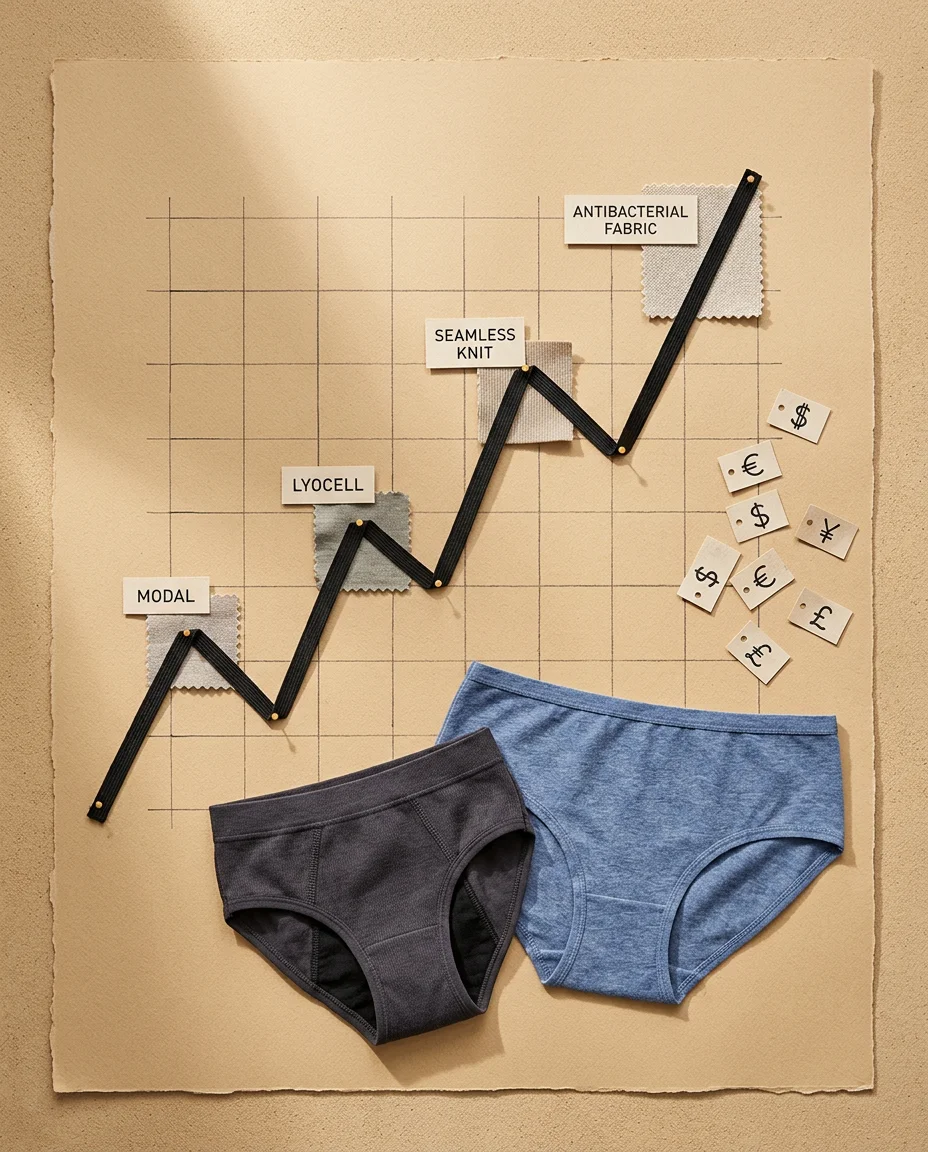
The underwear market is projected to reach $127.4B by 2032. We analyze 2026's trending products — period underwear (+300%), seamless (+110%), plus-size (+130%), and antibacterial Modal — with market data, fabric innovation timelines, and regional growth forecasts for brand planning.