Industry Trends2026-04-0413 min read
Best Period Underwear 2026: Technology, Brand Comparison & Buying Framework
Paul PengFactory Technology Director
Part of the Manufacturing Solutions series
Part of the Manufacturing Solutions series
In 2026, period underwear is no longer a niche category — it is becoming an established underwear segment. Google Trends data shows "best period underwear" reaching a historic peak score of 100, with review content searches growing over 200% year-over-year and brand keyword searches surging by 300%. Meanwhile, "what is period underwear" — a foundational awareness query — has grown by 70%, meaning large numbers of new consumers are learning about this category for the very first time.
These numbers signal two things: first, end-user demand is accelerating rapidly; second, brand competition is shifting from "does it exist?" to "which is better?" For brands looking to enter the period underwear category, understanding the underlying technology and competitive landscape has never been more critical.
The core technology of period underwear lies not in the fabric itself, but in the design of a multi-layer composite structure. Unlike regular underwear, period underwear uses a three-layer (or four-layer in premium products) functional system in the gusset area:
Wicking Layer
The top layer in direct contact with the skin, woven from hydrophilic fibers (regenerated cellulose, modal, or combed cotton). Its function is to rapidly draw liquid away from the body surface into the next layer. Key parameter: liquid spreading speed — industry standards require initial spreading within 3 seconds of liquid contact. The design goal is to make the wearer feel "dry" even after liquid has been discharged.
Absorbent Core
The middle layer is the heart of the entire system, typically composed of superabsorbent fiber, SAP (superabsorbent polymer) composite, or high-density knitted cotton. Its function is to lock in liquid and prevent rewetting. Two key metrics:
Waterproof Barrier
The bottom layer uses TPU coating or DWR (durable water repellent) treated fabric to prevent liquid from penetrating through to the outside. The technical barrier for this layer is relatively low, but the bonding process with the middle layer directly affects product lifespan — delamination after washing is one of the most common quality issues in period underwear.
The 2024-2026 iteration direction is making the absorbent layer thinner (compressed from the traditional 3-4mm to 1.5-2mm) while maintaining or even improving absorption capacity. This makes period underwear feel closer to regular underwear, reducing the psychological barrier for consumers. Knix and Modibodi hold the densest patent portfolios in this area.
Period underwear demands far higher antibacterial performance than everyday underwear. Menstrual blood contains proteins, iron, and various organic compounds that provide an ideal growth medium for bacteria. At 37°C body temperature in a confined environment, bacterial counts can increase by several orders of magnitude within 2 hours.
This means antibacterial grade is no longer just a marketing point — it is a safety baseline for menstrual products.
Antibacterial grades (3A/5A/7A/10A) measure wash durability, not antibacterial strength. A 3A product and a 10A product may have identical initial suppression rates (both can achieve 95%+). The difference is that after multiple washes, the 10A product maintains this effectiveness longer. For more details, see our Antibacterial Grades Deep Dive.
For period underwear, we recommend brands use at minimum a 7A grade, with suppression rate data covering three standard bacteria: Staphylococcus aureus, E. coli, and Candida albicans, all achieving suppression rates of 95% or above.
Based on third-party testing reports, large-scale consumer evaluation data, and publicly available brand technical specifications, we compared the major players in the 2026 period underwear market. For a detailed brand comparison analysis of Knix vs Thinx (including PFAS lawsuit impact, technology route differences, and brand migration dynamics), see our Knix vs Thinx Deep Brand Comparison.
Thinx was the first brand to bring period underwear into the mainstream market, but in 2026 it faces three structural challenges:
PFAS Chemical Lawsuits: PFAS (per- and polyfluoroalkyl substances) class-action lawsuits starting in 2023 severely damaged brand trust. Consumers began questioning whether the "waterproof" function came at the cost of health risks. This incident accelerated the entire industry's transition to non-PFAS waterproof solutions.
Inconsistent Quality Control: Multiple independent reviews have shown significant batch-to-batch variation in Thinx's absorption performance. For a functional product that relies on repeat purchases, quality consistency is the decisive factor for repurchase rates.
Competitor Catch-up: Knix has earned word-of-mouth with thinner absorbent layers and superior wearing experience, Modibodi has built patent barriers in absorption technology, and Ruby Love is rapidly capturing the mass market with strong value propositions. Thinx's first-mover advantage is being eroded by product performance gaps.
Thinx's case demonstrates that in functional underwear categories, the window for first-mover advantage is shrinking. Technology iteration speed and quality control stability matter more for market position than brand history. New brands have a genuine opportunity to enter the market through superior process parameters and stricter quality systems.
Beyond overall search volume,细分 keyword trends reveal the direction of shifting consumer preferences:
| Keyword Direction | Trend Change | Brand Implication |
|---|---|---|
| "high waist period underwear" | +140% | Surging demand for high-waisted styles; consumers seeking more secure leak protection |
| "cotton period underwear" | +40% | Natural fabric preference persists; regenerated cellulose/modal can serve as alternatives |
| "heavy absorbency period underwear" | +190% | High absorption capacity is a core selling point; products under 15ml struggle to meet mainstream needs |
| "best period underwear for teens" | +85% | Teen market is forming; attention needed for sizing systems and psychological comfort |
| "period underwear without PFAS" | +320% | Safety anxiety is a real consumer need; non-PFAS solutions are becoming a requirement, not a bonus |
For brands planning to launch a period underwear product line, here are the core process parameters to clarify when communicating with manufacturers:
In period underwear fabric selection, regenerated cellulose fibers (including modal) offer unique advantages:
In product copy, we recommend using "Regenerated Cellulose" or "Modal" rather than "Bamboo." The latter faces compliance risks in multiple markets — the US FTC and Canadian Competition Bureau have taken enforcement action against false or misleading "bamboo fiber" marketing claims.
Period underwear involves multiple compliance requirements that brands must consider during product development:
US Market:
EU Market:
China Market:
Period underwear brands must not claim their products can "treat," "prevent," or "diagnose" any disease. All functional claims should revolve around physical performance — "absorption," "leak prevention," "antibacterial" — and avoid entering medical regulatory territory. Export brands should consult regulatory experts in target markets before product launch.
The 2026 period underwear market presents three key characteristics: surging end-user demand (peak search interest), completed category education (basic awareness searches +70%), and an unsettled competitive landscape (category pioneer Thinx is losing momentum). This means the window is open for new entrants.
Period underwear's +300% brand search growth is part of a broader market transformation. For the complete picture of trending underwear categories, see our 2026 Trending Underwear Market Analysis.
Key success factors for entering this category:
For brands currently evaluating the viability of a period underwear product line, early engagement with a manufacturing partner experienced in multi-layer composite gusset construction and capable of coordinating third-party antibacterial and absorption performance testing is an effective way to reduce trial-and-error costs.
Data Sources: This article references 2024-2026 period underwear search trend data, third-party laboratory absorption performance test reports, multi-brand consumer testing data, and textile industry standards (GB/T 20944, FZ/T 62015, ISO 20743, relevant AATCC standards).
Business insights for apparel brand owners, from production strategies to manufacturing optimization
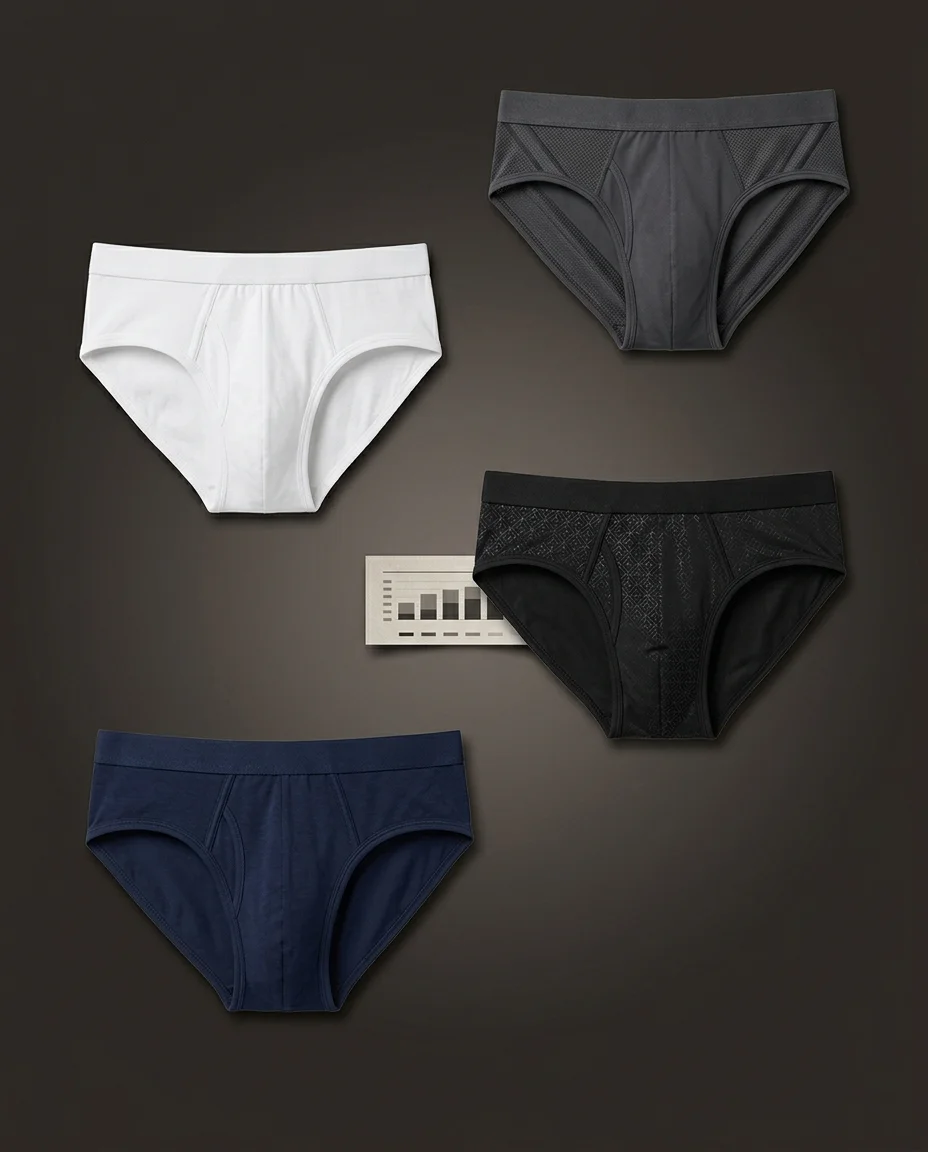
The men's briefs market is fragmenting from a single 'basics' category into four distinct competitive tracks. Traditional searches dropped 20-30%, while heated underwear (+2150%), seamless men's (+300%), and cooling fabrics (+180%) surge. This analysis breaks down four competitive tracks: budget basics, functional tech, premium fabrics, and performance sport — with pricing, technology requirements, and entry strategy for each.
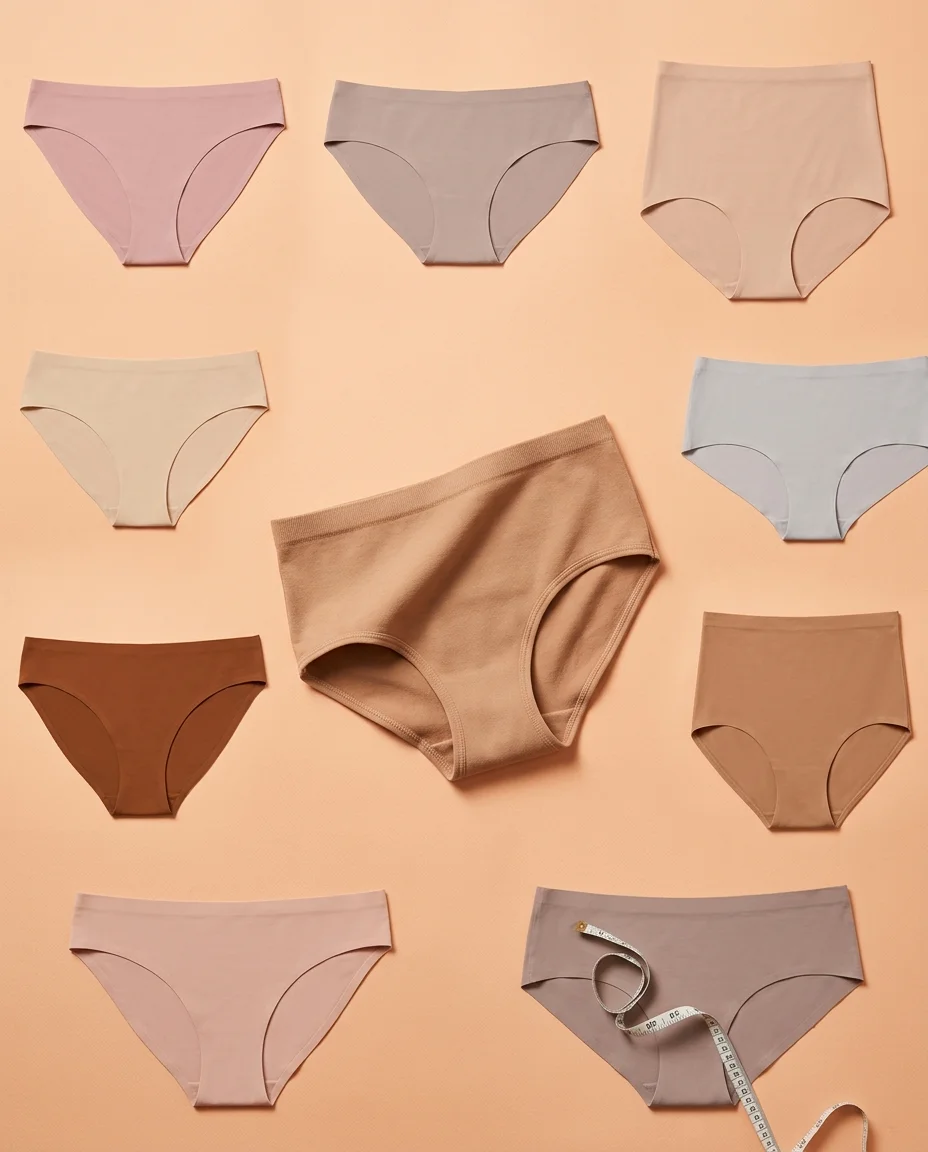
We tested 30+ seamless underwear brands across fabric recovery, waistband tension, and gusset construction. The results: only 6 brands use true circular knitting — most 'seamless' products are simply flat-lock seamed with marketing spin. This guide ranks the best seamless underwear by real performance data, not claims.
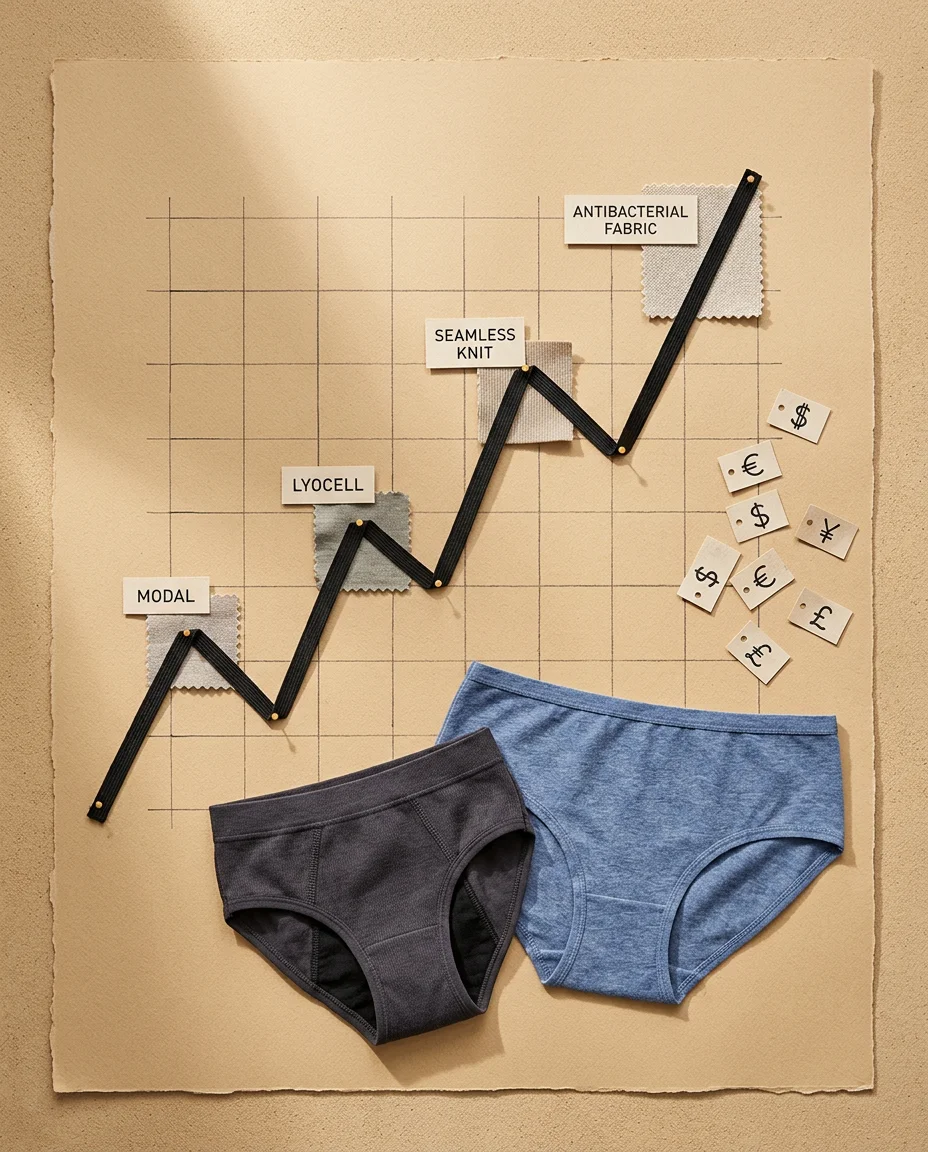
The underwear market is projected to reach $127.4B by 2032. We analyze 2026's trending products — period underwear (+300%), seamless (+110%), plus-size (+130%), and antibacterial Modal — with market data, fabric innovation timelines, and regional growth forecasts for brand planning.