Industry Standards2026-04-0910 min read
Antibacterial Underwear Grades: What Consumers Actually Understand (China Market Survey)
Karl XiaoFactory Production Director
Part of the The Fiber Lab series
Part of the The Fiber Lab series
72% of consumers misunderstand what antibacterial underwear grades mean. They think 7A means "7x stronger antibacterial power" and 10A means "maximum sterilization." The reality: these numbers indicate wash durability, not antibacterial strength.
This study analyzes consumer perception data from 30+ brands in the Chinese market, where antibacterial grade labeling is most prevalent.
For the complete technical breakdown of antibacterial grades, see our Antibacterial Grades Explained article.
"Higher grade = stronger antibacterial effect" — False. 7A and 10A both achieve 95%+ initial suppression. The difference is how many washes the effect survives.
"7A is the best available" — False. 10A (300 washes) outlasts 7A (150 washes) by approximately 2x.
"3A is better than nothing" — Debatable. 3A survives only 10 washes (~2 weeks), making sustained antibacterial effect negligible.
"If it says 7A, it really is 7A" — Not always. Many products state only the antibacterial rate (e.g., "99%") without specifying wash durability grade or testing standard.
"Antibacterial = sterilization, treats infections" — False. Antibacterial means inhibiting bacterial growth, not killing all microorganisms. Any brand claiming therapeutic benefits is making unsupported claims.
| Grade | Wash Durability | Approx. Usage Duration | Best For | Suggested Price Range |
|---|---|---|---|---|
| 3A | 10 washes | ~2 weeks | Not recommended | Avoid |
| 5A | 100 washes | ~3 months | Short-term use | $1-3 per pair |
| 7A | 150 washes | ~5 months | Daily wear | $2-5 per pair |
| 10A | 300 washes | ~10 months | High-frequency, sports | $3-7 per pair |
| Washing Method | Impact on 7A Lifespan | Estimated Duration |
|---|---|---|
| Cold water gentle wash (recommended) | Standard wear | ~5 months |
| Warm machine wash (30-40C) | 20% faster degradation | ~4 months |
| Hot machine wash (60C+) | 50% faster degradation | ~2.5 months |
| Bleach use | Severe damage to antibacterial layer | May fail in 1-2 washes |
| Fabric softener | Reduces antibacterial rate 15-20% | ~4 months (lower efficacy) |
| Hot dryer | 30% faster degradation | ~3.5 months |
Our team specializes in antibacterial fabric technology and quality control for intimate apparel. For production inquiries, contact us.
Deep dive into fabric composition, properties, and performance at the microscopic level
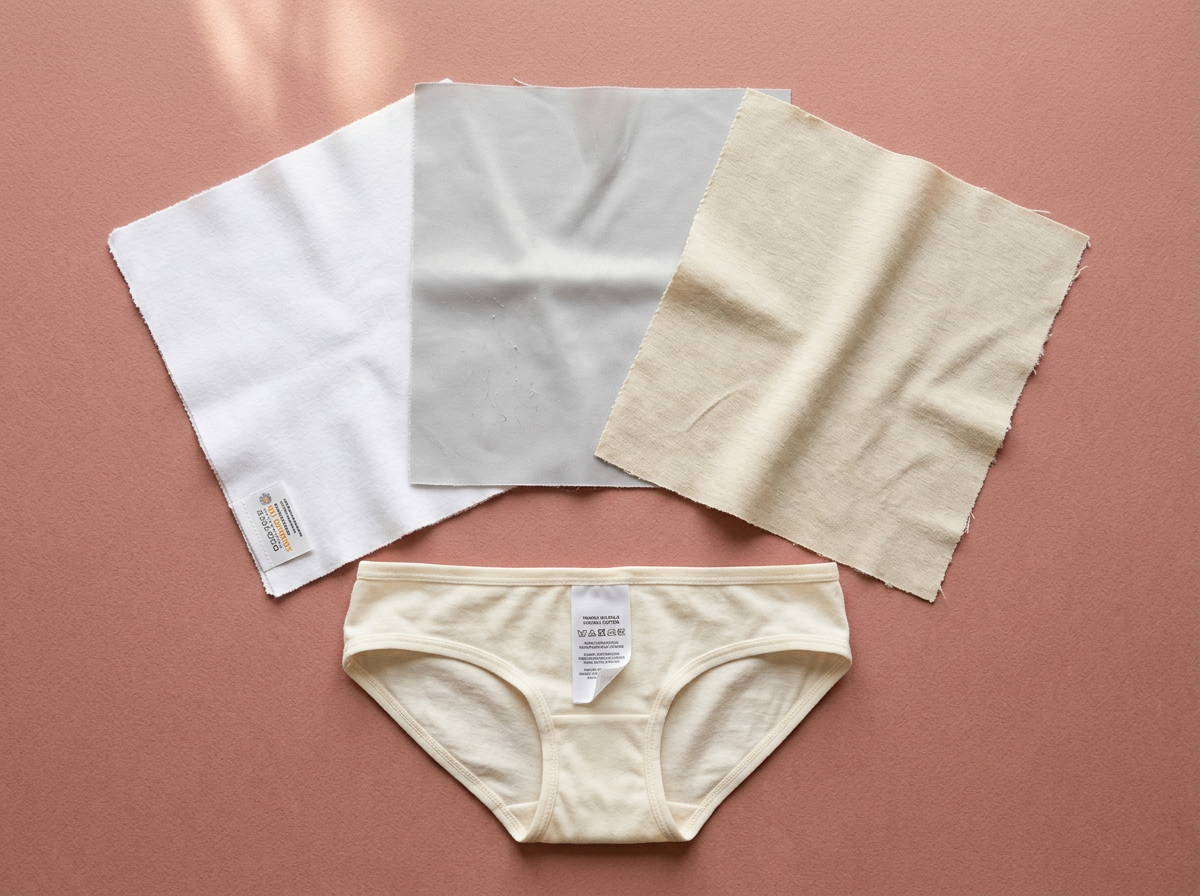
That recurring rash below your waistline. The itch that will not go away. The red marks where your underwear elastic sits. "Underwear rash" and "underwear irritation" searches have grown steadily as consumers discover their underwear may be the hidden cause of skin problems. We analyzed the four fabric-skin interaction mechanisms — bacterial microclimate, chemical contact dermatitis, pressure dermatitis, and antibacterial treatment sensitivity — with test data across 30+ brands.
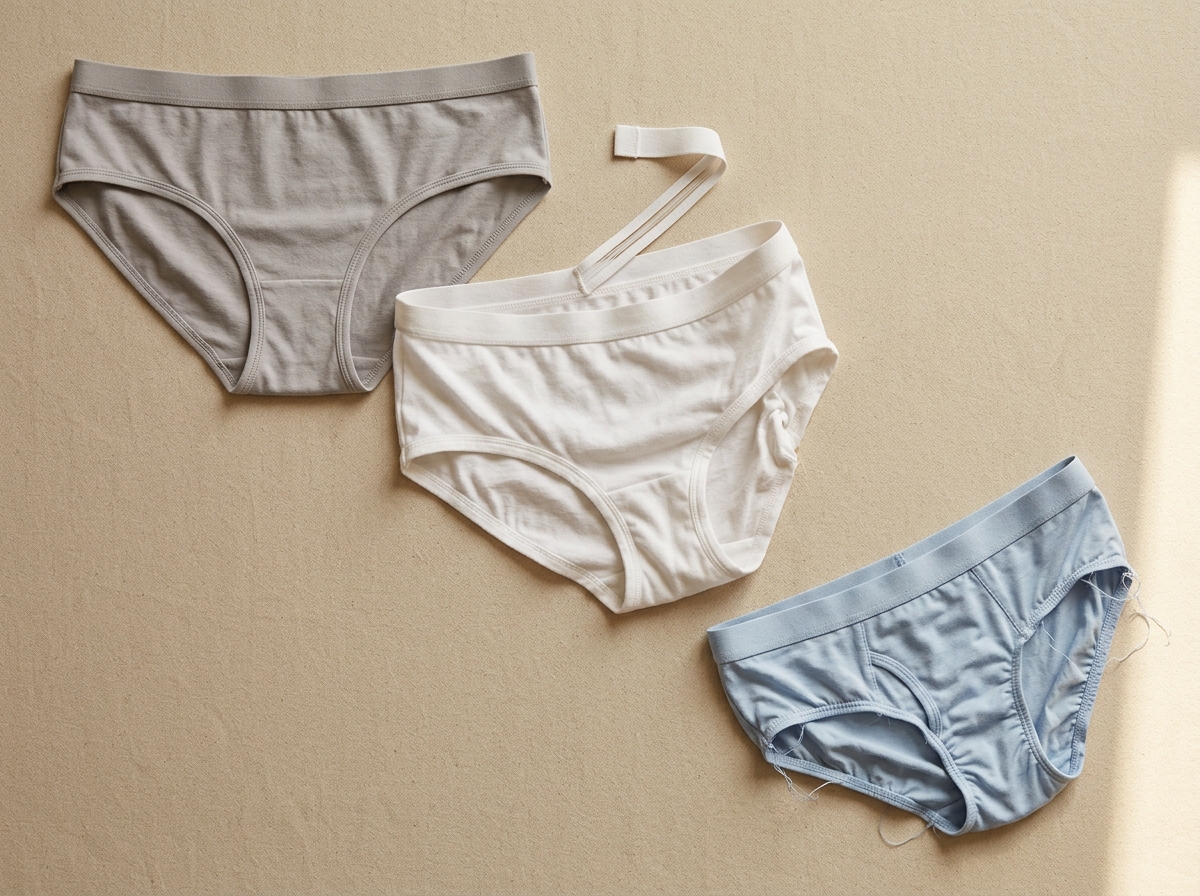
You adjust your underwear five times before lunch. The waistband rolls, the legs ride up, and everything bunches in the wrong places. "Why does my underwear keep riding up" is one of the most searched underwear complaints globally. We break down the four scientific causes — elastic recovery degradation, rise-torso mismatch, leg opening geometry, and fabric stretch ratio — and provide body-type-specific solutions based on testing across 30+ brands.
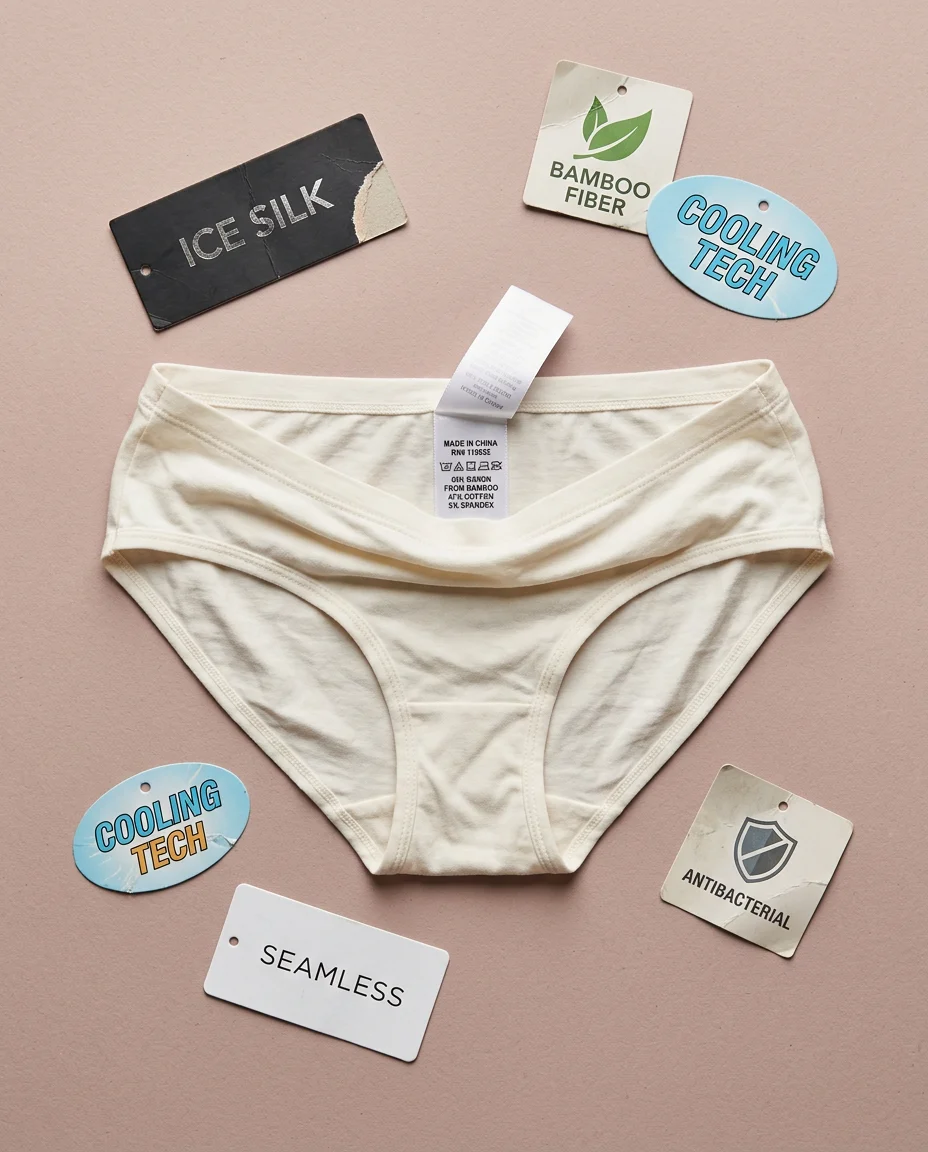
Your underwear label says "ice silk," "bamboo fiber," "seamless," "cooling technology," and "antibacterial." Three of those five terms do not mean what you think they mean. We deconstructed each marketing claim against published fiber science data and found a consistent pattern: the most expensive-sounding terms describe the cheapest materials.