Supply Chain Strategy2026-03-2012 min read
How to Find a Reliable Underwear Manufacturer with Low MOQ in 2026?
Paul PengFactory Technology Director
Part of the Manufacturing Solutions series
Part of the Manufacturing Solutions series
You've spent months designing your underwear collection. You've researched fabrics, perfected your brand positioning, and built a website that tells your story beautifully. Now all you need is someone to actually make your product.
So you start contacting manufacturers.
The first three never respond. The fourth asks for your production quantity, then stops replying when you say "100 pieces per style." The fifth finally responds—with a 2,000-unit minimum and a 12-week lead time. The sixth offers 300-unit MOQs but requires full payment upfront with no sample approval process.
Sound familiar?
In 2026, more DTC (direct-to-consumer) underwear brands are launching than ever before. Yet finding a reliable low MOQ underwear manufacturer remains one of the biggest obstacles for startups. The traditional manufacturing world is built for established brands with proven demand, not emerging brands testing the market.
But here's what most startup founders don't realize: reliable low MOQ manufacturers do exist. The challenge isn't finding them—it's recognizing them.
A manufacturer who accepts small orders but delivers inconsistent quality is more dangerous than one who requires larger minimums. A factory that offers low prices but lacks quality verification will cost you more in returns, replacements, and damaged brand reputation than you'll ever save on production costs.
This guide will show you how to evaluate private label underwear manufacturers with low MOQ requirements, what red flags to avoid, and what quality verification standards separate reliable partners from risky suppliers.
Loading video...
MOQ (Minimum Order Quantity) is the smallest number of units a manufacturer will produce for a single order. For underwear manufacturing, MOQs typically range from:
For a startup testing three styles at 100 units each, the difference between a 100-unit MOQ and a 500-unit MOQ is $4,000-8,000 in upfront inventory investment. That's capital that could be spent on marketing, photography, website development, or product iteration.
Understanding the economics behind MOQ requirements helps you identify which manufacturers can legitimately offer lower minimums—and which ones are cutting dangerous corners to do so.
Fixed Setup Costs: Before sewing a single garment, manufacturers face substantial fixed costs:
These costs exist whether you order 50 units or 5,000 units. Traditional factories spread these costs across larger orders, making high MOQs economically necessary.
Material Sourcing Constraints: Fabric mills have their own MOQs—typically 500-1,000 yards for custom fabrics. If your design uses a specific fabric not in the manufacturer's inventory, they must purchase enough to meet mill requirements, regardless of how much you actually need.
Production Line Efficiency: Traditional assembly lines optimize for volume. Workers perform the same operation repeatedly, developing speed and consistency. Changing between styles requires retraining, machine adjustment, and quality recalibration—time that's only economical for larger orders.
Manufacturers who offer legitimately low MOQs while maintaining quality have re-engineered their operations specifically for flexibility:
Stock Fabric Programs: Rather than requiring custom fabric sourcing for every order, they maintain libraries of 50-100 premium fabrics in inventory. This eliminates mill MOQs and 6-8 week sourcing delays.
Flexible Workshop Model: Instead of long assembly lines optimized for mass production, they use multi-skilled craftsmen who can construct complete garments. This eliminates changeover costs between small orders.
Digital Pattern Technology: Computer-controlled pattern making and cutting allows instant adjustments without expensive physical pattern creation, reducing setup costs by 60-80%.
Aggregated Material Sourcing: By serving multiple small brands simultaneously, they can consolidate material orders to achieve volume pricing while keeping individual brand MOQs low.
The key insight: A manufacturer offering low MOQs should be able to explain how they do it. If they can't articulate their flexible production model, they're likely cutting corners on quality.
A trustworthy manufacturer doesn't have a blanket "100 pieces minimum" policy. Instead, they offer tiered minimums based on product complexity:
Simple styles (basic briefs, simple waistbands): 50-100 units Moderate complexity (seamless construction, specialized fabrics): 100-200 units Complex designs (intricate lacework, multi-component construction): 200-300 units
They'll ask about your specific design and provide a realistic minimum rather than applying a generic policy. If a manufacturer offers the same MOQ for a basic cotton brief and a complex seamless bra, that's a red flag.
For a startup, speed is competitive advantage. A reliable low MOQ manufacturer should offer:
If a manufacturer quotes 3-4 weeks for samples, they're treating your small order as low priority. For startups testing multiple designs, that timeline destroys market agility.
Why sampling speed matters:
A manufacturer serious about serving startups maintains fabric inventory to eliminate sourcing delays. Look for:
Fabric variety:
No minimum penalties: Using stock fabrics shouldn't increase your per-unit cost. The manufacturer absorbs inventory costs as part of their startup-friendly service model.
Quality transparency: They should provide fabric specifications (GSM, composition, stretch percentage, Martindale abrasion ratings) without you having to ask.
The most valuable thing a startup friendly manufacturer provides isn't production capacity—it's technical expertise that prevents costly mistakes.
What to look for:
Tech Pack Review: Before sampling, they review your technical specifications for:
Quality Verification Standards: They can discuss specific testing protocols:
Third-Party Testing Coordination: They support independent laboratory testing (SGS, Intertek) for orders requiring compliance verification. Note: They don't claim to hold certifications like OEKO-TEX themselves, but facilitate testing for specific orders to meet your market requirements.
This level of technical engagement is rare among manufacturers accepting small orders. Most either lack the expertise or don't invest the time in startup accounts. A manufacturer who discusses quality standards proactively is invested in your success, not just your payment.
How a manufacturer communicates during the inquiry process predicts how they'll communicate during production.
Positive signals:
Red flags:
Reliable manufacturers provide transparent pricing that accounts for all costs upfront:
Quote should include:
Watch for hidden costs:
A transparent quote might be higher than a vague one, but it prevents expensive surprises later.
The best low MOQ manufacturers view themselves as growth partners, not just production vendors.
Signs of partnership orientation:
Transactional manufacturers produce what you specify at the price quoted. Partnership manufacturers help you build a better product and a more successful brand.
Not every manufacturer offering low minimums is legitimate. Some cut dangerous corners to make small orders economically viable.
If a manufacturer quotes $3-4 per unit for premium-quality underwear at 100 units when competitors quote $8-10, something's wrong.
What's really happening:
The $4-6 per unit you "save" will cost you 10× that in returns, replacements, and destroyed customer trust.
A manufacturer who doesn't mention quality standards, testing protocols, or inspection processes isn't maintaining them quietly—they're not maintaining them at all.
Questions to ask:
If answers are vague or dismissive ("Don't worry, our quality is good"), that's a warning sign.
Some factories produce excellent samples to win your business, then reduce quality in bulk production to recover margins.
This manifests as:
How to protect yourself:
Fabric behavior determines product quality. A manufacturer who doesn't pre-shrink fabrics or test shrinkage rates is setting you up for sizing disasters.
The shrinkage problem: Cotton can shrink 5-8% in the first wash. Without pre-shrinking and pattern adjustment, your size Medium becomes a Small after customers wash it. This destroys fit consistency and triggers returns.
What to verify:
A manufacturer pushing you to skip sample iterations or approve samples quickly is prioritizing their production schedule over your product quality.
What's really happening: They want to move your order through as fast as possible to free capacity for other clients. They're not invested in getting your product right—they're invested in getting it done.
Professional approach: A good manufacturer encourages thorough sample review. They'd rather spend extra time in sampling than deal with production quality issues or damage their reputation with unsatisfied clients.

At AuraTouchGlobal, we believe transparency about quality standards is the foundation of successful partnerships. Here's what we verify for every production run:
Martindale Abrasion Resistance:
Higher Martindale ratings predict longer-lasting smoothness and less pilling. We coordinate third-party testing to verify fabric durability before you commit to bulk orders.
GSM Specifications:
We verify GSM matches specifications for every production run. Lower GSM than specified means thinner fabric that won't meet customer expectations.
Stitch Density:
Higher stitch density creates stronger seams but requires more production time. We specify density based on your brand positioning and price point.
Shrinkage Control:
Wash Resistance:
Perspiration Resistance: Critical for underwear due to skin contact. We verify Grade 4-5 resistance to both acidic and alkaline perspiration.
We don't claim OEKO-TEX or BSCI factory certifications (these require comprehensive manufacturing system audits). Instead, we support third-party laboratory testing for specific orders:
Available Testing:
This approach provides verification for your specific production batches while maintaining flexibility for different market requirements.

After 15+ years manufacturing for China's top domestic underwear brands, we've adapted our expertise specifically for international startups and emerging brands.
We don't believe in one-size-fits-all minimums. Instead:
Contact our team with your specific design, and we'll provide a realistic minimum based on actual production requirements—not a generic policy.
Speed is your competitive advantage. Our flexible workshop delivers:
We can work from tech packs, high-quality photos, or physical reference samples. No professional technical drawings? We'll help you develop production-ready specifications.
Eliminate 6-8 week fabric sourcing delays and 500-yard mill minimums. Our inventory includes:
All fabrics pre-qualified for shrinkage, color fastness, and durability. Select from stock and start production immediately.
We review every design for production feasibility before you invest in samples:
Our factory in Zhongshan-Xiaolan (Pearl River Delta) provides unique advantages:
Start with quantities that make sense for market testing. Grow with us as sales validate demand:
You're not penalized for starting small—you're rewarded for growing with us.
Finding a reliable low MOQ underwear manufacturer doesn't have to be a frustrating process—if you know what to look for and what to avoid.
The key criteria:
The red flags:
Ready to discuss your project?
Whether you have:
We're ready to help you navigate the manufacturing process and find a production strategy that works for your stage.
Looking for a reliable partner for your 2026 collection?
📥 Download our latest Product Catalog — see material options and production capabilities
📧 Request a free sample analysis — send us your design or reference, and we'll provide feasibility feedback and recommendations
💬 Get a custom quote — specific MOQ tiers and pricing for your first production run
Contact us today to discuss your project. Limited spots available in our 2026 Starter Program—secure your production capacity now.

This article is part of our Supply Chain Strategy series designed to help emerging brands navigate manufacturing:
Why Most Emerging Apparel Brands Fail Before Their First Sale →
Learn about technical production mistakes that destroy startups—fabric shrinkage disasters, PP Sample confirmation failures, and how professional supply chain partners prevent these issues.
Balancing MOQ and Production Costs: A Survival Guide →
Navigate the tension between low minimums and production costs. Understand when to accept higher unit costs for flexibility, when to negotiate larger runs, and how to scale production intelligently.
How to Start a Lingerie Business: Costs, Timeline & Low-MOQ Manufacturing →
The complete business-side roadmap — from legal setup and cash flow planning to the 150-unit market testing framework and 8-week launch timeline. Everything you need beyond finding the right factory.
Your customers are waiting. Let's build something amazing together—with a manufacturing partner who understands startups.
Business insights for apparel brand owners, from production strategies to manufacturing optimization
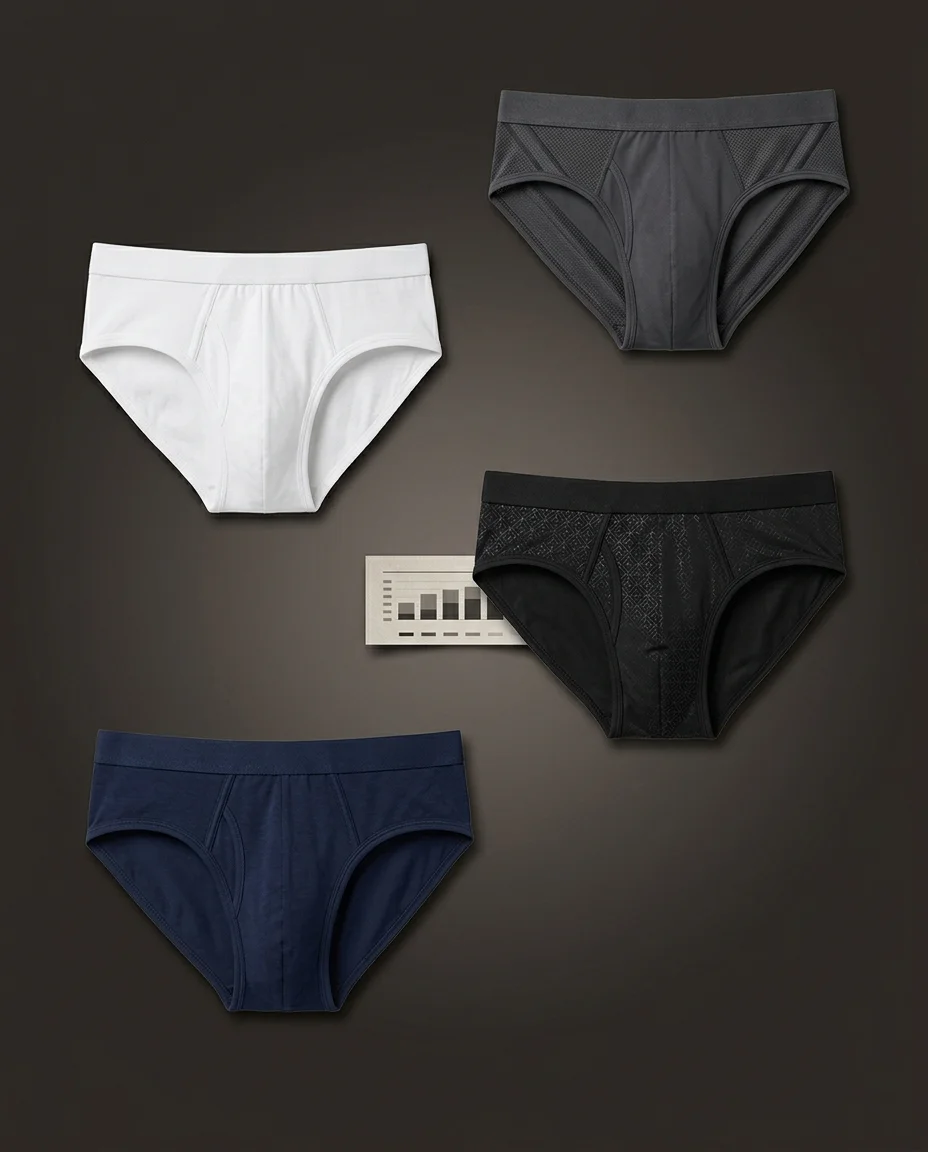
The men's briefs market is fragmenting from a single 'basics' category into four distinct competitive tracks. Traditional searches dropped 20-30%, while heated underwear (+2150%), seamless men's (+300%), and cooling fabrics (+180%) surge. This analysis breaks down four competitive tracks: budget basics, functional tech, premium fabrics, and performance sport — with pricing, technology requirements, and entry strategy for each.
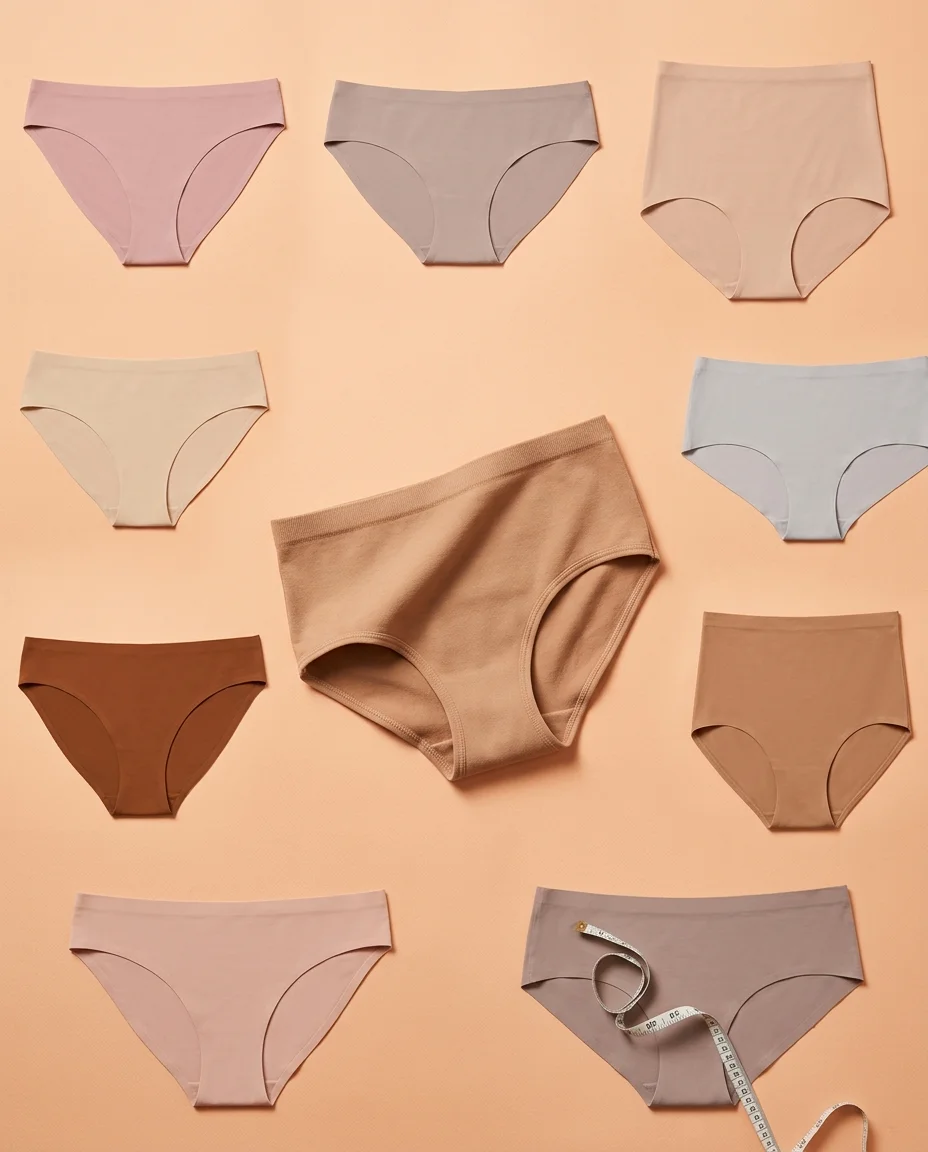
We tested 30+ seamless underwear brands across fabric recovery, waistband tension, and gusset construction. The results: only 6 brands use true circular knitting — most 'seamless' products are simply flat-lock seamed with marketing spin. This guide ranks the best seamless underwear by real performance data, not claims.
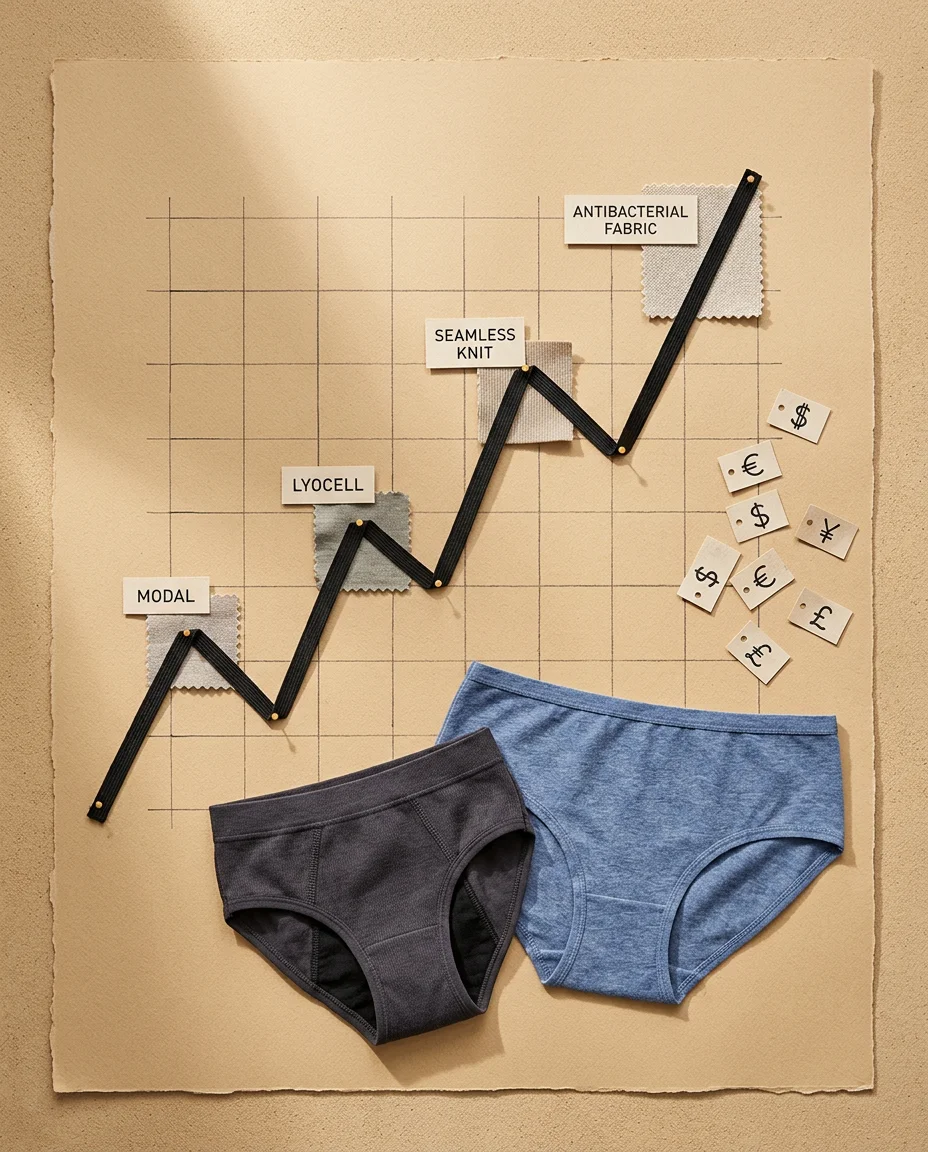
The underwear market is projected to reach $127.4B by 2032. We analyze 2026's trending products — period underwear (+300%), seamless (+110%), plus-size (+130%), and antibacterial Modal — with market data, fabric innovation timelines, and regional growth forecasts for brand planning.