Fabric Science2026-04-1011 min read
When to Replace Underwear: A Science-Based Lifespan Guide With Test Data
Karl XiaoFactory Production Director
Part of the The Fiber Lab series
Part of the The Fiber Lab series
Most people have a simple answer to "when should I replace my underwear?": when it looks worn, or when the elastic breaks. But by the time visible damage appears, the underwear has been functionally degraded for weeks or months.
Medical professionals recommend replacing underwear every 6-12 months. Good Housekeeping UK, The Guardian, and multiple dermatology sources converge on this timeline. But the recommendation lacks specificity — not all underwear degrades at the same rate, and not all degradation is visible.
An unmet search query space with no comprehensive answer
We analyzed degradation data across 30+ brands to build a replacement guide based on measurable criteria — not vague timelines.
What happens: Minimal perceptible change. Fibers settle into their permanent conformation. Elastic reaches its stable recovery range. Colors may shift slightly from first-wash dye release.
What you can measure:
Always wash new underwear before first wear. Manufacturing residues (sizing agents, dyes, dust) can cause skin irritation. One pre-wash also reveals early quality issues — significant shrinkage, color bleeding, or seam failure in the first wash indicates poor manufacturing quality.
What happens: The first measurable changes appear. Elastic recovery begins declining. Cotton fibers start hardening (especially in hard water areas). The gusset begins losing moisture absorption capacity.
What you can measure:
Key finding: This is where quality differences become most apparent. A 280+ denier spandex waistband maintains 95%+ recovery through 50 washes, while cheaper spandex (under 200 denier) drops below 90% recovery by wash 20-30.
What happens: Performance characteristics fall below functional thresholds. The waistband may not fully recover after stretching. Cotton fabrics become noticeably stiff. The gusset loses significant moisture management capability. Colors fade noticeably.
The critical degradation curve:
What happens: Components begin failing. Seams separate. Elastic loses recovery entirely. Fabric becomes threadbare in high-stress areas. Holes develop at friction points (inner thighs, waistband attachment points).
At this stage, the underwear should have been replaced long ago.
Do not wait for visible damage. Use these five objective tests:
Stretch the waistband to its full extension.
Release and wait 10 seconds.
Measure: Does it recover to within 95% of its original length? If the waistband remains stretched by more than 5%, the elastic has degraded below functional threshold.
Why 95%: Below this threshold, the waistband cannot maintain consistent pressure against the body. It will slip, roll, and require constant adjustment — and the lack of consistent tension allows the garment to shift out of position during movement.
Examine the crotch lining for three warning signs:
Hold the underwear up to a bright light source. Compare the light transmission to what you remember (or to a new pair of the same brand/model).
Fasten the waistband and observe:
Any failure on these criteria means the waistband has lost its functional integrity.
Regardless of visual or physical condition:
The cheapest underwear is not the most economical. When calculated by daily cost (price divided by functional lifespan in days), 80-count Modal at $10-15/pair works out to $0.02-0.04/day — lower than most regular cotton options because it maintains performance longer and requires less frequent replacement.
The single most important determinant of underwear lifespan is spandex (elastane) quality, measured in denier:
Denier is a unit of measurement for fiber thickness — the weight in grams of 9,000 meters of fiber. Higher denier spandex is thicker, stronger, and more resilient to repeated stretching and washing. For underwear waistbands and recovery, 280+ denier spandex provides significantly better long-term performance than standard spandex.
In real-world testing, a budget brand at ¥12.5/pair ($1.75) with high-quality spandex maintained full waistband elasticity after 7 months of daily wear including basketball — while premium imported brands using standard spandex showed waistband loosening within 2 months.
This is why price does not reliably predict durability. The spandex specification matters more than the brand name.
With 7 pairs in rotation (one for each day of the week), each pair is worn and washed approximately 4 times per month. At this frequency:
With 14+ pairs, each pair is worn approximately 2 times per month. At this frequency:
Rather than replacing all underwear at once, stagger purchases. Buy 3-4 new pairs every 3-4 months and retire the oldest pairs. This ensures you always have underwear at various lifecycle stages and never face a situation where multiple pairs reach end-of-life simultaneously.
Medical and hygiene data: Multiple dermatology sources and medical recommendations for underwear replacement frequency (6-12 months consensus); The Guardian (2026) analysis of replacement recommendations.
Fabric degradation data: Independent blind-test evaluations across 30+ brands with 10 testers over 103 days; long-term durability testing (7-month continuous wear study); third-party laboratory testing for moisture absorption and breathability.
Spandex performance data: Industry specifications for spandex denier ratings and elastic recovery testing; comparative testing of waistband elasticity across price points.
Antibacterial treatment lifespan: FZ/T 62015 standard for antibacterial grade durability (3A/5A/7A/10A wash resistance ratings).
Related articles:
Deep dive into fabric composition, properties, and performance at the microscopic level
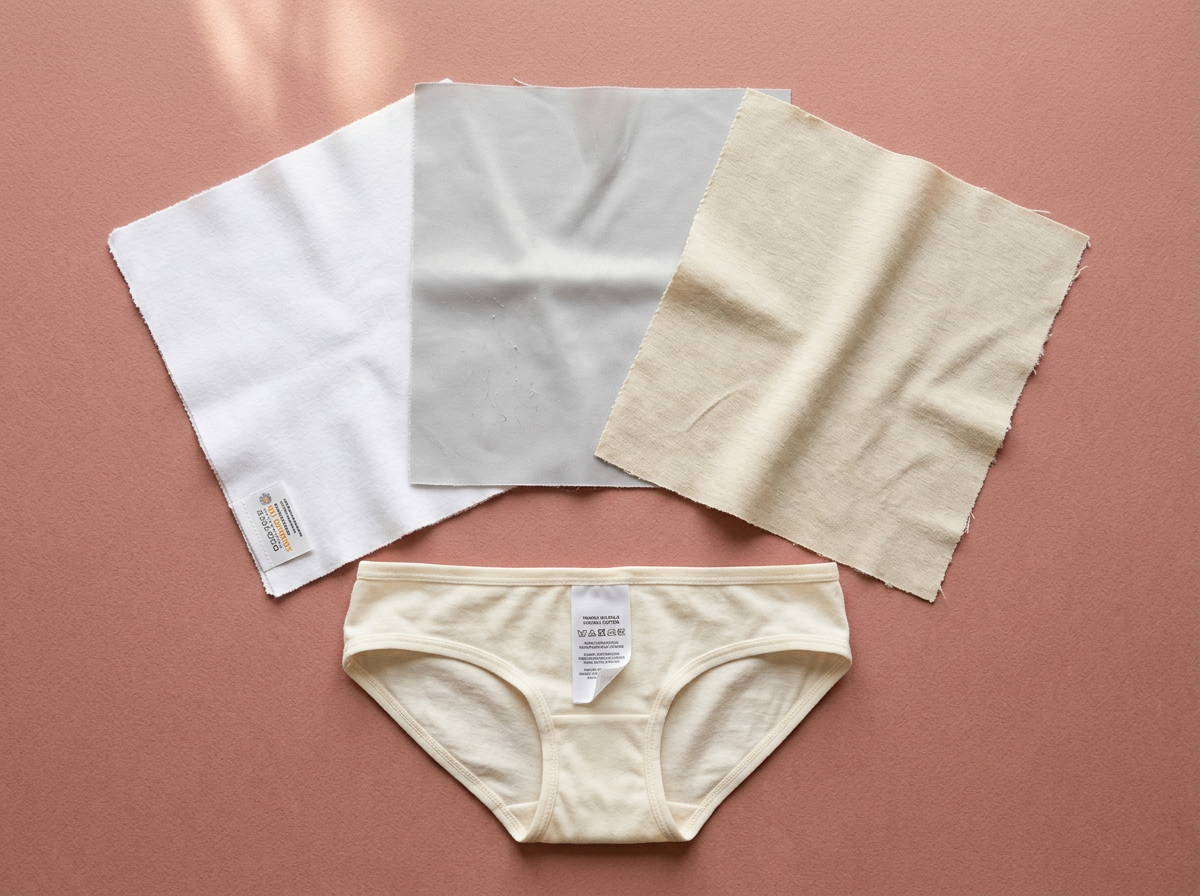
That recurring rash below your waistline. The itch that will not go away. The red marks where your underwear elastic sits. "Underwear rash" and "underwear irritation" searches have grown steadily as consumers discover their underwear may be the hidden cause of skin problems. We analyzed the four fabric-skin interaction mechanisms — bacterial microclimate, chemical contact dermatitis, pressure dermatitis, and antibacterial treatment sensitivity — with test data across 30+ brands.
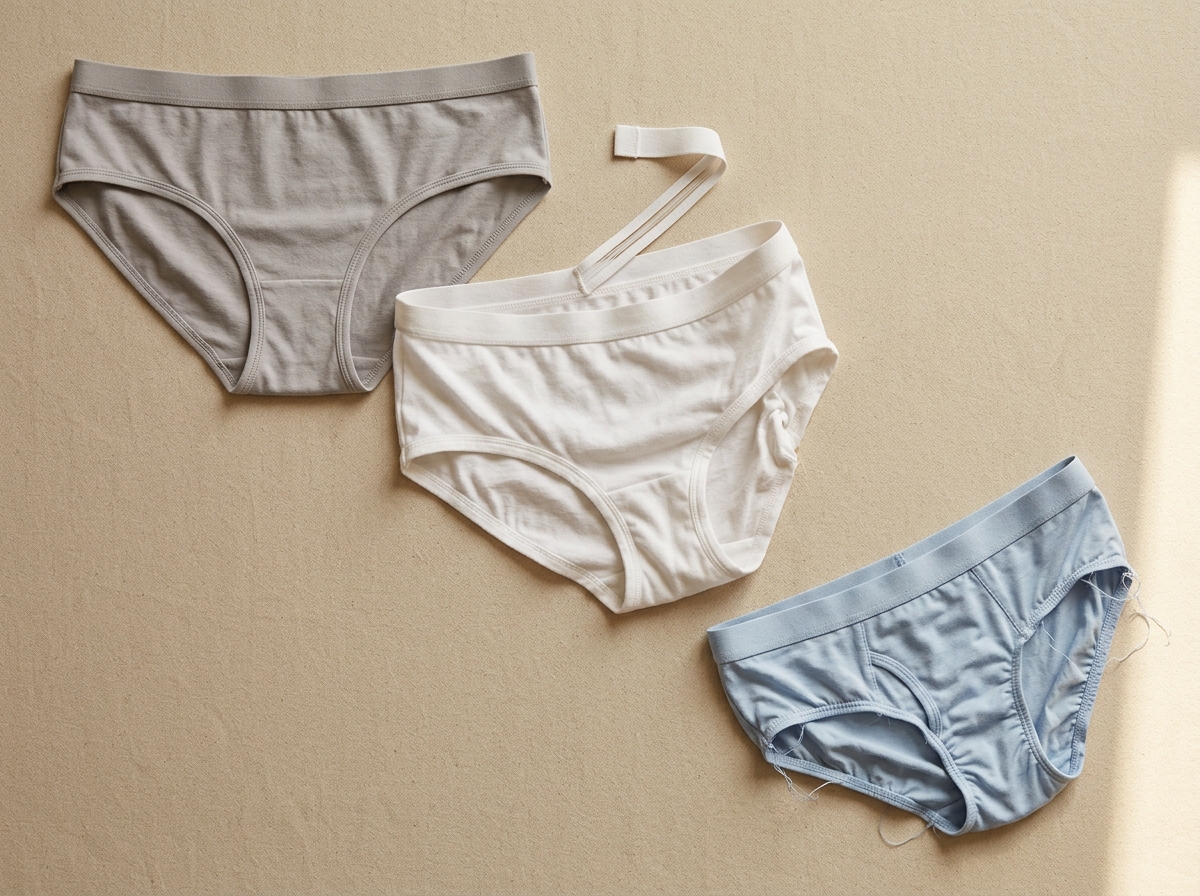
You adjust your underwear five times before lunch. The waistband rolls, the legs ride up, and everything bunches in the wrong places. "Why does my underwear keep riding up" is one of the most searched underwear complaints globally. We break down the four scientific causes — elastic recovery degradation, rise-torso mismatch, leg opening geometry, and fabric stretch ratio — and provide body-type-specific solutions based on testing across 30+ brands.
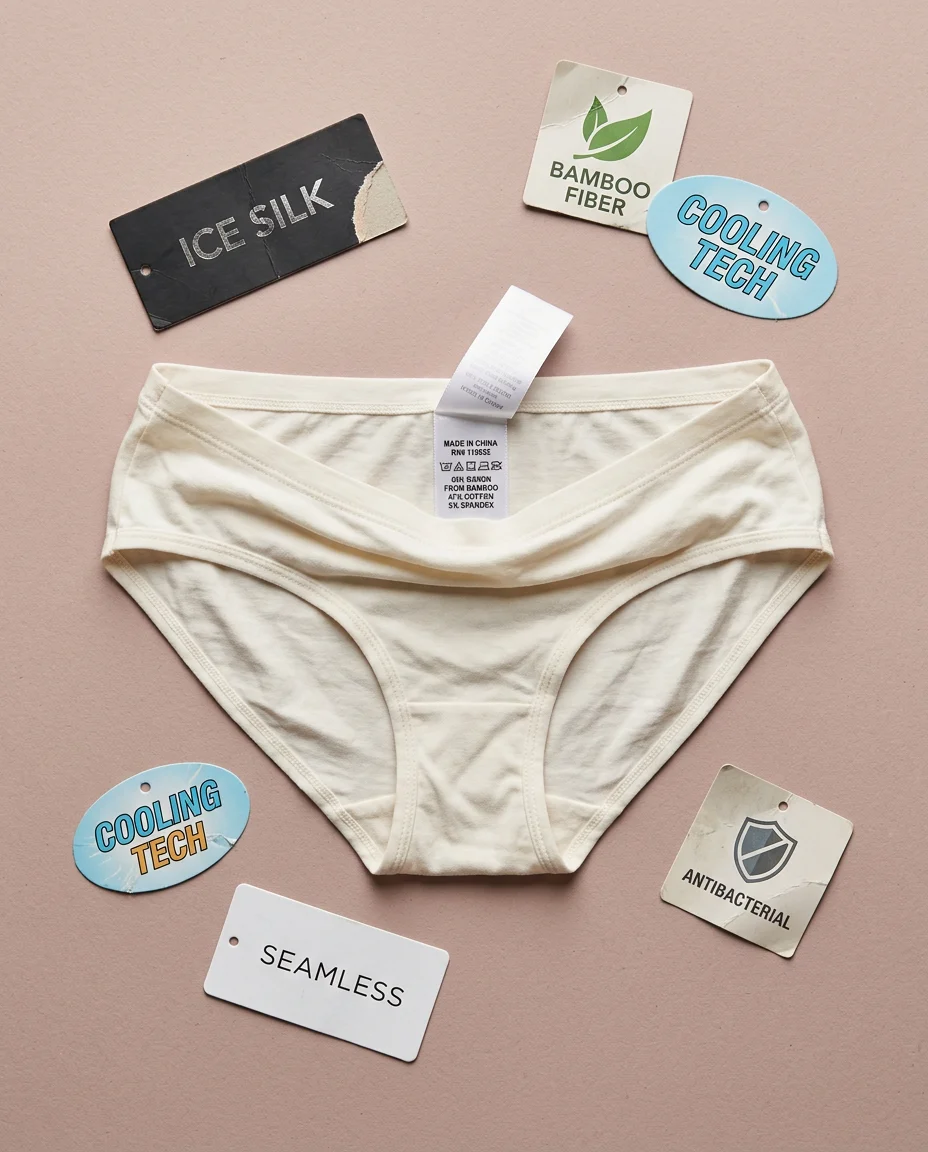
Your underwear label says "ice silk," "bamboo fiber," "seamless," "cooling technology," and "antibacterial." Three of those five terms do not mean what you think they mean. We deconstructed each marketing claim against published fiber science data and found a consistent pattern: the most expensive-sounding terms describe the cheapest materials.