Fabric Science2026-04-0713 min read
Bamboo Underwear Reviews: Lab Data vs Marketing (2026)
Karl XiaoFactory Production Director
Part of the The Fiber Lab series
Part of the The Fiber Lab series
"Is bamboo underwear worth it?" — this question drove a +400% surge in "bamboo underwear reviews" searches. The honest answer: if you are paying for "bamboo-specific" benefits like natural antibacterial properties, no. Peer-reviewed research shows natural bamboo fiber has no proven antibacterial advantage over cotton. Most "bamboo fiber" products are viscose. But if you want the genuine breathability advantages of regenerated cellulose fiber, yes — just check the actual fiber composition, not the marketing label.
The "bamboo underwear" market sits at the intersection of genuine fiber science and aggressive marketing. We decided to cut through the noise with a systematic review framework backed by first-hand lab data.
Collect Products Marketed as "Bamboo Fiber" Underwear
Gather products from multiple brands across price tiers ($5-50/pair). Record all marketing claims found on product pages, packaging, and promotional materials.
Check Actual Fiber Composition Labels
Read the fiber composition label (required by law in the US, EU, and China). Compare what the label says against what marketing materials claim. Key check: does the label say "bamboo fiber" or "viscose/regenerated cellulose fiber"?
Cross-Reference with Third-Party Lab Reports
Cross-reference manufacturer claims against SGS, Intertek, or equivalent third-party laboratory test certificates. Verify fiber composition, antibacterial performance, and chemical safety.
Test Specific Claims Against Published Research
Evaluate each marketing claim (antibacterial, eco-friendly, breathable) against peer-reviewed research published on PMC/NIH, FTC enforcement records, and textile engineering references.
Compile Findings into Consumer Review Framework
Organize results into an actionable evaluation framework that any consumer can apply when shopping for "bamboo" underwear.
This article references peer-reviewed research published on PMC/NIH, US FTC Textile Fiber Products Identification Act enforcement records, EU Textile Regulation (EU No 1007/2011), third-party laboratory test reports (SGS/Intertek) from manufacturing quality assurance processes, and multi-brand consumer testing data. No data from consumer video platforms is used as primary evidence.
Many "bamboo fiber" underwear products claim that bamboo contains a natural bio-agent called "bamboo kun" that provides inherent antibacterial properties. The implication: bamboo underwear stays fresher and more hygienic than cotton or synthetic alternatives.
A peer-reviewed study published in Bioresources (North Carolina State University) tested natural bamboo fiber against common microorganisms and found: natural bamboo fiber has no inherent antibacterial properties compared to cotton.
When a "bamboo fiber" product shows antibacterial test results, the effect comes from chemical finishing agents applied during manufacturing — typically silver ions (Ag⁺), chitosan, or zinc pyrithione. These agents work regardless of the base fiber. A silver-ion treated cotton underwear would achieve identical antibacterial results. The "bamboo" part contributes nothing to the antibacterial performance. The FTC requires companies to provide reliable scientific evidence for antibacterial claims.
Additionally, UV light testing of "bamboo fiber" underwear products found fluorescent whitening agents in gusset patches — chemical additives that consumers cannot detect by sight. Products may pass national safety standards (e.g., GB18401 Class B) yet still contain these agents in internal components.
Bamboo is the world's fastest-growing plant, requires no pesticides, and needs minimal water. "Bamboo fiber underwear" is marketed as the eco-friendly, sustainable choice.
The conclusion: bamboo Lyocell (closed-loop NMMO process) is genuinely eco-friendly. Bamboo viscose — the dominant product on the market — is not. For the complete fiber process comparison, see our Modal vs Lyocell fabric deep dive.
The FTC has been actively enforcing accurate labeling for bamboo textiles for over a decade:
The FTC requires that fibers made from bamboo pulp be labeled as "Rayon (from bamboo)" or "Viscose (from bamboo)" — not "bamboo fiber." The reason: the chemical processing completely transforms the raw material. The resulting fiber is chemically identical to wood-pulp rayon. Bamboo is the raw material source, not the fiber type. Using cotton as an analogy: cotton fiber is itself a fiber type, so "cotton underwear" is accurate. But we do not call polyester "petroleum fiber" even though petroleum is indeed its raw material.
In the EU, the proposed Green Claims Directive would impose fines of up to 4% of annual revenue for unsubstantiated environmental claims — significantly raising the stakes for brands making vague "eco-friendly bamboo" claims.
For the parallel story of another misleading fabric marketing term, see our ice silk underwear exposed investigation.
Bamboo's "natural microstructure" provides superior breathability and cooling compared to cotton.
The key finding: Regenerated cellulose fiber IS more breathable than cotton — 12.5-13.5% vs 7-8.5% moisture absorption, higher air permeability. But this advantage belongs to ALL regenerated cellulose fiber, regardless of raw material source. Bamboo pulp, beechwood (Modal), or eucalyptus (Lyocell) — they all deliver similar breathability because the chemical processing has completely transformed the raw material into regenerated fiber.
For the complete fiber science explanation, see our regenerated cellulose fiber overview and bamboo underwear breathability analysis.
Read the Fiber Composition Label
Ignore all marketing terminology and go directly to the fiber composition label (required by law). Look for specific fiber names: "viscose," "Modal," "Lyocell," "regenerated cellulose fiber." If the label does not say "bamboo fiber" but the marketing does — the product is following labeling regulations, and the marketing is misleading you.
Check for Third-Party Certifications
Legitimate brands provide verifiable certifications:
Verify Antibacterial Claims
If the product claims antibacterial properties, look for:
Assess Eco-Claims by Fiber Process
Not all "bamboo" is equal:
Compare Price to Non-Bamboo Equivalents
If a "bamboo viscose" underwear costs 2x a "Modal" underwear of identical fiber composition, you are paying a "bamboo marketing premium" — not a performance premium.
If you are buying "bamboo underwear" for specific benefits, here are alternatives that deliver those same benefits more reliably:
After systematically testing bamboo underwear claims against lab data, the picture is clear:
For consumers: check the fiber composition label, not the marketing copy. For brands: accurate fiber classification and verifiable performance data will earn more trust than the "bamboo fiber" marketing label. For the science behind regenerated cellulose fiber performance, see our regenerated cellulose fiber overview.
Data Sources: This article references peer-reviewed research published on PMC/NIH (bamboo fiber antibacterial properties), US Federal Trade Commission (FTC) Textile Fiber Products Identification Act enforcement records, EU Textile Regulation (EU No 1007/2011) and proposed Green Claims Directive, 2025 ScienceDirect life cycle assessment of bamboo viscose production, North Carolina State University Bioresources study on natural bamboo fiber resistance to microorganisms, Good Housekeeping investigation of bamboo fabric labeling, and third-party laboratory test reports (SGS/Intertek) from manufacturing quality assurance processes.
Deep dive into fabric composition, properties, and performance at the microscopic level
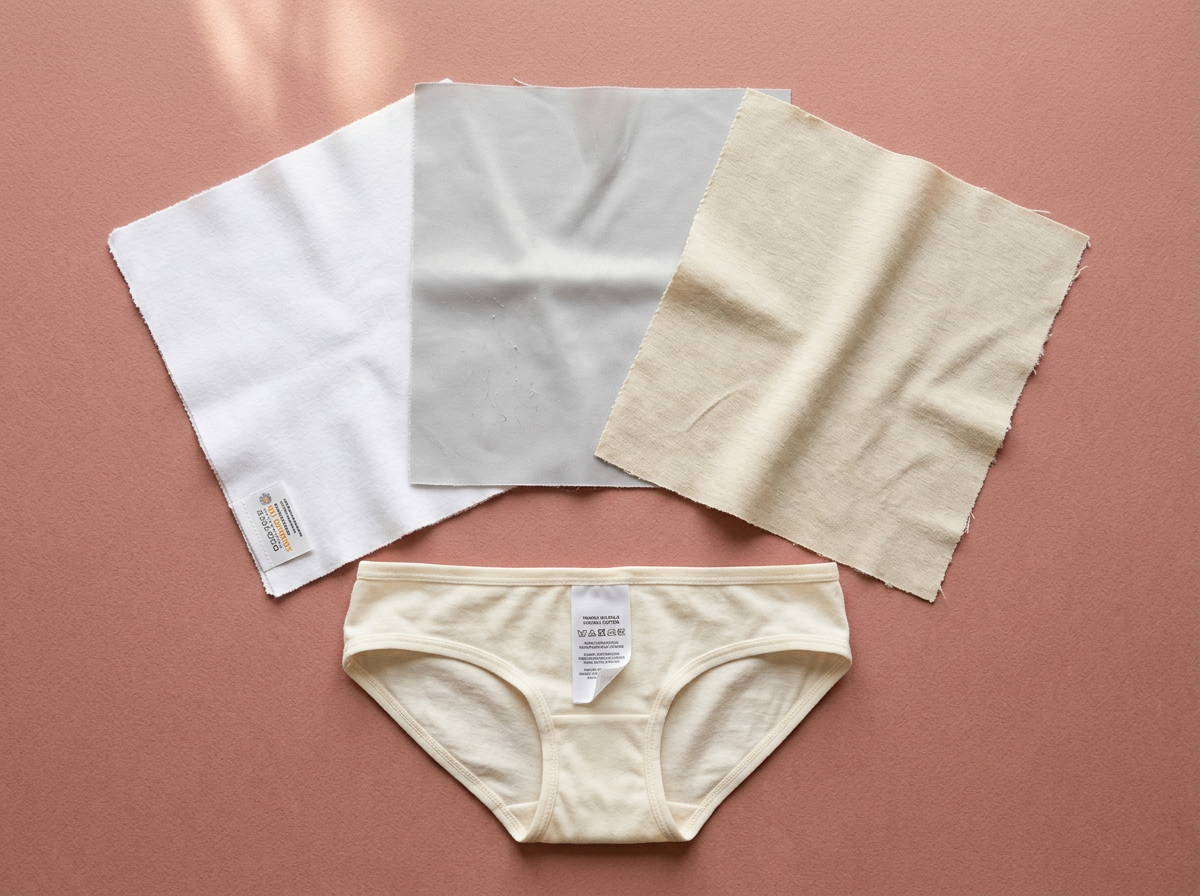
That recurring rash below your waistline. The itch that will not go away. The red marks where your underwear elastic sits. "Underwear rash" and "underwear irritation" searches have grown steadily as consumers discover their underwear may be the hidden cause of skin problems. We analyzed the four fabric-skin interaction mechanisms — bacterial microclimate, chemical contact dermatitis, pressure dermatitis, and antibacterial treatment sensitivity — with test data across 30+ brands.
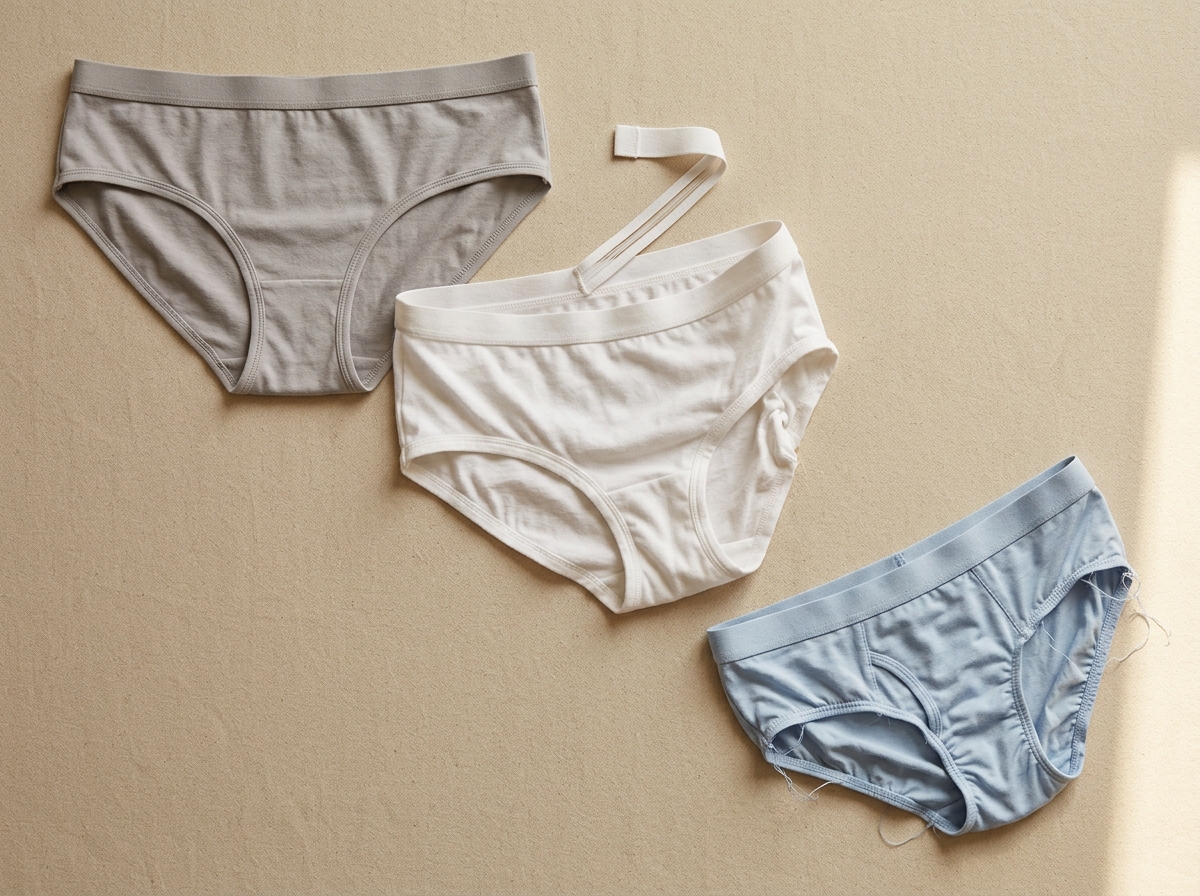
You adjust your underwear five times before lunch. The waistband rolls, the legs ride up, and everything bunches in the wrong places. "Why does my underwear keep riding up" is one of the most searched underwear complaints globally. We break down the four scientific causes — elastic recovery degradation, rise-torso mismatch, leg opening geometry, and fabric stretch ratio — and provide body-type-specific solutions based on testing across 30+ brands.
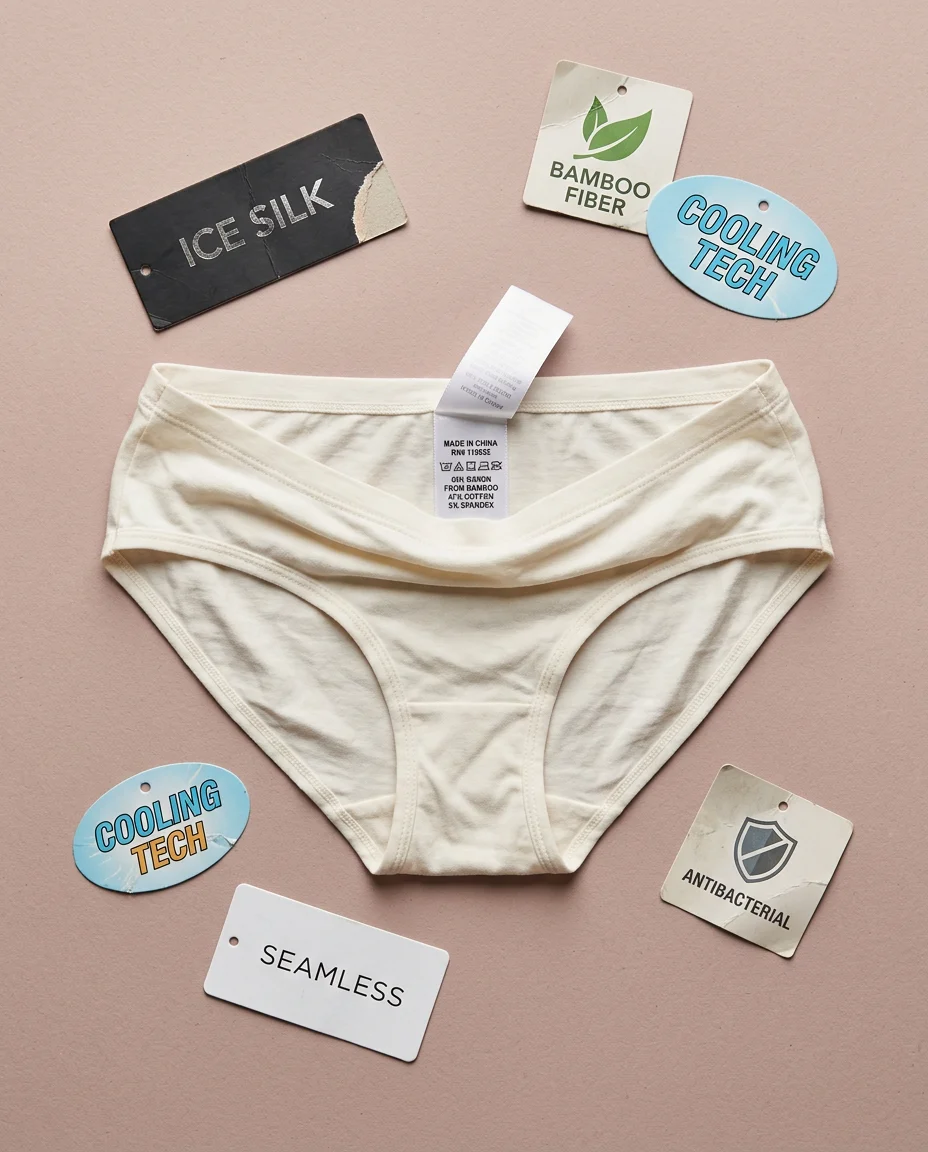
Your underwear label says "ice silk," "bamboo fiber," "seamless," "cooling technology," and "antibacterial." Three of those five terms do not mean what you think they mean. We deconstructed each marketing claim against published fiber science data and found a consistent pattern: the most expensive-sounding terms describe the cheapest materials.