Fabric Science2026-04-0811 min read
Best Modal Underwear 2026: Blind-Tested Brands & Fabric Grades Compared
Karl XiaoFactory Production Director
Part of the The Fiber Lab series
Part of the The Fiber Lab series
"Best modal underwear" searches grew +120% in 2026. "What is modal" hit peak search interest (score 100). Consumers are no longer asking what Modal is — they are actively searching for the best Modal products to buy.
We analyzed 34 brands across 103 days of blind testing by 10 independent testers, cross-referenced with lab fabric data, to identify which Modal underwear actually delivers on its promise.
The data from our 34-brand blind test tells a clear story:
| Rank | Brand / Product | Fabric Grade | Score | Key Result |
|---|---|---|---|---|
| 1 | Top-rated 7A Modal | 7A antibacterial Modal | 4.83/5 | 6 out of 10 testers named it their favorite; effective through 150 washes |
| 2 | Premium Modal brand | High-count Modal | 4.66/5 | 7A antibacterial, consistently rated smoother than cotton |
| 3 | Ultra-fine Modal | Super-fine Modal | 4.65/5 | Rated more silky than premium cotton brands costing 3x more |
| 4 | Premium cotton brand | Selected Xinjiang cotton | 4.54/5 | Best cotton product — but still below all three Modal entries |
| 5 | Value cotton brand | Standard cotton | 4.48/5 | 7A antibacterial cotton, solid but unremarkable |
The top 3 were all Modal. No cotton product, regardless of price or brand reputation, matched the top Modal performers. This is not marketing — it is blind test data.
For the complete science behind why Modal outperforms cotton at the fiber level, see our Modal vs Lyocell comparison and moisture management science guide.
Not all Modal is equal. The thread count (yarn count) is the single most important quality indicator:
The jump from 60 to 80 count is the most impactful quality upgrade in Modal underwear. Testers consistently rated 80+ count Modal as "noticeably smoother" compared to 60 count, while the difference between 80 and 100 count was harder to detect in blind testing. The best value-to-performance ratio sits at 80 count Modal.
Why does thread count matter so much? Because Modal fiber diameter at higher counts approaches natural silk:
For reference, standard cotton fiber diameter is 40-60μm — roughly 3-6x thicker than premium Modal.
Many Modal products advertise antibacterial properties, but the grade makes a critical difference:
Antibacterial grades are tested against standard bacterial strains (typically Staphylococcus aureus, Escherichia coli, and Candida albicans) after specified numbers of wash cycles. The grade indicates how many washes the product retains effective antibacterial performance. See our antibacterial underwear grades explained for the complete testing methodology.
The practical impact: 7A Modal underwear costs approximately 20-30% more than non-antibacterial Modal, but extends usable lifespan to 150 wash cycles — making it the lowest daily-cost option despite the higher upfront price.
Beyond the blind test rankings, we analyzed 8 prominent underwear brands for Modal-specific performance:
The key insight: fabric type matters more than brand reputation. A lesser-known brand using 80-count Lenzing Modal (9/10) outperformed established luxury brands using cotton by a wide margin.
The most revealing metric for underwear value is daily cost per wear — purchase price divided by estimated wash-cycle lifespan:
| Fabric Type | Purchase Price | Lifespan (Washes) | Daily Cost | Value Rating |
|---|---|---|---|---|
| 7A Modal (80 count) | ~$6-10/pair | 150 cycles | ~$0.04-0.07/day | Best value |
| Standard Modal (60 count) | ~$4-7/pair | 80-100 cycles | ~$0.05-0.09/day | Good value |
| Premium cotton | ~$8-15/pair | 50-80 cycles | ~$0.10-0.30/day | Poor value |
| Standard cotton | ~$3-5/pair | 40-60 cycles | ~$0.06-0.13/day | Moderate |
| Nylon-Spandex | ~$8-15/pair | 100+ cycles | ~$0.08-0.15/day | Moderate |
The counter-intuitive finding: premium Modal is the cheapest underwear to own, not the most expensive. Its 150-wash lifespan (driven by 7A antibacterial treatment) drops the daily cost below budget cotton, which degrades faster due to fiber compaction.
Understanding the cost structure explains why Modal prices vary so widely:
| Cost Component | Impact | Explanation |
|---|---|---|
| Raw fiber source | High | Lenzing-certified Modal (Austria) costs 30-50% more than generic regenerated cellulose |
| Thread count | High | Each grade increase (60s to 80s to 100s) adds ~15-25% to fiber cost |
| Antibacterial grade | Medium | 7A treatment adds ~20-30% to total cost; 10A adds ~40-50% |
| Dyeing process | Low-Medium | Newer digital dyeing costs more but provides better color consistency |
| Knitting construction | Medium | Circular knitting (seamless) costs more but delivers better comfort |
A critical insight from manufacturing data: Modal is priced by weight (grams), and Modal is significantly lighter than cotton. A single piece of cotton underwear weighs roughly the same as two pieces of Modal underwear. This means the per-piece cost difference between Modal and cotton is much smaller than the per-kilogram fiber price suggests.
For brands considering Modal product lines, see our fabric sourcing guide for sourcing strategy.
For detailed breathability data during sports, see our best breathable underwear guide.
The market is flooded with products labeled "Modal" that contain minimal actual Modal fiber. Here is how to verify:
1. Check the fiber composition label. Look for Modal content above 90%. Products labeled "Modal blend" may contain only 30-40% Modal with the rest being polyester or nylon — these will not deliver Modal's characteristic smoothness or breathability.
2. Look for Lenzing certification. Lenzing AG (Austria) is the gold standard for Modal fiber. Products using Lenzing Modal will typically advertise it prominently. Generic "Modal" may use lower-quality regenerated cellulose with less consistent performance.
3. Verify the antibacterial grade. If the product claims antibacterial properties, check for the grade (3A/5A/7A/10A). Products that claim "antibacterial" without specifying a grade are almost certainly 3A — the lowest and least durable grade.
4. Thread count claims. Legitimate 80+ count Modal has a distinctly silky hand feel. If a product claims 80 or 100 count but feels rough or cotton-like, the claim is likely inflated.
For the science behind regenerated cellulose fiber identification, see our regenerated cellulose fiber overview.
The 34-brand blind test data is unambiguous: Modal is the highest-performing underwear fabric for daily comfort. The key takeaways:
The "best modal underwear" is not the most expensive one — it is the one that matches the right thread count, antibacterial grade, and blend ratio to your specific needs.
Data Sources: This article references multi-brand consumer blind test results (34 brands, 103 days, 10 independent testers), ASTM D737 air permeability testing standards, textile engineering fiber diameter reference data, antibacterial grade testing per GB/T 20944 series, and textile industry cost structure analysis.
Deep dive into fabric composition, properties, and performance at the microscopic level
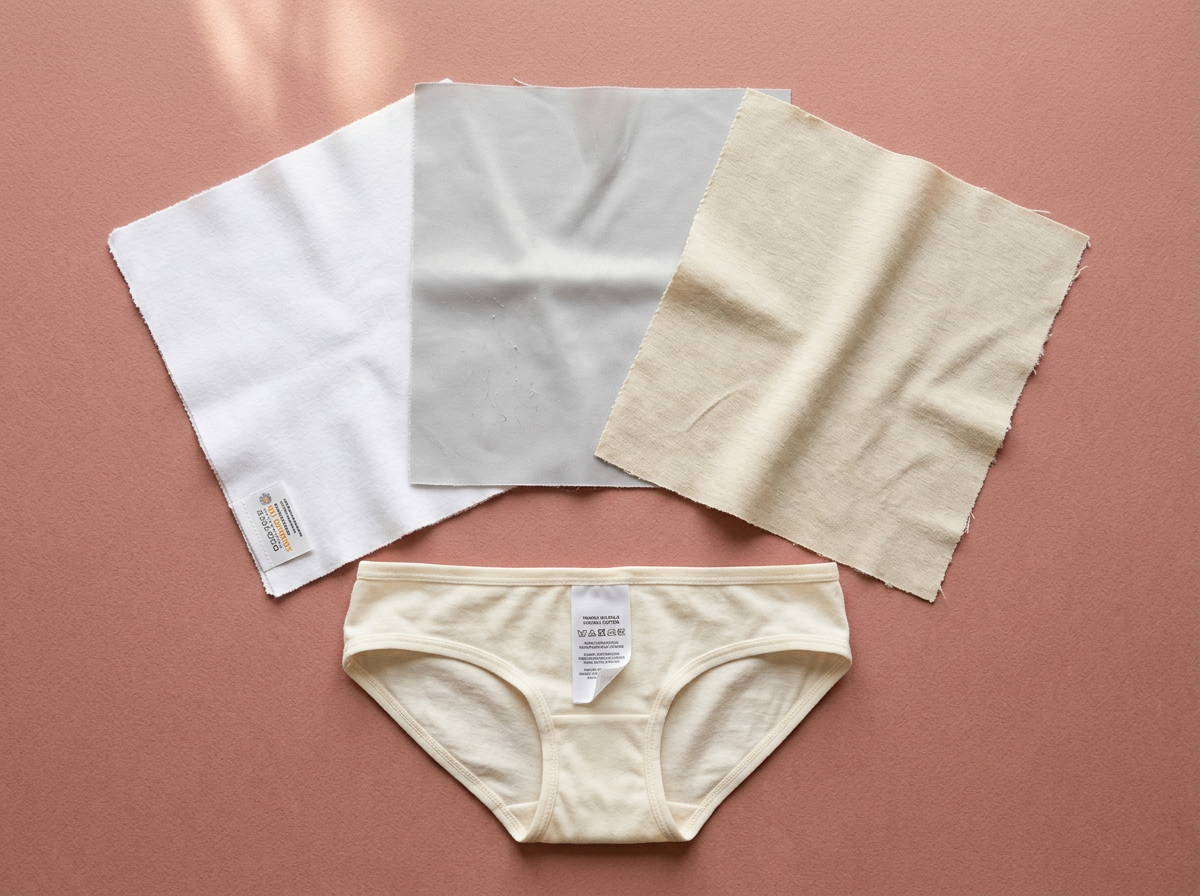
That recurring rash below your waistline. The itch that will not go away. The red marks where your underwear elastic sits. "Underwear rash" and "underwear irritation" searches have grown steadily as consumers discover their underwear may be the hidden cause of skin problems. We analyzed the four fabric-skin interaction mechanisms — bacterial microclimate, chemical contact dermatitis, pressure dermatitis, and antibacterial treatment sensitivity — with test data across 30+ brands.
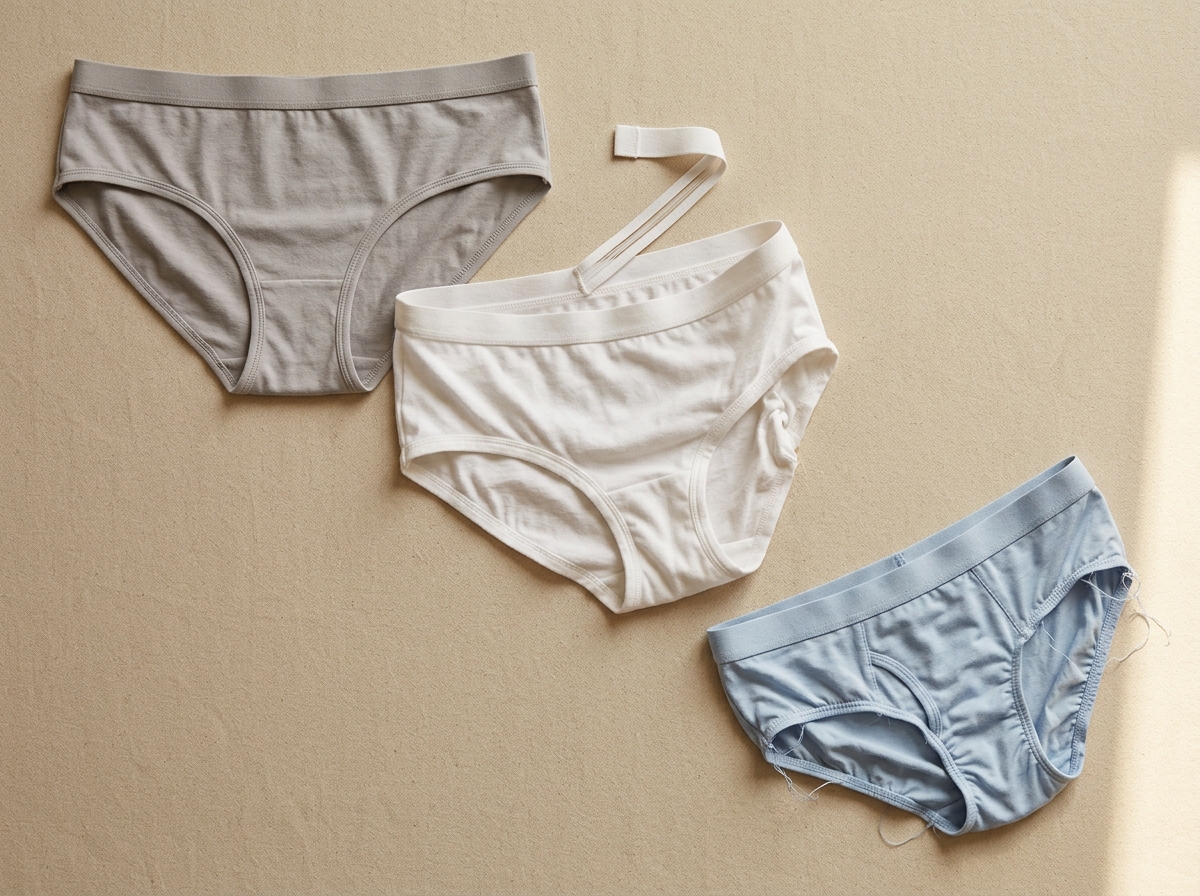
You adjust your underwear five times before lunch. The waistband rolls, the legs ride up, and everything bunches in the wrong places. "Why does my underwear keep riding up" is one of the most searched underwear complaints globally. We break down the four scientific causes — elastic recovery degradation, rise-torso mismatch, leg opening geometry, and fabric stretch ratio — and provide body-type-specific solutions based on testing across 30+ brands.
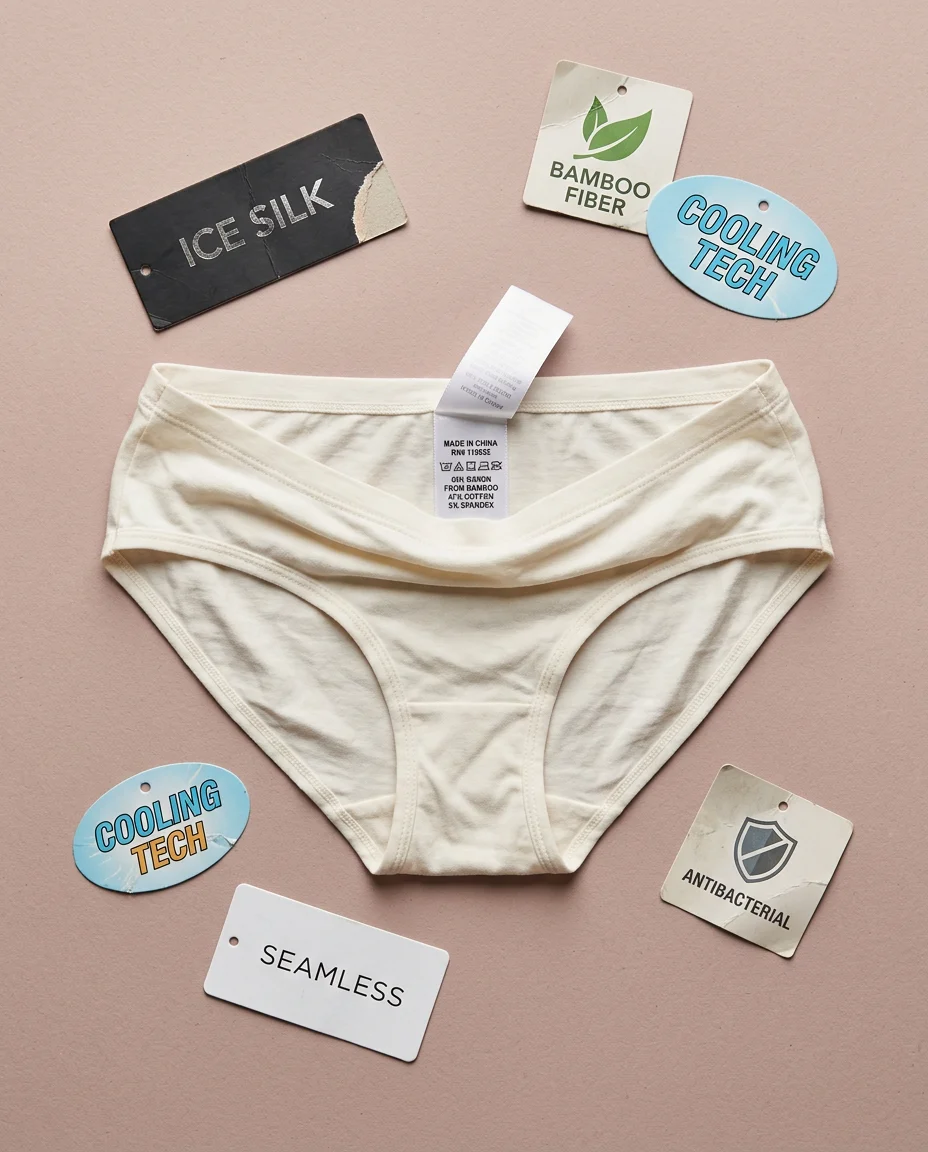
Your underwear label says "ice silk," "bamboo fiber," "seamless," "cooling technology," and "antibacterial." Three of those five terms do not mean what you think they mean. We deconstructed each marketing claim against published fiber science data and found a consistent pattern: the most expensive-sounding terms describe the cheapest materials.