Fabric Science2026-04-0913 min read
Lyocell Underwear: Complete Fiber Science & Buying Guide
Karl XiaoFactory Production Director
Part of the The Fiber Lab series
Part of the The Fiber Lab series
Lyocell fiber searches grew 100% year-over-year in 2025, making it the fastest-growing fiber category in intimate apparel. Yet most consumers — and even some brands — cannot clearly explain what Lyocell is, how it differs from viscose or Modal, or why it commands a premium price.
This is not another vague "Lyocell is soft and sustainable" article. We are going to break down the actual chemistry, manufacturing process, performance data, and buying criteria so you can make informed decisions — whether you are a consumer choosing underwear or a brand selecting materials.
For our head-to-head comparison with Modal, see the Modal vs Lyocell Fabric Comparison.
Lyocell is a regenerated cellulose fiber — meaning it starts as natural cellulose (wood pulp) that is dissolved and reformed into continuous filaments.
Step 1: Wood Pulp Preparation Eucalyptus or birch wood is harvested and processed into dissolving pulp (over 90% cellulose purity). Eucalyptus is preferred because it grows rapidly, requires no irrigation, and minimal pesticides.
Step 2: Direct Dissolution The pulp is dissolved directly in NMMO (N-methylmorpholine N-oxide) monohydrate solvent at approximately 100C. This is the key distinction from viscose — there is no chemical derivatization (no carbon disulfide, no aging step).
Step 3: Extrusion and Coagulation The cellulose solution is extruded through spinnerets into a water bath, where the cellulose regenerates as continuous filaments. The NMMO solvent diffuses into the water and is recovered.
Step 4: Solvent Recovery The water-NMMO mixture is processed to recover the solvent. 99.5% of NMMO is recycled back into the process. This closed-loop recovery is Lyocell's primary environmental advantage.
Step 5: Washing, Drying, and Finishing Filaments are washed, dried, and may receive finishes (softeners, anti-pilling treatments) before being spun into yarn.
For the broader context of regenerated cellulose fiber science, see our Regenerated Cellulose Fiber Science Overview.
Lyocell's smooth, round cross-section creates natural capillary channels that transport moisture away from skin. The result: 50% higher moisture absorption than cotton and significantly faster drying time.
This matters for underwear because:
For the science of moisture management in intimate apparel, see Moisture Management 101.
Under a microscope, Lyocell fibers have a smooth, round surface — compared to cotton's irregular, twisted surface. This translates directly to:
Lyocell manages moisture so effectively that it creates an environment less conducive to bacterial growth. This is not an "antibacterial treatment" — it is a physical property of the fiber's moisture management.
Important distinction: Lyocell's moisture management reduces bacterial growth naturally, but it does not replace purpose-built antibacterial treatments (5A/7A/10A rated gussets). For daily underwear in hot climates, combining Lyocell fabric with an antibacterial gusset is optimal.
For the complete antibacterial grading system, see our Antibacterial Underwear Grades guide.
Lyocell shrinks 2-3% after washing — compared to cotton's 5-7%. This means:
This is where Lyocell truly outperforms other regenerated cellulose fibers:
Wet strength matters because underwear is washed frequently. Fibers that lose strength when wet degrade faster in the wash cycle, leading to pilling, thinning, and fabric breakdown.
Tencel is Lenzing AG's trademark for their Lyocell fiber. It is the most recognized Lyocell brand, but not the only producer.
Other Lyocell producers include:
Does the brand matter? The NMMO process produces fundamentally similar fiber regardless of producer. However, Lenzing's Tencel tends to have more consistent quality control, and their sourcing certifications (FSC, PEFC) provide traceability that generic Lyocell may lack.
For underwear specifically: Fiber consistency matters more than brand. A well-produced generic Lyocell from a reputable mill performs similarly to Tencel. The key is verifying the fabric composition and requesting third-party test reports.
For the compliance implications of fiber naming, see our Bamboo Underwear Breathability guide — which explains why "bamboo" labeling is often non-compliant for regenerated cellulose fabrics.
Compliant labeling:
Non-compliant or misleading:
Lyocell is rarely used as 100% in underwear because it lacks stretch. Common blends:
| Blend | Characteristics | Best For |
|---|---|---|
| 95% Lyocell / 5% spandex | Soft, moderate stretch, excellent moisture management | Everyday comfort |
| 92% Lyocell / 8% spandex | More recovery, slightly less drape | Activewear seamless |
| 50% Lyocell / 50% cotton | Balanced softness and durability, lower cost | Budget-friendly daily wear |
| 70% Lyocell / 30% silk | Premium hand-feel, luxury positioning | Premium/specialty |
For why the spandex percentage matters for longevity, see our Spandex in Underwear analysis.
| Quality Tier | Price Per Pair | What You Get |
|---|---|---|
| Budget | $8-15 | Lyocell-cotton blend, basic construction, may use generic Lyocell |
| Mid-range | $15-25 | 90%+ Lyocell with spandex, quality gusset, branded fiber (Tencel) |
| Premium | $25-40 | 95% Lyocell with covered spandex, antibacterial gusset, luxury finish |
Lyocell is durable but requires specific care:
Expected lifespan: 80-120 wash cycles before noticeable degradation (vs 60-80 for Modal, 100-150 for cotton).
If you are developing a Lyocell underwear line, here are the manufacturing considerations:
Yarn Sourcing:
Knitting Considerations:
Dyeing:
For startup-friendly manufacturing with Lyocell, see our How to Start a Lingerie Business guide.
For Lyocell's environmental credentials compared to other fabrics, see our Sustainable Underwear Material Science guide.
Developing a Lyocell underwear collection? Our team sources certified Lyocell fabrics and specializes in intimate apparel manufacturing. Contact us to discuss fabric options and production capabilities.
Deep dive into fabric composition, properties, and performance at the microscopic level
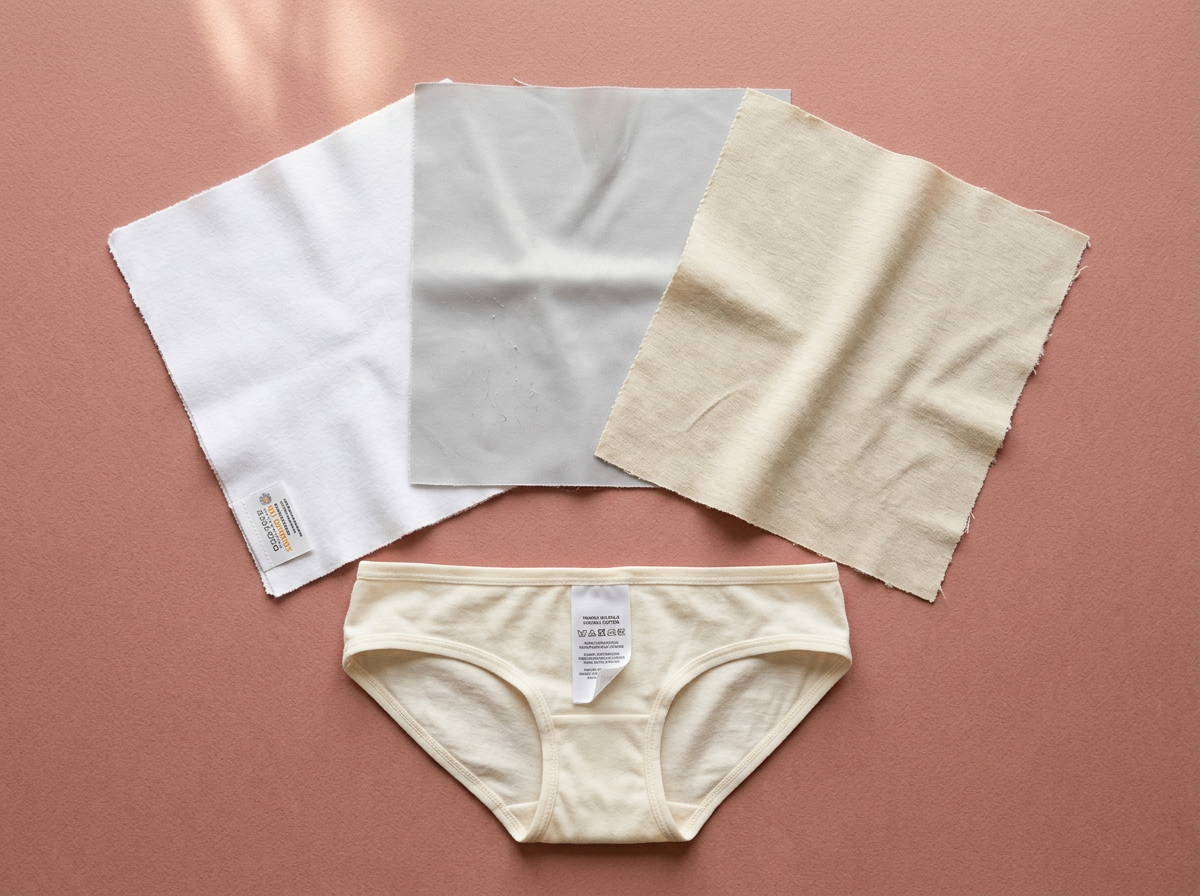
That recurring rash below your waistline. The itch that will not go away. The red marks where your underwear elastic sits. "Underwear rash" and "underwear irritation" searches have grown steadily as consumers discover their underwear may be the hidden cause of skin problems. We analyzed the four fabric-skin interaction mechanisms — bacterial microclimate, chemical contact dermatitis, pressure dermatitis, and antibacterial treatment sensitivity — with test data across 30+ brands.
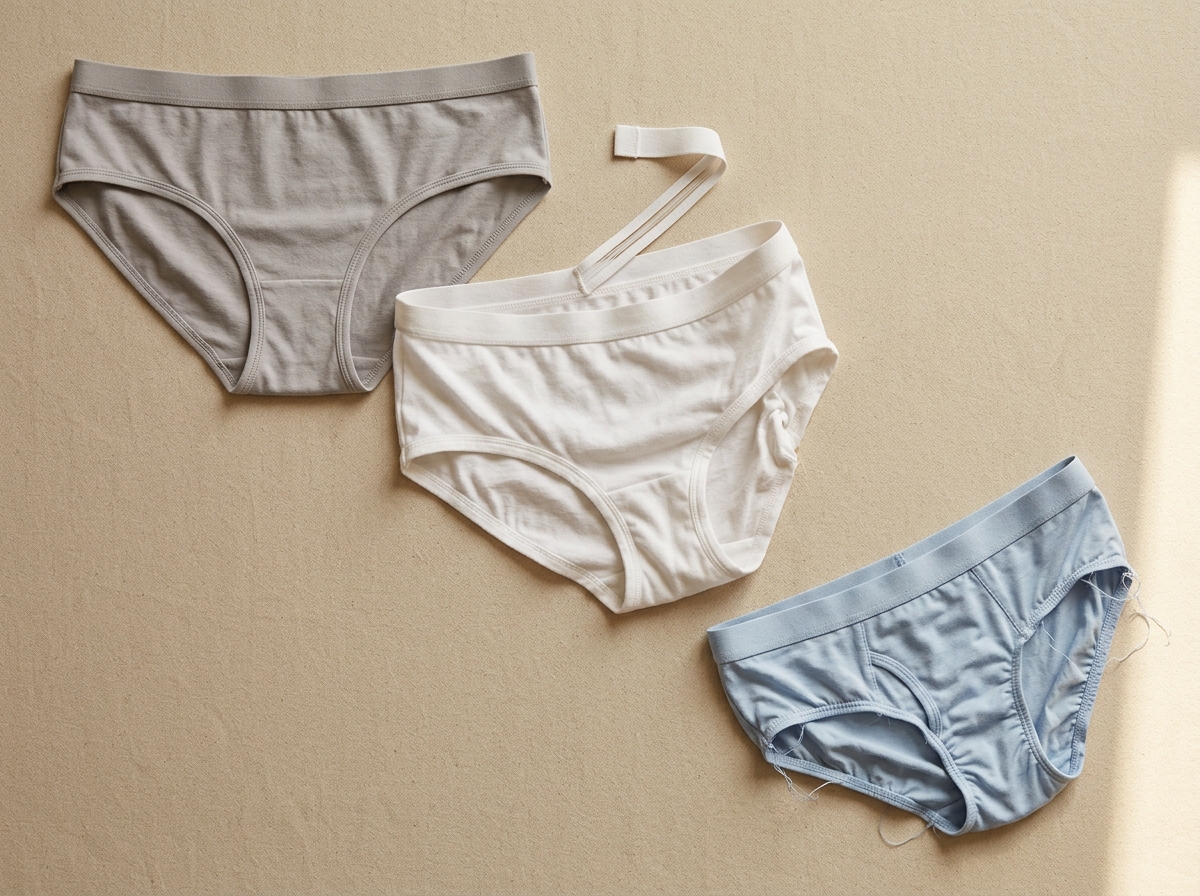
You adjust your underwear five times before lunch. The waistband rolls, the legs ride up, and everything bunches in the wrong places. "Why does my underwear keep riding up" is one of the most searched underwear complaints globally. We break down the four scientific causes — elastic recovery degradation, rise-torso mismatch, leg opening geometry, and fabric stretch ratio — and provide body-type-specific solutions based on testing across 30+ brands.
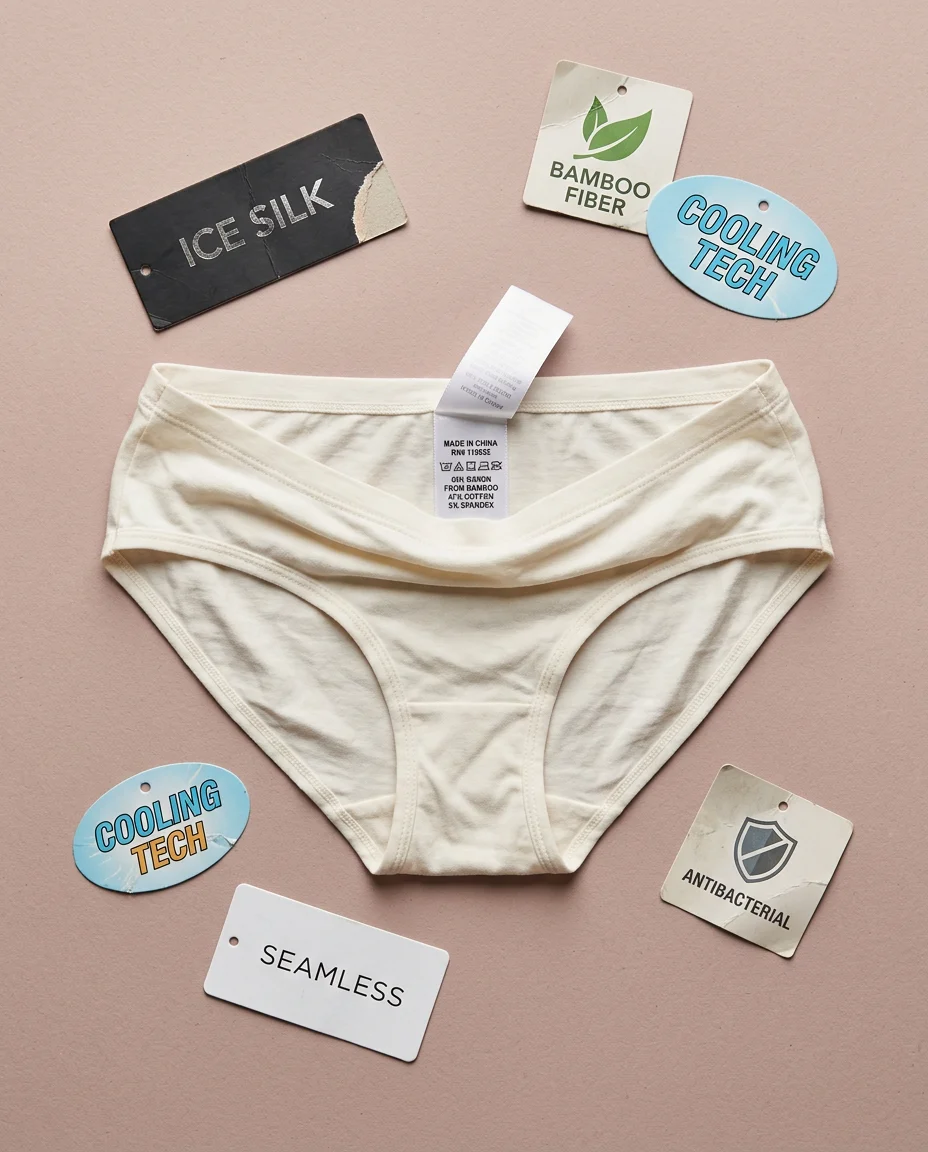
Your underwear label says "ice silk," "bamboo fiber," "seamless," "cooling technology," and "antibacterial." Three of those five terms do not mean what you think they mean. We deconstructed each marketing claim against published fiber science data and found a consistent pattern: the most expensive-sounding terms describe the cheapest materials.